The short answer
- Flea beetles chew tiny 'shot holes' in seedlings; damage usually isn't serious beyond the early seedling stage.[9]
- Cutworms clip seedlings at the soil line at night; protect seedlings with cardboard collars or cloth and handpick by flashlight.[10]
- Squash bugs: lay boards in the garden and each morning collect the bugs hiding underneath; pull out old squash and pumpkin plants after harvest.[11]
- Thrips: confirm they're there by shaking flowers or foliage over white paper before treating; damage often shows only after the tissue grows.[12]
More vegetable and flower garden pest profiles
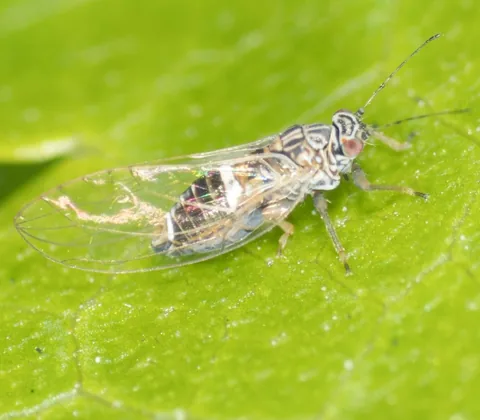 Potato/Tomato Psyllid
Bactericera cockerelli
The potato/tomato psyllid is a tiny sap-sucking insect, about the size of an aphid and shaped like a miniature cicada, that feeds on tomatoes, potatoes, peppers and other nightshade-family plants. Its toxic saliva causes psyllid yellows, which stunts plants and shrinks fruit and tubers, and it carries the bacterium linked to zebra chip disease of potato. Colorado State advises checking leaf undersides for nymphs and their sugary droppings and, if you find them, spraying spinosad or a horticultural oil so it covers the undersides of the leaves; multiple applications are needed during outbreaks.
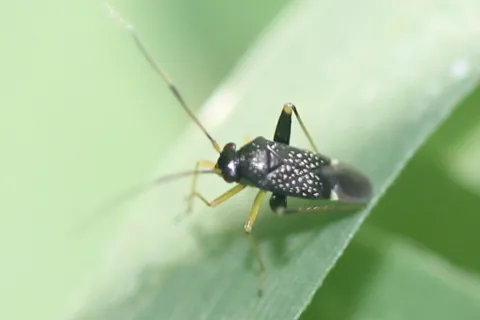 Garden Fleahopper
Halticus bractatus
Garden fleahoppers are tiny shiny black plant bugs that jump like fleas and suck sap from beans, tomatoes, squash, lettuce, many other plants and weeds, leaving pale speckles that look like mite damage. The sources list no risk to people. Clear weedy hosts near the garden; for severe infestations, insecticides listed for aphids should work, and a second spray may be needed after eggs hatch.
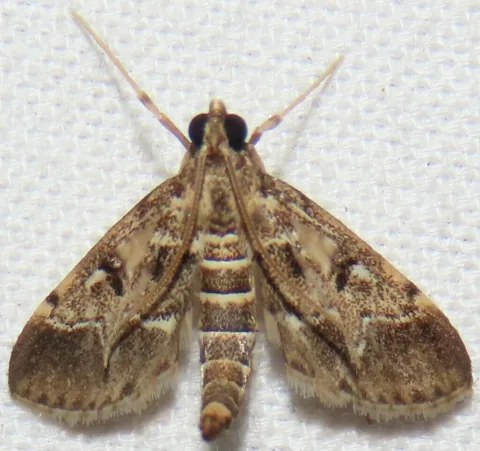 European Pepper Moth
Duponchelia fovealis
European pepper moth is an invasive greenhouse moth recorded on more than 70 host plants; in the United States it is a pest of greenhouse and container plants, and it is not yet clear whether it is establishing outdoors. UF/IFAS says it is native to freshwater and saltwater marshes of southern Europe, the eastern Mediterranean, the Canary Islands, Syria and Algeria, and has been a notable greenhouse pest in northern Europe and Canada since 1984.
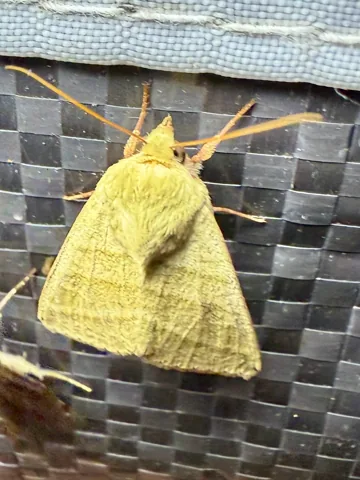 Tobacco Budworm
Chloridea virescens
Tobacco budworm caterpillars, also called geranium budworms, feed on the buds and petals of geranium, petunia, nicotiana and other garden flowers.
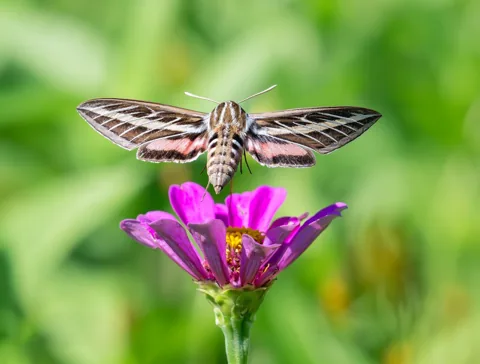 Whitelined Sphinx
Hyles lineata
The whitelined sphinx is a large hawk moth found across most of North America. It is the most common hornworm in Colorado and by far the most commonly seen 'hummingbird moth.'
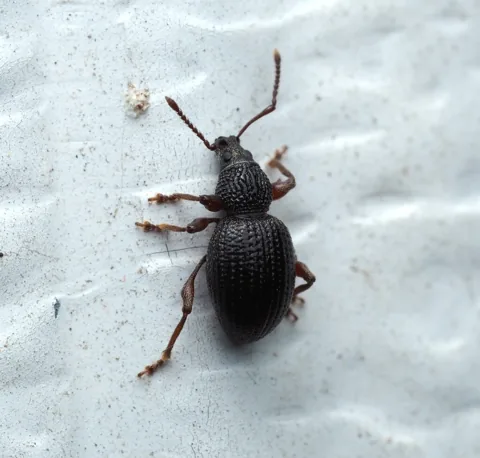 Strawberry Root Weevil
Otiorhynchus ovatus
The strawberry root weevil is a small, flightless black snout beetle whose grubs feed on the roots of strawberries, evergreens and many other plants. Adults notch leaves at night and often wander into homes in summer, where they're harmless.
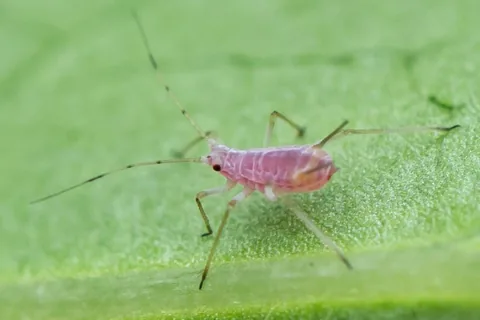 Potato Aphid
Macrosiphum euphorbiae
Potato aphids are fairly large, soft, pear-shaped aphids, pink, green or a mix of both, that suck sap from tomatoes, potatoes, roses and many other garden plants and weeds. Heavy colonies curl and stunt new growth, drop blossoms and coat leaves in sticky honeydew, and they can spread plant viruses, though Clemson says infestations are rarely severe enough to kill plants. UC IPM suggests knocking aphids off with a strong spray of water and letting natural enemies work; NC State says insecticidal soaps, neem seed extracts and horticultural oils are much less harmful to those natural enemies than most pyrethroids.
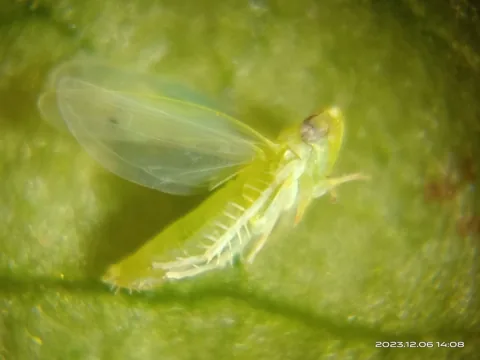 Two-Spotted Cotton Leafhopper
Amrasca biguttula
The two-spotted cotton leafhopper, also called the cotton jassid, is an Asian leafhopper that reached the US mainland in 2024. It scorches the leaves of cotton, okra, eggplant and hibiscus, and potted hibiscus sold in stores has carried it to new states.
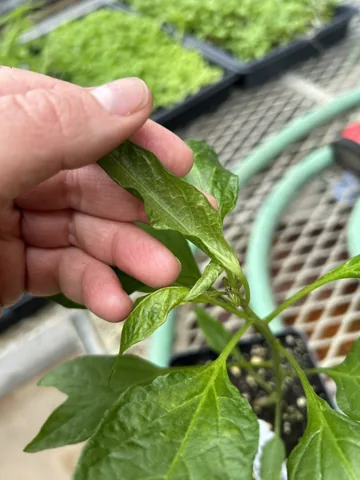 Broad Mite
Polyphagotarsonemus latus
Broad mites are microscopic mites with a very wide host range. They distort new leaves and flowers, scar young fruit, and are a common problem in greenhouse crops, peppers, citrus and blackberries. UF/IFAS says it was first described in 1904 from the terminal buds of mango in a greenhouse in Washington, D.C.
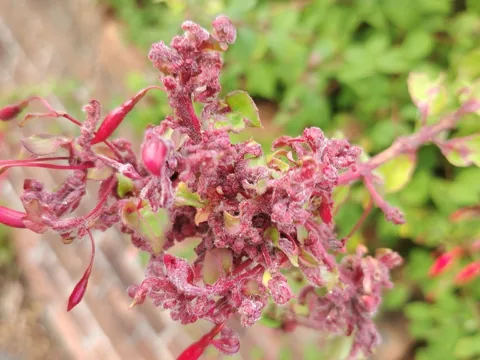 Fuchsia Gall Mite
Aculops fuchsiae
Fuchsia gall mites are microscopic mites that turn fuchsia tips, leaves and flowers into thickened, twisted, reddish galls. They do best where summers are cool.
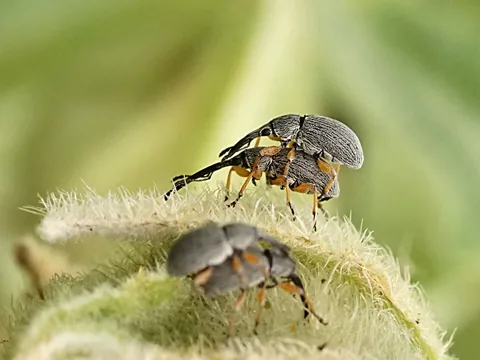 Hollyhock Weevil
Rhopalapion longirostre
The hollyhock weevil is a tiny, long-snouted gray weevil that chews small holes in hollyhock leaves and lays its eggs in the developing buds.
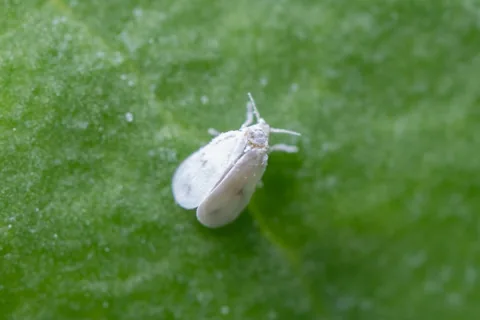 Cabbage Whitefly
Aleyrodes proletella
The cabbage whitefly is a European pest of cabbage, kale and other brassicas, including ornamental kale, that has spread to North America. It curls and yellows outer leaves and coats them with honeydew and sooty mold.
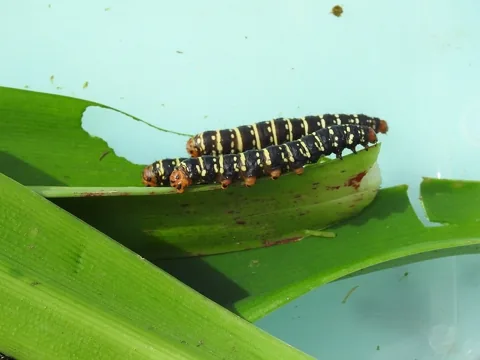 Spanish Moth (Convict Caterpillar)
Xanthopastis timais
Spanish moth caterpillars, nicknamed convict caterpillars, feed in groups on the thick, fleshy leaves of amaryllis, spider lilies and related plants that few other insects eat, and they will move on to the bulbs once the leaves are gone. UF/IFAS Featured Creatures says the adult is unmistakable for any other moth in Florida and the caterpillars are occasional pests of lilies, mainly in the amaryllis family.
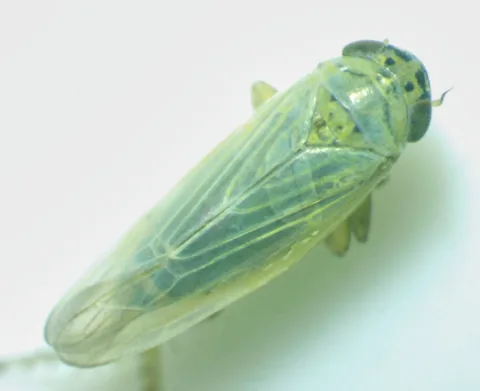 Aster Leafhopper
Macrosteles quadrilineatus
The aster leafhopper, also called the sixspotted leafhopper, is a small leafhopper whose own feeding does little harm but which is the main carrier of aster yellows, a plant disease caused by a phytoplasma (Candidatus Phytoplasma asteris).
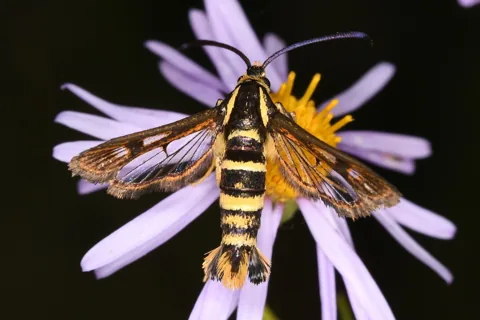 Strawberry Crown Moth
Synanthedon bibionipennis
The strawberry crown moth is a native clearwing moth that strongly resembles a yellowjacket. Its white, brown-headed larvae tunnel in the crowns and roots of strawberries and related plants; injured plants are stunted, turn reddish and yield poorly, and the tops separate from the roots when pulled. The Pacific Northwest handbook says to remove and destroy infested plants and, in home gardens, to cut the old leaves off June-bearers; UC IPM says to clean up debris under plants and that insecticides are usually not effective.
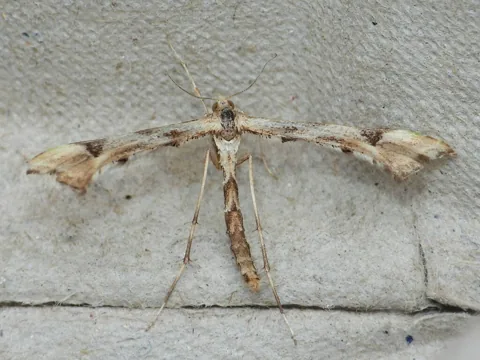 Artichoke Plume Moth
Platyptilia carduidactylus (often written P. carduidactyla)
The artichoke plume moth has feathery, lobed wings, and its larvae tunnel into artichoke stalks and buds, mainly where artichokes are grown as perennials, such as California's central coast.
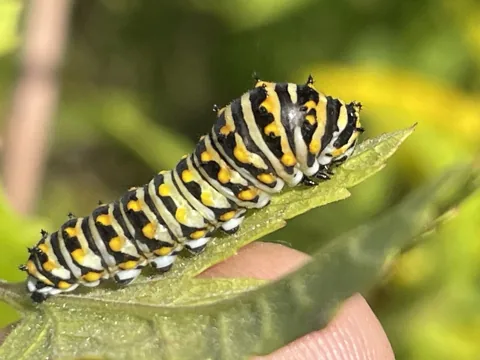 Eastern Black Swallowtail
Papilio polyxenes asterius
Eastern black swallowtail caterpillars, often called parsleyworms, are the young of a black-and-yellow butterfly. They eat dill, parsley, fennel and other carrot-family plants but are harmless to people and pets. They are usually not numerous enough to be a real problem, and hand-picking is usually all a few herb plants need. Mississippi State Extension notes they are one of the few butterfly caterpillars that count as garden pests.
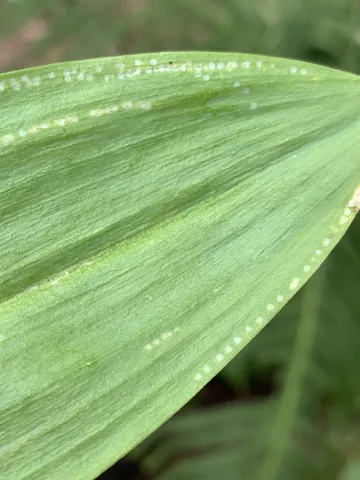 Allium Leafminer
Phytomyza gymnostoma
Allium leafminer is an invasive fly whose larvae feed in the leaves of onions, leeks, chives and garlic and burrow into the bulb, stunting plants.
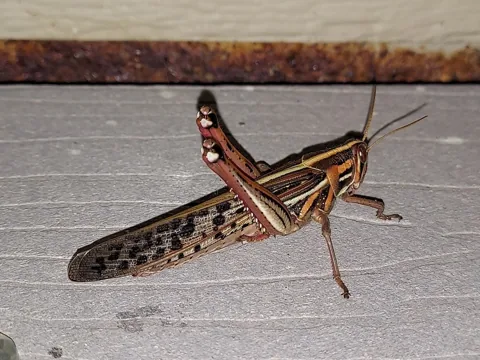 American Grasshopper
Schistocerca americana
The American grasshopper is a large, long-winged grasshopper that flies off into trees when flushed. It can feed destructively on crops and garden plants, especially in Florida, where it is a notable pest of citrus groves. UF/IFAS says it occasionally causes serious damage to crops and ornamental plants, and its sheer numbers can be a nuisance.
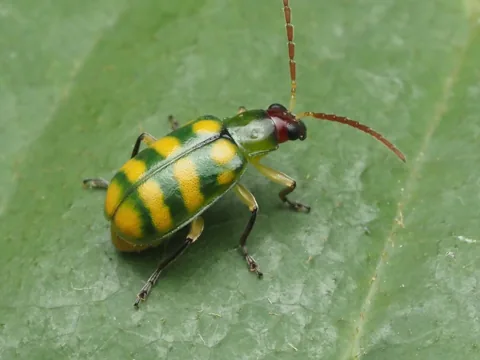 Banded Cucumber Beetle
Diabrotica balteata
The banded cucumber beetle is a leaf beetle native to the American tropics whose range has expanded into the southern United States. Adults chew leaves, flowers and pods of many crops, and the larvae feed on roots underground. UF/IFAS calls it nearly omnivorous: it injures every part of the plant, and its larvae feed only on roots.
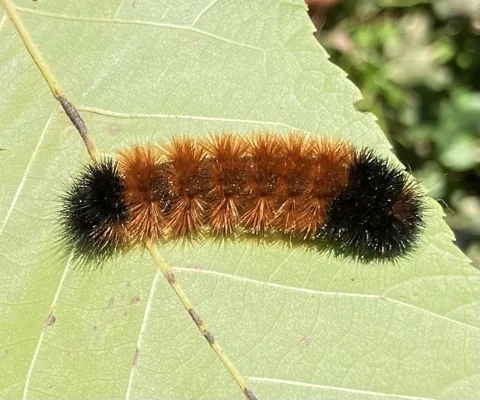 Banded Woolly Bear
Pyrrharctia isabella
The banded woolly bear is the fuzzy caterpillar of the Isabella tiger moth, famous in folklore for predicting winter. Most are noticed in fall, crossing roads in search of a sheltered spot to spend the winter.
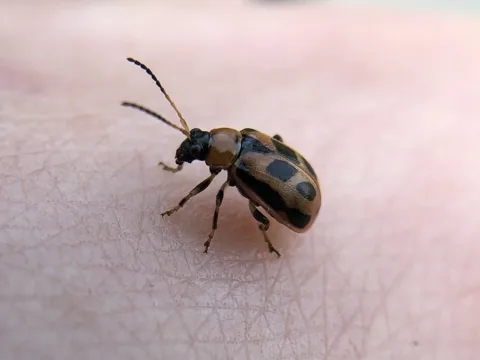 Bean Leaf Beetle
Cerotoma trifurcata
The bean leaf beetle is a small native leaf beetle that riddles bean leaves with round holes and can wipe out seedlings; in soybean fields it also carries bean pod mottle virus.
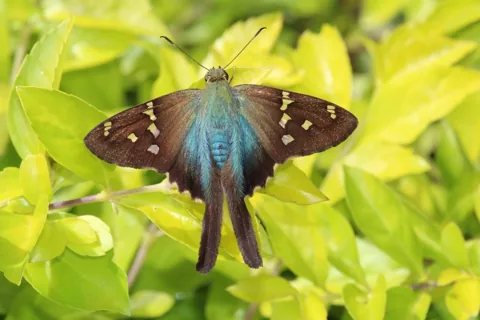 Bean Leafroller
Urbanus proteus
Ragged and rolled-up bean leaves often mean bean leafroller caterpillars, the young of the longtailed skipper. Older caterpillars roll a leaf into a shelter and feed inside it. UF/IFAS calls it a common late-summer pest of beans, and occasionally soybeans, especially in home gardens and on weeds such as Dixie tick trefoil.
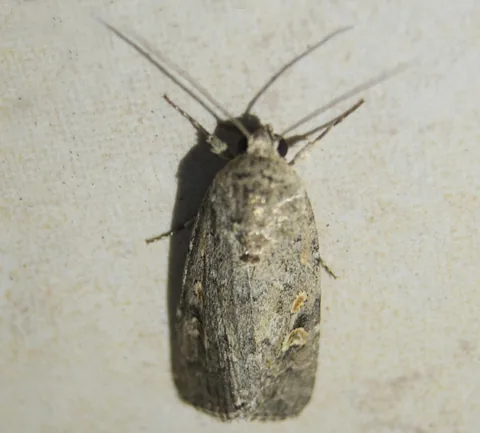 Beet Armyworm
Spodoptera exigua
Beet armyworm caterpillars hatch in groups from cottony egg masses, feed together near the egg cluster, then spread out; older larvae chew leaves and bore into fruit and lettuce heads. UF/IFAS says it originated in Southeast Asia and is a serious pest of vegetable, field and flower crops.
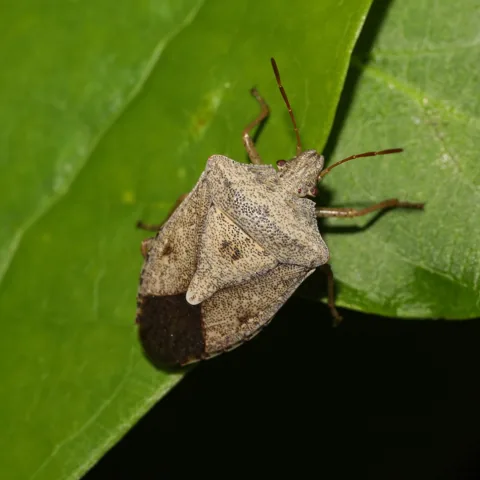 Brown Stink Bug
Euschistus servus
The brown stink bug is a native stink bug and often the first one to show up in Southern vegetable gardens, where it feeds on tomatoes, green beans and other crops. On farms it is a damaging pest of corn, cotton and soybeans, especially in the southeastern United States. The University of Florida calls it a serious pest of most seed, grain, nut and fruit crops in the southern U.S.
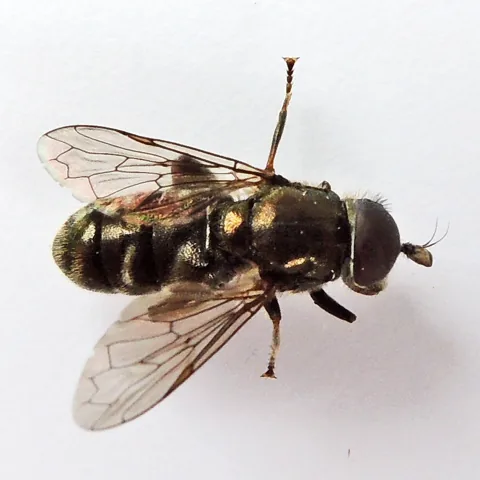 Bulb Flies
Merodon equestris and Eumerus species (shown: lesser bulb fly, E. funeralis)
Bulb fly maggots tunnel inside bulbs, mainly daffodils and their relatives but also iris, lily, tulip and others. Buying firm, healthy bulbs is the best prevention.
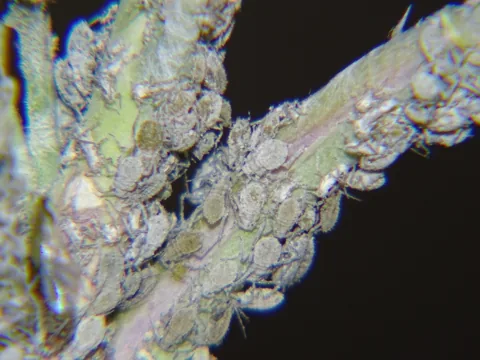 Cabbage Aphid
Brevicoryne brassicae
Dense, gray, powdery colonies on broccoli, cabbage, kale or Brussels sprouts are cabbage aphids. They feed only on the cabbage family and are worst on long-season fall crops, when cool weather lets populations explode. UF/IFAS Featured Creatures calls it a serious pest under cool, dry conditions that causes significant yield losses in the mustard family.
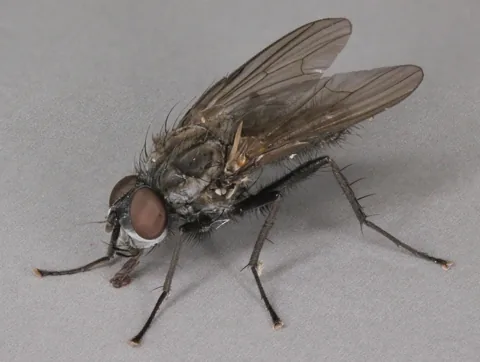 Cabbage Maggot
Delia radicum
The cabbage maggot is the larva of a small gray fly. The maggots tunnel into the roots of cabbage-family crops, and young plants can wilt, yellow and die, especially after a cool, wet spring.
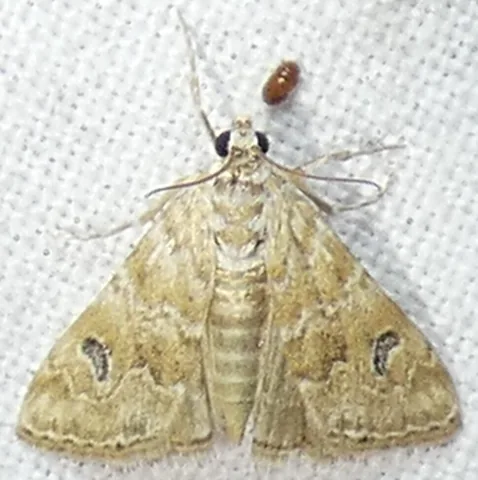 Cabbage Webworm
Hellula rogatalis
Cabbage webworms are small caterpillars that web leaf edges and bore into the buds of cabbage, broccoli and other crucifers, killing the bud and preventing a marketable head. They're mainly a pest of fall plantings in the South.
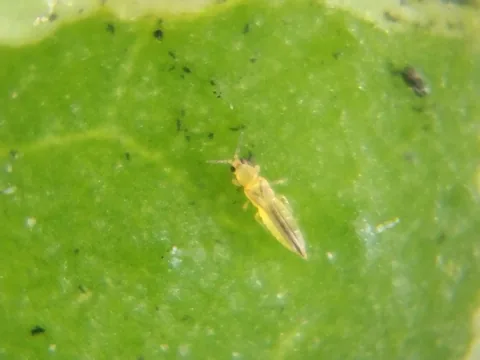 Chilli Thrips
Scirtothrips dorsalis
Chilli thrips are pale thrips under 2 mm long whose feeding curls, bronzes and scars the young leaves, buds and fruit of roses, peppers and many ornamentals. Damage is usually noticed before the insects are.
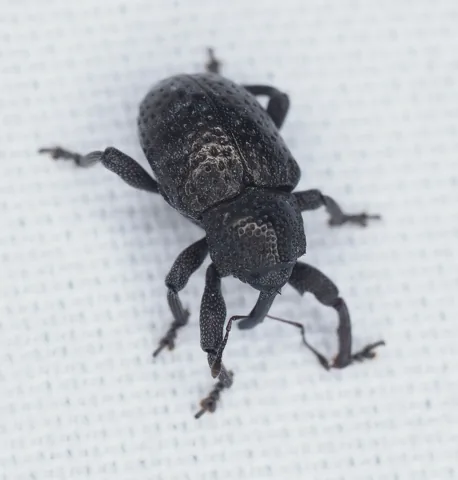 Cowpea Curculio
Chalcodermus aeneus
The cowpea curculio is a small snout beetle (weevil) and the most destructive insect pest of southern peas, also called cowpeas or black-eyed peas, in the Southeast. Adults puncture the pods to feed and lay eggs, and the grubs develop inside the peas.
No photo yet
Cyclamen Mite
Phytonemus pallidus
Cyclamen mites usually go unnoticed until their damage, stunted, curled and distorted new leaves and buds, becomes severe.
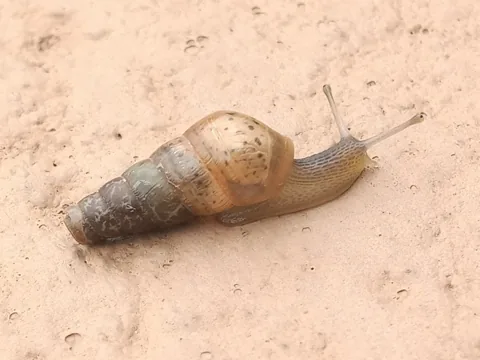 Decollate Snail
Rumina decollata
The decollate snail is a slim, tapered, light-brown snail whose shell tip is missing: it breaks off as the snail grows. It hunts brown garden snails and slugs, so California gardeners and citrus growers release it on purpose, but only in certain counties. Is it harmful? Not to people, but it also eats seedlings, small plants and flowers, and as an introduced predator it may harm native snails. Where you don't want it, hand-pick, trap and remove hiding places; where you use it, skip snail baits, which kill decollates too.
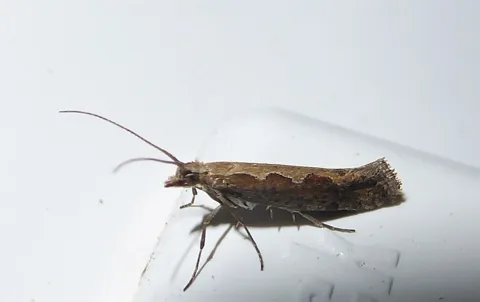 Diamondback Moth
Plutella xylostella
The diamondback moth is a small moth whose caterpillars feed on cabbage, broccoli, kale and other cole crops. Natural enemies often keep it in check in California, but it has developed resistance to many insecticides.
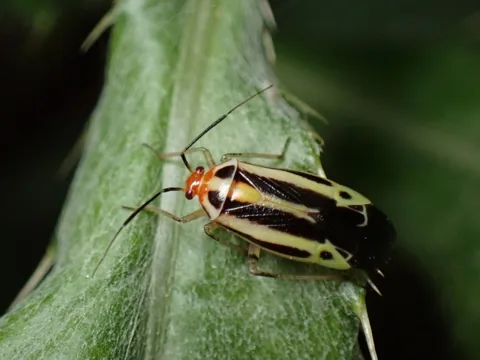 Fourlined Plant Bug
Poecilocapsus lineatus
Fourlined plant bug feeding leaves neat, dark, sunken spots that are often mistaken for leaf spot disease; it's usually only cosmetic.
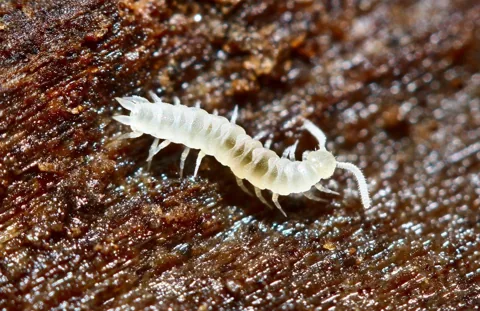 Garden Symphylan
Scutigerella immaculata and relatives (family Scutigerellidae)
Garden symphylans aren't insects. They are small, white, centipede-like soil animals with up to 12 pairs of legs that feed on roots and sprouting seeds, so they can stunt or kill seedlings and leave patchy, poor stands. They don't hurt people; UC IPM mentions no risk. They are hard to get rid of, but tilling dry soil before planting, using transplants instead of seed, and planting tolerant crops such as potatoes and beans all help.
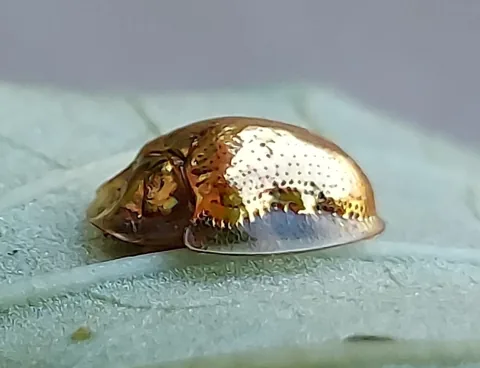 Golden Tortoise Beetle
Charidotella bicolor (Charidotella sexpunctata in iNaturalist)
Golden tortoise beetles look like tiny drops of gold on morning glories, sweetpotato and bindweed. They feed only on plants in the morning glory family.
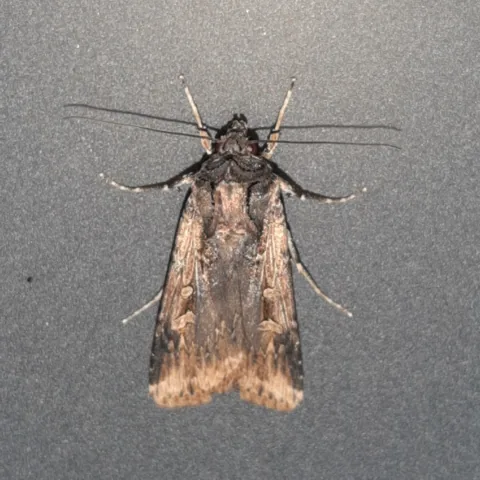 Granulate Cutworm
Feltia subterranea
The granulate cutworm is a night-feeding caterpillar that cuts off young vegetable plants near the ground. It ranges across the Americas, and NC State Extension finds it more abundant in the southern part of its range, while the black cutworm is more abundant in the north. UF/IFAS Featured Creatures calls it the most commonly occurring cutworm in Florida and the most important cutworm pest of vegetables in the Gulf Coast region, though rarely numerous enough to be a major pest; because it is nocturnal and plain-looking, it is often overlooked.
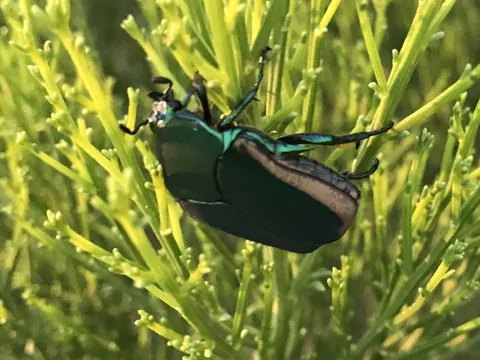 Figeater Beetle
Cotinis mutabilis (green fruit beetle, figeater)
The figeater is a large metallic green beetle drawn to ripe fruit; its grubs live in compost and manure piles.
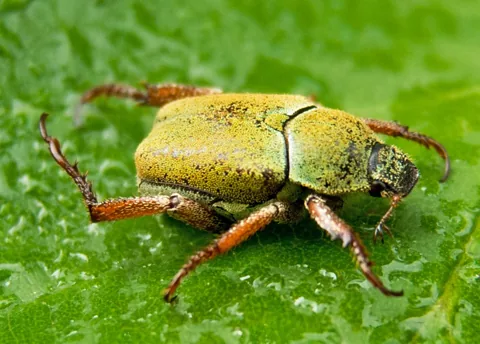 Hoplia Beetle
Hoplia callipyge (shown: a Hoplia species)
The hoplia beetle is a small scarab beetle that chews round holes in the petals of light-colored roses and other flowers in California, especially the Central Valley, from late March to May. It does not bite people or eat rose leaves. Handpicking the beetles into soapy water is the main remedy, because insecticide sprays rarely reach them inside the blooms.
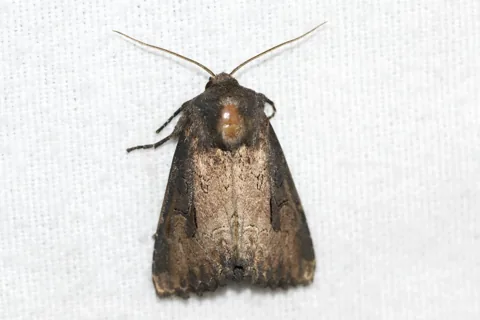 Iris Borer
Macronoctua onusta
The iris borer is the most destructive insect pest of iris. Its pink caterpillars tunnel down through the leaves and hollow out the rhizome, and the wounds let in a foul-smelling soft rot.
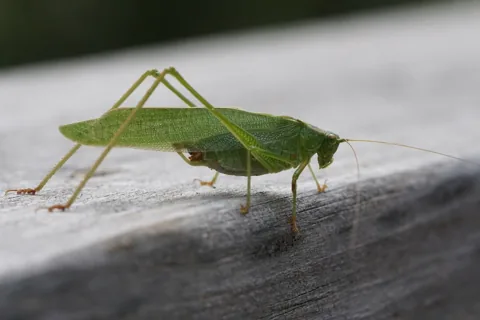 Katydids
Tettigoniidae (shown: Scudderia furcata)
Most katydids nibble a little foliage and move on, but the forktailed bush katydid also chews young fruit, leaving corky scars later.
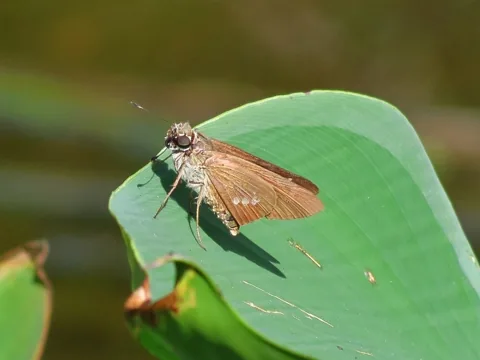 Larger canna leafroller (Brazilian skipper)
Calpodes ethlius
The larger canna leafroller is the caterpillar of a skipper butterfly, the Brazilian skipper, also called the canna butterfly or arrowroot butterfly. It shelters in rolled canna leaves and chews large, ragged pieces out of them. UF/IFAS calls it one of two caterpillars that are very destructive to canna in Florida; the other is the lesser canna leafroller.
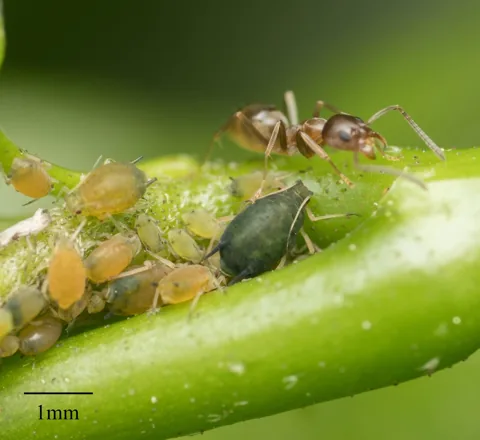 Melon aphid (cotton aphid)
Aphis gossypii
The melon aphid, also called the cotton aphid, is a small sap-feeding aphid with an unusually long host list. Large colonies distort leaves, coat plants and fruit with sticky honeydew and spread several plant viruses, and many populations resist common insecticides.
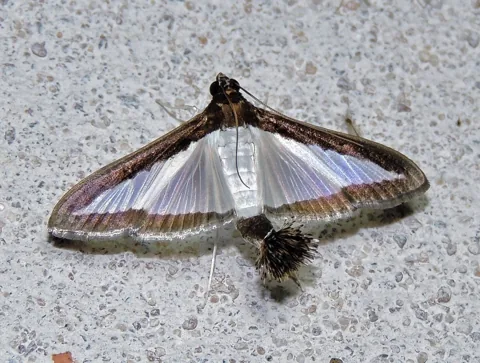 Melonworm
Diaphania hyalinata
Melonworm caterpillars strip squash and cucumber leaves down to the veins, leaving them lacy, and sometimes feed in blossoms or on the fruit.
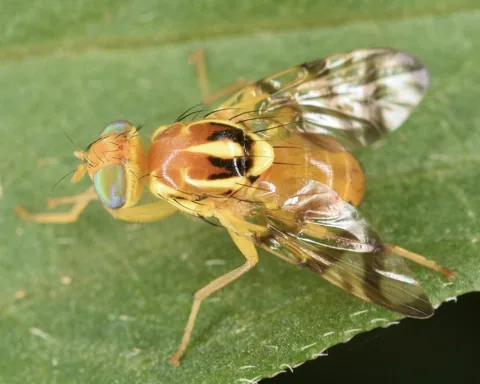 Pepper Maggot
Zonosemata electa
Pepper maggots tunnel inside sound pepper fruit, leaving little outside evidence except a small dimple where the egg was laid, so the damage often goes unseen until too late.
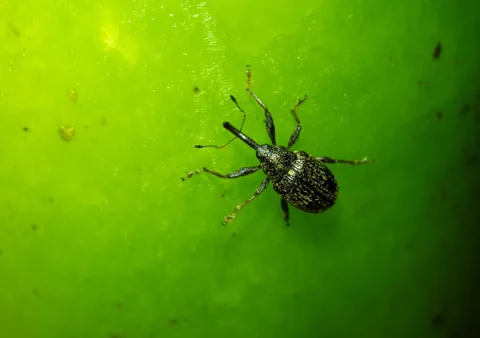 Pepper Weevil
Anthonomus eugenii
The pepper weevil is one of the most important pests of cultivated pepper in North America. Females lay eggs in flower buds and young pods, the larvae feed inside, and the buds and small fruit turn yellow and fall off.
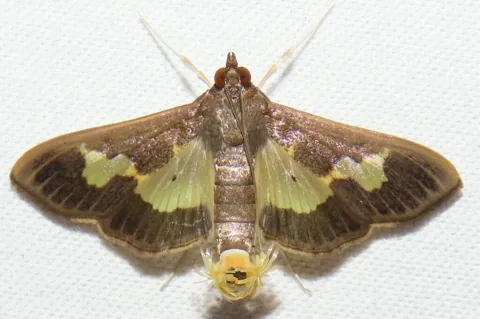 Pickleworm
Diaphania nitidalis
The pickleworm is a tropical moth whose caterpillars bore into the blossoms and developing fruit of cucumbers, squash, zucchini and cantaloupe. It overwinters only in the far South and spreads north each summer.
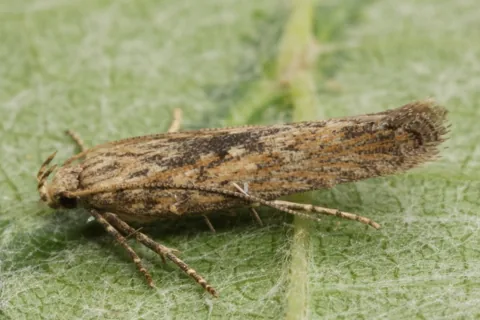 Potato Tuberworm
Phthorimaea operculella
Potato tuberworm larvae mine potato leaves, then tunnel into tubers and stalks; in tomatoes they bore into fruit and stem tips. Tuber damage is the main concern.
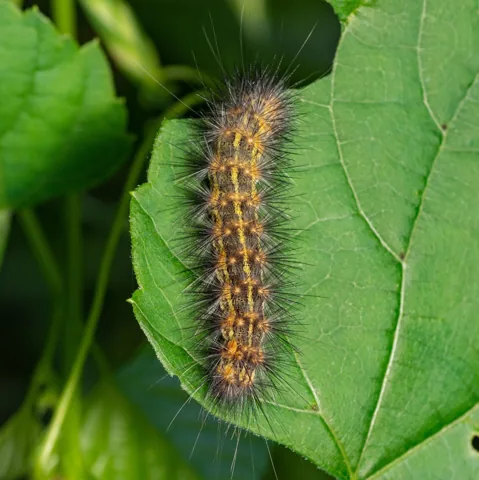 Saltmarsh Caterpillar
Estigmene acrea
The saltmarsh caterpillar is a very hairy, color-variable caterpillar that feeds mainly on broadleaf weeds such as pigweed and sometimes moves onto beans, lettuce, tomatoes, grapes and other crops. Older caterpillars are often seen crossing lawns, sidewalks and roads. Texas A&M says the hairs do not sting. UC IPM calls it a sporadic, uncommon pest, and weeding and hand-picking usually handle it.
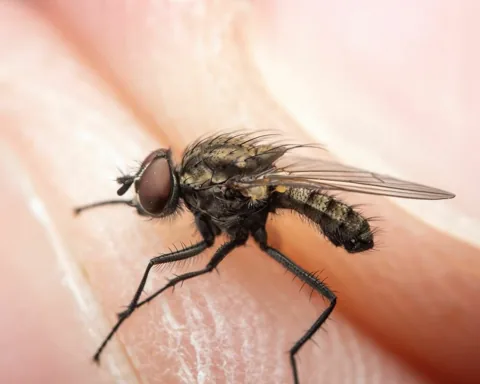 Seedcorn Maggot
Delia platura
When beans, corn or other seeds fail to come up in a cool, wet spring, seedcorn maggots feeding on the germinating seeds are a likely cause.
No photo yet
Sixspotted Spider Mite
Eotetranychus sexmaculatus
A tiny yellow mite that is a major pest of plumeria and, in humid coastal areas, of avocado and citrus. Unlike twospotted and Pacific spider mites, it leaves blistered patches on the leaves.
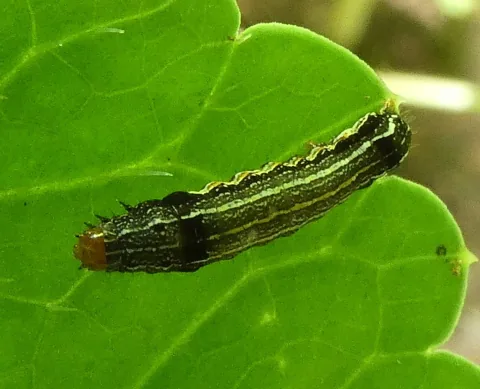 Southern Armyworm
Spodoptera eridania
Young southern armyworms feed together and skeletonize leaves; older caterpillars spread out and can bore into fruit, often damaging tomatoes. UF/IFAS Featured Creatures says it has a very broad host range among vegetable, fruit, field and ornamental crops.
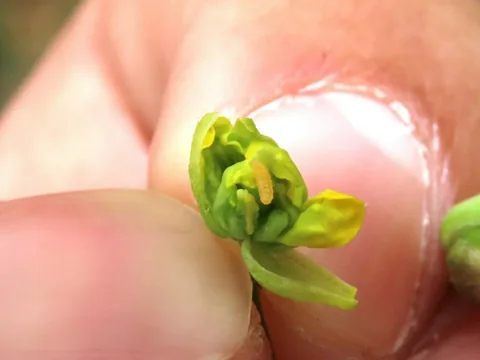 Swede Midge
Contarinia nasturtii
You'll rarely see swede midges, but their larvae can keep broccoli from heading and leave twisted, scarred brassica plants.
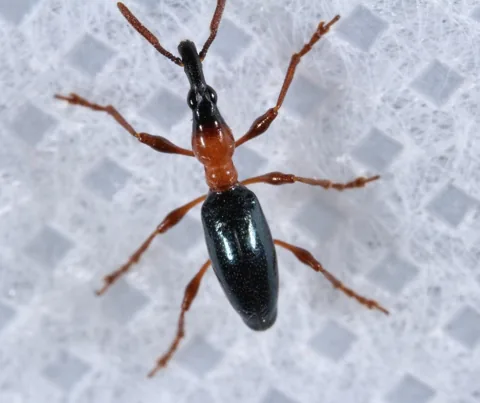 Sweetpotato Weevil
Cylas formicarius
The sweetpotato weevil is the most damaging pest of sweet potato in the country and one of the most destructive in the world. Its larvae tunnel roots in the field and keep breeding in storage. UF/IFAS calls it the most serious pest of sweet potato around the world, causing damage in the field and in storage, and a pest of quarantine significance.
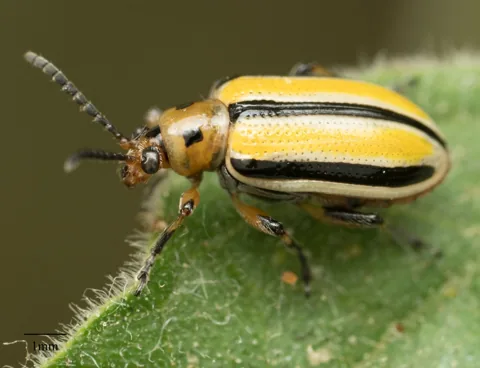 Threelined Potato Beetle
Lema daturaphila
Despite its name, this small striped leaf beetle rarely bothers potatoes. Its larvae, which wear a coat of their own excrement, are the ones that can defoliate tomatillos.
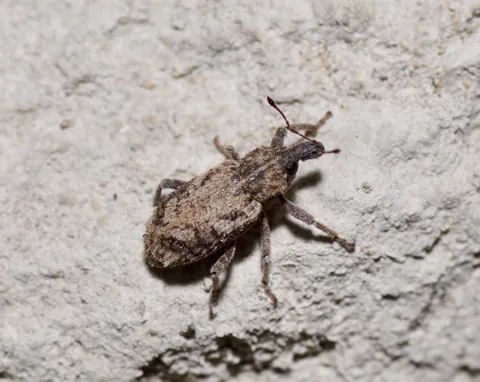 Vegetable Weevil
Listroderes difficilis (also listed as L. costirostris)
The vegetable weevil is a small gray-brown snout beetle that can't fly. Adults and their green, legless larvae feed at night on the buds, leaves and roots of carrots, turnips, lettuce, potatoes, tomatoes and other vegetables, and can cut seedlings off at the ground much like cutworms. It feeds only on plants and neither UC IPM nor Texas A&M lists any risk to people. To get rid of it, handpick weevils at night, protect young plants with fabric covers, and if needed use a pyrethrin or azadirachtin (neem) spray on the worst spots.
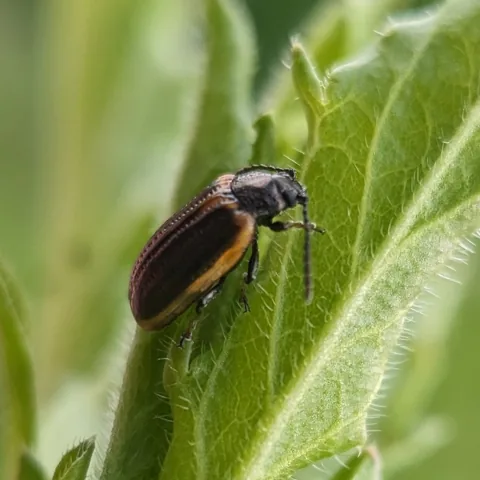 Yellowmargined Leaf Beetle
Microtheca ochroloma
The yellowmargined leaf beetle is a small, dark leaf beetle whose adults and larvae chew holes in turnips, mustard and other crucifers. It is a major pest of organic crucifer vegetables in the southern United States.
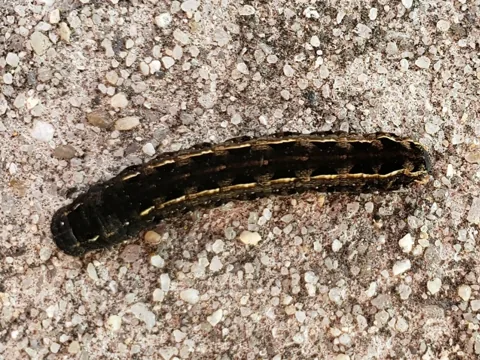 Yellowstriped Armyworm
Spodoptera ornithogalli
The yellowstriped armyworm is a striped caterpillar that feeds on hundreds of kinds of herbaceous plants, from beans and cabbage to cotton, and tunnels into tomato and pepper fruit.
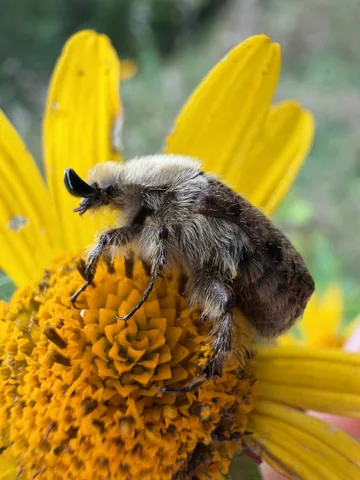 Bumble Flower Beetle
Euphoria inda
The bumble flower beetle is a hairy, mottled brown scarab that buzzes like a bumble bee in flight and feeds on ripe or damaged fruit, corn, flowers and tree sap. Its grubs develop in compost and manure.
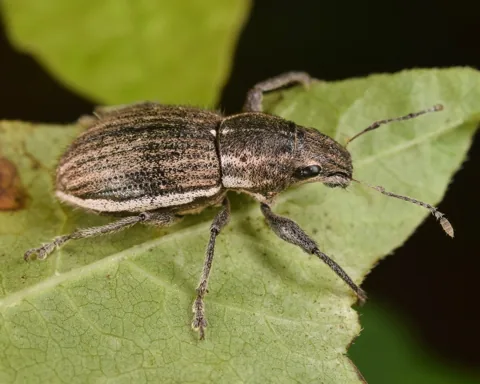 Whitefringed Beetles
Naupactus leucoloma and related species (whitefringed beetle complex)
Whitefringed beetles are flightless South American weevils about 1/2 inch long, gray with a pale band along the edge of each wing cover. Every one found in North America is a female that lays eggs without mating. Are they harmful? Not to people or pets, but their legless grubs feed on the roots of hundreds of plants and can make plants yellow, wilt and die, while the adults notch leaf edges. To get rid of them, keep them from arriving in soil and potted plants, check failing plants for grubs, and, if needed, use an insecticide labeled for landscape use; NC State suggests a pyrethroid for longer residual activity.
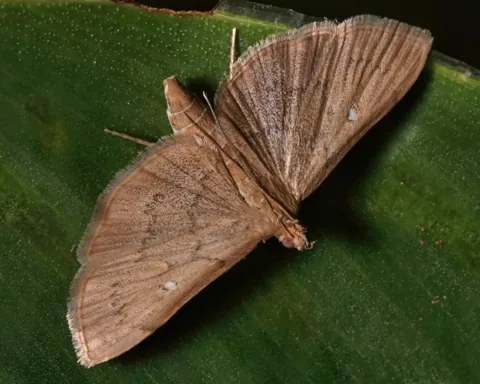 Lesser Canna Leafroller
Geshna cannalis
The lesser canna leafroller is a small caterpillar that feeds on canna, living inside new leaves that are still rolled or older leaves it ties shut. NC State says that if it is not managed it may completely destroy the aesthetic value of cannas, and the University of Arkansas Plant Health Clinic says it receives more samples of the lesser canna leaf roller than of the larger one. UF/IFAS says it can be a serious pest of ornamental canna in Florida.
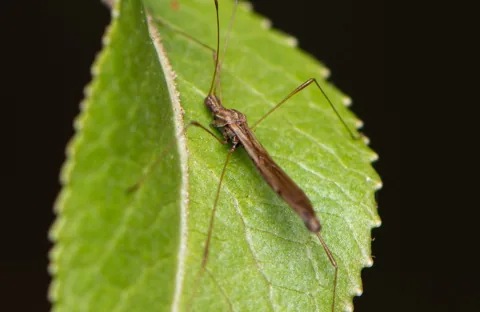 Spined Stilt Bug
Jalysus wickhami
The spined stilt bug is a thin, brown, very long-legged bug that lives on sticky, hairy plants such as tomato and tobacco. It is mostly a helper, eating caterpillar eggs and aphids, but it also sucks sap and can kill tomato flowers and blotch fruit, mainly in greenhouses. Neither NC State nor Penn State lists any risk to people. In tobacco it is valued as a predator; for tomatoes, Penn State says control has not been studied.
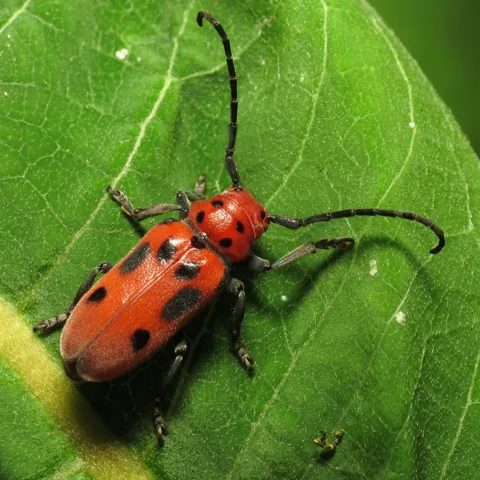 Red Milkweed Beetle
Tetraopes tetrophthalmus (other milkweed longhorns: Tetraopes spp.)
The red milkweed beetle (Tetraopes tetrophthalmus) is a red longhorned beetle with black spots and long black antennae that feeds and breeds on milkweeds. Adults chew the leaves, buds and flowers, and the larvae live underground on milkweed roots. Its bright color is a warning: like other milkweed feeders, it takes in the plant's toxic chemicals.
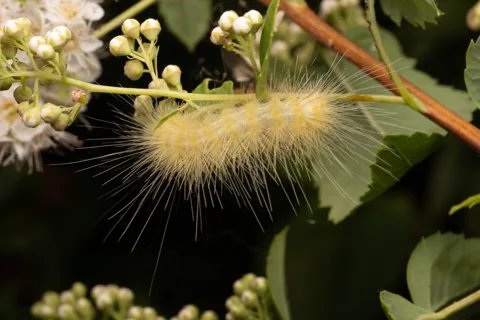 Yellow Woollybear
Spilosoma virginica
The yellow woollybear is the hairy caterpillar of the Virginian tiger moth (Spilosoma virginica), a white moth. It feeds on more than 100 kinds of vegetables, field crops, fruits, flowers and weeds and chews irregular holes in leaves; how much that matters depends on how many there are and on the plant. Its hairs aren't venomous, though they can bother sensitive skin.
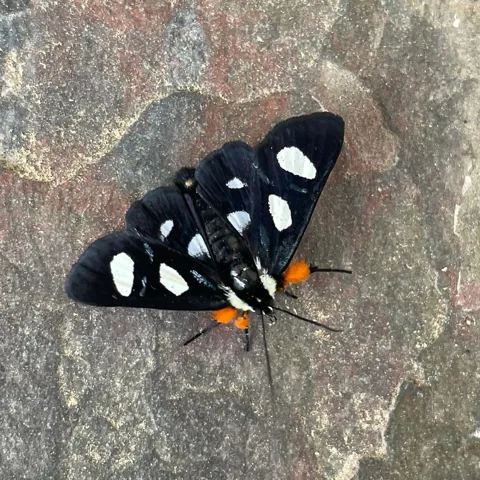 Eight-spotted Forester
Alypia octomaculata
The eight-spotted forester is a black, butterfly-like moth that flies by day; its banded caterpillars feed on grape and Virginia creeper leaves and are occasionally a pest of grapes.
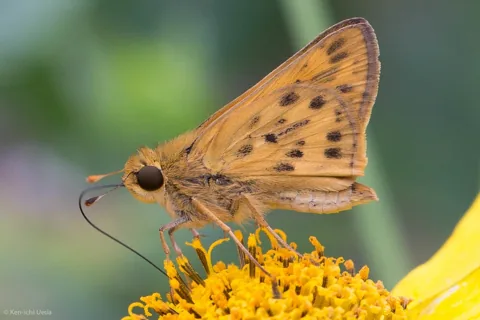 Fiery Skipper
Hylephila phyleus
The fiery skipper is a small, fast-flying orange-and-brown butterfly of lawns and other open, grassy places. None of the sources reports any risk to people or pets, and the adults sip nectar from garden flowers. Its caterpillars feed on lawn grasses such as bermudagrass and St. Augustinegrass, each one leaving a round dead spot 1 to 2 inches across. Most lawns need no treatment; where damage spreads, dethatching, Bt or insect-killing nematodes are the first choices.
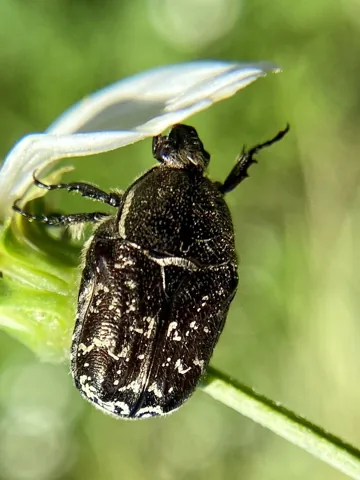 Dark Flower Scarab
Euphoria sepulcralis
The dark flower scarab, also called the spangled flower beetle, is a dark, white-flecked scarab that eats pollen, nectar and perhaps other parts of flowers. In flight it buzzes like a huge bee, and it sometimes becomes an agricultural pest. UF/IFAS says it is common in Florida and much of the eastern U.S. and occasionally damages corn, roses and the flowers of blooming fruit trees.
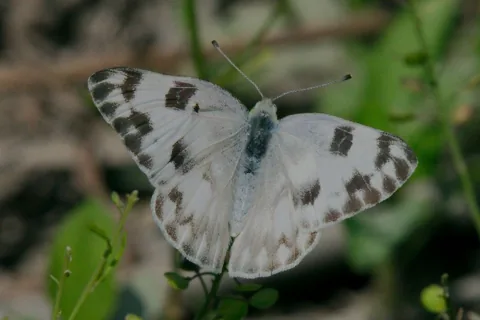 Checkered White
Pontia protodice
The checkered white is a white butterfly with black checkered markings. Its caterpillar, the southern cabbageworm, eats mustard-family plants and today is only a minor pest of cabbage-family crops.
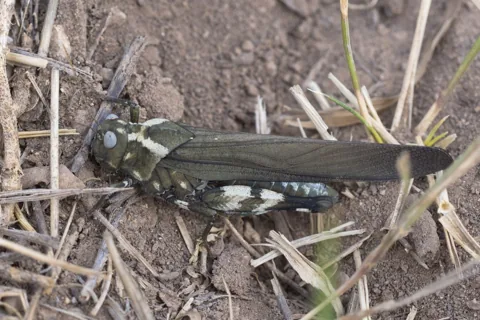 Carolina Grasshopper
Dissosteira carolina
The Carolina grasshopper is a large, gray-brown band-winged grasshopper that rests on bare ground and flashes black, pale-yellow-bordered hind wings in a crackling flight, looking like a butterfly in the air.
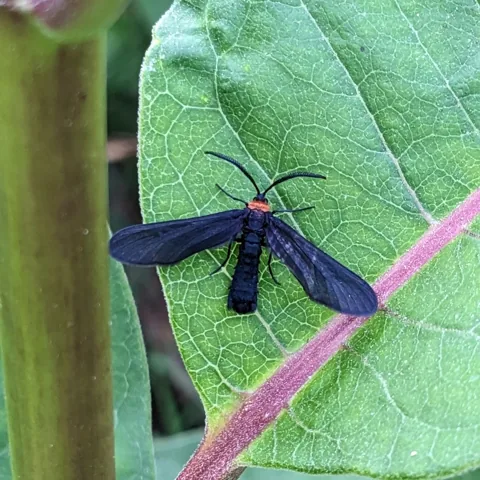 Grapeleaf Skeletonizer
Harrisina americana
The grapeleaf skeletonizer is a small black moth with an orange collar. Its yellow, black-marked caterpillars feed side by side in a row on the undersides of grape and Virginia creeper leaves, leaving only the veins.
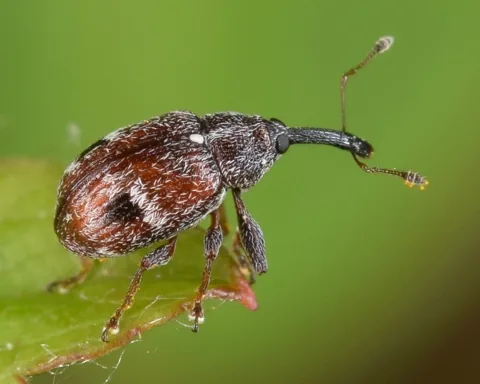 Strawberry Clipper
Anthonomus signatus
The strawberry clipper, or strawberry bud weevil, is a tiny native snout beetle that lays an egg in an unopened strawberry or bramble bud and then chews partway through its stem, so the bud hangs by a thread or drops.
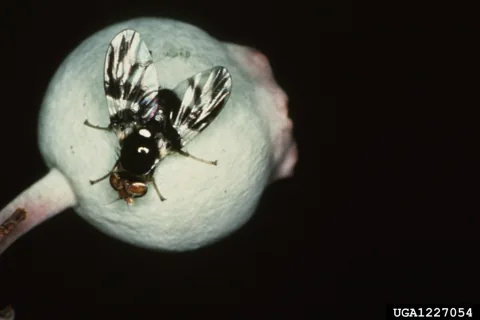 Blueberry Maggot
Rhagoletis mendax
The blueberry maggot (blueberry fruit fly) is a small black fruit fly with white markings and dark zigzag-banded wings. Its white, legless maggots feed inside ripening blueberries.
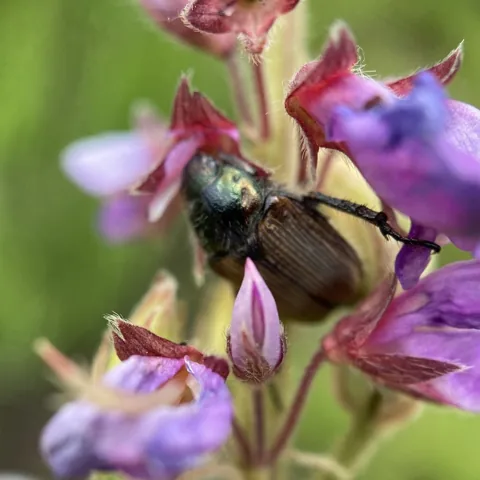 Spring Rose Beetle
Strigoderma arbicola (often written arboricola)
The spring rose beetle (false Japanese beetle) is a scarab about half an inch long that chews the flowers of roses, especially pale and white ones, and of iris, peony and lilies. Its grubs live in the soil and often attack crops grown in sandy soil, which is why it is also called the sand chafer.
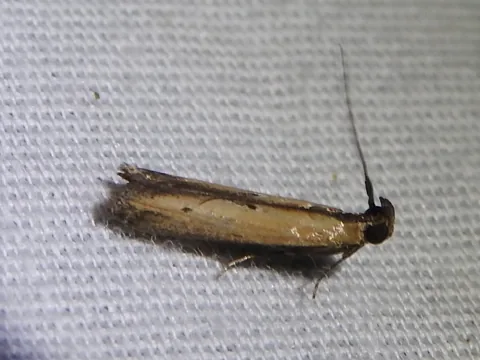 Lesser Cornstalk Borer
Elasmopalpus lignosellus (GBIF: E. lignosella)
The lesser cornstalk borer is a small moth whose slender, bluish-green caterpillars bore into plant stems at or just below the soil line from silk tubes that become covered in sand, making plants wilt. NC State says dry soils favor egg and larval survival, and the EFSA plant health panel says it survives well in dry, hot conditions and sandy soils.
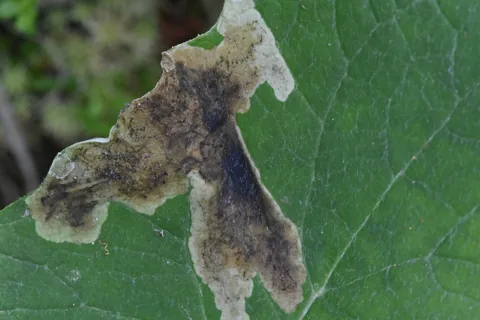 Spinach and Beet Leafminers
Pegomya hyoscyami and P. betae
Spinach and beet leafminers are two closely related flies whose whitish maggots feed between the upper and lower surfaces of spinach, chard, beet and related leaves. UMass says the two species generally can't be told apart in the field.
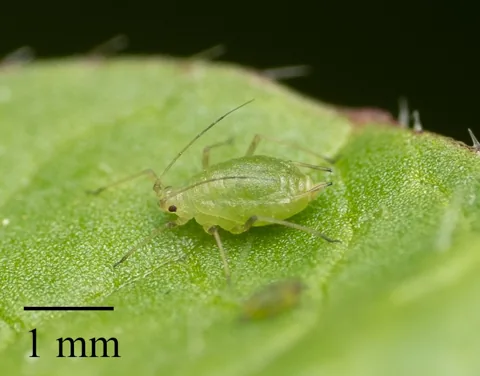 Green Peach Aphid
Myzus persicae
The green peach aphid is a small, pale green to yellowish aphid that overwinters on peach and other Prunus trees and spreads in summer to hundreds of vegetables, flowers and weeds. It carries many plant viruses and builds up so fast that it is a major greenhouse pest. UF/IFAS says many consider it the most important carrier of plant viruses in the world.
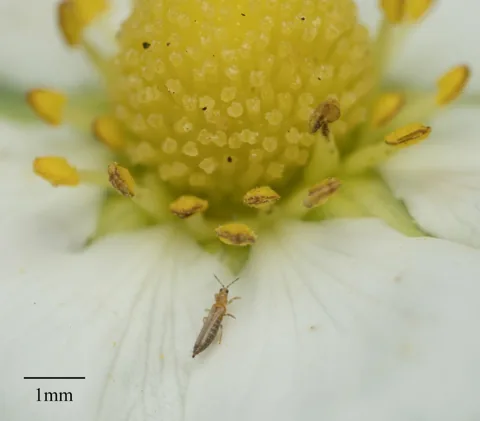 Western Flower Thrips
Frankliniella occidentalis
Western flower thrips are slender yellow to dark brown insects, about 1/16 inch long or smaller, that feed in flowers and buds and on fruit and leaves. Their feeding leaves silvery or pale scars and distorted growth, and they spread tospoviruses such as tomato spotted wilt and impatiens necrotic spot.
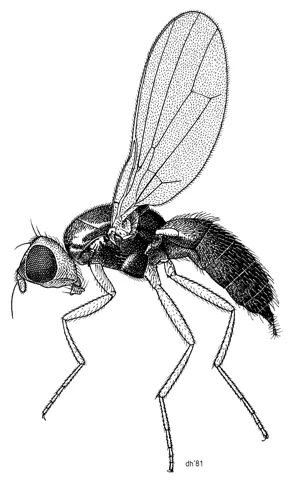 Carrot Rust Fly
Psila rosae (now often Chamaepsila rosae)
The carrot rust fly is a small, slender black fly whose creamy-white maggots tunnel into the roots of carrots, parsnips, celery and related plants, leaving tunnels filled with rusty-red frass.
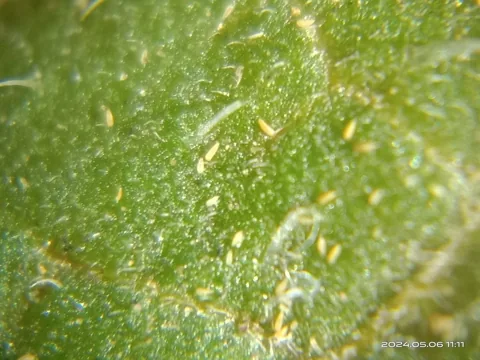 Tomato Russet Mite
Aculops lycopersici
The tomato russet mite is a mite too small to see without a strong lens, about 1/5 mm long, that can kill tomato plants: stems and lower leaves turn greasy-looking, then bronze, curl and dry, with damage moving up from the base in hot, dry weather. Start with clean transplants, keep nightshade-family weeds and petunias away from tomatoes and remove old plant debris. Once mites are present, UC IPM says sulfur dust and wettable sulfur are effective, and Utah State names sulfur and abamectin as the primary treatments.
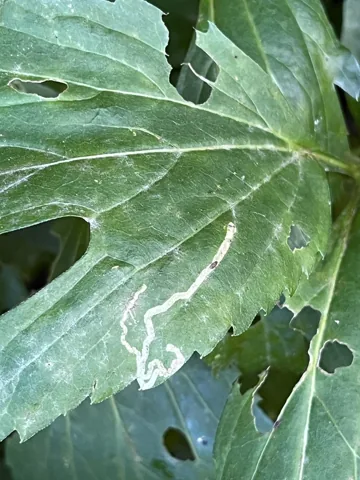 American Serpentine Leafminer
Liriomyza trifolii
The American serpentine leafminer is a tiny fly whose maggots tunnel winding, whitish trails through the leaves of many vegetables and garden flowers.
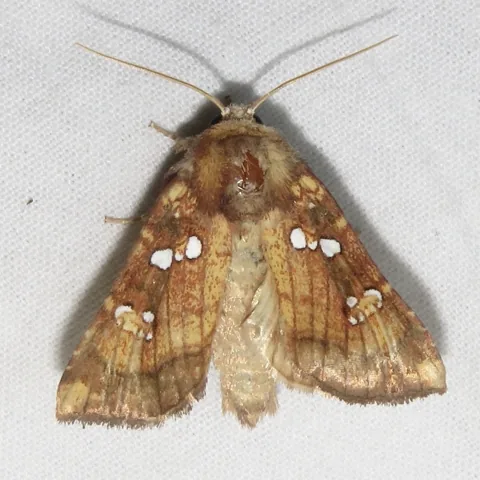 Common Stalk Borer
Papaipema nebris
The common stalk borer (Papaipema nebris) is a striped caterpillar that tunnels inside the stems of garden plants, corn and weeds, making them wilt and die. None of these sources reports harm to people or pets. Sprays cannot reach it once it is inside a stem, so the best defense is keeping grassy weeds mowed, slicing borers out by hand and removing wilted plants.
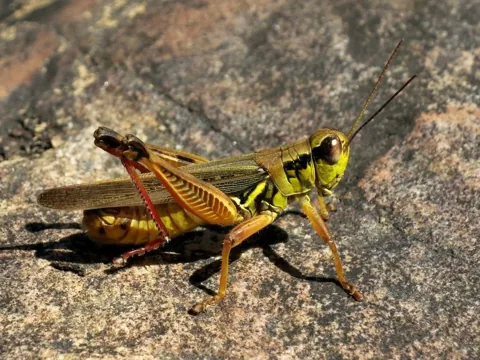 Red-Legged Grasshopper
Melanoplus femurrubrum
The red-legged grasshopper is a common, inch-long grasshopper with red hind legs that feeds on many garden plants and weeds. It is harmless to people and pets. Control works best in spring on young hoppers near the sites where eggs were laid; once adults fly in, sprays often fail and need repeating.
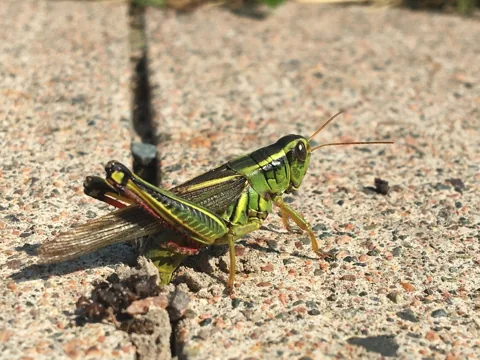 Twostriped Grasshopper
Melanoplus bivittatus
The twostriped grasshopper is a large grasshopper, one of the two largest of its genus in Nebraska, with two pale yellow stripes running from the head to the wing tips. It eats many kinds of plants, moves into gardens from weedy roadsides and empty lots, and in Colorado is often the most common grasshopper damaging gardens.
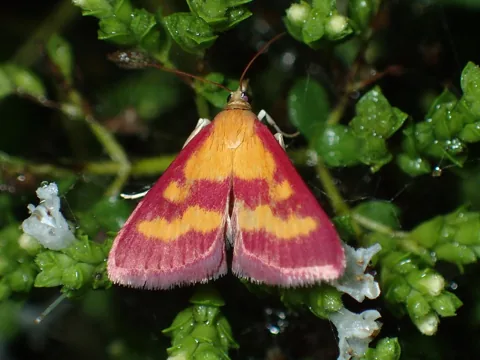 Southern Purple Mint Moth
Pyrausta laticlavia
The southern purple mint moth is a small native moth whose caterpillars, called rosemary webworms, web together and kill the foliage of rosemary.
No photo yet
Bulb Mites
Rhizoglyphus
Bulb mites are tiny, shiny, creamy-white mites, about 0.5 to 1 mm long, that cluster in damaged spots under the root plate of bulbs, cloves and corms. They are harmless to people and pets. On their own they do limited harm, but they open wounds that let root-rot fungi in, and together mites and fungi can turn a bulb into rotten pulp. To get rid of them: plant only clean, firm bulbs and cloves, handle them gently, discard spongy or infested bulbs, rotate onion and garlic beds, and let old plant debris rot down before replanting.
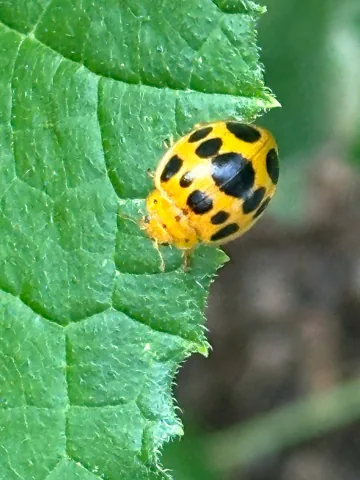 Squash Beetle
Epilachna borealis
The squash beetle is a plant-eating lady beetle. While most lady beetles hunt aphids and other small insects, adults and larvae of this one chew the leaves of squash, zucchini, cucumber and pumpkin.
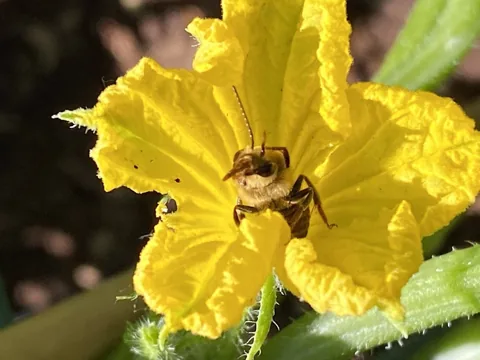 Squash Bees
Xenoglossa pruinosa (formerly Peponapis pruinosa)
Squash bees are native, solitary bees that collect pollen only from squash, pumpkin and gourd flowers, and they are usually the first bees in the blossoms at sunrise.
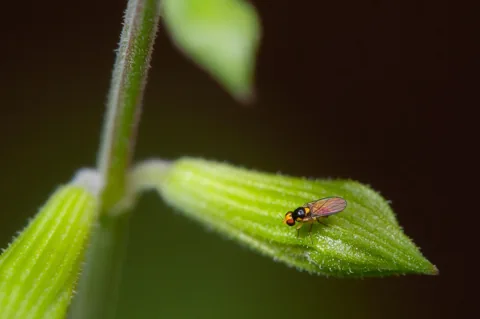 Vegetable Leafminer
Liriomyza sativae
The vegetable leafminer is a tiny fly whose maggots tunnel winding mines through the leaves of tomatoes, melons, beans and many other vegetables. It is native to the Americas and has spread to Africa, Asia and Oceania.
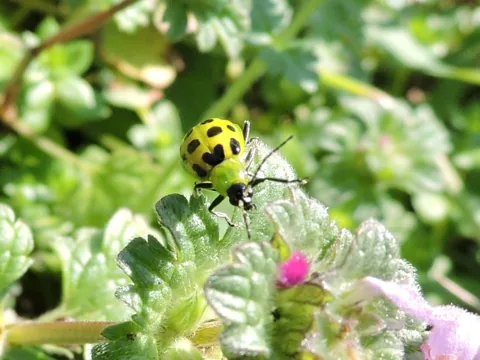 Spotted Cucumber Beetle
Diabrotica undecimpunctata
The spotted cucumber beetle, also called the southern corn rootworm, is a yellow-green beetle with 12 black spots. Adults feed on cucurbits and many other plants and can carry bacterial wilt into cucumbers and muskmelons.
No photo yet
Onion Maggot
Delia antiqua
The onion maggot is the larva of a small gray fly; it feeds below ground on onions and their relatives, killing seedlings and tunneling into bulbs that later rot.
No photo yet
Onion Thrips
Thrips tabaci
Onion thrips are tiny, pale insects that hide in the necks of onion plants and rasp the youngest leaves, leaving white to silvery streaks and, when numbers are high, smaller bulbs. None of these sources reports harm to people or pets. To manage them, keep onions away from alfalfa and grain, use straw mulch and overhead watering, protect natural enemies, and spray only when counts pass a threshold.
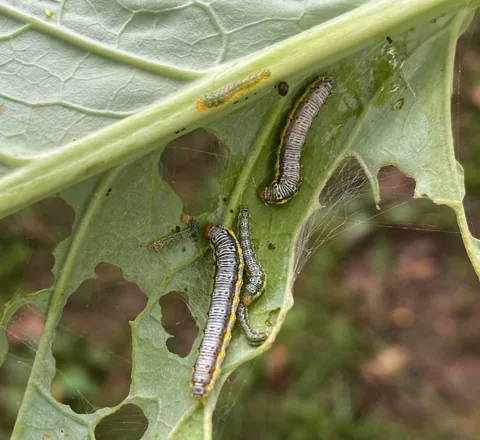 Cross-Striped Cabbageworm
Evergestis rimosalis
The cross-striped cabbageworm is a moth caterpillar that feeds on cabbage, collards, broccoli and other brassicas. Because the moths lay their eggs in clusters, one plant can carry many caterpillars that riddle the leaves and bore into the heads while the plant next to it is left alone.
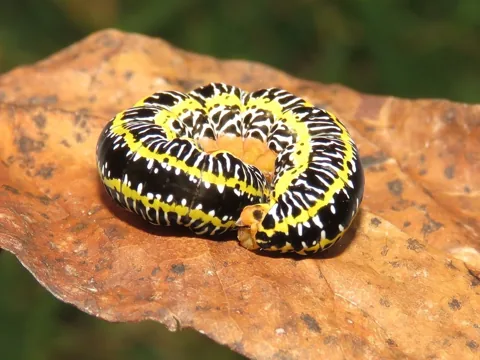 Zebra Caterpillar
Melanchra picta
The zebra caterpillar is a boldly striped moth caterpillar that feeds on many vegetables, flowers and small fruits. The young caterpillars feed in groups and skeletonize leaves before they spread out, but it is generally not considered a serious pest.
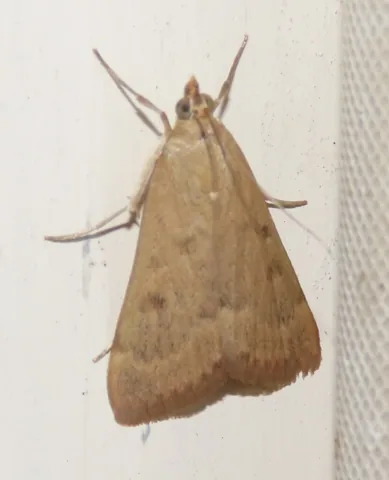 Garden Webworm
Achyra rantalis
The garden webworm is a small, spotted caterpillar that ties leaves together with silk and feeds inside, skeletonizing soybeans, alfalfa, many vegetables and weeds; badly damaged plants end up covered in webbing. It is usually an occasional pest.
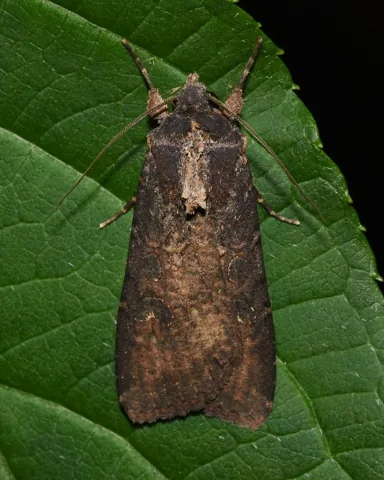 Variegated Cutworm
Peridroma saucia
The variegated cutworm, nicknamed the climbing cutworm, is a plump moth caterpillar that climbs plants at night to eat leaves, flowers, buds and fruit. Minnesota Extension says it also cuts seedlings off near the soil line, while Iowa State says it doesn't clip plants at ground level the way most cutworms do.
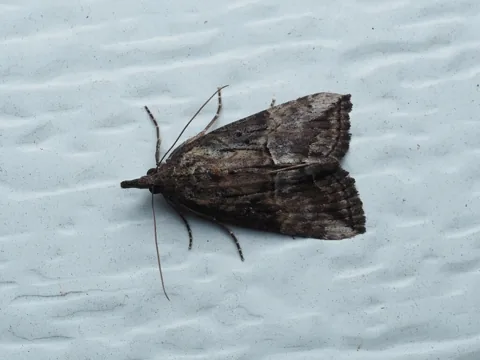 Green Cloverworm
Hypena scabra
The green cloverworm is a slender green caterpillar with a white stripe along each side that chews the leaves of soybeans, beans, alfalfa, clover and other legumes; it is common but rarely does enough damage to need control.
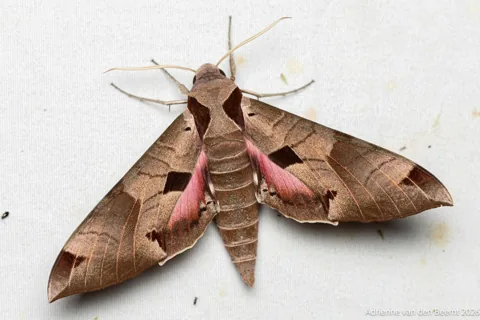 Achemon Sphinx
Eumorpha achemon
The achemon sphinx, also called the grape sphinx, is a large sphinx moth whose hornworm caterpillars, up to about 3.5 inches long, feed on grape and Virginia creeper leaves.
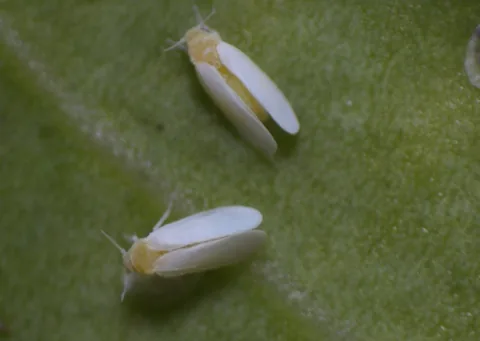 Silverleaf Whitefly
Bemisia tabaci (the B biotype is also called Bemisia argentifolii)
The silverleaf whitefly, also called the sweetpotato whitefly, is a tiny yellowish whitefly that can feed on more than 500 kinds of plants, from ornamentals to warm-season vegetables, weakening plants, coating leaves with honeydew and sooty mold, and spreading plant viruses.
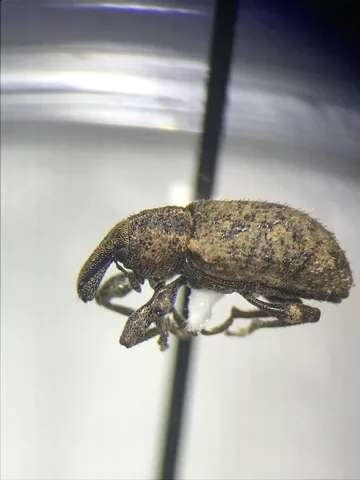 Carrot Weevil
Listronotus oregonensis
The carrot weevil is a small, snouted brown beetle whose legless grubs tunnel into the roots and crowns of carrots, parsley, celery and parsnips, often killing the plants.
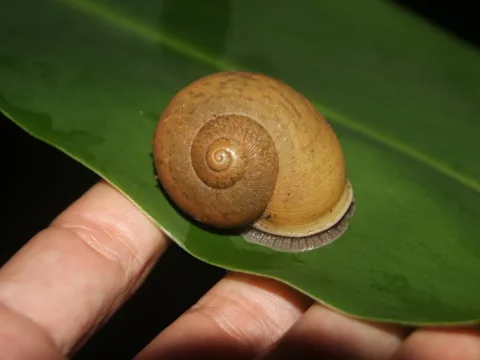 Cuban Brown Snail
Zachrysia provisoria
The Cuban brown snail, also called garden zachrysia, is an invasive land snail about 1 inch across that feeds at night on ornamental plants and garden vegetables. It is also a known host of rat lungworm, a parasite that can make people sick.
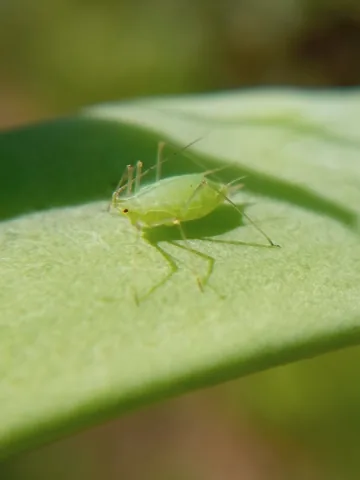 Pea Aphid
Acyrthosiphon pisum
The pea aphid is a green, long-legged aphid that's the main aphid on peas, and it also feeds on fava beans, lentils, alfalfa, vetch and clover. Besides sucking sap, it spreads several legume viruses.
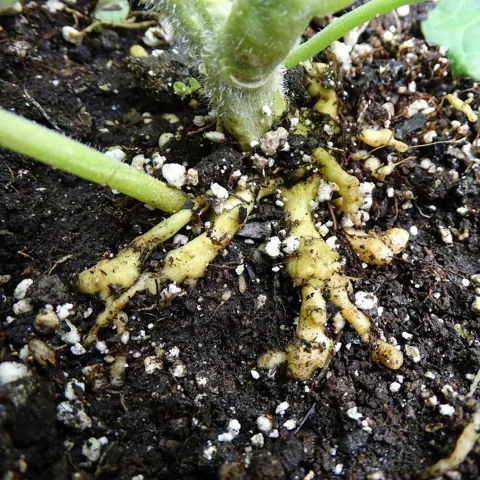 Root-Knot Nematodes
Meloidogyne spp. (most often M. incognita in South Carolina gardens)
Root-knot nematodes are microscopic roundworms in the soil that feed inside plant roots and make them swell into knots and galls, leaving tomatoes, okra, beans, squash and many other plants stunted and quick to wilt.
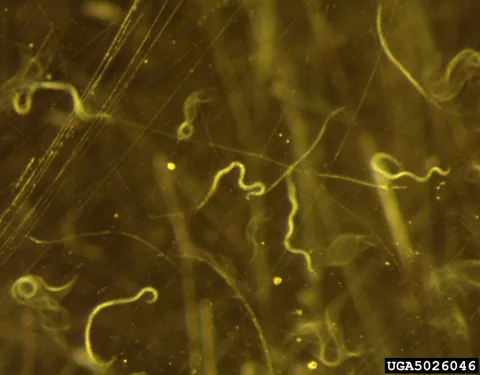 Foliar Nematodes
Aphelenchoides spp. (including A. fragariae and A. ritzemabosi)
Foliar nematodes are microscopic roundworms in the genus Aphelenchoides that live inside the leaves of hostas, ferns, anemones and hundreds of other plants, leaving yellow, then brown, patches and stripes bounded by the leaf veins.
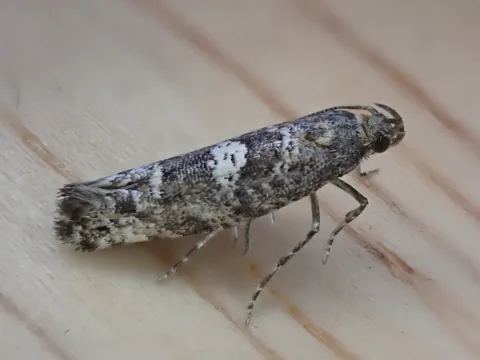 Leek Moth
Acrolepiopsis assectella
The leek moth is a small moth from Europe whose caterpillars mine the leaves of leeks, garlic, onions, chives and shallots, leaving windowpane damage. In North America it was first found in Ontario in 1993 and in the United States in 2009, and it has since spread through northern New York and into northern New England.
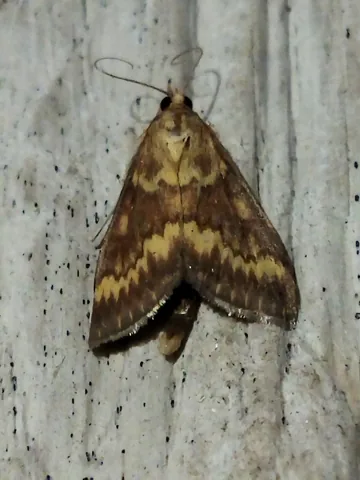 European corn borer
Ostrinia nubilalis
The European corn borer is a moth whose caterpillars tunnel into the stalks, ears, fruit and stems of more than 200 kinds of plants. Gardeners meet it most in sweet corn and peppers, and it also bores into flowers such as chrysanthemums and dahlias.
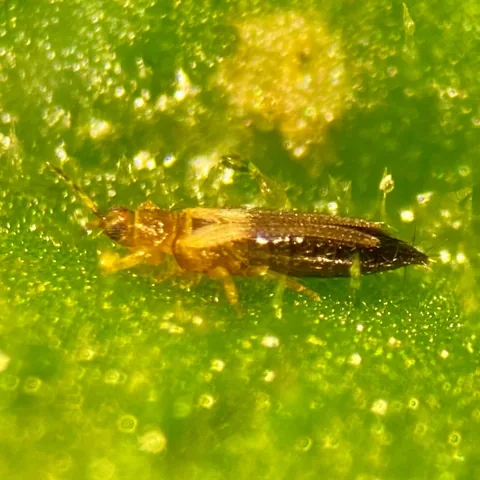 Thrips parvispinus
Thrips parvispinus is an invasive thrips native to Southeast Asia that feeds on a wide range of plants and damages peppers and tropical ornamentals such as gardenia, mandevilla and hibiscus. It became established in Florida in 2020 and has since been detected in other states, and a Southern California survey found it on nursery stock in retail stores.
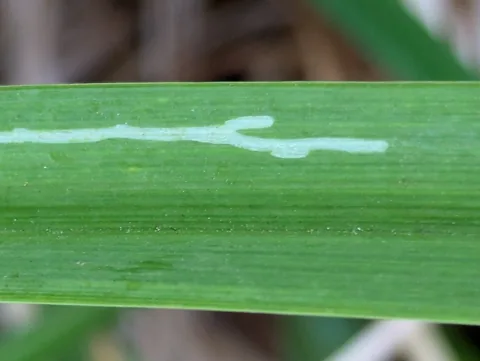 Daylily leafminer
Ophiomyia kwansonis
The daylily leafminer is a tiny black fly from Japan and Taiwan whose maggots tunnel through daylily leaves, leaving long pale lines. It was first confirmed in North America in 2011 and mostly disfigures the leaves rather than harming the plants.
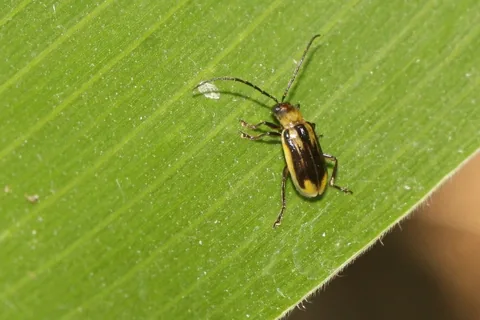 Corn rootworms
Diabrotica virgifera (western corn rootworm) and Diabrotica barberi (northern corn rootworm)
Corn rootworms are small beetles whose white larvae feed on corn roots, and across the US Corn Belt they are the number one group of corn insect pests. In gardens, the adult beetles also chew the silks of sweet corn and the blossoms of squash and cucumbers.
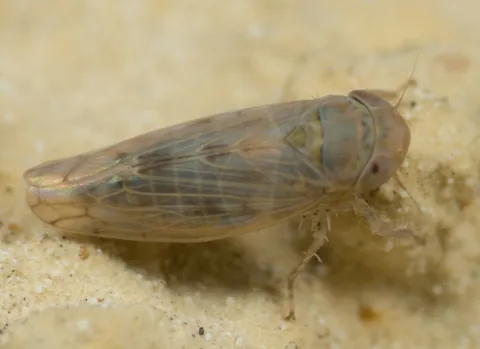 Beet leafhopper
Neoaliturus tenellus (formerly Circulifer tenellus)
The beet leafhopper is a small, pale, wedge-shaped leafhopper whose feeding spreads curly top virus, which leaves tomatoes, peppers, beets and beans curled, yellowed and stunted. It is the only insect known to carry the virus, and an infected leafhopper can pass it on within minutes of feeding. In gardens, the fixes are weed control, row covers or netted cages over young plants, and pulling infected plants; sprays work poorly.
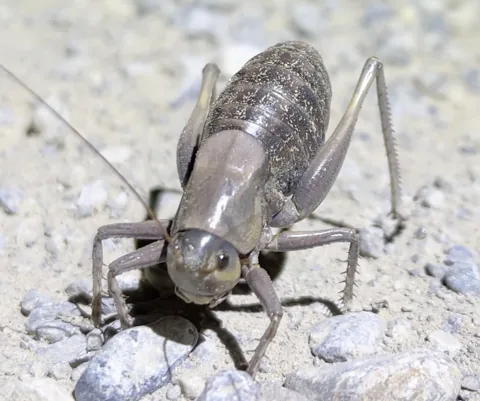 Mormon cricket
Anabrus simplex
The Mormon cricket is not a true cricket but a large, flightless shield-backed katydid of western rangelands. In outbreak years it forms huge bands that walk and hop across the land, eating forage, crops and garden vegetables in their path.
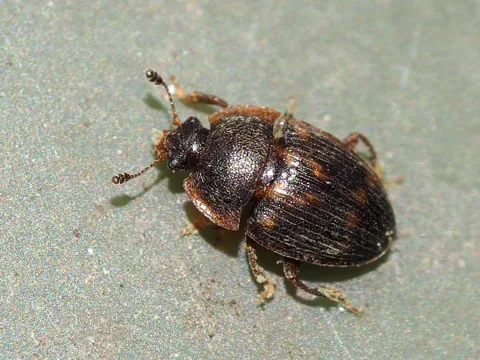 Strawberry sap beetle
Stelidota geminata
The strawberry sap beetle is a tiny, mottled brown beetle, less than 1/8 inch long, that moves into strawberry plantings as the berries ripen and chews holes and cavities in ripe and overripe fruit. The adults drop and scurry away when a berry is disturbed, and they spread rot organisms and fungi from fruit to fruit.
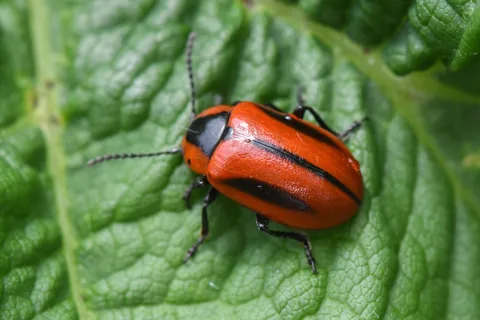 Red turnip beetle
Entomoscelis americana
The red turnip beetle is a bright red beetle with three black stripes down its back that feeds only on turnip, radish, mustard, canola and other plants in the mustard family. Both the larvae and the adults chew seedlings, and heavy infestations can strip and kill young plants. To get rid of it, control mustard-family weeds and volunteer plants, cultivate after harvest to bury the overwintering eggs, and if adults invade new seedlings in June, treat only the field margins where they walk in.
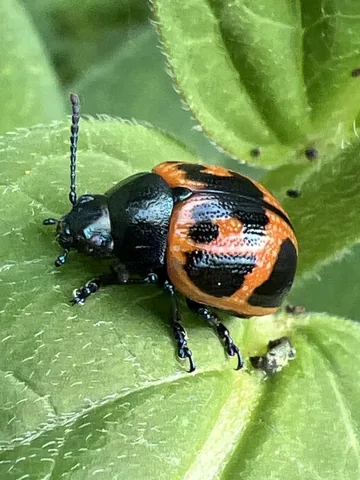 Swamp milkweed leaf beetle
Labidomera clivicollis
The swamp milkweed leaf beetle is a round, orange-and-black leaf beetle found on milkweeds, especially swamp milkweed. Adults and larvae feed on the leaves, and the adults first clip the leaf veins to drain off the plant's sticky, toxic sap.
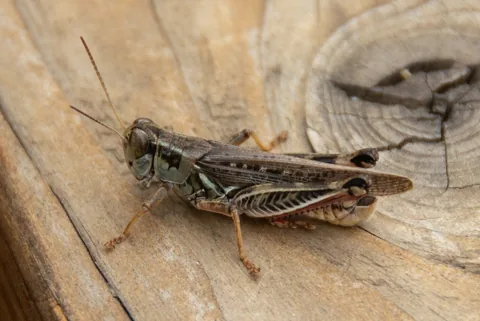 Migratory grasshopper
Melanoplus sanguinipes
The migratory grasshopper is a medium-sized, reddish-brown spur-throated grasshopper that causes more crop damage than any other grasshopper species in the United States, and Alberta calls it one of the most destructive pests in western Canada. Outbreaks that build on weedy rangeland and idle cropland can take off in swarms and land on crops, rangeland or city gardens miles away.
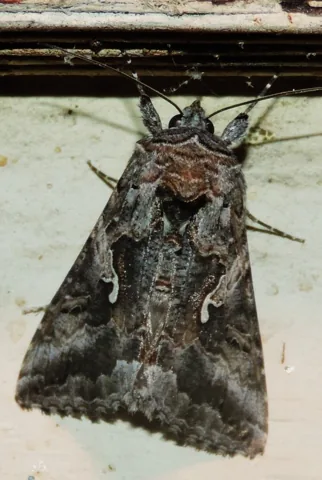 Alfalfa Looper
Autographa californica
The alfalfa looper is a pale green caterpillar that arches its back as it crawls, like an inchworm. It chews ragged holes in the leaves of alfalfa, mint, peas, beans, potatoes, sugarbeets and spinach, fouls the heads of cole crops, and grows into a gray-brown moth with a pale mark on each forewing.
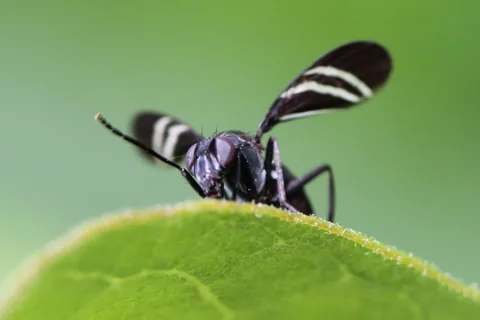 Black Onion Fly
Tritoxa flexa
The black onion fly is a black picture-winged fly about the size of a house fly, with three white bands across each dark wing. Its maggots feed inside the bulbs of onions, garlic and ornamental alliums. An infested plant can't be saved, so the goal is to protect the rest of the bed: NC State suggests a pyrethroid spray on the remaining foliage to repel egg-laying adults, or an imidacloprid drench when a few plants in a bed are infested.
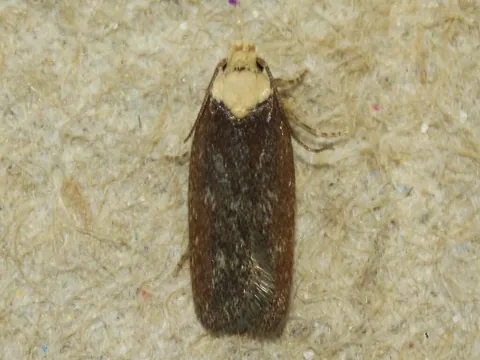 Purple Carrot-seed Moth
Depressaria depressana
The purple carrot-seed moth is a small moth from Europe and Asia, first found in North America around 2008, whose caterpillars web together and eat the flower heads and unripe seeds of dill and other plants in the carrot family.
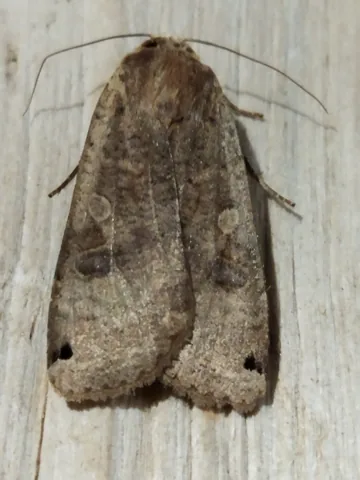 Large Yellow Underwing
Noctua pronuba
The large yellow underwing is an accidentally introduced moth named for the bright yellow to orange hindwings it flashes in flight. Its larvae, known as winter cutworms, tolerate cold and keep feeding through fall and winter, moving in groups like armyworms and cutting down lawns, gardens and crops.
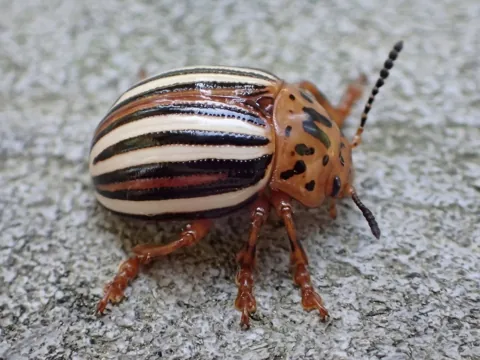 False potato beetle
Leptinotarsa juncta
The false potato beetle (Leptinotarsa juncta) is a striped leaf beetle native to the eastern United States that is easily mistaken for the Colorado potato beetle. It feeds mostly on horsenettle and related weeds, and although it can feed on potato, it cannot complete its life cycle on that crop.
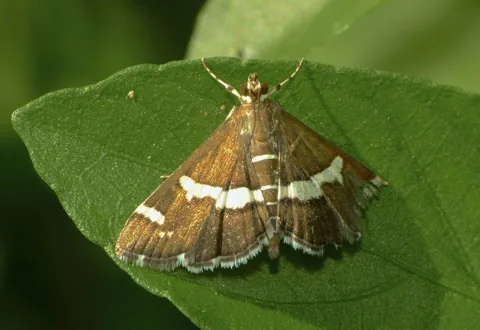 Hawaiian Beet Webworm
Spoladea recurvalis
The Hawaiian beet webworm is a small brownish gray moth whose caterpillars feed on beets, spinach, lambsquarters and pigweeds. It can't survive New England winters, but it breeds year-round farther south and moves north as the season warms, and its caterpillars can strip a field's foliage in a short time.
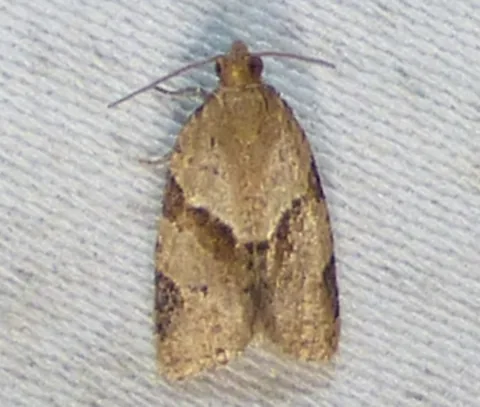 Garden Tortrix
Clepsis peritana
The garden tortrix is one of the most common and widespread leafroller moths in North America. Its caterpillars live in silk tubes and mostly eat dead or decaying leaves, which makes them useful recyclers early in the season, but they also web leaves to strawberries and chew holes in berries that rest on the ground, and in citrus groves they can damage fruit near the ground or already dropped. Neither UC IPM nor USDA mentions any risk to people. Where it is a problem, UC IPM's first steps are clearing leaf and fruit litter from under strawberry plants and picking out rolled leaves and damaged berries, with sprays such as Bt or spinosad aimed into the litter if needed.
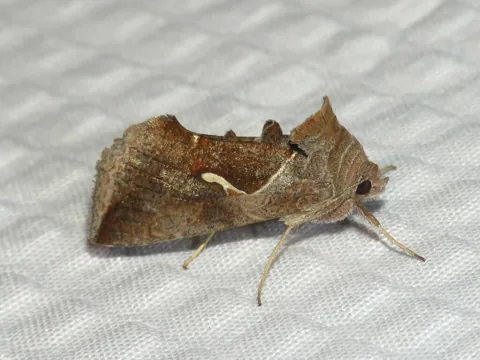 Celery Looper
Anagrapha falcifera
The celery looper is an owlet moth that looks like a dead leaf when it rests. Its pale green caterpillars walk like inchworms and feed on a great variety of herbaceous plants, including beet, blueberry, cabbage, carrot, corn, lettuce and celery, as well as wild clovers, plantains and viburnums.
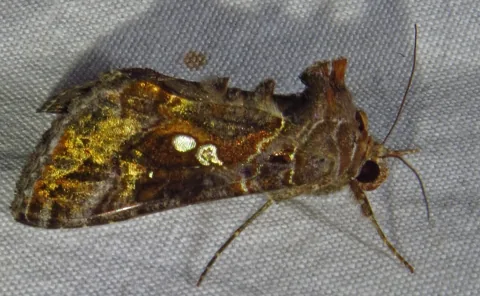 Soybean Looper
Chrysodeixis includens
The soybean looper (Chrysodeixis includens) is a light to dark green caterpillar with white stripes, named for its preferred host and for the looping motion it makes as it moves. University of Florida Extension says it is often confused with the cabbage looper. Besides soybean it feeds on cotton, peanut, tomato, sunflower, tobacco and many vegetable and flower crops. In the United States it overwinters only in south Florida and south Texas and spreads north each season, and it has become resistant to several kinds of insecticides.
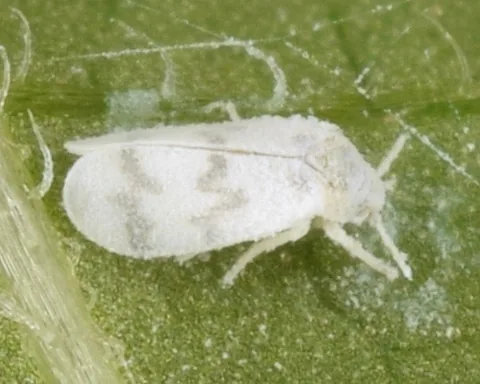 Bandedwinged whitefly
Trialeurodes abutiloneus
The bandedwinged whitefly is a native whitefly that feeds on a very wide range of plants, from velvetleaf and ragweed to cotton, cucurbits, geraniums and poinsettias. Two zigzag bands across the adult's wings set it apart from the plain white greenhouse whitefly. Once a serious pest of ornamentals, it is now an occasional one that moves from weeds into landscapes and greenhouses, and it can spread tomato chlorosis virus.
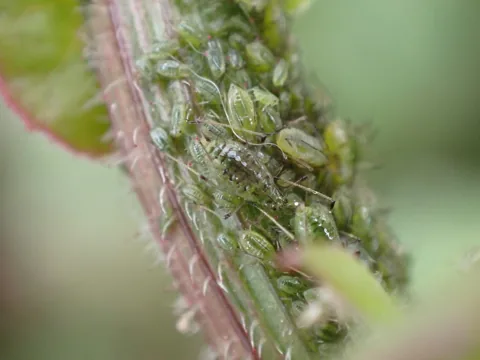 Lettuce aphid
Nasonovia ribisnigri
The lettuce aphid, also called the currant-lettuce aphid, is a worldwide pest that feeds deep inside lettuce plants, almost always at the heart of head lettuce. Its short life cycle lets numbers build quickly, and its hiding place makes it hard to control.
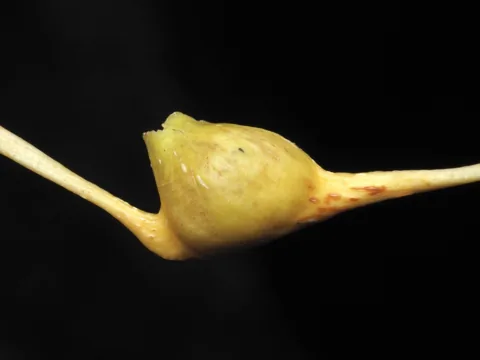 Lettuce root aphid
Pemphigus bursarius
The lettuce root aphid lives out of sight on lettuce roots, in clustered colonies covered with white powdery wax. It is a serious pest mostly where lettuce grows near Lombardy poplars, the trees it uses as a winter host, and once a crop is infested no insecticide will control it.
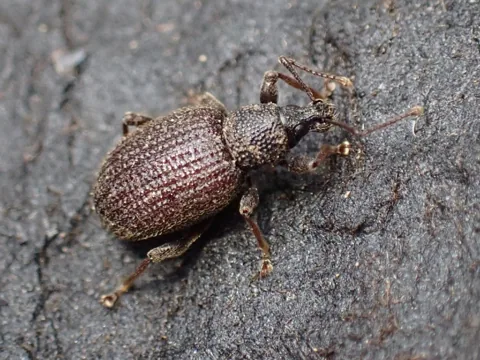 Rough strawberry root weevil
Otiorhynchus rugosostriatus
The rough strawberry root weevil, Otiorhynchus rugosostriatus, is a small, chocolate-brown snout beetle that cannot fly. It does not harm people or pets, but its C-shaped grubs tunnel in the roots and crowns of strawberries and other plants, while the adults chew notches in leaf edges at night and sometimes wander into homes. Indoors, sweep or vacuum them up and seal entry gaps; outdoors, hand-picking, nematodes and well-timed sprays protect plants.
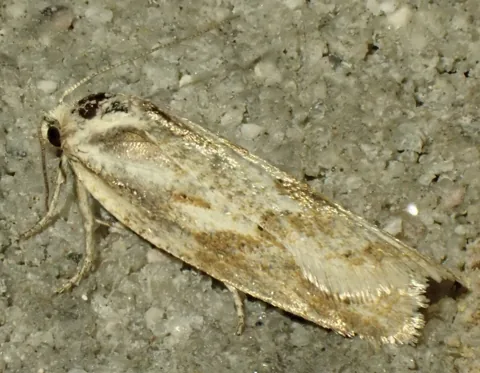 Omnivorous Leaftier
Cnephasia longana
The omnivorous leaftier (Cnephasia longana) is a small moth native to Europe, northwestern Africa and Asia that was introduced into western North America in the late 1920s. Its caterpillars feed on a long list of herbaceous plants; on strawberries they web the leaves and flowers together and tunnel into green and ripe berries.
No photo yet
Sugarbeet root aphid
Pemphigus betae
The sugarbeet root aphid is a pinhead-sized, pale aphid that lives on beet roots under a coat of white wax that can look like mold. Heavy infestations wilt plants in patches and cut sugarbeet yields, and because it hides in the soil it is hard to reach with insecticides, so management relies on rotation, sanitation and good irrigation.
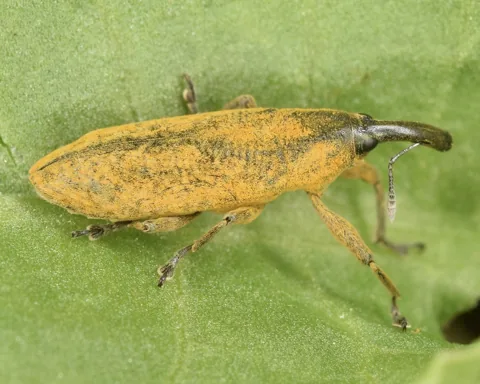 Rhubarb curculio
Lixus concavus
The rhubarb curculio, Lixus concavus, also called the rhubarb weevil, is a North American weevil that originally fed on wild docks and took to rhubarb after rhubarb arrived from Europe. Adults chew notches and pits in rhubarb stalks, but eggs laid in rhubarb are crushed by the growing stalk, so the insect breeds in nearby weeds. It is a sporadic pest that is easy to manage without insecticides.
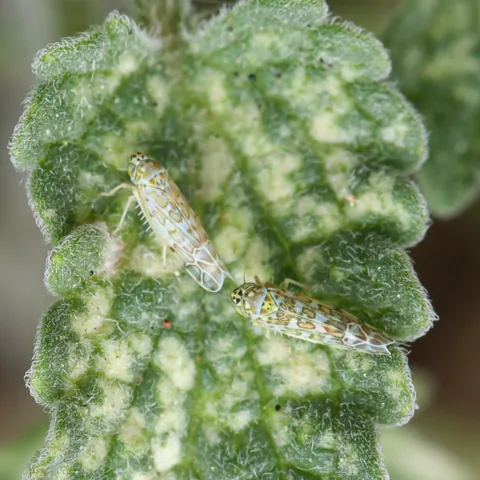 Ligurian leafhopper
Eupteryx decemnotata
The Ligurian leafhopper, Eupteryx decemnotata, is a tiny Mediterranean leafhopper and an important pest of herbs in the mint family, such as sage, rosemary, basil, oregano, thyme and mint. Its feeding leaves pale stippling and yellowing that can be mistaken for thrips or mite damage. It has spread across Europe, has been reported from several US states, was first detected in Oregon in 2020 and has since been recorded in Argentina.
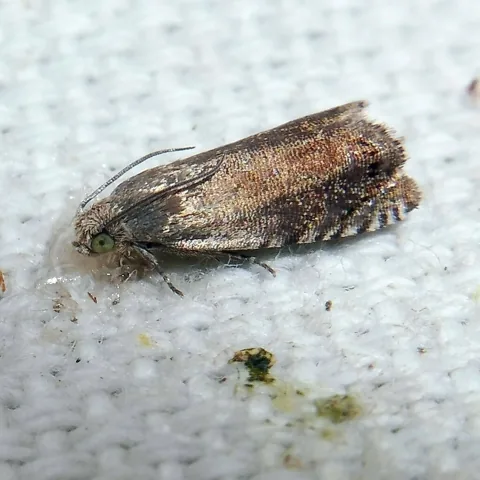 Pea Moth
Cydia nigricana
The pea moth (Cydia nigricana) is a small moth whose caterpillars bore into pea pods and eat the developing seeds. The entry hole is almost too small to see, so most gardeners only find the problem when they shell mature peas and turn up a pale caterpillar, droppings and hollowed seeds.
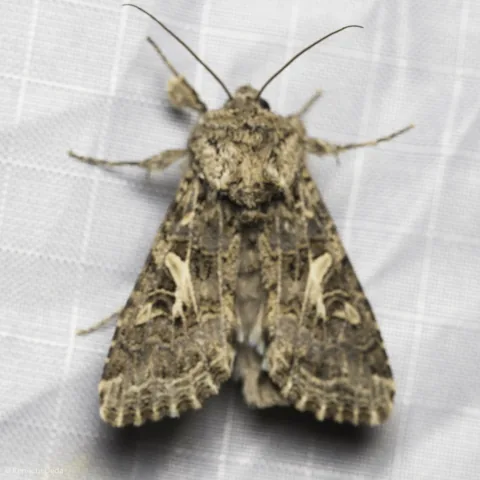 Western Yellowstriped Armyworm
Spodoptera praefica
The western yellowstriped armyworm (Spodoptera praefica) is a black caterpillar with bright yellow side stripes that chews alfalfa, tomatoes, lentils, grass hay and other crops in the West. Natural enemies often keep it in check; in gardens, pull weeds that feed it, check plants early and spray Bt or spinosad while caterpillars are small.
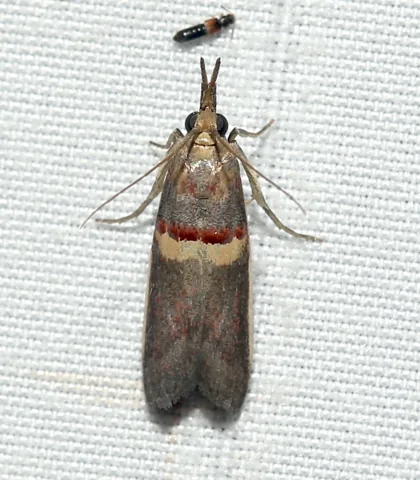 Lima Bean Pod Borer
Etiella zinckenella
The lima bean pod borer (Etiella zinckenella) is a small moth whose caterpillars chew into lima bean pods and eat the developing beans. It has been one of the most serious insect pests of lima beans in California, it has damaged bush limas in the Columbia Basin, and it breeds on wild lupines between crops.
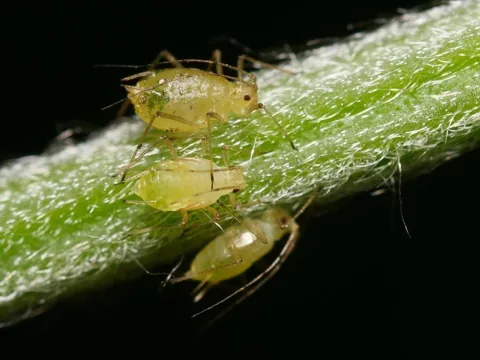 Foxglove aphid
Aulacorthum solani
The foxglove aphid, also called the glasshouse-potato aphid, is one of the most widely distributed aphids and feeds on plants in more than 82 families. It is a pest of greenhouse flowers such as geraniums and of crops including peppers, tomatoes, potatoes and soybeans, and it tends to distort leaves more than many other aphids.
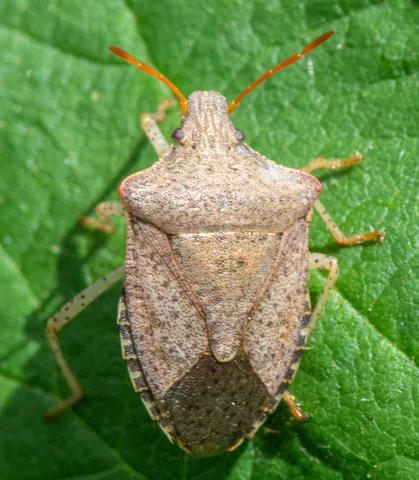 Consperse stink bug
Euschistus conspersus
The consperse stink bug is a native, shield-shaped stink bug about half an inch long that is the most common stink bug on California tomatoes and a pest of apples in the Pacific Northwest. Its feeding leaves pinprick spots on tomatoes and dimpled, corky patches on apples.
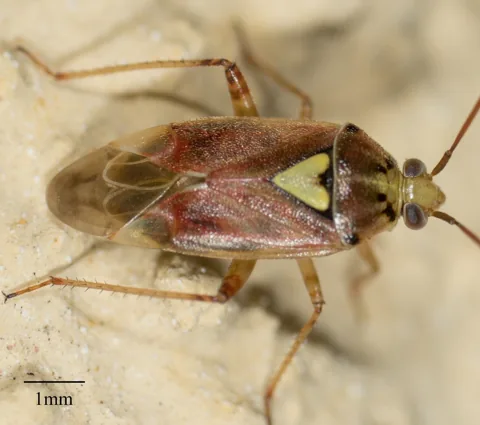 Western tarnished plant bug
Lygus hesperus
The western tarnished plant bug, usually just called the lygus bug, feeds on many crops and weeds. Oregon State lists lygus bugs as pests of strawberries, tree fruit, alfalfa and seed crops in the Pacific Northwest, and UC IPM calls this species a serious strawberry pest on California's Central Coast. In strawberries it punctures the seeds, which stops the berry from developing around them and leaves misshapen, cat-faced fruit.
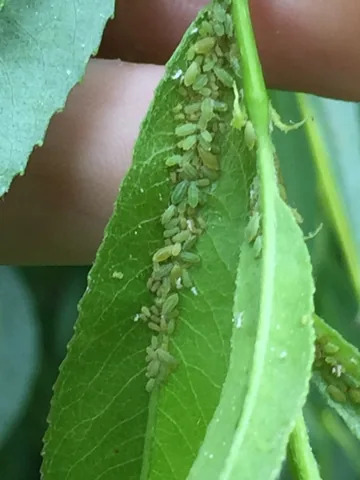 Willow-carrot aphid
Cavariella aegopodii
The willow-carrot aphid is a pale greenish-yellow aphid that alternates between willows and plants in the carrot family. In summer it feeds on carrots, celery, parsley, dill and fennel, and it matters most because it can spread plant viruses.
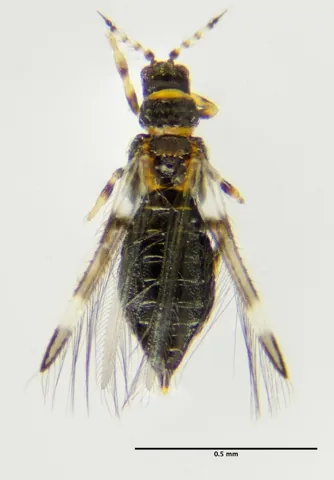 Bean thrips
Caliothrips fasciatus
Bean thrips, Caliothrips fasciatus, is a tiny dark thrips with white wing bands, native to North America and western Mexico. It feeds on beans and many other crops and weeds, leaving silvered, bronzed or browned leaves, and in California the adults crawl into the navels of oranges to spend the winter, which makes it a quarantine problem for fruit exports.
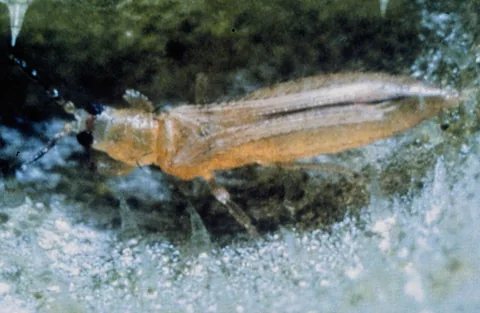 Melon thrips
Thrips palmi
Melon thrips, Thrips palmi, is a tiny, clear yellow thrips, described in 1925 from Sumatra, that has become a serious pest of vegetables in warm regions. It is not a pest of people: it sucks sap from cucumbers, melons, squash, eggplant, peppers and beans, silvering or bronzing the leaves and scarring fruit, and it can spread several plant viruses. In the United States EPPO lists it from Florida and Hawaii. It is hard to control with sprays, so growers lean on reflective mulch, natural enemies and spraying only when needed with products that spare those enemies.
No photo yet
Bean flower thrips
Megalurothrips usitatus
The bean flower thrips, Megalurothrips usitatus, also called the Asian bean thrips or oriental bean thrips, is a dark thrips that is a serious pest of beans and other legumes across Asia. Florida's Division of Plant Industry reported it as the first record in the continental United States after a 2020 sample from snap beans in Miami-Dade County. Larvae and adults feed on flowers, buds, leaves and pods, and a severe infestation can cause total crop loss.
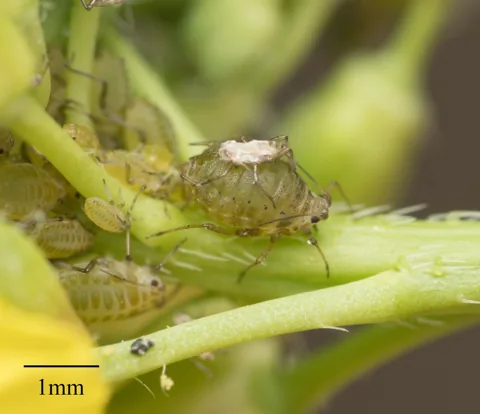 Turnip aphid
Lipaphis pseudobrassicae
The turnip aphid, also called the mustard aphid, is a dark to olive green aphid found worldwide on cabbage, turnip, radish, mustards and other members of the mustard family. It has been implicated in spreading at least 16 plant viruses, and when it feeds on the roots of cole crops it can stunt or even kill the plants.
No photo yet
Common blossom thrips
Frankliniella schultzei
The common blossom thrips, Frankliniella schultzei, is a tiny flower thrips found in tropical and subtropical areas around the world. It feeds mostly on petal tissue and pollen, and it is an important carrier of tospoviruses on many crops. UF/IFAS calls it a relatively new vegetable pest in south Florida and a key pest of tomato and cucumber fields in South America; in the United States it has been reported from central and southern Florida, Colorado and Hawaii.
No photo yet
Mint aphid
Ovatus crataegarius
The mint aphid is a small apple-green to yellow-green aphid that feeds on mint and on rose-family plants such as apple and quince. Large colonies stunt and distort mint stems and leaves, and the aphid can spread a virus between mint plants.
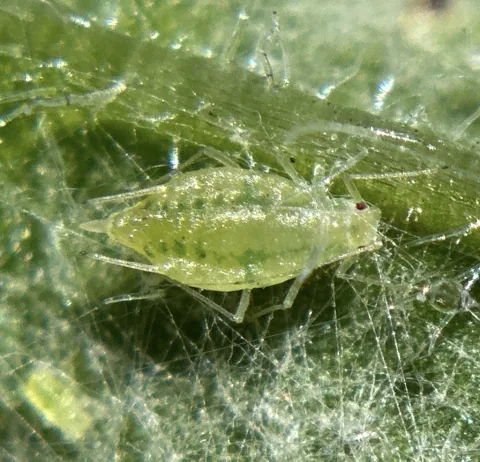 Artichoke aphid
Capitophorus elaeagni
The artichoke aphid is a pale, almost translucent aphid that spends the winter on Russian olive and related shrubs and moves to thistles and artichokes in summer. On artichokes, large numbers stunt the plants, deform the buds and leave a heavy coat of honeydew and sooty mold.
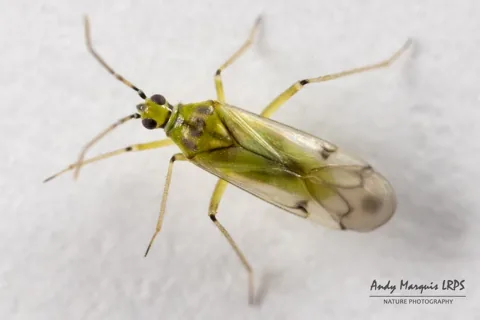 Tomato mirid
Nesidiocoris tenuis
Nesidiocoris tenuis, called the tomato bug or tomato mirid, is a small, slender green plant bug that preys on whiteflies, thrips, aphids, mites and the eggs and larvae of tomato caterpillars, including the tomato leafminer Tuta absoluta. When prey is scarce it feeds on the plants themselves, so it is released as a biological control agent in some places and treated as a tomato pest in others.
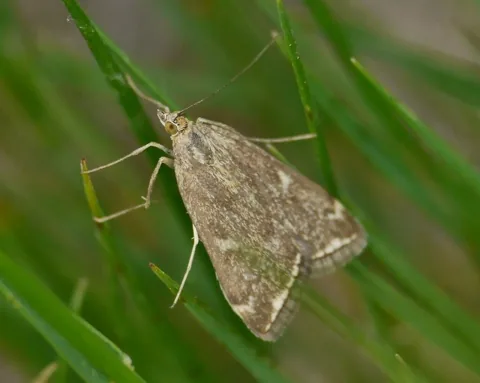 Beet Webworm
Loxostege sticticalis
The beet webworm (Loxostege sticticalis) is a moth whose caterpillars skeletonize leaves and web them together into tubes where they hide. UC IPM covers it as an occasional pest of sugarbeets that can completely defoliate a field in a very short time, and the Pacific Northwest handbook covers it as a pest of clover hay.
No photo yet
Cornsilk Fly
Euxesta stigmatias
The cornsilk fly (Euxesta stigmatias) is one of the picture-winged flies (family Ulidiidae), known together as corn silk flies, that attack corn; 11 species are known to feed on corn plants, and UF/IFAS lists four that attack corn in Florida. Their maggots feed in the silk, the cob tip and the developing kernels, and in Florida these flies are the most damaging insect pests of fresh-market sweet corn.
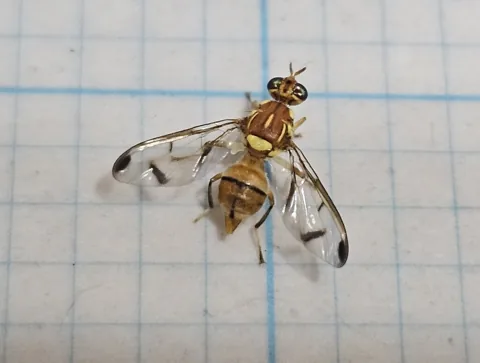 Melon Fly
Bactrocera cucurbitae
The melon fly (Bactrocera cucurbitae, also called Zeugodacus cucurbitae) is a fruit fly whose maggots tunnel in melons, cucumbers, squash and other crops; EPPO calls it a very serious pest of the fruits and flowers of cucurbits. It is native to Asia and established in Hawaii, but not on the US mainland: California has caught it sporadically since 1956 and eradicated every infestation.
No photo yet
Asparagus Miner
Ophiomyia simplex
The asparagus miner (Ophiomyia simplex) is a small fly brought to North America from Europe. It is found wherever asparagus grows and feeds on nothing else. Its maggots tunnel just under the surface of the stalks, mostly older stalks carrying ferns. The tunnels themselves do little harm, but the insect is linked to Fusarium, a fungus that causes crown and root rot.
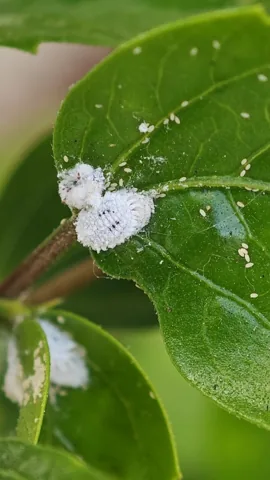 Cotton mealybug
Phenacoccus solenopsis
Cotton mealybug, also called solenopsis mealybug, was first described in 1898 from specimens collected in New Mexico alongside fire ants. It is a white, waxy, sap-sucking insect that feeds on plants in more than 240 genera, and since the mid-2000s it has become a damaging pest of cotton in Pakistan, India and China and of hibiscus, peppers and tomatoes in Israel. The sources describe it only as a plant pest and don't mention any risk to people. On garden plants, check new plants before buying, prune out infested shoots, hose off colonies, control ants and use insecticidal soap, oil or neem on the young stages.
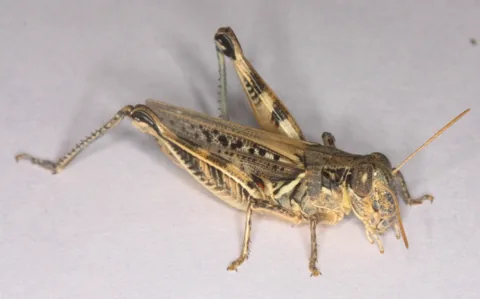 Devastating grasshopper
Melanoplus devastator
The devastating grasshopper is a gray-and-tan grasshopper of California's foothills. It eats plants, not people, so it is harmless to you, but in outbreak years bands of hungry nymphs and flying swarms of adults leave the dry range and strip gardens, orchards and crops. To protect a garden, keep a green trap border, cover prized plants with metal screening, handpick when numbers are low and, if you use an insecticide, put carbaryl bait around the garden edge before the grasshoppers arrive.
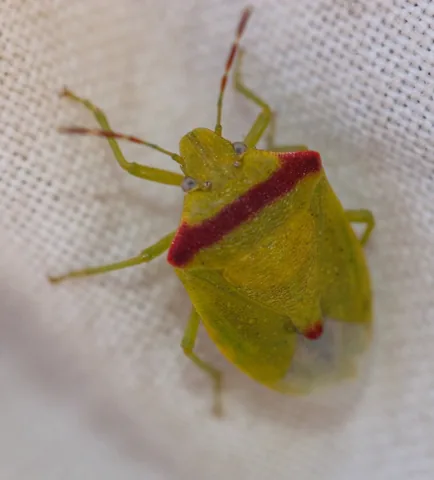 Redshouldered stink bug
Thyanta pallidovirens
The redshouldered stink bug is a native California stink bug that feeds on pistachios and tomatoes. It is the most prevalent stink bug in tomatoes in the southern San Joaquin Valley, and in pistachios its late-season feeding blackens kernels and can let fungal blights into the nuts.
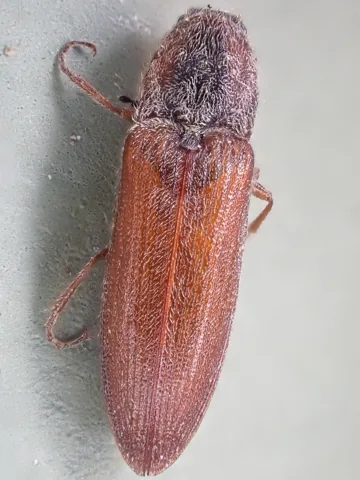 Limonius wireworms
Limonius canus (Pacific Coast wireworm) and Limonius californicus (sugarbeet wireworm)
Wireworms are the soil-dwelling larvae of click beetles, and in irrigated land of the western United States the two most common and damaging are the Pacific Coast wireworm and the sugarbeet wireworm, both in the genus Limonius. They spend two to six years in the soil chewing seed, roots, crowns and potato tubers, while the adult beetles do little harm to most crops.
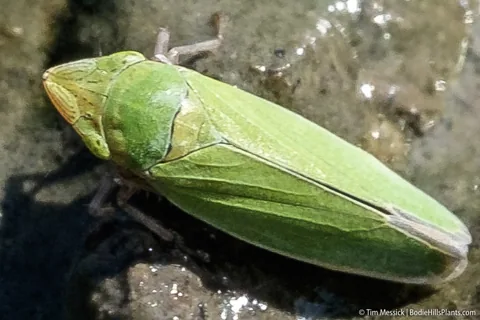 Green sharpshooter
Draeculacephala minerva
The green sharpshooter, also called the grass sharpshooter, is a very common and often abundant grass-feeding leafhopper in California. It does no direct harm to vines or trees, but it carries the bacterium Xylella fastidiosa, and in Central Valley areas without the glassy-winged sharpshooter it and the red-headed sharpshooter are the primary vectors of Pierce's disease in grapes and the most probable vectors of almond leaf scorch.
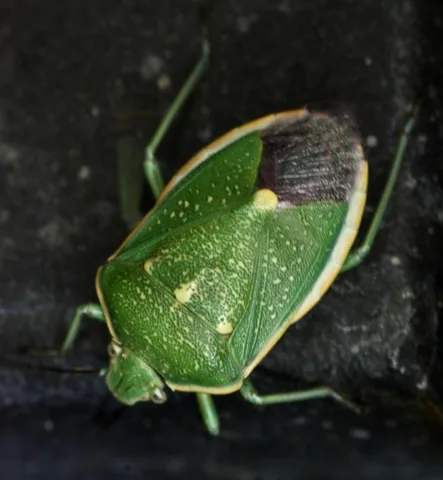 Say stink bug
Chlorochroa sayi
The Say stink bug is a California field and orchard stink bug that, together with Uhler's stink bug, is the most prevalent stink bug on the west side of California's San Joaquin Valley. Like the other stink bugs that feed on tomatoes, it punctures developing fruit and leaves pinpricks and corky spots, and it is one of the species that researchers in California's Central Valley have studied for pheromone-based monitoring.
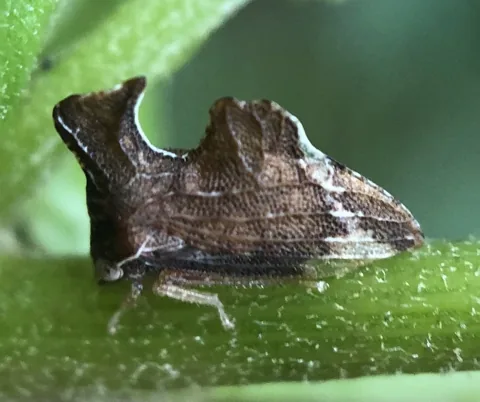 Keeled treehopper
Entylia carinata
The keeled treehopper is a small brown treehopper whose back rises into a saddle-shaped keel. Gardeners notice it on goldenrod, asters, dahlias, sunflowers and other composites, often with ants standing guard and a mother sitting on her eggs. NC State says it does not transmit plant diseases and is more of a curiosity than a pest, and that no pesticide recommendation seems necessary.
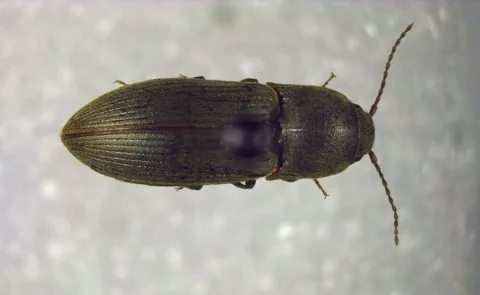 Agriotes wireworms
Agriotes obscurus (dusky wireworm) and Agriotes lineatus (lined click beetle)
Most Pacific Northwest wireworms are native Limonius species of irrigated ground east of the Cascades. West of the mountains a different problem has been walking south from British Columbia: two European click beetles, the dusky wireworm and the lined click beetle, that came in with ship-ballast soil in the 1800s, have been in BC since 1950, were at the Washington border by 1997 and reached southwest Washington in 2005. In Europe they have long been major crop pests, in Canada they are doing increasing damage to potatoes, corn and strawberries, and organic growers there have been hit hardest. Their larvae live three to five years in the soil, so once a field has them it keeps them.
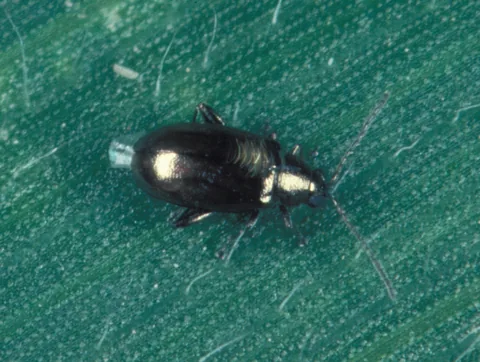 Corn flea beetle
Chaetocnema pulicaria
The corn flea beetle is about the size of a pinhead, and by itself it seldom kills a corn plant. What makes it matter is the bacterium it carries through the winter: Pantoea stewartii, the cause of Stewart's wilt, which can severely cut yields in susceptible sweet corn and seed corn inbreds. A beetle can pick up the bacterium after as little as six hours of feeding on an infected plant and pass it to a healthy one in under three. How many beetles survive to spring depends on the winter, which is why Purdue's advice starts with adding up December, January and February temperatures.
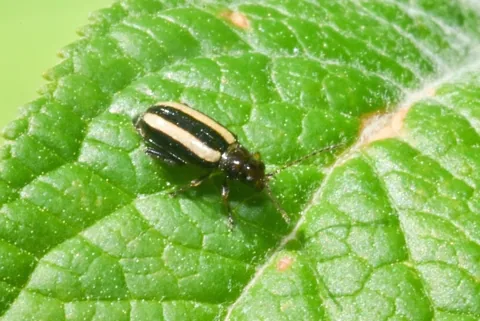 Palestriped flea beetle
Systena blanda
Most flea beetles are plain black specks. The palestriped flea beetle wears a broad creamy white stripe down each brown wing cover, and it is about twice the size of the potato flea beetle it often shares a field with. Adults pit and hole the undersides of seedling leaves on crops from alfalfa and corn to carrots, eggplant and hemp, and this species also does something many flea beetles do not: its larvae feed on the roots of young plants and on germinating seed, and in California's Imperial and San Joaquin Valleys they scar carrot taproots badly enough to be mistaken for cavity spot disease.
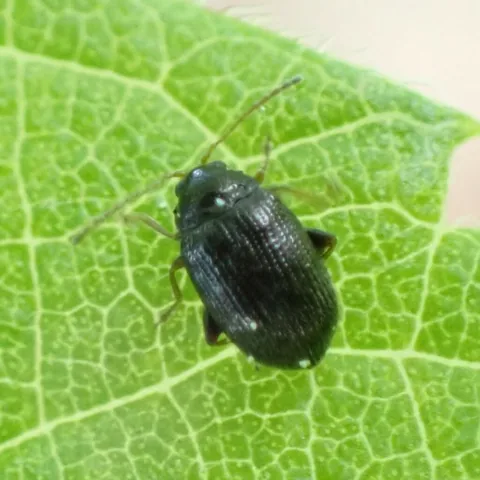 Potato flea beetle
Epitrix cucumeris
When eggplant, tomatoes or potatoes in the Northeast come up looking like they were hit with birdshot, the potato flea beetle is usually the one responsible. It overwinters in the leaf litter at the field edge, feeds on horse nettle and pokeweed in early spring, then moves into the crop and stays until August, with a second flush of summer adults from mid July to mid August. Potatoes and tomatoes often grow fast enough to outrun it; slow-starting eggplant seedlings do not, which is why UMass sets a threshold of just two beetles per newly set transplant.
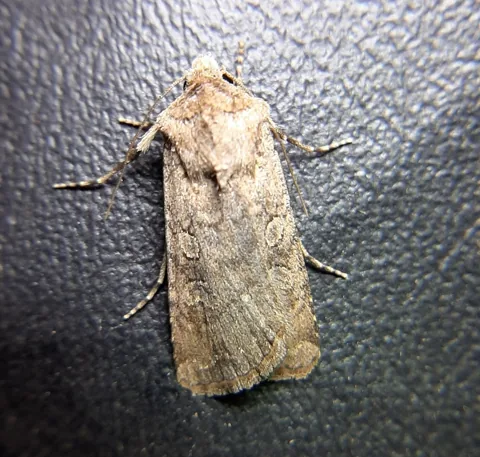 Darksided Cutworm
Euxoa messoria
The darksided cutworm (Euxoa messoria) is a cutworm of field crops and vegetables. Its gray to brown larva has a narrow dark gray stripe on each side, grows to about 1.5 inches (UC IPM gives 1.5 to 2 inches) and is often found mixed with redbacked cutworms in the same field. It overwinters as eggs in the soil; the larvae hatch in spring and feed from May to the end of June, so there is one generation a year. SDSU Extension groups it with the late-season cutworms because of that egg stage.
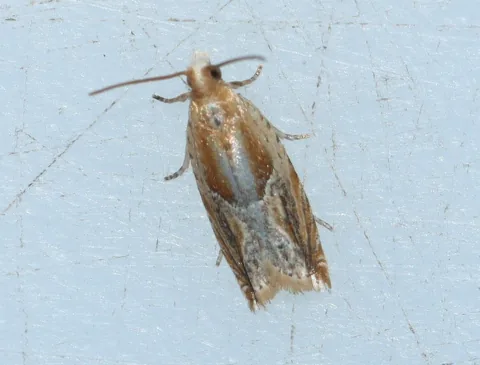 Strawberry Leafroller
Ancylis comptana
The strawberry leafroller (Ancylis comptana, often written A. comptana fragariae) is a small rust-brown moth with pale yellow or wavy white markings whose slender green to grayish-brown caterpillars roll strawberry leaves and tie them with silk, wriggling and dropping on a thread when disturbed. It is common in the eastern half of the United States and present in the Pacific Northwest and California, but strawberries tolerate its leaf feeding well and treatment is usually not needed.
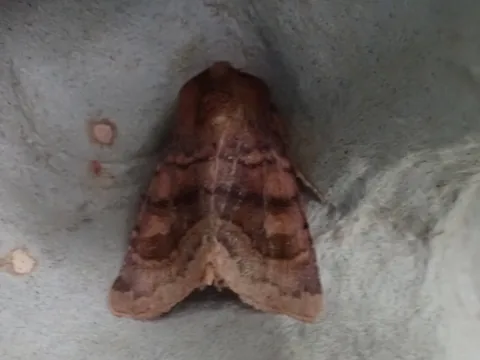 Bronzed Cutworm
Nephelodes minians
The bronzed cutworm (Nephelodes minians) is a dark brown caterpillar with a bronze sheen and three narrow yellow stripes. It hides by day and comes out at night to clip grass blades and young garden plants at the soil line, leaving small brown patches in lawns and cut-off seedlings. It does not bother people; a watered, healthy lawn usually outgrows it, and collars protect transplants.
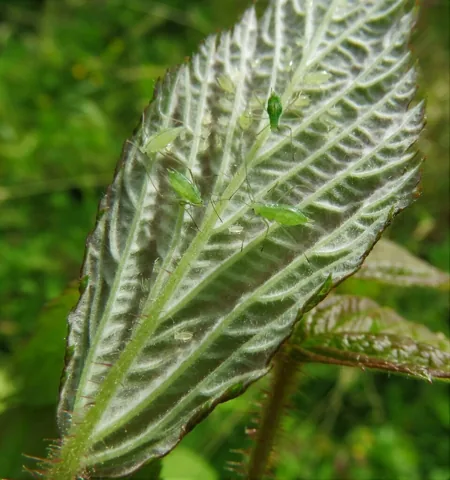 Larger raspberry aphid
Amphorophora agathonica
Several aphids turn up on raspberries and blackberries, but the larger raspberry aphid is the one that matters. It is big for an aphid, up to 3 mm, and dark green to yellow. Its feeding can stunt and yellow new growth and leave honeydew and sooty mold on the fruit, but the real damage is the viruses it carries: it is the primary vector of aphid-transmitted viruses in red raspberry in the Pacific Northwest and an important vector in red and black raspberries across North America. In one Washington study, 30 to 60 percent of plants in four commercial fields carried raspberry leaf mottle virus after three growing seasons.
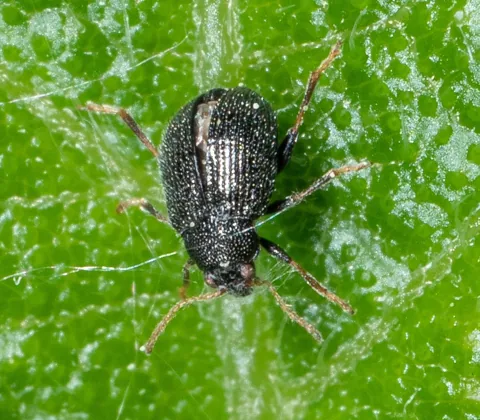 Eggplant flea beetle
Epitrix fuscula
Eggplant is a favorite host of several flea beetles, most of them in the genus Epitrix, and the eggplant flea beetle is the one named for the crop. It is a 2 mm black beetle that UMass says looks very much like the potato flea beetle but occurs farther south. The beetles are around all season, yet UC IPM says they matter most in the month after transplanting, when they can defoliate and kill young plants that a month later would tolerate them.
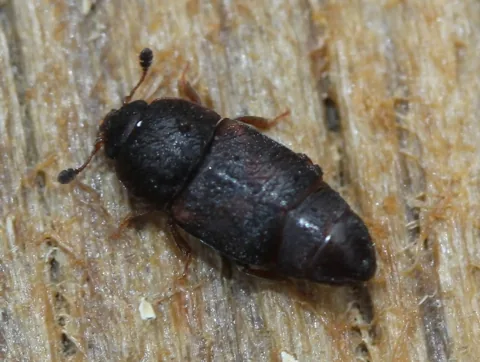 Dusky sap beetle
Caplothorax lugubris
Of the sap beetles that turn up in sweet corn, the dusky sap beetle is the plain one: all black, 3.5 to 4.5 mm, no spots. UMass calls it and the four-spotted picnic beetle the two most common sap beetles in corn. It was long written off as a secondary pest that followed caterpillar or bird damage, but on some farms it is a regular problem in early plantings on its own, laying eggs in the silks of ears with poor tip cover so that tiny larvae are hollowing kernels by the time anyone notices at harvest.
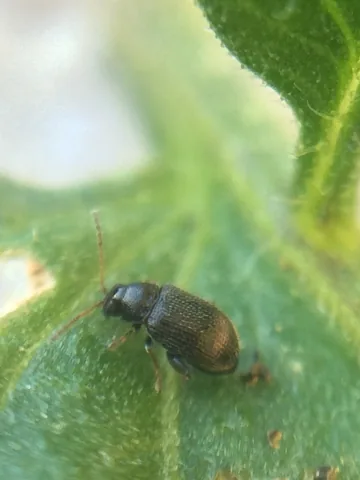 Tuber flea beetle
Epitrix tuberis
Most flea beetles only pepper potato leaves. The tuber flea beetle is the exception: its soil-dwelling larvae carve shallow, wavy furrows just under the skin of the tubers, damage the PNW Handbook says is almost identical to symphylan injury, and the second and third generations hit the late crop. It is a serious problem in some areas west of the Cascades, particularly Washington's Skagit Valley, and European plant-health agencies watch for it because its tuber damage can make a crop unmarketable.
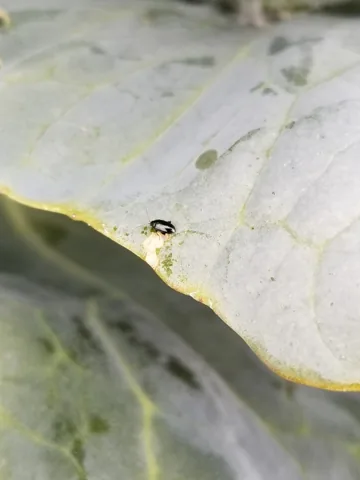 Crucifer flea beetle
Phyllotreta cruciferae
If the shot holes are in arugula, mustard, bok choy or cabbage and not in the tomatoes next door, the beetle is almost certainly a brassica specialist, and the plain black one is the crucifer flea beetle. It feeds only on brassica crops and weeds, winters in the shrubby or wooded borders of the field, moves in during May, and sends a second generation out in late July to work the fall plantings. On the Canadian prairies it and the striped flea beetle are devastating pests of canola.
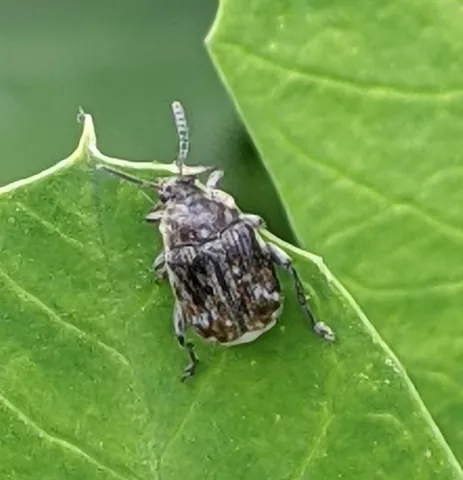 Pea weevil
Bruchus pisorum
The pea weevil is a seed beetle rather than a true weevil, and Montana State University is careful to say it is not the more common pea leaf weevil. Adults appear as peas bloom, females lay yellow eggs on the outside of the pods, and each larva bores through the pod wall into a single developing pea and eats out its center. The larva is still inside at harvest and keeps feeding, so most of the loss shows up in the grain bin or at the elevator, where a round exit hole in the seed gives it away.
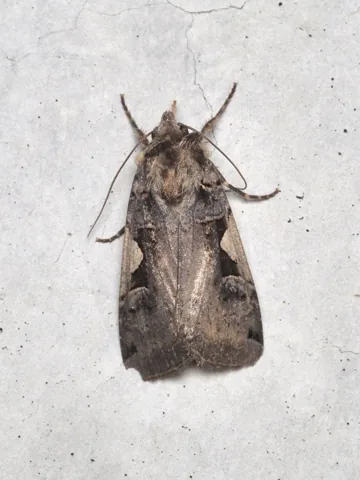 Spotted Cutworm
Xestia c-nigrum
The spotted cutworm (Xestia c-nigrum) is a climbing cutworm best known in orchards and vineyards. Along with the bertha armyworm it is one of the most serious cutworm pests of tree fruit in the Pacific Northwest, and in California it is the predominant cutworm in Central Coast vineyards. The caterpillars hide by day in the soil or under loose bark and climb up at night in early spring to hollow out swelling buds and chew ragged holes in new leaves. They also turn up in mint, potatoes and hemp, where feeding on mature plants is usually minor.
No photo yet
Raspberry Cane Maggot
Pegomya rubivora
The raspberry cane maggot (Pegomya rubivora) is a small gray fly, a little smaller than a house fly, whose maggot bores into the tip of a new raspberry or blackberry cane in spring and tunnels downward, girdling the shoot from the inside. The tip wilts suddenly, droops and turns purplish or blackish, which is often blamed on the raspberry cane borer even though it happens weeks earlier and leaves no girdle on the outside. It kills individual canes but does not appear to reduce fruit yield, and the usual advice is to prune out wilted tips rather than spray.
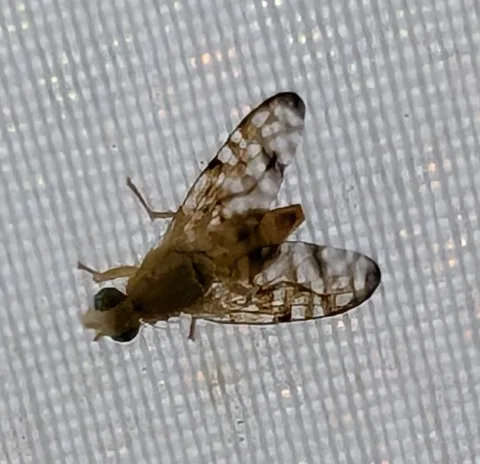 Sunflower Receptacle Maggot
Gymnocarena diffusa
The sunflower receptacle maggot (Gymnocarena diffusa), listed simply as the sunflower maggot in the Pacific Northwest handbook, is a bright yellow fruit fly with metallic green eyes and brown-mottled wings. Its larvae feed on the receptacle, the fleshy base of the sunflower head, and leave exit holes there in late summer. Both sources treat it as a minor pest: its feeding has not been shown to cause significant yield loss, and insecticide treatment is not considered necessary.
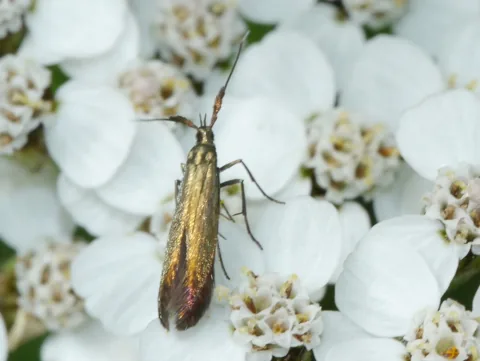 Red Clover Casebearer
Coleophora deauratella
The red clover casebearer (Coleophora deauratella) is a micromoth with an 11 mm wingspan and shiny metallic bronze-and-copper wings. Native to Europe, the Middle East and eastern Siberia, where it does little harm, it has spread across a wide area of the United States and Canada and become a significant pest of red clover grown for seed. The larvae enter the florets, chew from one to the next through the corolla and eat the developing seeds, then overwinter inside a small cigar-like case in the field residue. Because they feed hidden inside the flower head, insecticides are ineffective, and research has focused on pheromone mating disruption.
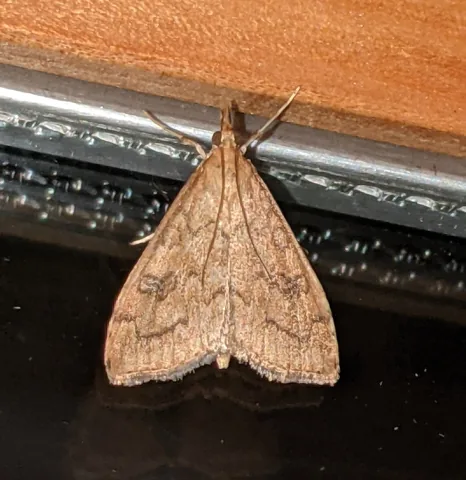 False Celery Leaftier
Udea profundalis
The false celery leaftier (Udea profundalis) is a small crambid moth of the West whose caterpillars tie leaves together with silk to make a shelter and skeletonize the leaves from inside it. In the Pacific Northwest the larvae can become abundant in sugar beet fields late in the season, and in California and Arizona cotton they feed on leaves, small squares and the surface of green bolls, though that injury is sporadic, localized and seldom economically important.
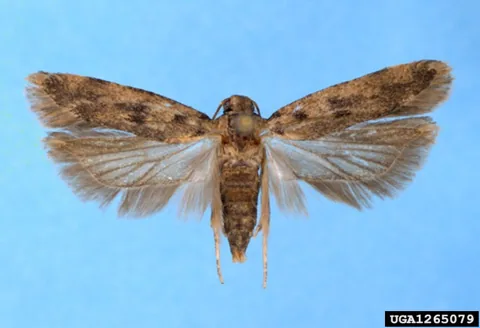 Pink Bollworm
Pectinophora gossypiella
The pink bollworm (Pectinophora gossypiella) is a small, inconspicuous grayish-brown moth whose caterpillar turns pink in its last stage and feeds hidden inside cotton bolls, moving from seed to seed and cutting and staining the lint as it goes. It first invaded the United States in 1917, spread through the cotton states from the 1930s and reached California by 1963, and UC IPM long ranked it a major pest of desert cotton. After decades of quarantines, pheromone mating disruption, Bt cotton and sterile moth releases, USDA announced on October 19, 2018 that all commercial cotton areas in the continental United States were free of the pest and lifted the last quarantines; trapping and monitoring continue.
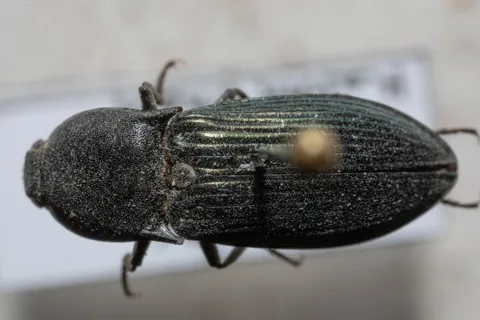 Prairie grain wireworms
Selatosomus aeripennis destructor and Hypnoidus bicolor
On the Canadian prairies the wireworms that matter are two species that often share a field: the prairie grain wireworm, historically the more destructive, and the smaller Hypnoidus bicolor, which recent surveys found to be the most common wireworm in prairie crops. Both prefer non-irrigated land, both feed below ground on seeds and shoots, and both can spend years in the soil. A 2004 to 2019 survey of 571 farmland sites in Alberta, Saskatchewan and Manitoba found that these two species plus the sugarbeet wireworm and Aeolus mellillus made up 97 percent of the 5,704 specimens collected.
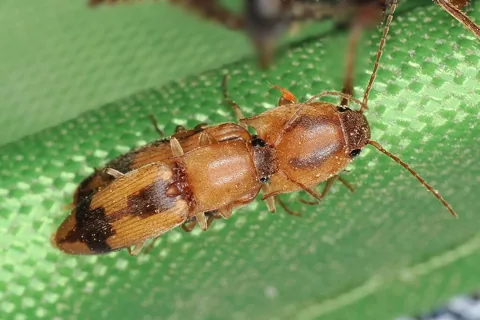 Conoderus wireworms
Conoderus falli and Conoderus vespertinus (iNaturalist: Monocrepidius)
In the Southeast the wireworms that scar sweetpotatoes are mostly Conoderus species. The southern potato wireworm is the injurious one across the region and the common species in southeast Arkansas; in North Carolina sweetpotato fields the tobacco wireworm made up about two-thirds of all wireworms collected, and in North Florida the main species were C. scissus, C. rudis, C. amplicollis and C. falli. Their larvae gouge small, ragged holes in the roots late in the season, when the soil is still too warm to slow them down and nothing can be done about damage already made.
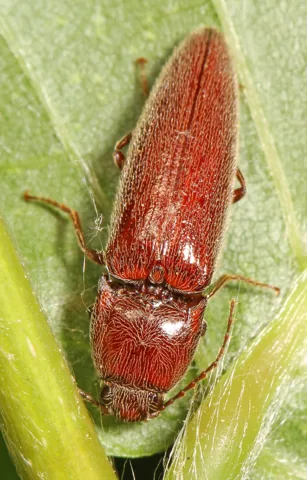 Corn wireworm
Melanotus communis
The corn wireworm spends three to five years, and in one Iowa study six, as a shiny, wire-like larva underground, which is why one cohort can damage several successive crops and why a field's history matters more than the crop in it now. In the Midwest it is one of the Melanotus species that hollow out corn and soybean seed in cold, slow springs; in North Carolina and Virginia it is a significant pest of potato and sweetpotato, found after harvest when it is too late to act, and its abundance rises with the proportion of corn grown in the surrounding landscape over the previous five years.
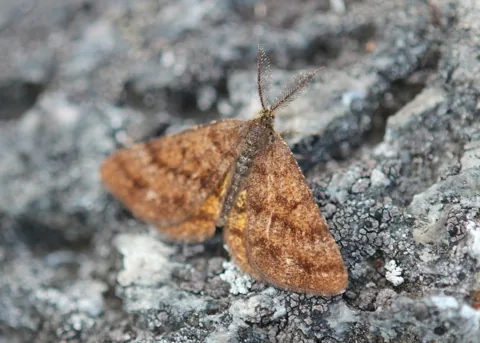 Cranberry Spanworm Moth
Ematurga amitaria
The brown spanworm (Ematurga amitaria), which BAMONA calls the cranberry spanworm moth, is a day-flying geometrid moth of bogs and wet meadows whose slender brown looper caterpillars reach high densities in managed cranberry bogs, destroying new leaves and flowers. Its eggs hatch in mid-June, much later than the cutworms and green spanworms that share the bog, which puts its larvae on the vines just as bee hives arrive for pollination and makes it one of the trickier cranberry caterpillars to treat; Wisconsin's extension profile calls it the most damaging of the spanworms.
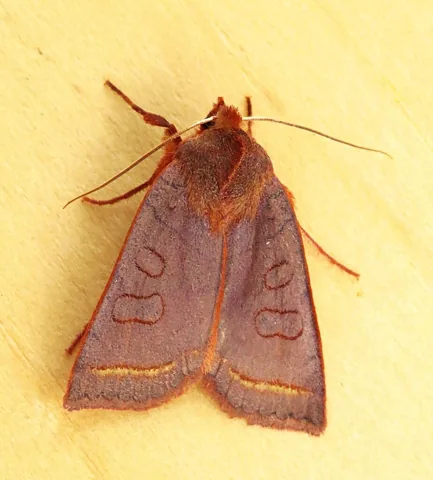 Pointed Sallow
Epiglaea apiata
The cranberry blossomworm (Epiglaea apiata), known to moth watchers as the pointed sallow, is a cutworm of cranberry bogs. Its eggs overwinter on the bog and hatch in May into greenish caterpillars tinged pink, red and purple that eat leaves and terminal buds, and the larger, distinctly purplish larvae cut off flower pods and blossoms. UMass lists it with the cutworms and false armyworm as the most damaging spring caterpillars on Massachusetts bogs, and in New Jersey, where it is a major cranberry pest, Rutgers reports that older larvae can destroy 100 blossoms in three weeks.
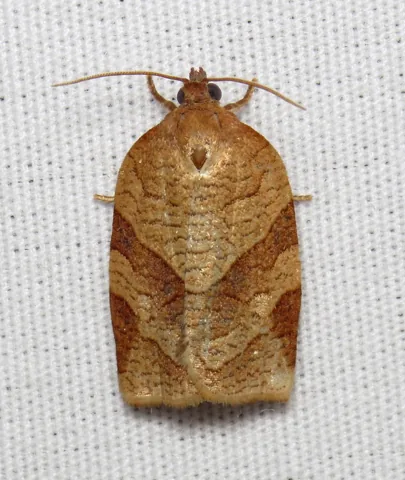 Parallel-banded Leafroller Moth
Choristoneura parallela
The spotted fireworm (Choristoneura parallela) is a tortricid moth native to the United States and one of the two key caterpillar pests of New Jersey cranberry bogs, alongside the more widespread Sparganothis fruitworm. Its larvae feed between cranberry uprights they have webbed together, and first-generation feeding leaves the foliage brown as if it had been burned, which is where the name comes from. The second generation hatches in mid-August and may feed on the fruit itself.
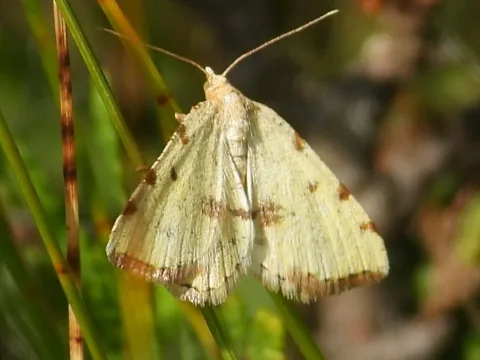 Sulphur Angle
Macaria sulphurea
The green cranberry spanworm (Macaria sulphurea, listed in older and Wisconsin sources as Itame sulphurea and more recently as Speranza sulphurea) is one of the two most important spanworms of cranberry bogs. Its green, white-lined looper caterpillars hatch from eggs that spent the winter in the trash layer under the vines, feed on leaves and developing buds, and sever flower buds at the stem; dense infestations can defoliate vines and cut fruit set. UMass reports that the species has shifted to earlier spring activity in recent years, so sweeping for it now starts in May.
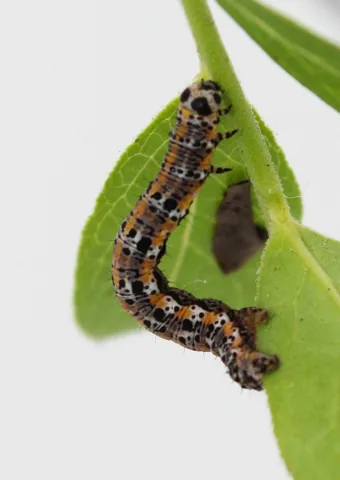 Mousy Angle
Macaria argillacearia
The blueberry spanworm (Macaria argillacearia, listed in the Nova Scotia sheet and a 2013 pheromone study as Itame argillacearia) is the principal spanworm of Nova Scotia's lowbush blueberry fields and an important defoliator of wild blueberry in northeastern North America. Its yellow-orange, black-spotted inchworms hatch from eggs in the leaf litter in mid to late May, feed at night on leaves and buds until late June or early July, and in severe outbreaks can strip a field. It has become more of a problem since growers switched from burning to mowing their fields, because burning destroyed the overwintering eggs.
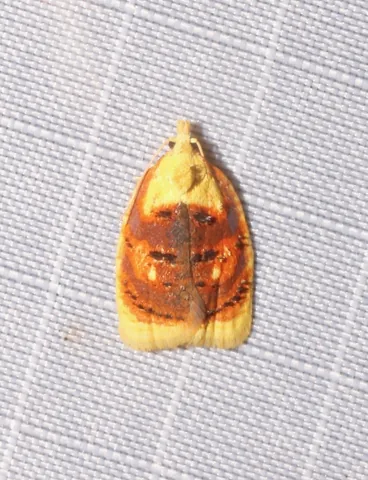 Blueberry Leaftier Moth
Acleris curvalana
The blueberry leaftier (Acleris curvalana, called Croesia curvalana in older literature) is a tortricid moth whose eggs spend the winter in the leaf litter under blueberry plants and hatch in late April and May. The newly hatched caterpillars climb the stems and burrow into flower buds, the most serious damage they do, and older larvae fasten expanding leaves together with silk and feed on leaves and flowers. In Nova Scotia's lowbush fields it can be a serious commercial problem; in North Carolina it is the least common of three leaf tiers on highbush blueberry and rarely causes severe damage.
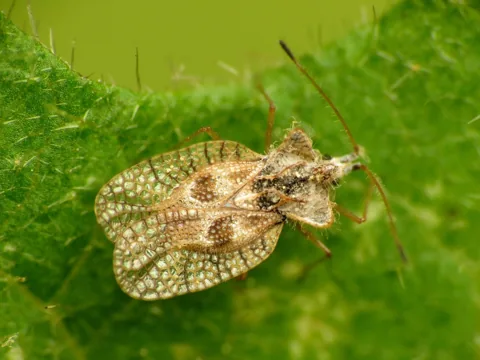 Eggplant lace bug
Gargaphia solani
The eggplant lace bug is one of the two common insect pests of eggplant named by NC State Extension, along with the eggplant flea beetle. Grayish to light brown adults with lacelike wings gather in herds with their spiny yellow nymphs on the undersides of leaves, and the tops of infested leaves show roughly circular discolored patches. Besides eggplant it feeds on potato, tomato, horsenettle and other nightshade-family plants, and has been recorded on cotton, sunflower and sage.
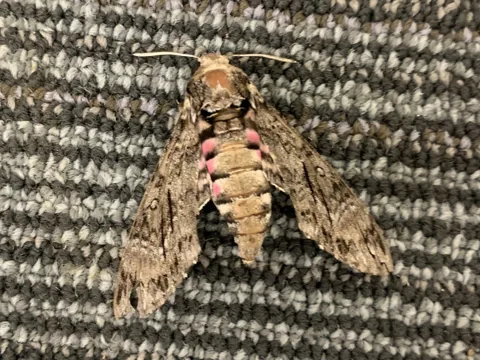 Sweetpotato Hornworm (Pink-spotted Hawkmoth)
Agrius cingulata
The sweetpotato hornworm is the caterpillar of the pink-spotted hawkmoth, a big gray moth with pink bands on its hind wings and pink spots on its body. The green or brown hornworm grows to more than 3 1/2 inches and can eat a sweet potato or morning glory vine down to bare stems. It is common in the southern US and the tropics.
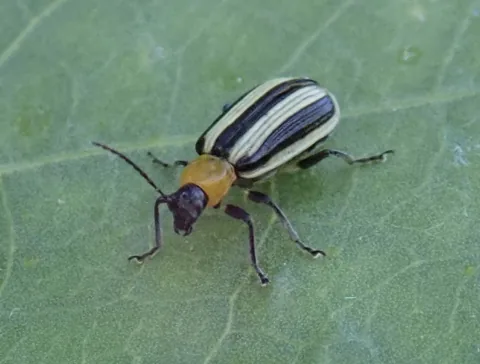 Western striped cucumber beetle
Acalymma trivittatum
The western striped cucumber beetle is a small yellowish orange beetle with three black stripes down its back. It feeds on cucurbits in western gardens and fields, and its larvae feed only on cucurbit roots.
Flea beetles
Cutworms
- Dull brown caterpillars, 1 to 2 inches long, that curl into a C when disturbed and feed at night at or just below the soil surface; mainly a spring pest.[10]
- Destroy crop residue, keep the garden weed-free in winter, plant extra seedlings or hardy transplants, and use sticky collars to keep climbing cutworms out of berries.[10]
- Bt or spinosad can protect larger plants; pesticides aren't very effective and aren't recommended on ornamentals.[10]
Squash bugs
- Flat-backed, grayish-brown bugs about 5/8 inch long with orange stripes along the edges and underside; they feed on squash, pumpkin and melon, causing wilting, plant death and rotting fruit.[11]
- Bronze to brick-red eggs are laid in clusters of 15 to 40 on the undersides of leaves and hatch in 5 to 10 days; look for and remove them.[11]
- Keep the garden free of debris where adults overwinter.[11]
Thrips
- Tiny, slender insects under 1/20 inch that scar and distort leaves, flowers and fruit, leaving silvery or brown patches and dark specks of excrement.[12]
- Avoid overwatering and excess nitrogen, prune off infested parts, use row covers on small plants, and hang blue or yellow sticky traps to detect them.[12]
- Oils, soaps and pyrethrins give temporary control and spinosad may work better, but sprays won't restore damaged tissue and rarely work alone.[12]
Leafhoppers, plant bugs and spittlebugs
- Leafhoppers are wedge-shaped, usually under 1/4 inch, and leave pale stippling on leaves; check leaf undersides because mites, thrips and lace bugs cause similar spotting.[13]
- Lygus bugs, including the tarnished plant bug, are 1/5 to 1/4 inch with a contrasting triangle on the back; they feed on buds, fruit and shoots, and the injury often appears after the bugs have left.[14]
- Spittlebug nymphs hide in frothy white masses on stems; adults are stout, about 1/3 inch, and jump or fly when disturbed.[15]
Grasshoppers
- Grasshoppers are among the hardest garden pests to manage; populations can build in foothills and rangeland after a wet spring and move into gardens.[16]
- Handpick when numbers are low. Row covers, cones and screened boxes protect plants, but hungry grasshoppers chew through fabric, so metal window screening works better.[16]
- Birds, blister beetles that eat their eggs, and robber flies are among their many predators.[16]
Colorado potato beetle
- Adults are oval, 3/8 inch, with yellowish-white wing covers carrying 10 narrow black stripes. Young larvae are brick red and older ones pink to salmon, all with two rows of dark spots on each side. Bright yellowish-orange eggs sit in clusters under leaves.[17]
- Larvae and adults eat the leaves of potatoes and can strip plants completely; they also feed on eggplant, tomatillo and related crops. Adults spend the winter in the soil, and Minnesota Extension says southern and central Minnesota generally get a second generation.[17]
Mexican bean beetle
- Adults look like copper-colored lady beetles, about 1/3 inch, with 16 black spots in rows of 6, 6 and 4; larvae are yellow and covered with soft spines.[1]
- Larvae and adults feed on leaf undersides of lima and snap beans, leaving a lacy, skeletonized look. Beans tolerate up to 20% leaf loss before yield drops.[1]
- Cover rows with row cover after planting, crush yellow egg clusters, larvae and adults by hand, or release the parasitic wasp Pediobius faveolatus in larger plantings.[1]
Squash vine borer
- Adults are day-flying, wasp-like moths with an orange abdomen, metallic green front wings and clear hind wings; the cream-colored larvae tunnel inside stems.[2]
- The first sign is wilting, often in the morning, then holes near the base packed with moist, sawdust-like frass. In Minnesota adults emerge in late June or early July, and a yellow pan of soapy water traps them for monitoring.[2]
- Grow less-attacked crops such as butternut squash, cucumbers and melons, plant a second crop of summer squash in early July, or cover vines with floating row cover for about two weeks after the first adult appears, removing it when plants flower.[2]
- The University of Minnesota calls it a common clearwing moth whose larvae feed inside the vines and crowns of summer squash, winter squash and pumpkins.[2]
Harlequin bugs and stink bugs
- Harlequin bugs are 3/8-inch, shield-shaped bugs, black with bright red, yellow or orange markings, that leave yellow or white blotches on cabbage-family crops; heavy feeding can kill plants.[3]
- Handpick bugs and their drum-shaped egg clusters, clear weedy areas, especially mustards, in early spring, and destroy old cole crop plants. Insecticides are generally not recommended for stink bugs in gardens.[3]
- Stink bugs are shield-shaped with a large triangle on the back; some, such as the spined soldier bug, are beneficial predators. The invasive brown marmorated stink bug is mottled brown, about 5/8 inch, with alternating light and dark bands on the abdomen edges.[4]
Asparagus beetles
- The common asparagus beetle is 1/4 inch, bluish-black with six cream-colored spots; the spotted asparagus beetle is reddish-orange with twelve black spots. Don't confuse either with beneficial lady beetles.[5]
- Adult feeding makes spears turn brown and hook over, and common asparagus beetle larvae and adults strip the ferns, weakening plants for next season.[5]
- Check from early May, in the afternoon when they're most active, and handpick them into a pail of soapy water.[5]
Onion maggots and wireworms
- Onion maggots are white, legless larvae of small gray flies that tunnel into onion seedlings and bulbs, mainly in cool coastal climates. Avoid heavy manure, use transplants, and cover seedbeds with cloth so flies can't lay eggs.[6]
- Wireworms are slender, yellowish larvae of click beetles that feed on seeds, seedlings and potato tubers, mostly in soils high in organic matter. Trap them with nearly mature carrots buried every 2-1/2 to 3 feet, pulled and checked every 2 to 3 days.[7]
Spotted-wing drosophila
- This tiny fruit fly, 1/16 to 1/8 inch with red eyes, lays eggs in healthy ripening cherries, raspberries, blackberries, blueberries and strawberries; males have a dark spot near each wing tip.[8]
- Sprays at harvest won't help because the maggots are already in the fruit. Harvest early and often, pick up fallen and infested fruit and seal it in a plastic bag in the trash, and cover plants with very fine netting before fruit ripens.[8]
Photo credits
- Potato/Tomato Psyllid: Jesse Rorabaugh, public domain (CC0), via iNaturalist
- Garden Fleahopper: (c) Even Dankowicz, some rights reserved (CC BY) — via iNaturalist, CC BY 4.0
- European Pepper Moth: kcthetc1, public domain (CC0), via iNaturalist
- Tobacco Budworm: (c) Jane Weeden, some rights reserved (CC BY) — via iNaturalist, CC BY 4.0
- Whitelined Sphinx: (c) Karen Szafrajda, some rights reserved (CC BY) — via iNaturalist, CC BY 4.0
- Strawberry Root Weevil: Brighton Lee, public domain (CC0), via iNaturalist
- Potato Aphid: (c) Bill Keim, some rights reserved (CC BY) — via iNaturalist, CC BY 4.0
- Two-Spotted Cotton Leafhopper: 余世文, public domain (CC0), via iNaturalist
- Broad Mite: (c) Bonnie Semmling, some rights reserved (CC BY) — via iNaturalist, CC BY 4.0
- Fuchsia Gall Mite: (c) Sean Hartnett, some rights reserved (CC BY) — via iNaturalist, CC BY 4.0
- Hollyhock Weevil: (c) Sylvain Montagner, some rights reserved (CC BY) — via iNaturalist, CC BY 4.0
- Cabbage Whitefly: (c) Frank Ashwood, some rights reserved (CC BY) — via iNaturalist, CC BY 4.0
- Spanish Moth (Convict Caterpillar): (c) Neptalí Ramírez Marcial, some rights reserved (CC BY) — via iNaturalist, CC BY 4.0
- Aster Leafhopper: Ken Kneidel, public domain (CC0), via iNaturalist
- Strawberry Crown Moth: (c) Hawk T., some rights reserved (CC BY) — via iNaturalist, CC BY 4.0
- Artichoke Plume Moth: (c) Dan MacNeal, some rights reserved (CC BY) — via iNaturalist, CC BY 4.0
- Eastern Black Swallowtail: (c) Tom Scavo, some rights reserved (CC BY) — via iNaturalist, CC BY 4.0
- Allium Leafminer: (c) Elizabeth Axley, some rights reserved (CC BY) — via iNaturalist, CC BY 4.0
- American Grasshopper: (c) florawhite, some rights reserved (CC BY) — via iNaturalist, CC BY 4.0
- Banded Cucumber Beetle: Zygy, public domain (CC0), via iNaturalist
- Banded Woolly Bear: Ken Kneidel, public domain (CC0), via iNaturalist
- Bean Leaf Beetle: (c) Tobias Thrien, some rights reserved (CC BY) — via iNaturalist, CC BY 4.0
- Bean Leafroller: (c) Ricard Busquets Reverte, some rights reserved (CC BY) — via iNaturalist, CC BY 4.0
- Beet Armyworm: (c) katunchik, some rights reserved (CC BY) — via iNaturalist, CC BY 4.0
- Brown Stink Bug: (c) Adrienne van den Beemt, some rights reserved (CC BY) — via iNaturalist, CC BY 4.0
- Bulb Flies: (c) Bill Keim, some rights reserved (CC BY) — via iNaturalist, CC BY 4.0
- Cabbage Aphid: (c) Jesse Rorabaugh, some rights reserved (CC BY) — via iNaturalist, CC BY 4.0
- Cabbage Maggot: Delia radicum, Deeside, North Wales, May 2012 by janetgraham84 — via Flickr, CC BY 2.0
- Cabbage Webworm: kcthetc1, public domain (CC0), via iNaturalist
- Chilli Thrips: 余世文, public domain (CC0), via iNaturalist
- Cowpea Curculio: (c) Rosario Douglas, some rights reserved (CC BY) — via iNaturalist, CC BY 4.0
- Decollate Snail: (c) Rodolfo Salinas Villarreal, some rights reserved (CC BY) — via iNaturalist, CC BY 4.0
- Diamondback Moth: (c) Aalbert Rebergen, some rights reserved (CC BY) — via iNaturalist, CC BY 4.0
- Fourlined Plant Bug: (c) W Rao, some rights reserved (CC BY) — via iNaturalist, CC BY 4.0
- Garden Symphylan: (c) Zachary Dankowicz, some rights reserved (CC BY) — via iNaturalist, CC BY 4.0
- Golden Tortoise Beetle: (c) florawhite, some rights reserved (CC BY) — via iNaturalist, CC BY 4.0
- Granulate Cutworm: (c) Arthur de Jesús Chavarría Pérez, some rights reserved (CC BY) — via iNaturalist, CC BY 4.0
- Figeater Beetle: (c) CK2AZ, some rights reserved (CC BY) — via iNaturalist, CC BY 4.0
- Hoplia Beetle: (c) katunchik, some rights reserved (CC BY) — via iNaturalist, CC BY 4.0
- Iris Borer: (c) Owen Strickland, some rights reserved (CC BY) — via iNaturalist, CC BY 4.0
- Katydids: (c) Matt Pelikan, some rights reserved (CC BY) — via iNaturalist, CC BY 4.0
- Larger canna leafroller (Brazilian skipper): (c) Annika Lindqvist, some rights reserved (CC BY) — via iNaturalist, CC BY 4.0
- Melon aphid (cotton aphid): Jesse Rorabaugh, public domain (CC0), via iNaturalist
- Melonworm: Hugo Hulsberg, public domain (CC0), via iNaturalist
- Pepper Maggot: (c) skitterbug, some rights reserved (CC BY) — via iNaturalist, CC BY 4.0
- Pepper Weevil: (c) Forest Botial-Jarvis, some rights reserved (CC BY) — via iNaturalist, CC BY 4.0
- Pickleworm: kcthetc1, public domain (CC0), via iNaturalist
- Potato Tuberworm: (c) ingridaltmann, some rights reserved (CC BY) — via iNaturalist, CC BY 4.0
- Saltmarsh Caterpillar: (c) Justin Williams, some rights reserved (CC BY) — via iNaturalist, CC BY 4.0
- Seedcorn Maggot: (c) Zachary Dankowicz, some rights reserved (CC BY) — via iNaturalist, CC BY 4.0
- Southern Armyworm: (c) Helio Lourencini, some rights reserved (CC BY) — via iNaturalist, CC BY 4.0
- Swede Midge: (c) Juan C. Espinosa, some rights reserved (CC BY) — via iNaturalist, CC BY 4.0
- Sweetpotato Weevil: (c) Joshua Ebright, some rights reserved (CC BY) — via iNaturalist, CC BY 4.0
- Threelined Potato Beetle: Jesse Rorabaugh, public domain (CC0), via iNaturalist
- Vegetable Weevil: (c) Michelle W. (鍾偉瑋), some rights reserved (CC BY) — via iNaturalist, CC BY 4.0
- Yellowmargined Leaf Beetle: (c) ncb1221, some rights reserved (CC BY) — via iNaturalist, CC BY 4.0
- Yellowstriped Armyworm: (c) Elizabeth Green, some rights reserved (CC BY) — via iNaturalist, CC BY 4.0
- Bumble Flower Beetle: (c) Marc-Olivier Beausoleil, some rights reserved (CC BY) — via iNaturalist, CC BY 4.0
- Whitefringed Beetles: (c) skitterbug, some rights reserved (CC BY) — via iNaturalist, CC BY 4.0
- Lesser Canna Leafroller: Dennis White, public domain (CC0), via iNaturalist
- Spined Stilt Bug: (c) Patrick O'Brien, some rights reserved (CC BY) — via iNaturalist, CC BY 4.0
- Red Milkweed Beetle: (c) Katja Schulz, some rights reserved (CC BY) — via iNaturalist, CC BY 4.0
- Yellow Woollybear: (c) Jack Forrester, some rights reserved (CC BY) — via iNaturalist, CC BY 4.0
- Eight-spotted Forester: (c) Jacqueline Raiford, some rights reserved (CC BY) — via iNaturalist, CC BY 4.0
- Fiery Skipper: (c) Ken-ichi Ueda, some rights reserved (CC BY) — via iNaturalist, CC BY 4.0
- Dark Flower Scarab: (c) Sandra H Statner, some rights reserved (CC BY) — via iNaturalist, CC BY 4.0
- Checkered White: (c) Dennis Vollmar, some rights reserved (CC BY) — via iNaturalist, CC BY 4.0
- Carolina Grasshopper: Robbie Hannawacker, public domain (CC0), via iNaturalist
- Grapeleaf Skeletonizer: (c) Adrienne van den Beemt, some rights reserved (CC BY) — via iNaturalist, CC BY 4.0
- Strawberry Clipper: (c) skitterbug, some rights reserved (CC BY) — via iNaturalist, CC BY 4.0
- Blueberry Maggot: Blueberry maggot by Jerry A. Payne, USDA Agricultural Research Service — via Wikimedia Commons, CC BY 3.0
- Spring Rose Beetle: (c) Michelle Orcutt, some rights reserved (CC BY) — via iNaturalist, CC BY 4.0
- Lesser Cornstalk Borer: (c) Sam Kieschnick, some rights reserved (CC BY) — via iNaturalist, CC BY 4.0
- Spinach and Beet Leafminers: Braden J. Judson, public domain (CC0), via iNaturalist
- Green Peach Aphid: Jesse Rorabaugh, public domain (CC0), via iNaturalist
- Western Flower Thrips: Jesse Rorabaugh, public domain (CC0), via iNaturalist
- Carrot Rust Fly: DIPT Psilidae Psila rosae by Desmond W. Helmore — via Wikimedia Commons, CC BY 4.0
- Tomato Russet Mite: 余世文, public domain (CC0), via iNaturalist
- American Serpentine Leafminer: (c) Andrew Sebastian, some rights reserved (CC BY) — via iNaturalist, CC BY 4.0
- Common Stalk Borer: (c) Dan MacNeal, some rights reserved (CC BY) — via iNaturalist, CC BY 4.0
- Red-Legged Grasshopper: (c) Evan M. Raskin, some rights reserved (CC BY) — via iNaturalist, CC BY 4.0
- Twostriped Grasshopper: Paul Manning, public domain (CC0), via iNaturalist
- Southern Purple Mint Moth: (c) John P Friel, some rights reserved (CC BY) — via iNaturalist, CC BY 4.0
- Squash Beetle: Anne P, public domain (CC0), via iNaturalist
- Squash Bees: (c) Frances Oliver, some rights reserved (CC BY) — via iNaturalist, CC BY 4.0
- Vegetable Leafminer: (c) Federico Figueroa Cabezas, some rights reserved (CC BY) — via iNaturalist, CC BY 4.0
- Spotted Cucumber Beetle: (c) Sam Kieschnick, some rights reserved (CC BY) — via iNaturalist, CC BY 4.0
- Cross-Striped Cabbageworm: Dianne Kadonaga, public domain (CC0), via iNaturalist
- Zebra Caterpillar: (c) Dan MacNeal, some rights reserved (CC BY) — via iNaturalist, CC BY 4.0
- Garden Webworm: (c) Mary Beth Stowe, some rights reserved (CC BY) — via iNaturalist, CC BY 4.0
- Variegated Cutworm: Chrissy McClarren and Andy Reago, public domain (CC0), via iNaturalist
- Green Cloverworm: Brighton Lee, public domain (CC0), via iNaturalist
- Achemon Sphinx: (c) Adrienne van den Beemt, some rights reserved (CC BY) — via iNaturalist, CC BY 4.0
- Silverleaf Whitefly: (c) Mike Bowie, some rights reserved (CC BY) — via iNaturalist, CC BY 4.0
- Carrot Weevil: Earl Agpawa, public domain (CC0), via iNaturalist
- Cuban Brown Snail: (c) Dayron Breto, some rights reserved (CC BY) — via iNaturalist, CC BY 4.0
- Pea Aphid: Alexis_lsu, public domain (CC0), via iNaturalist
- Root-Knot Nematodes: Plant pests and diseases, public domain (CC0), via Wikimedia Commons
- Foliar Nematodes: Aphelenchoides ritzemabosi by Jody Fetzer, Maryland National Capital Park and Planning Commission, Bugwood.org — via Wikimedia Commons, CC BY 3.0
- Leek Moth: Stephen James McWilliam, public domain (CC0), via iNaturalist
- European corn borer: (c) SteveM4560, some rights reserved (CC BY) — via iNaturalist, CC BY 4.0
- Thrips parvispinus: (c) F. LaBry, some rights reserved (CC BY) — via iNaturalist, CC BY 4.0
- Daylily leafminer: (c) David Anderson, some rights reserved (CC BY) — via iNaturalist, CC BY 4.0
- Corn rootworms: Liubov Ilminska, public domain (CC0), via iNaturalist
- Beet leafhopper: Jesse Rorabaugh, public domain (CC0), via iNaturalist
- Mormon cricket: (c) Nicole Michel, some rights reserved (CC BY) — via iNaturalist, CC BY 4.0
- Strawberry sap beetle: (c) Mario Bassini, some rights reserved (CC BY) — via iNaturalist, CC BY 4.0
- Red turnip beetle: (c) Trevor Van Loon, some rights reserved (CC BY) — via iNaturalist, CC BY 4.0
- Swamp milkweed leaf beetle: (c) Healthy Yards, some rights reserved (CC BY) — via iNaturalist, CC BY 4.0
- Migratory grasshopper: (c) Daniel Patterson, some rights reserved (CC BY) — via iNaturalist, CC BY 4.0
- Alfalfa Looper: dougbrown, public domain (CC0), via iNaturalist
- Black Onion Fly: (c) Adrienne van den Beemt, some rights reserved (CC BY) — via iNaturalist, CC BY 4.0
- Purple Carrot-seed Moth: (c) Dan MacNeal, some rights reserved (CC BY) — via iNaturalist, CC BY 4.0
- Large Yellow Underwing: (c) SteveM4560, some rights reserved (CC BY) — via iNaturalist, CC BY 4.0
- False potato beetle: Zygy, public domain (CC0), via iNaturalist
- Hawaiian Beet Webworm: (c) Steve Kerr, some rights reserved (CC BY) — via iNaturalist, CC BY 4.0
- Garden Tortrix: kcthetc1, public domain (CC0), via iNaturalist
- Celery Looper: (c) Dan MacNeal, some rights reserved (CC BY) — via iNaturalist, CC BY 4.0
- Soybean Looper: (c) David Dodd, some rights reserved (CC BY) — via iNaturalist, CC BY 4.0
- Bandedwinged whitefly: (c) skitterbug, some rights reserved (CC BY) — via iNaturalist, CC BY 4.0
- Lettuce aphid: (c) Alex Press, some rights reserved (CC BY) — via iNaturalist, CC BY 4.0
- Lettuce root aphid: (c) Joss Carr, some rights reserved (CC BY) — via iNaturalist, CC BY 4.0
- Rough strawberry root weevil: (c) Adrien Cozannet, some rights reserved (CC BY) — via iNaturalist, CC BY 4.0
- Omnivorous Leaftier: Jean-Paul Boerekamps, public domain (CC0), via iNaturalist
- Rhubarb curculio: (c) skitterbug, some rights reserved (CC BY) — via iNaturalist, CC BY 4.0
- Ligurian leafhopper: (c) Adrienne van den Beemt, some rights reserved (CC BY) — via iNaturalist, CC BY 4.0
- Pea Moth: (c) Barry Walter, some rights reserved (CC BY) — via iNaturalist, CC BY 4.0
- Western Yellowstriped Armyworm: (c) Ken-ichi Ueda, some rights reserved (CC BY) — via iNaturalist, CC BY 4.0
- Lima Bean Pod Borer: (c) David George, some rights reserved (CC BY) — via iNaturalist, CC BY 4.0
- Foxglove aphid: (c) Alexis Tinker-Tsavalas, some rights reserved (CC BY) — via iNaturalist, CC BY 4.0
- Consperse stink bug: (c) Don Loarie, some rights reserved (CC BY) — via iNaturalist, CC BY 4.0
- Western tarnished plant bug: Jesse Rorabaugh, public domain (CC0), via iNaturalist
- Willow-carrot aphid: (c) Stephen Thorpe, some rights reserved (CC BY) — via iNaturalist, CC BY 4.0
- Bean thrips: (c) Don Loarie, some rights reserved (CC BY) — via iNaturalist, CC BY 4.0
- Melon thrips: Thrips palmi by Florida Division of Plant Industry Archive, Florida Department of Agriculture and Consumer Services, Bugwood.org — via Wikimedia Commons, CC BY 3.0
- Turnip aphid: Jesse Rorabaugh, public domain (CC0), via iNaturalist
- Artichoke aphid: (c) David Rankin, some rights reserved (CC BY) — via iNaturalist, CC BY 4.0
- Tomato mirid: (c) andymarquis, some rights reserved (CC BY) — via iNaturalist, CC BY 4.0
- Beet Webworm: (c) Roman, some rights reserved (CC BY) — via iNaturalist, CC BY 4.0
- Melon Fly: (c) 胡正恆(Jackson Hu), some rights reserved (CC BY) — via iNaturalist, CC BY 4.0
- Cotton mealybug: (c) relew, some rights reserved (CC BY) — via iNaturalist, CC BY 4.0
- Devastating grasshopper: Scott Loarie, public domain (CC0), via iNaturalist
- Redshouldered stink bug: (c) Andrew Meeds, some rights reserved (CC BY) — via iNaturalist, CC BY 4.0
- Limonius wireworms: (c) Trevor Van Loon, some rights reserved (CC BY) — via iNaturalist, CC BY 4.0
- Green sharpshooter: (c) Tim Messick, some rights reserved (CC BY) — via iNaturalist, CC BY 4.0
- Say stink bug: (c) Andrew Meeds, some rights reserved (CC BY) — via iNaturalist, CC BY 4.0
- Keeled treehopper: (c) James Kindt, some rights reserved (CC BY) — via iNaturalist, CC BY 4.0
- Agriotes wireworms: (c) Егор Смирнов, some rights reserved (CC BY) — via iNaturalist, CC BY 4.0
- Corn flea beetle: Chaetocnema pulicaria by Frank Peairs, Bugwood.org — via Wikimedia Commons, CC BY 3.0
- Palestriped flea beetle: (c) Tom Kennedy, some rights reserved (CC BY) — via iNaturalist, CC BY 4.0
- Potato flea beetle: (c) Cecil Smith, some rights reserved (CC BY) — via iNaturalist, CC BY 4.0
- Darksided Cutworm: (c) Will Linnard, some rights reserved (CC BY) — via iNaturalist, CC BY 4.0
- Strawberry Leafroller: (c) Rich Sommer, some rights reserved (CC BY) — via iNaturalist, CC BY 4.0
- Bronzed Cutworm: Lynn Harper, public domain (CC0), via iNaturalist
- Larger raspberry aphid: (c) Barry Cottam, some rights reserved (CC BY) — via iNaturalist, CC BY 4.0
- Eggplant flea beetle: (c) Jim Moore (Maryland), some rights reserved (CC BY) — via iNaturalist, CC BY 4.0
- Dusky sap beetle: (c) Even Dankowicz, some rights reserved (CC BY) — via iNaturalist, CC BY 4.0
- Tuber flea beetle: Jeffrey Lee (he/him/his), public domain (CC0), via iNaturalist
- Crucifer flea beetle: (c) Hume Douglas, some rights reserved (CC BY) — via iNaturalist, CC BY 4.0
- Pea weevil: (c) David Anderson, some rights reserved (CC BY) — via iNaturalist, CC BY 4.0
- Spotted Cutworm: (c) Cosimo Costanzia di Costigliole, some rights reserved (CC BY) — via iNaturalist, CC BY 4.0
- Sunflower Receptacle Maggot: (c) Jeff Hansen, some rights reserved (CC BY) — via iNaturalist, CC BY 4.0
- Red Clover Casebearer: (c) Matt Muir, some rights reserved (CC BY) — via iNaturalist, CC BY 4.0
- False Celery Leaftier: Ben Keen, public domain (CC0), via iNaturalist
- Pink Bollworm: Mississippi State University Archive, Mississippi State University, Bugwood.org — via Wikimedia Commons, CC BY 3.0
- Prairie grain wireworms: (c) Kalvin Chan, some rights reserved (CC BY) — via iNaturalist, CC BY 4.0
- Conoderus wireworms: (c) Rosario Douglas, some rights reserved (CC BY) — via iNaturalist, CC BY 4.0
- Corn wireworm: Click Beetle - Melanotus communis complex by Judy Gallagher — via Wikimedia Commons, CC BY 2.0
- Cranberry Spanworm Moth: (c) Steven Lamonde, some rights reserved (CC BY) — via iNaturalist, CC BY 4.0
- Pointed Sallow: Nancy Mullin, public domain (CC0), via iNaturalist
- Parallel-banded Leafroller Moth: (c) Nick Block, some rights reserved (CC BY) — via iNaturalist, CC BY 4.0
- Sulphur Angle: (c) Dan MacNeal, some rights reserved (CC BY) — via iNaturalist, CC BY 4.0
- Mousy Angle: (c) Teá Montagna, some rights reserved (CC BY) — via iNaturalist, CC BY 4.0
- Blueberry Leaftier Moth: (c) Laura Gaudette, some rights reserved (CC BY) — via iNaturalist, CC BY 4.0
- Eggplant lace bug: (c) Katja Schulz, some rights reserved (CC BY) — via iNaturalist, CC BY 4.0
- Sweetpotato Hornworm (Pink-spotted Hawkmoth): (c) Neal Kelso, some rights reserved (CC BY) — via iNaturalist, CC BY 4.0
- Western striped cucumber beetle: (c) Cricket Raspet, some rights reserved (CC BY) — via iNaturalist, CC BY 4.0
Sources
- University of Maryland Extension, “Mexican Bean Beetle (Vegetables).” extension.umd.edu/resource/mexican-bean-beetle-vegetables (accessed 2026-10-06)
- University of Minnesota Extension, “Squash Vine Borers.” extension.umn.edu/garden-and-home/yard-and-garden/yard-and-garden-insects/squash-vine-borers (accessed 2026-10-06)
- University of California Statewide IPM Program, “Harlequin Bug (Pest Notes, Home and Landscape).” ipm.ucanr.edu/home-and-landscape/harlequin-bug/ (accessed 2026-10-06)
- University of California Statewide IPM Program, “Stink Bugs (Pest Notes, Home and Landscape).” ipm.ucanr.edu/home-and-landscape/stink-bugs/ (accessed 2026-10-06)
- University of Minnesota Extension, “Asparagus Beetles.” extension.umn.edu/garden-and-home/yard-and-garden/yard-and-garden-insects/asparagus-beetles (accessed 2026-10-06)
- University of California Statewide IPM Program, “Onion Maggot (Pest Notes, Home and Landscape).” ipm.ucanr.edu/home-and-landscape/onion-maggot/ (accessed 2026-10-06)
- University of California Statewide IPM Program, “Wireworms (Pest Notes, Home and Landscape).” ipm.ucanr.edu/home-and-landscape/wireworms/ (accessed 2026-10-06)
- University of California Statewide IPM Program, “Spotted-Wing Drosophila (Pest Notes, Home and Landscape).” ipm.ucanr.edu/home-and-landscape/spotted-wing-drosophila/ (accessed 2026-10-06)
- University of California Statewide IPM Program, “Flea Beetles (Pest Notes, Home and Landscape).” ipm.ucanr.edu/home-and-landscape/flea-beetles/ (accessed 2026-10-06)
- University of California Statewide IPM Program, “Cutworms (Pest Notes, Home and Landscape).” ipm.ucanr.edu/home-and-landscape/cutworms/ (accessed 2026-10-06)
- University of California Statewide IPM Program, “Squash Bugs (Pest Notes, Home and Landscape).” ipm.ucanr.edu/home-and-landscape/squash-bugs/ (accessed 2026-10-06)
- University of California Statewide IPM Program, “Thrips (Pest Notes, Home and Landscape).” ipm.ucanr.edu/home-and-landscape/thrips/ (accessed 2026-10-06)
- University of California Statewide IPM Program, “Leafhoppers (Pest Notes, Home and Landscape).” ipm.ucanr.edu/home-and-landscape/leafhoppers/ (accessed 2026-10-06)
- University of California Statewide IPM Program, “Lygus Bugs (Pest Notes, Home and Landscape).” ipm.ucanr.edu/home-and-landscape/lygus-bugs/ (accessed 2026-10-06)
- University of California Statewide IPM Program, “Spittlebugs (Pest Notes, Home and Landscape).” ipm.ucanr.edu/home-and-landscape/spittlebugs/ (accessed 2026-10-06)
- University of California Statewide IPM Program, “Grasshoppers (Pest Notes, Home and Landscape).” ipm.ucanr.edu/home-and-landscape/grasshoppers/ (accessed 2026-10-06)
- University of Minnesota Extension, “Colorado potato beetle.” extension.umn.edu/yard-and-garden-insects/colorado-potato-beetles (accessed 2026-11-12)