The short answer
- Big chewed areas on leaves and fruit plus large dark green or black droppings under the plant: tomato hornworms.[1][2]
- A hole leading into the fruit, with a wet cavity full of droppings inside: tomato fruitworm.[4][3]
- Irregular holes in ripening fruit near the ground, with slime trails: slugs or snails.[7][6]
- Large bites taken out of the top of fruit still on the vine, or fruit missing: rats or squirrels.[8]
Profiles of pests that damage tomatoes
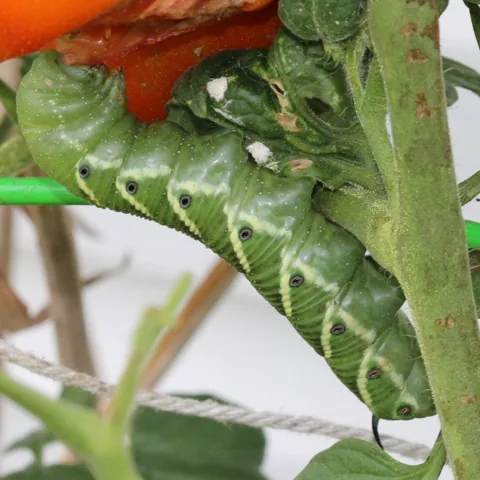 Tomato Hornworm
Manduca quinquemaculata
The tomato hornworm is one of the largest caterpillars in the vegetable garden, up to about 4 inches long, with a horn at its rear end. It chews leaves and fruit of tomato and related plants and can defoliate them quickly. UF/IFAS says hornworms can defoliate tomatoes in just a few days.
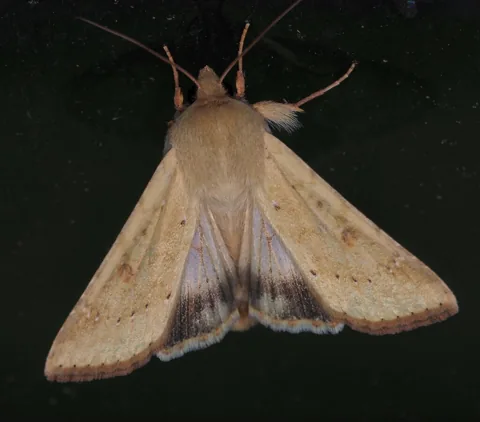 Corn Earworm (Tomato Fruitworm)
Helicoverpa zea
The corn earworm is the caterpillar usually found feeding at the tip of a sweet corn ear. The same species is called the tomato fruitworm when it bores into tomatoes, and the cotton bollworm in cotton, and it also feeds on peppers, beans, lettuce, okra, eggplant and other crops.
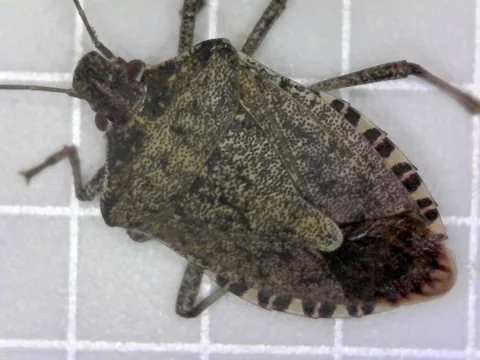 Brown Marmorated Stink Bug
Halyomorpha halys
The brown marmorated stink bug is an invasive insect from east Asia that damages fruit and vegetable crops and invades homes in fall looking for overwintering sites. Minnesota Extension says it feeds on about 200 plant species and, unlike the native stink bugs there, prefers to spend the winter in homes. Clemson notes that the bugs gather on outside walls before they move in.
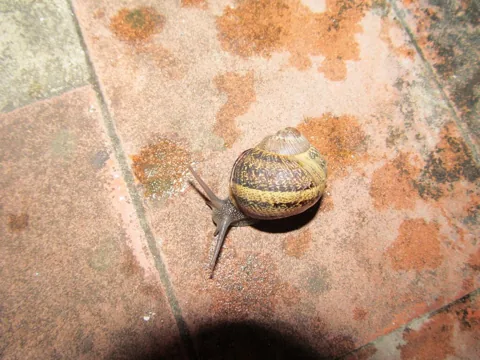 Snails and Slugs
Cornu aspersum (brown garden snail), Deroceras reticulatum (gray garden slug) and related species
Snails and slugs are garden mollusks that hide by day and feed at night, chewing holes in leaves, flowers and low fruit. Slugs are built and behave like snails, just without the external spiral shell, so this page covers both.
Tomato damage clues and the likely culprit
Look at the fruit, the leaves and the ground under the plant. Several of these pests hide during the day, so the clues they leave behind matter.[7][2]
- Leaves stripped and fruit chewed, with dark green or black droppings that are easy to see: tomato hornworms. Older hornworms can destroy several leaves as well as the fruit.[1][2]
- A hole in the fruit with the damage inside: tomato fruitworm. UC IPM notes fruitworms typically feed inside the fruit, creating a water cavity contaminated with feces; Clemson says larvae enter fruit soon after hatching.[4][3]
- Relatively neat holes with no droppings inside and shallow dry scars: armyworms, which UC IPM says often feed on the outside of the fruit. Cutworms can also feed on fruit touching the ground.[4]
- Irregular holes in ripening fruit close to the ground, often with a dried slime trail nearby: slugs or snails.[7][6]
- No real hole, but spongy areas and damaged tissue inside the fruit, or deformed fruit if it was hit while small: stink bugs, which pierce fruit and suck sap.[5][3]
- Big bites from the top of fruit still on the plant: rats, which cling to the plant and eat in place. Squirrels are more likely to carry the tomato off, so you may find only part of it nearby. Birds can also peck fruit.[8][10][9]
How to confirm the cause
- Look under the plant for large black or green droppings, then search the foliage for the hornworm itself; its color pattern makes it hard to spot despite its size.[2][1]
- Cut open a damaged tomato. A fruitworm hole leads to a wet cavity with droppings; armyworm holes usually have none.[4]
- Go out at night or early in the morning with a flashlight to catch slugs and snails feeding.[7][6]
- Note when damage happens: squirrels are active only during the day, while rats are active at night or at dusk and dawn.[8]
What to do next
- Hornworms: handpick them or snip them with shears. Leave any that carry white, rice-like cocoons; those are parasitic wasps that go on to attack other hornworms.[2][1]
- Slugs and snails: remove daytime hiding places such as boards, stones, weeds and flowerpots, and handpick at night.[7][6]
- Rats and squirrels: a UC Master Gardener recommends caging plants completely with metal mesh with holes no larger than ½ inch.[8]
- Stink bugs, fruitworms and other insects: see the guides below. Clemson notes that handpicking pests such as hornworms is an effective control in a home garden.[3]
Common questions
- What makes a big hole in the top of a ripe tomato overnight?
- Rats are a common cause. They eat tomatoes in place on the plant and are active at night, dusk and dawn; squirrels feed by day and usually carry the fruit away.[8]
- Do stink bugs make holes in tomatoes?
- They pierce the fruit and suck sap rather than chewing. Feeding can leave spongy areas and internal tissue damage, and young fruit can become deformed.[5][3]
- Are slugs a problem on tomatoes?
- Yes. UC IPM lists ripening fruits that are close to the ground, such as strawberries and tomatoes, among the things snails and slugs seriously damage.[7]
Photo credits
- Tomato Hornworm: (c) adam1420, some rights reserved (CC BY) — via iNaturalist, CC BY 4.0
- Corn Earworm (Tomato Fruitworm): (c) Rosario Douglas, some rights reserved (CC BY) — via iNaturalist, CC BY 4.0
- Brown Marmorated Stink Bug: (c) Stan Rullman, some rights reserved (CC BY) — via iNaturalist, CC BY 4.0
- Snails and Slugs: (c) zebedeugalinha, some rights reserved (CC BY) — via iNaturalist, CC BY 4.0
Sources
- University of Minnesota Extension, “Tomato hornworms in home gardens.” extension.umn.edu/yard-and-garden-insects/tomato-hornworms (accessed 2026-11-12)
- University of California Statewide IPM Program, “Hornworms (Pest Notes, Home and Landscape).” ipm.ucanr.edu/home-and-landscape/hornworms/ (accessed 2026-11-12)
- Clemson Cooperative Extension Home & Garden Information Center, “Tomato Insect Pests (HGIC 2218).” hgic.clemson.edu/factsheet/tomato-insect-pests/ (accessed 2026-11-12)
- University of California Statewide IPM Program, “Tomato: Distinguishing Armyworm, Cutworm, and Fruitworm Damage (Pest Management Guidelines).” ipm.ucanr.edu/PMG/C783/m783fpcatdmgid.html (accessed 2026-11-12)
- Penn State Extension, “Brown Marmorated Stink Bug.” extension.psu.edu/brown-marmorated-stink-bug (accessed 2026-11-12)
- University of Minnesota Extension, “Slugs in home gardens.” extension.umn.edu/yard-and-garden-insects/slugs (accessed 2026-11-12)
- University of California Statewide IPM Program, “Snails and Slugs (Pest Notes, Home and Landscape).” ipm.ucanr.edu/home-and-landscape/snails-and-slugs/ (accessed 2026-11-12)
- UC Master Gardener Program of Contra Costa County (UC ANR), “Can you tell me what's eating my beautiful tomatoes? Squirrels?.” ucanr.edu/node/145882 (accessed 2026-11-12)
- Penn State Extension, “Tree Squirrels.” extension.psu.edu/tree-squirrels (accessed 2026-11-12)
- Internet Center for Wildlife Damage Management, “Tree Squirrel Damage Identification.” icwdm.org/species/rodents/tree-squirrels/tree-squirrel-damage-identification/ (accessed 2026-11-12)