The short answer
- Get emergency care for chest pain, nausea, dizziness or signs of shock after stings, or trouble breathing after a scorpion sting.[15][19]
- See a doctor if a rash or fever develops in the weeks after a tick bite.[6]
- Remove attached ticks promptly; Lyme bacteria usually pass only after about 36 hours of feeding.[5][6]
- A suspected black widow or brown recluse bite should be seen by a doctor; bring the spider if you can.[8][10]
Profiles of biting and stinging pests
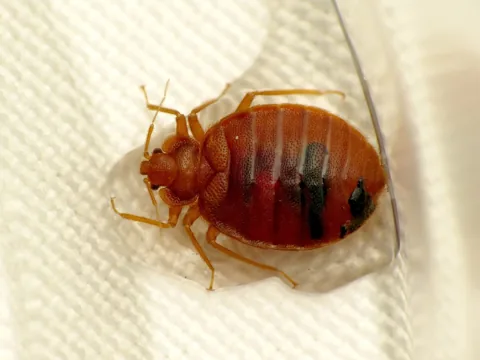 Bed Bug
Cimex lectularius
Bed bugs are wingless, blood-feeding insects that feed on sleeping or resting people, mostly at night; they have resurged worldwide and now turn up even in the finest hotels. CDC says they turn up in five-star hotels and resorts, and how clean a place is does not determine whether bed bugs are present.
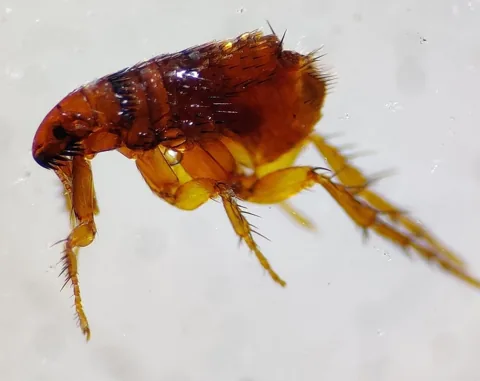 Cat Flea
Ctenocephalides felis
The cat flea is the most common external parasite of domestic cats and dogs, and the flea most often found on both. Adults spend most of their time on the pet, while eggs, larvae and pupae build up wherever the pet rests.
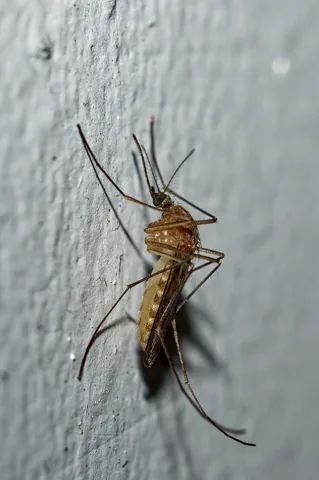 Mosquito
Culicidae (shown: Culex pipiens complex)
Mosquitoes are small, delicate flies whose females feed on blood and can pass on viruses such as West Nile; the control that works best goes after the larvae in standing water.
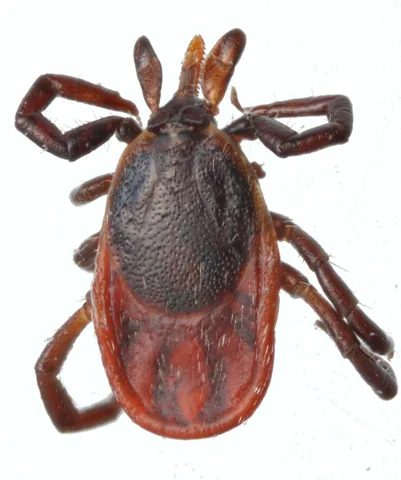 Blacklegged Tick
Ixodes scapularis
The blacklegged tick, often called the deer tick, is widely distributed across the eastern United States and spreads the bacteria that cause Lyme disease along with several other infections.
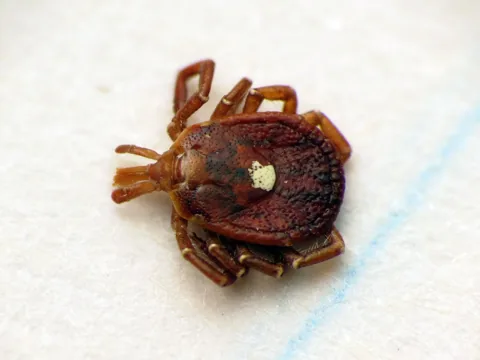 Lone Star Tick
Amblyomma americanum
The lone star tick is a very aggressive tick that readily bites people and pets across the Northeast, South and Midwest; its bite is linked to alpha-gal syndrome, a red meat allergy.
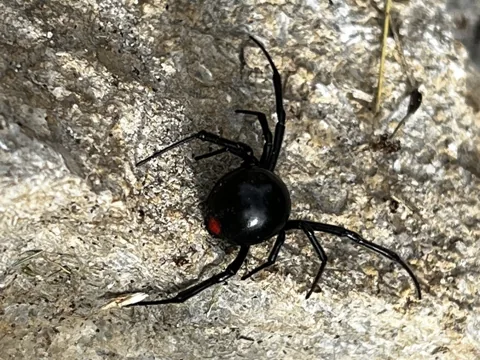 Southern Black Widow
Latrodectus mactans
Black widows are shy, web-building spiders with a neurotoxic venom; they live throughout North America and are most common in the southern and western United States. The southern black widow is found throughout states such as South Carolina.
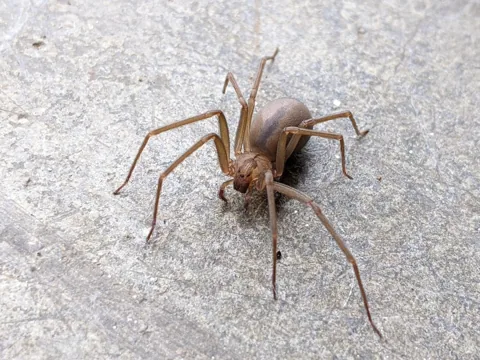 Brown Recluse
Loxosceles reclusa
The brown recluse is a secretive spider of the south-central and Midwestern United States whose bite can occasionally cause serious wounds; it is widely over-reported outside its range. The Illinois Department of Public Health says it occurs in roughly the southeastern quarter of the country and that bites are uncommon even where the spider is common.
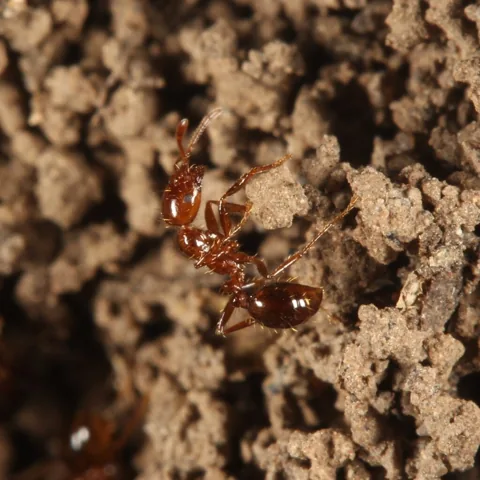 Red Imported Fire Ant
Solenopsis invicta
The red imported fire ant is an aggressive stinging ant that infests most of the southern United States and parts of California, building mounds in open, sunny areas such as lawns, parks and roadsides. USDA APHIS says imported fire ants came from South America, probably in soil on cargo ships, and now infest more than 367 million acres in Alabama, Arkansas, California, Florida, Georgia, Louisiana, Mississippi, North Carolina, Oklahoma, South Carolina, Tennessee, Texas, Virginia and Puerto Rico.
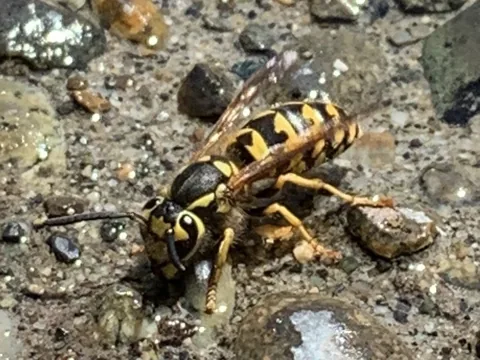 Western Yellowjacket
Vespula pensylvanica
Yellowjackets are social wasps that nest mostly in the ground and in wall voids, defend their nests vigorously, and become persistent scavengers at picnics and garbage cans in late summer and fall.
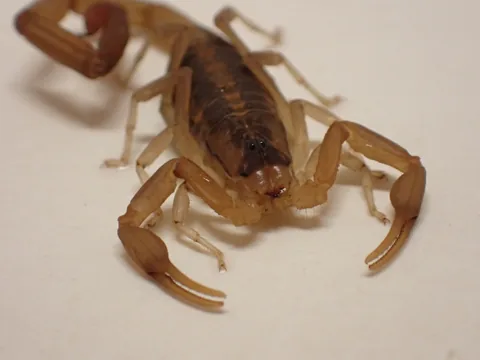 Scorpions
Order Scorpiones (shown: striped bark scorpion, Centruroides vittatus)
Scorpions are arachnids, relatives of spiders, ticks and mites, that hide by day and hunt insects at night. They live across the southern United States, and most U.S. stings are reported from Arizona, Texas and Nevada.
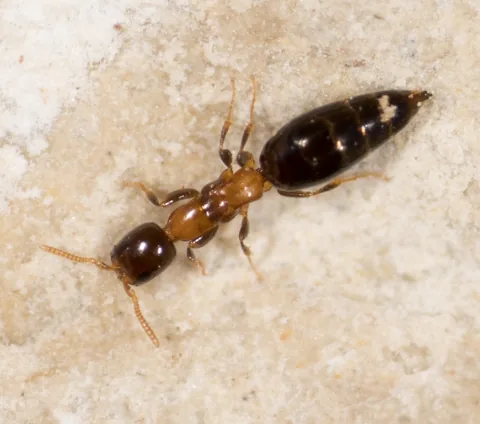 Sclerodermus Wasps
Sclerodermus species (S. carolinensis, S. macrogaster and S. ventura in North America)
Sclerodermus are tiny, ant-like flat wasps that parasitize wood-boring beetle larvae; when they share infested furniture or rafters with people, the females can sting.
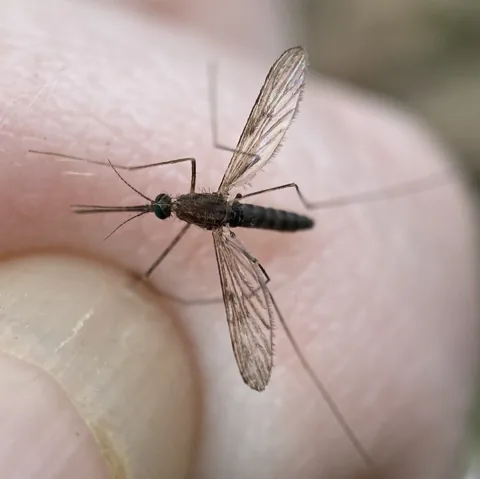 Common Malaria Mosquito
Anopheles quadrimaculatus (a complex of five sibling species)
The common malaria mosquito is a large, dark Anopheles mosquito of the eastern United States. It was the most important malaria carrier in the Southeast, still serves as the primary vector in eastern outbreaks, and bites livestock, deer and, to a lesser extent, people.
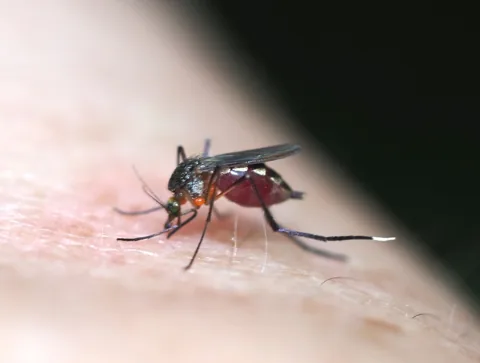 White-Footed Woods Mosquito
Psorophora ferox
Psorophora ferox, the white-footed woods mosquito, breeds in temporary woodland pools that fill with rain and is a persistent, painful biter that attacks readily during the day. UF/IFAS Featured Creatures says it is native to most of North and South America, has several generations a year, and frequently and voraciously bites people.
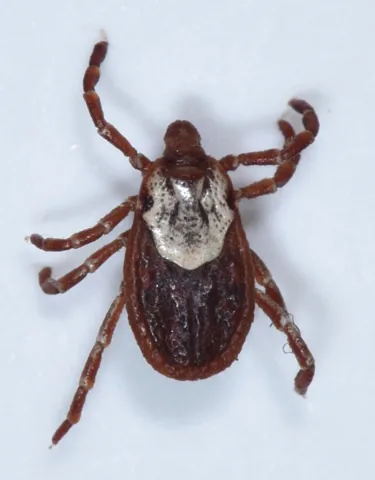 American Dog Tick
Dermacentor variabilis
The American dog tick, also called the wood tick, is widely distributed east of the Rocky Mountains. Adult females are the stage most likely to bite people, especially in spring and summer, and adults commonly climb to the crown of the head.
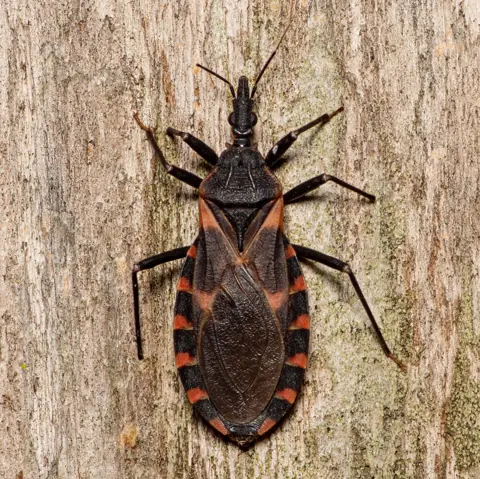 Eastern Bloodsucking Conenose
Triatoma spp. (shown: T. sanguisuga)
Kissing bugs are blood-feeding insects, active mostly at night, that can carry Trypanosoma cruzi, the parasite that causes Chagas disease. They have been found in 29 U.S. states, and studies of bugs collected in the United States have found the parasite in roughly one in six to nearly two in three of those tested, depending on the place.
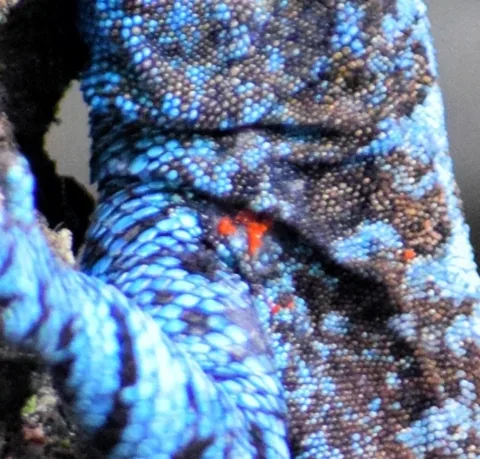 Chiggers
Trombiculidae (e.g., Trombicula / Eutrombicula alfreddugesi)
Chiggers are the tiny larvae of mites; only the larva bites, and its feeding causes intense itching and small red welts. Contrary to popular belief, chiggers don't burrow into the skin or suck blood.
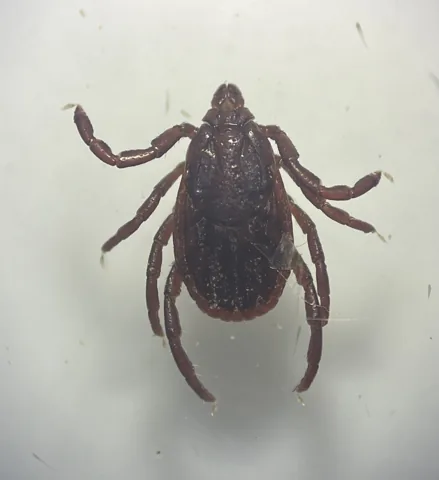 Brown Dog Tick
Rhipicephalus sanguineus
The brown dog tick is unusual: unlike most ticks, it can complete its entire life cycle indoors. It occurs across the United States, is met more often in the southern states, and can build up to high numbers on dogs and in homes and kennels. UF/IFAS Featured Creatures adds that this lets it set up populations even in colder climates.
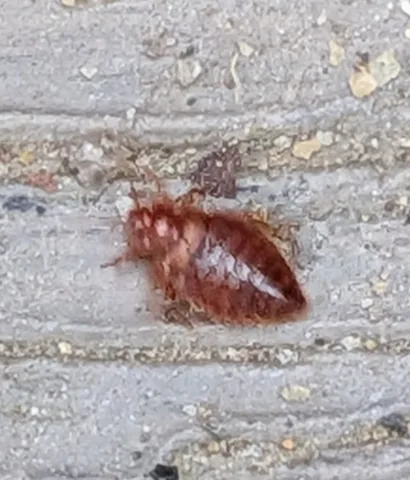 Bat Bugs
Cimex adjunctus (eastern bat bug) and Cimex pilosellus (western bat bug)
Bat bugs are close relatives of bed bugs that feed on the blood of roosting bats. They turn up in homes that have bats in the attic or walls, and they may bite people when the bats leave or are shut out.
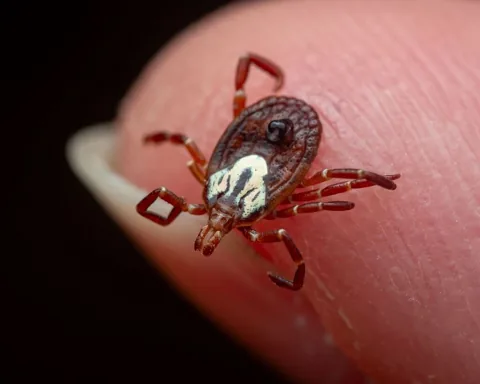 Gulf Coast Tick
Amblyomma maculatum
The Gulf Coast tick is a hard tick of grass prairies, coastal uplands and shrubby, recently disturbed ground with little or no tree cover. Adults bite people, and it is the principal carrier of Rickettsia parkeri, which causes a form of spotted fever, and of the parasite behind American canine hepatozoonosis in dogs.
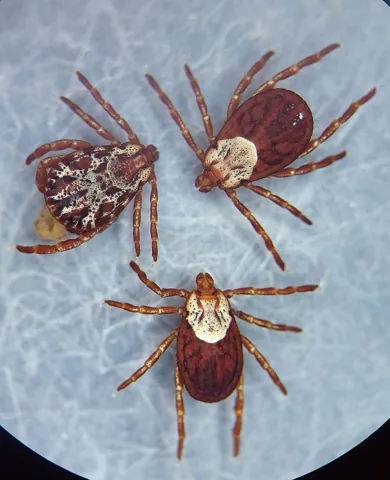 Rocky Mountain Wood Tick
Dermacentor andersoni
The Rocky Mountain wood tick is the tick most often found on people and pets in Colorado and Utah. It is most active in spring, then goes dormant as the weather turns hot and dry, and it is the vector of Colorado tick fever.
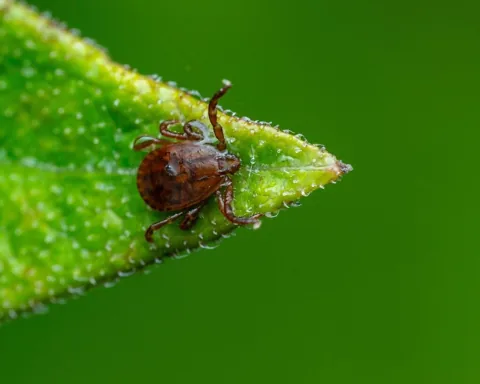 Asian Longhorned Tick
Haemaphysalis longicornis
The Asian longhorned tick is an invasive tick first reported in the United States in 2017. U.S. females lay eggs without mating, which APHIS describes as essentially cloning themselves, so huge numbers can build up on livestock, pets and wildlife and in grass.
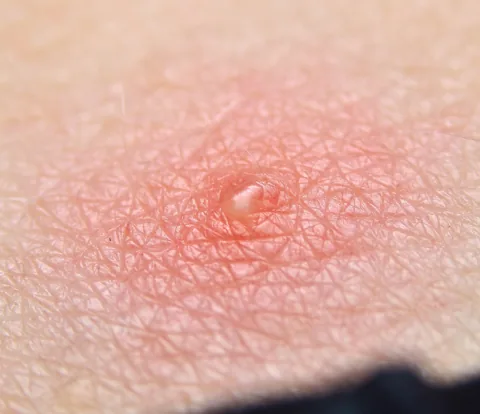 Oak Leaf Itch Mite
Pyemotes herfsi
The oak leaf itch mite is a nearly invisible predatory mite that feeds on gall-making midge larvae on oak leaves. When its numbers explode in late summer and fall, mites fall from the trees and bite people underneath, leaving very itchy red bumps. The mites cannot live on people, do not survive indoors and are not known to transmit disease; tree sprays don't help, so avoidance and washing up are the main defenses.
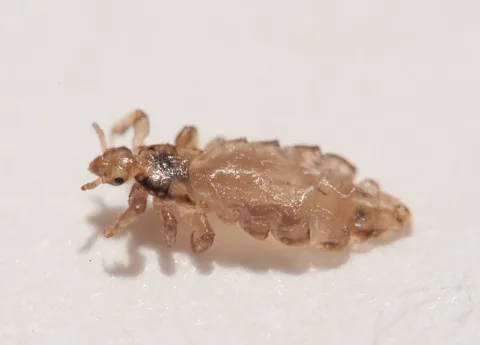 Head Louse
Pediculus humanus capitis
Head lice are tiny wingless insects that live their whole lives on the human head and feed on small amounts of blood from the scalp. They make the scalp itch but don't spread disease and aren't a sign of being dirty. Getting rid of them means treating the person with a lice medicine and combing out lice and nits, not treating the house.
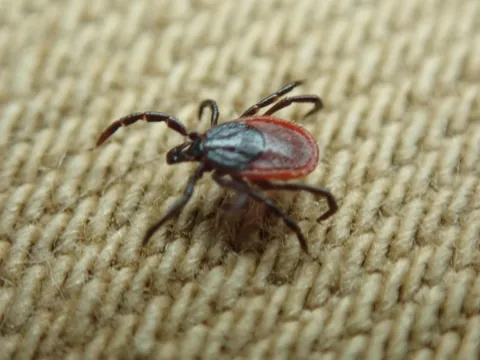 Western Blacklegged Tick
Ixodes pacificus
The western blacklegged tick is the Pacific Coast relative of the eastern deer tick and, in California, the only tick whose nymphs and adult females pass Lyme disease bacteria to people. It attaches to people more often than any other tick species in the state.
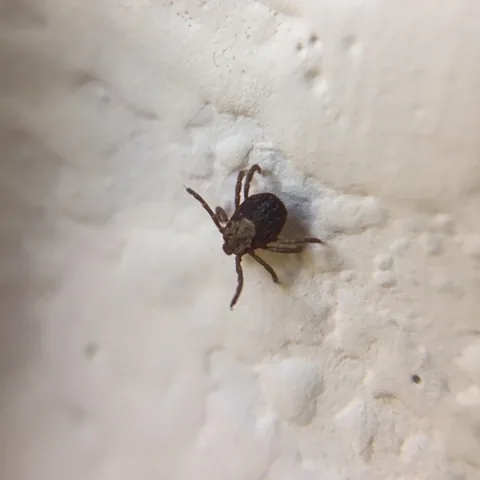 Pacific Coast Tick
Dermacentor occidentalis
The Pacific Coast tick is one of the most widespread ticks in California and a frequently reported human biter. It is the primary vector of Pacific Coast tick fever, a spotted fever related to Rocky Mountain spotted fever.
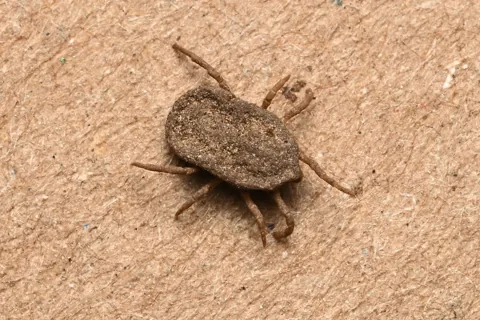 Soft Ticks (relapsing fever ticks)
Ornithodoros species (mainly O. hermsi and O. turicata in the U.S.)
Soft ticks live in rodent nests, often inside the walls and floors of rustic cabins, and come out at night to feed briefly on sleeping people. In the U.S., infected Ornithodoros soft ticks spread soft tick relapsing fever.
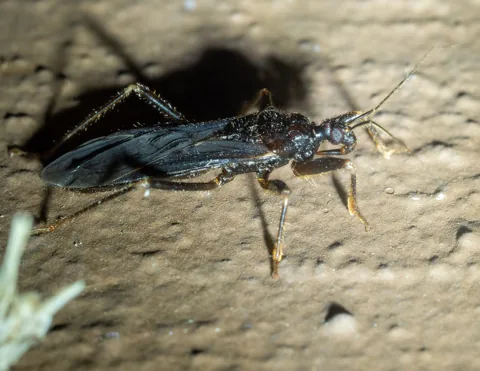 Masked Hunter
Reduvius personatus
The masked hunter is a predatory assassin bug that often lives inside homes and hunts other insects at night. It doesn't feed on blood, and indoors it is mainly a nuisance and a sign that other insects are present.
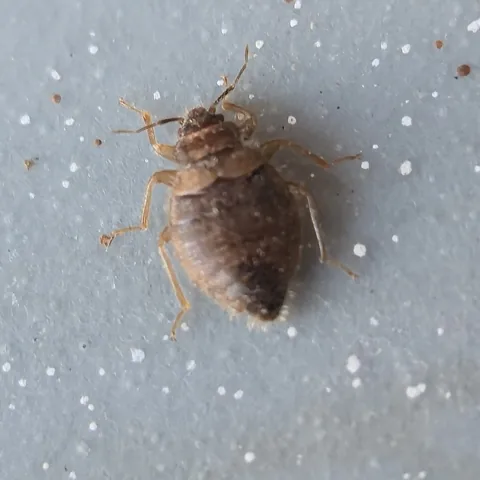 Swallow Bug
Oeciacus vicarius
Swallow bugs are close relatives of bed bugs that feed on the blood of swallows, mainly cliff swallows and sometimes barn swallows. They live in and around mud nests on buildings and bite people mainly when their birds are away.
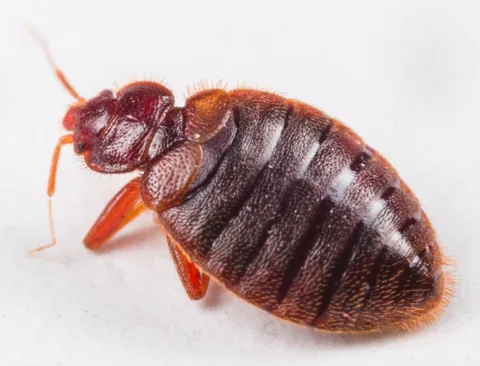 Tropical Bed Bug
Cimex hemipterus
The tropical bed bug is one of two bed bug species that feed on people. UC IPM says it is the dominant species in the tropics, and a 2021 study describes it spreading to new areas, including the United States, northern Australia, the Middle East, Russia and Central Europe.
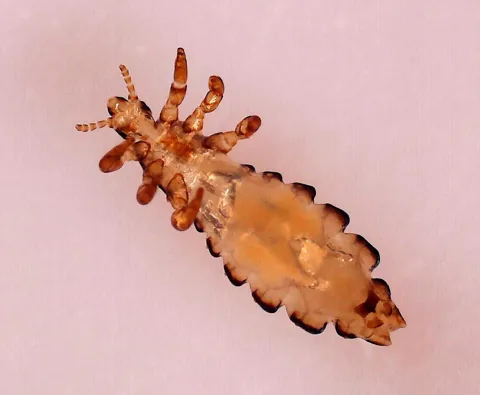 Body lice
Pediculus humanus humanus
Body lice are tiny insects that feed on human blood but live and lay their eggs in clothing and bedding. Unlike head lice, they can spread disease. They mostly affect people who can't bathe or change clothes regularly, and an infestation is usually cleared with regular bathing, clean clothes and hot-water laundering of clothes and bedding.
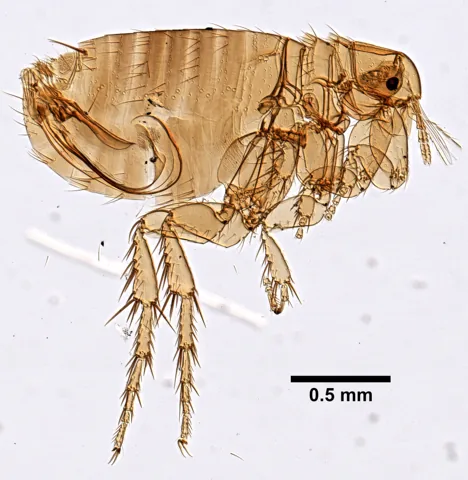 Oriental Rat Flea
Xenopsylla cheopis
The oriental rat flea is a parasite of rats and other small mammals and is best known for spreading two diseases to people: plague and flea-borne (murine) typhus. People are incidental hosts.
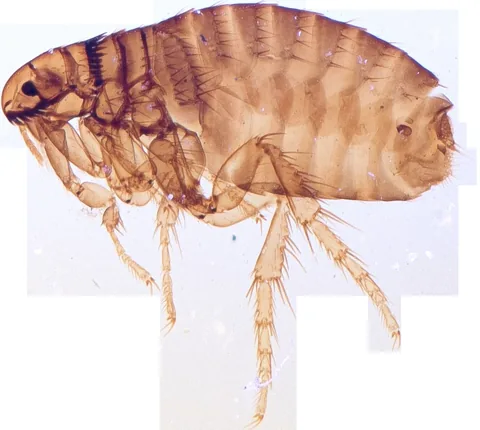 Dog Flea
Ctenocephalides canis
The dog flea looks very much like the cat flea but is the less common of the two on U.S. pets: UC IPM says the cat flea is the most common external parasite on domestic cats and dogs and calls the dog flea rare in California. In some countries, such as South Korea and Uzbekistan, surveys have found it to be the main flea on dogs.
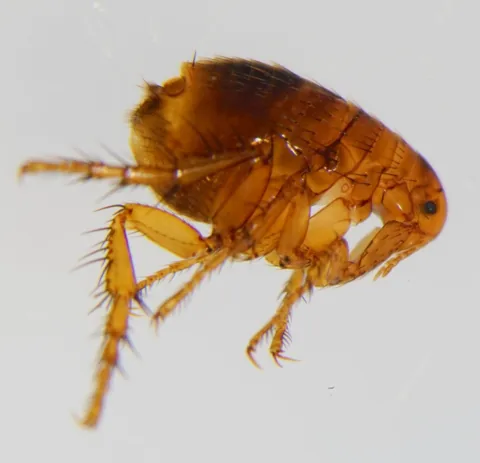 Human Flea
Pulex irritans
The human flea is a bloodsucking flea with a long association with people, one of its main hosts, though it also feeds on a wide range of wild and domestic animals. UF/IFAS notes it has even been found in archaeological sediments in Europe and Greenland.
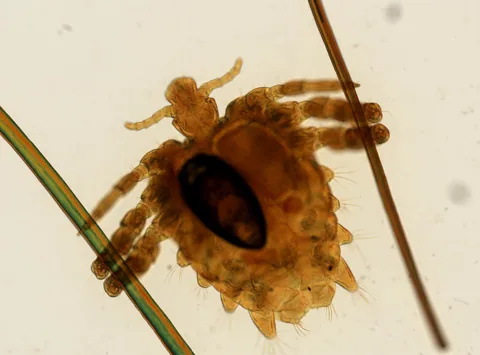 Crab Lice (Pubic Lice)
Pthirus pubis
Crab lice, or pubic lice (Pthirus pubis), are blood-feeding insects found only on people, usually in pubic hair, and they spread mostly through sexual contact.
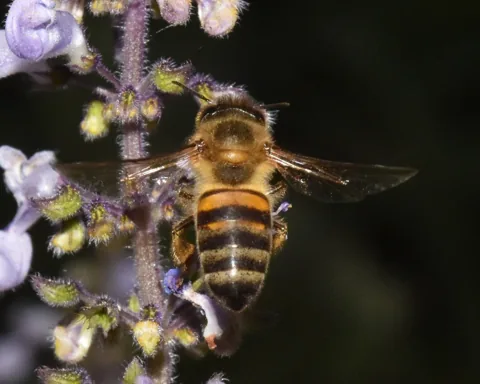 Africanized Honey Bee
Apis mellifera scutellata and its hybrids with European honey bees (Apis mellifera)
Africanized honey bees descend from African honey bees taken to Brazil in the 1950s that got into the wild and bred with European honey bees. They look like ordinary honey bees and carry the same venom, but colonies respond faster, in greater numbers and over a wider area when their nest is disturbed. UF/IFAS's Featured Creatures profile says the African subspecies was imported into Brazil in the late 1950s for a breeding program to make it gentler, which ended when the bees swarmed accidentally out of quarantine.
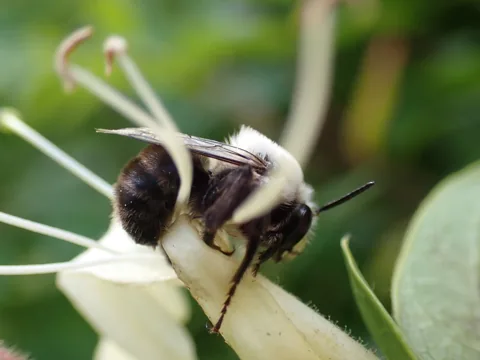 Chimney bee (miner bee)
Anthophora abrupta
The chimney bee is a solitary digger bee that nests in the ground, often in large groups, and builds a mud chimney over its nest entrance. Digger bees are not aggressive. UF/IFAS calls it gregarious yet solitary: nests cluster like a small village, but each female cares only for her own nest, and the bees are not aggressive or defensive of their nests and do not typically sting.
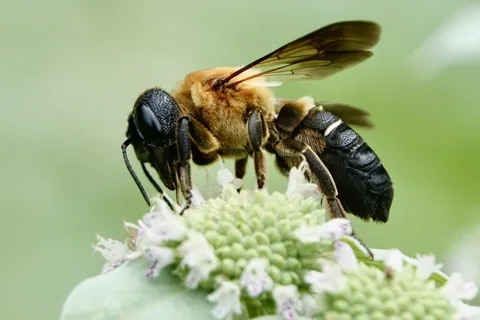 Giant Resin Bee
Megachile sculpturalis
The giant resin bee is a large East Asian bee that moves into holes carpenter bees and other insects have already made, because it can't bore its own tunnels in wood.
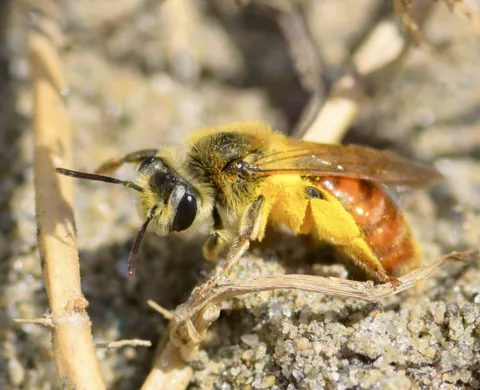 Mining Bees
Andrena species
Mining bees, genus Andrena, are solitary native bees that nest in the ground, often in dense spring aggregations in lawns and bare soil. They pollinate spring flowers and fruit crops, aren't aggressive, and Penn State says they aren't considered pests.
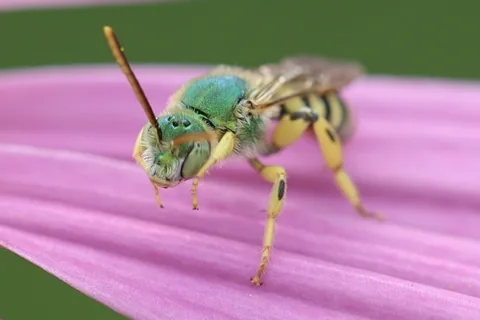 Sweat Bees
Family Halictidae (e.g., Halictus, Lasioglossum and Agapostemon)
Sweat bees are small native bees, many of them shiny metallic green or blue, that are drawn to human perspiration for its moisture and salt. They are not aggressive and are important pollinators of wildflowers and crops.
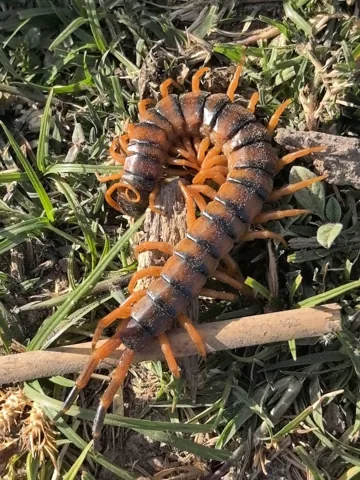 Giant desert centipede (giant redheaded centipede)
Scolopendra heros
The giant desert centipede, also called the giant redheaded centipede, is the largest centipede in North America: a fast, brightly colored predator that hides under rocks and wood by day. It is beneficial outdoors, but its bite is painful, so keep it out of the house by sealing gaps and remove any that wander in with tongs and a jar rather than bare hands.
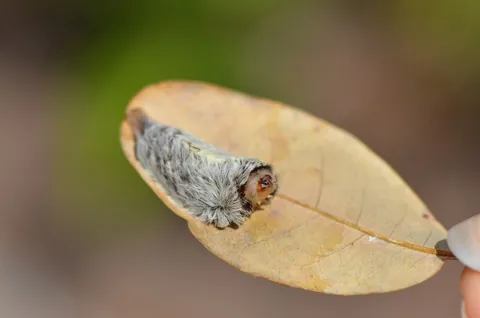 Puss Caterpillar (southern flannel moth)
Megalopyge opercularis
The puss caterpillar is the larva of the southern flannel moth. Its soft, fur-like coat hides short venomous spines, and medical reviews count it among the most serious stinging caterpillars in North America. UF/IFAS calls it one of the most venomous caterpillars in the United States, and its adult is the most common of the five flannel moth species in the Southeast.
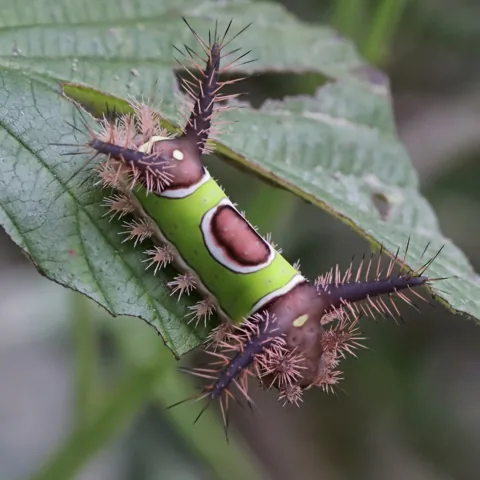 Saddleback Caterpillar
Acharia stimulea
The saddleback caterpillar is a slug caterpillar, a stinging moth larva named for the saddle-shaped spot in the middle of its green back. Clemson calls it the most common slug caterpillar, and poison center records list it among the caterpillars that actually cause stings.
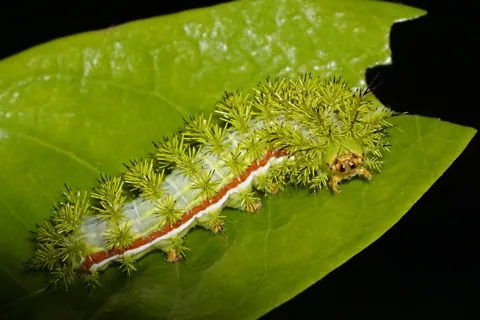 Io Moth Caterpillar
Automeris io
The io moth caterpillar is the larva of a giant silkworm moth. Most giant silkworm caterpillars are harmless, but this one carries stinging spines, and Clemson calls it the largest stinging caterpillar commonly encountered in South Carolina. UF/IFAS calls the io one of the most recognizable moths, thanks to the big eyespots on its hind wings.
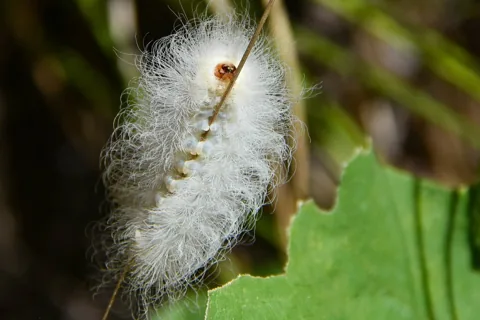 Black-waved Flannel Moth
Megalopyge crispata (also listed as Lagoa crispata)
The black-waved, or crinkled, flannel moth caterpillar is a fuzzy caterpillar that looks a lot like the puss caterpillar. Its coat of long, soft hairs hides short venomous spines that sting if you brush against it or pick it up.
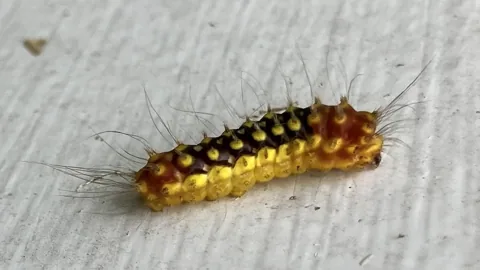 White Flannel Moth
Norape ovina
The white flannel moth caterpillar, also called the hackberry leafslug, is a stinging caterpillar that NC State says turns up more often on redbud than on hackberry. Brushing bare skin against it breaks off stinging hairs, and the sting is about like a bee's or wasp's.
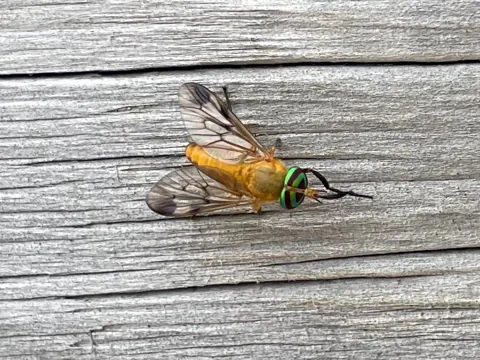 Yellow Fly
Diachlorus ferrugatus
The yellow fly, Diachlorus ferrugatus, is a biting fly in the same family as deer flies and horse flies and is common in the southeastern United States. Only the females bite, and their bites are painful and can swell fast. UF/IFAS calls the female one of the most serious biting fly pests wherever it occurs.
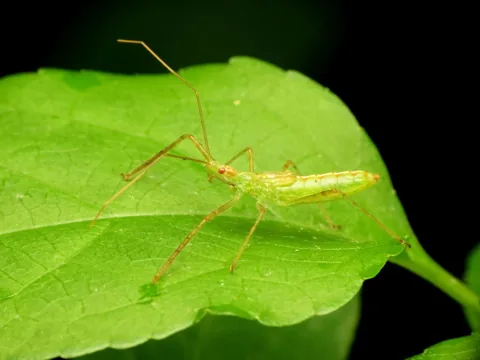 Pale Green Assassin Bug
Zelus luridus
The pale green assassin bug is a slender, long-legged green bug that hunts other insects on the leaves of trees and shrubs. It is a beneficial predator, but like other assassin bugs it can bite if handled carelessly.
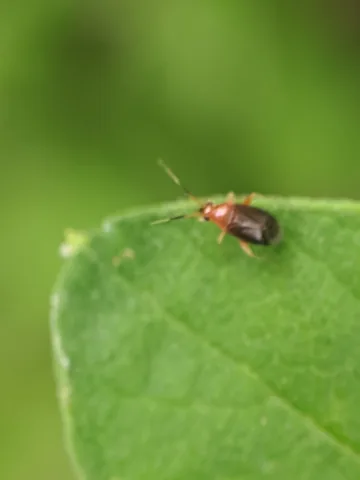 Azalea Plant Bug
Rhinocapsus vanduzeei
The azalea plant bug is a tiny native plant bug, about 1/8 inch long, that lives in azalea flowers in spring. It does little harm to the plants, slightly deforming some flowers and mattering mainly on azaleas grown for seed, but it often bites gardeners working in their azaleas, leaving a painful, chigger-like welt. Control is rarely needed; if it is, products labeled for plant bugs, such as carbaryl (Sevin) or pyrethrins, should work.
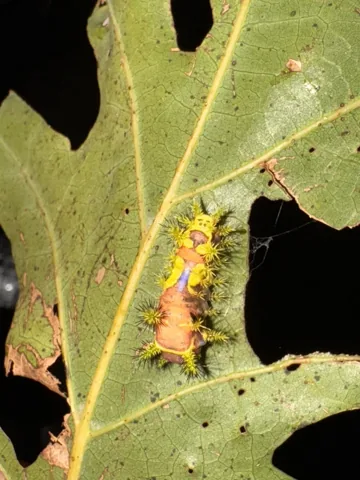 Oriental Moth
Monema flavescens (formerly Cnidocampa flavescens)
The oriental moth is an Asian slug moth whose brightly colored caterpillars, called stinging nettle caterpillars, carry spines that sting like nettles. In the United States it is known only from eastern Massachusetts, where it is rarely seen and causes no measurable damage to trees. Don't touch the caterpillars; if one stings you, pull the spines out with tape and wash the spot. If you find one in Massachusetts, photograph it and report it to the state Department of Agricultural Resources.
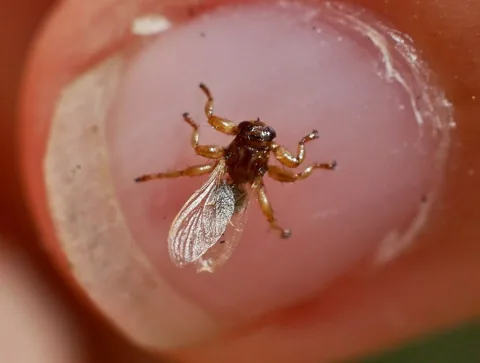 European Deer Ked
Lipoptena cervi (European deer ked); also L. mazamae, L. depressa and Neolipoptena ferrisi
Deer keds are flat, brown flies that feed on the blood of deer; once they land on a host they shed their wings and look like odd ticks, and they often land on and bite hunters, deer processors and hikers in fall.
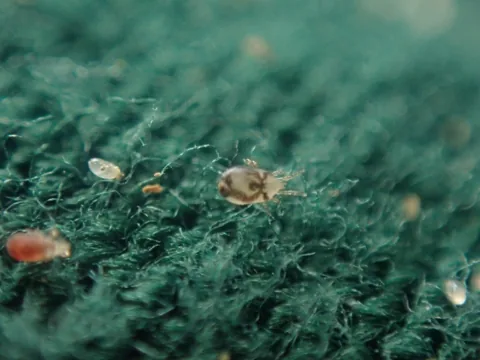 Northern Fowl Mite
Ornithonyssus sylviarum
The northern fowl mite is a tiny blood-feeding mite that Mississippi State Extension calls the most serious external parasite of poultry in North America. It lives its whole life on chickens and other birds, crowding around the vent, and heavy infestations cause anemia, fewer eggs and even death.
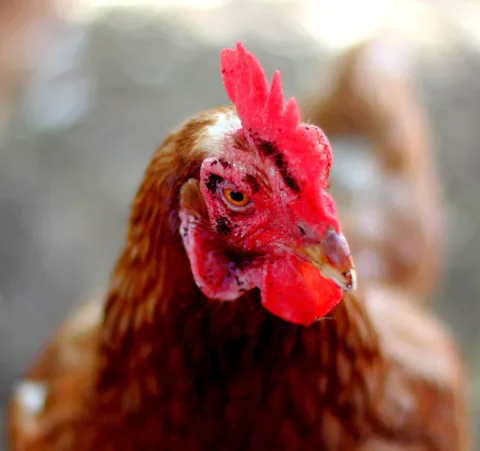 Sticktight Flea
Echidnophaga gallinacea
The sticktight flea is a small, dark flea that embeds its mouthparts in its host's skin and stays put for days or weeks. Texas A&M's veterinary diagnostic lab calls it the main flea pest of poultry, and it also attaches to dogs, cats and people.
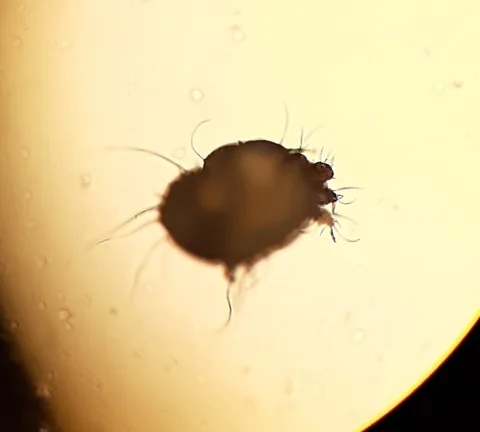 Scabies mite
Sarcoptes scabiei
Scabies is a skin infestation caused by a microscopic mite, Sarcoptes scabiei, that burrows into the upper layer of the skin of people and many other mammals. Its hallmark is intense itching, especially at night, and it spreads mainly through direct, prolonged skin-to-skin contact.
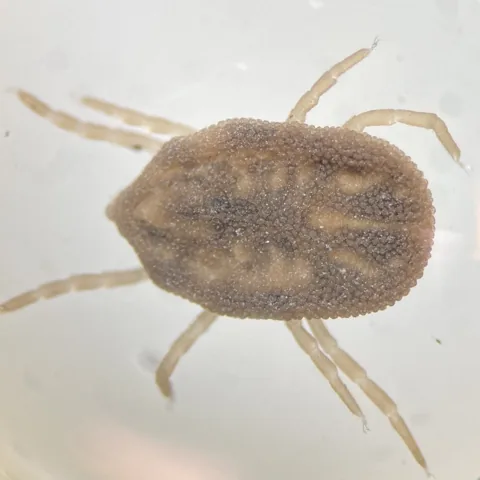 Bat tick
Carios kelleyi (formerly Ornithodoros kelleyi; iNaturalist: Alectorobius kelleyi)
The bat tick, Carios kelleyi, is a soft tick that lives in the cracks and crevices of bat roosts in houses and other buildings. It feeds on bats, and people usually meet it only after the bats leave or are evicted and the hungry ticks start to wander in search of another meal.
No photo yet
Cheyletiella mites
Cheyletiella yasguri (dogs), C. blakei (cats) and C. parasitivorax (rabbits)
Cheyletiella mites live in the fur of dogs, cats and rabbits. They can often be seen moving in the hair coat, which gives the infestation its nickname, walking dandruff. People who handle infested pets can get an itchy rash, but the mites do not stay long on humans and do not complete their life cycle on people; once the pets are treated, the rash in people clears on its own.
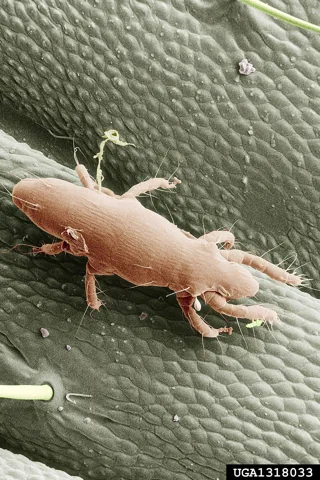 Straw itch mite
Pyemotes tritici
The straw itch mite is a microscopic mite that lives in hay, straw, dried beans and stored grain, where it preys on the insects infesting them. It does not live on people, but anyone who carries, handles or sits on infested bales can get intensely itchy red welts, usually 11 to 18 hours later. The fix is to get rid of the infested material, and to wear long sleeves and repellent when handling bales.
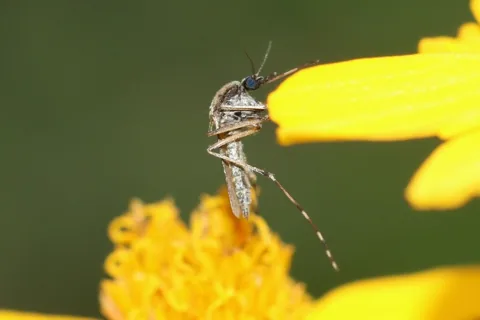 Eastern saltmarsh mosquito
Aedes sollicitans
The eastern saltmarsh mosquito is a major pest along the coast from Atlantic Canada to Texas. Huge broods hatch from salt marsh pools after unusually high tides or heavy rain, and the females fly inland and bite persistently, by day or night.
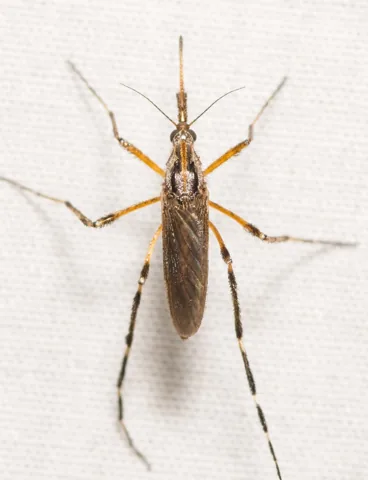 Gallinipper
Psorophora ciliata
The gallinipper is a very large mosquito, about the size of a quarter, with heavily scaled legs banded in yellow and black. It breeds in rain-flooded pools and fields, its larvae eat other mosquito larvae, and the females bite painfully, even in the daytime.
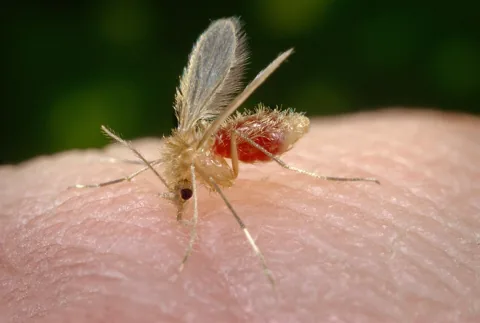 Phlebotomine sand flies
Lutzomyia species (subfamily Phlebotominae; in the U.S. mainly Lu. anthophora, Lu. diabolica, Lu. shannoni and Lu. vexator)
Phlebotomine sand flies are tiny, hairy-winged biting flies that are active mostly from dusk to dawn. In the United States, Lutzomyia sand flies carry the Leishmania parasites that cause cutaneous leishmaniasis, a skin disease people occasionally catch locally, mostly in Texas.
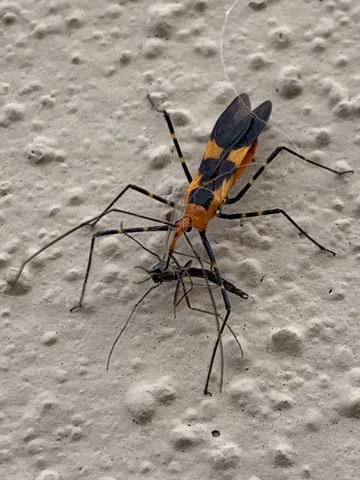 Milkweed assassin bug
Zelus longipes
The milkweed assassin bug is a long-legged, orange and black predator of gardens and fields. Some color forms may mimic the milkweed bug. It is a beneficial insect, but like other assassin bugs it can give a painful bite if handled carelessly. UF/IFAS says it is also called the longlegged assassin bug or Zelus assassin bug, and that it hunts by day.
Biting insects
- Bed bugs: bites can cause itchy, allergic swellings that may become infected if scratched; bed bugs have never been shown to transmit human disease. Bites alone can't confirm bed bugs.[1]
- Fleas: bites usually cause minor itching, but some people and pets develop flea allergy dermatitis; cat fleas can transmit cat flea rickettsiosis and carry tapeworm.[2]
- Mosquitoes: Culex mosquitoes carry West Nile virus, which causes no symptoms in about 80% of infected people and serious neurological illness in about 1 in 150. Aedes aegypti and Aedes albopictus can transmit Zika, dengue and chikungunya.[3]
Ticks
- Blacklegged (deer) ticks transmit Lyme disease, anaplasmosis, babesiosis, ehrlichiosis and Powassan virus.[4][5]
- Lone star ticks can transmit ehrlichiosis, tularemia and Heartland and Bourbon viruses, and are the tick most often linked to alpha-gal syndrome, a potentially life-threatening allergy to red meat.[4][7]
- American dog ticks can transmit Rocky Mountain spotted fever and tularemia.[4]
Spiders
- Black widow: bites are rare; symptoms can include spreading pain, muscle cramps, rigid abdominal muscles, sweating and nausea, with little swelling at the bite. Seek care right away; an antivenom exists.[8][9]
- Brown recluse: most bites heal within three weeks, but some form a necrotic wound that takes months; many skin conditions, including staph infections, are misdiagnosed as recluse bites, especially outside the spider's range.[10][11]
- Yellow sac spider: initial pain like a bee sting, redness and sometimes swelling.[12][13]
- Wolf spider: bites only if handled or trapped; pain, redness and some swelling that usually fade within a day.[14][13]
Stinging insects and scorpions
- Fire ants: one ant can sting repeatedly, causing burning pain and a white pustule that lasts weeks and can scar if infected.[15][16]
- Yellowjackets and wasps: stings range from short-term pain to life-threatening allergic reactions, and multiple stings can damage the kidneys. Yellowjackets can sting repeatedly.[17][18]
- Scorpions: most stings cause intense local burning that fades in about 30 minutes; bark scorpion stings can cause numbness, trouble breathing, muscle twitching and convulsions, especially in children and older adults, and need immediate care.[19]
Finding what's biting
Because reactions vary and other pests bite too, look for the source: bed bugs and their signs along mattress seams, fleas on pets, ticks after time outdoors.[1][2][5]
Common questions
- Can a doctor tell what bit me from the bite?
- Usually not reliably; reactions vary, and conditions such as staph infections are often mistaken for spider bites.[1][10]
- How soon should I remove a tick?
- As soon as you find it; Lyme bacteria usually pass only after the tick has fed for about 36 hours.[5][6]
Photo credits
- Bed Bug: (c) Katja Schulz, some rights reserved (CC BY) — via iNaturalist, CC BY 4.0
- Cat Flea: (c) Thomas Gyselinck, some rights reserved (CC BY) — via iNaturalist, CC BY 4.0
- Mosquito: (c) Donald Davesne, some rights reserved (CC BY) — via iNaturalist, CC BY 4.0
- Blacklegged Tick: (c) Christian Back, some rights reserved (CC BY) — via iNaturalist, CC BY 4.0
- Lone Star Tick: (c) Katja Schulz, some rights reserved (CC BY) — via iNaturalist, CC BY 4.0
- Southern Black Widow: Carol Spence, public domain (CC0), via iNaturalist
- Brown Recluse: iamfindingplants, public domain (CC0), via iNaturalist
- Red Imported Fire Ant: (c) Natasha Taylor, some rights reserved (CC BY) — via iNaturalist, CC BY 4.0
- Western Yellowjacket: (c) eebee, some rights reserved (CC BY) — via iNaturalist, CC BY 4.0
- Scorpions: (c) dhasdf, some rights reserved (CC BY) — via iNaturalist, CC BY 4.0
- Sclerodermus Wasps: Jesse Rorabaugh, public domain (CC0), via iNaturalist
- Common Malaria Mosquito: (c) fuzzyspider, some rights reserved (CC BY) — via iNaturalist, CC BY 4.0
- White-Footed Woods Mosquito: (c) Jeff Clark, some rights reserved (CC BY) — via iNaturalist, CC BY 4.0
- American Dog Tick: (c) Don Loarie, some rights reserved (CC BY) — via iNaturalist, CC BY 4.0
- Eastern Bloodsucking Conenose: (c) Justin Williams, some rights reserved (CC BY) — via iNaturalist, CC BY 4.0
- Chiggers: (c) Alberto Alcalá, some rights reserved (CC BY) — via iNaturalist, CC BY 4.0
- Brown Dog Tick: (c) NoahM, some rights reserved (CC BY) — via iNaturalist, CC BY 4.0
- Bat Bugs: (c) Jason Hill, some rights reserved (CC BY) — via iNaturalist, CC BY 4.0
- Gulf Coast Tick: (c) Zachary Dankowicz, some rights reserved (CC BY) — via iNaturalist, CC BY 4.0
- Rocky Mountain Wood Tick: (c) Toby, some rights reserved (CC BY) — via iNaturalist, CC BY 4.0
- Asian Longhorned Tick: (c) Zachary Dankowicz, some rights reserved (CC BY) — via iNaturalist, CC BY 4.0
- Oak Leaf Itch Mite: (c) Zachary Dankowicz, some rights reserved (CC BY) — via iNaturalist, CC BY 4.0
- Head Louse: (c) Rolf Lawrenz, some rights reserved (CC BY) — via iNaturalist, CC BY 4.0
- Western Blacklegged Tick: Randal, public domain (CC0), via iNaturalist
- Pacific Coast Tick: Stanley, public domain (CC0), via iNaturalist
- Soft Ticks (relapsing fever ticks): (c) Trevor Van Loon, some rights reserved (CC BY) — via iNaturalist, CC BY 4.0
- Masked Hunter: (c) Forest Botial-Jarvis, some rights reserved (CC BY) — via iNaturalist, CC BY 4.0
- Swallow Bug: (c) John Clonce, some rights reserved (CC BY) — via iNaturalist, CC BY 4.0
- Tropical Bed Bug: (c) portioid, some rights reserved (CC BY) — via iNaturalist, CC BY 4.0
- Body lice: (c) Christine Young, some rights reserved (CC BY) — via iNaturalist, CC BY 4.0
- Oriental Rat Flea: Daniel J. Drew, public domain (CC0), via Wikimedia Commons
- Dog Flea: Ctenocephalides canis by Hallvard Elven, Naturhistorisk museum, Universitetet i Oslo — via Wikimedia Commons, CC BY 3.0
- Human Flea: (c) carnifex, some rights reserved (CC BY) — via iNaturalist, CC BY 4.0
- Crab Lice (Pubic Lice): Daniel J. Drew, public domain (CC0), via Wikimedia Commons
- Africanized Honey Bee: (c) Sunčana Bradley, some rights reserved (CC BY) — via iNaturalist, CC BY 4.0
- Chimney bee (miner bee): (c) Evan M. Raskin, some rights reserved (CC BY) — via iNaturalist, CC BY 4.0
- Giant Resin Bee: (c) Louise Woodrich, some rights reserved (CC BY) — via iNaturalist, CC BY 4.0
- Mining Bees: (c) Bernie Paquette, some rights reserved (CC BY) — via iNaturalist, CC BY 4.0
- Sweat Bees: (c) eebee, some rights reserved (CC BY) — via iNaturalist, CC BY 4.0
- Giant desert centipede (giant redheaded centipede): Sinaloa Silvestre, public domain (CC0), via iNaturalist
- Puss Caterpillar (southern flannel moth): Center for Urban Ecology, public domain (CC0), via iNaturalist
- Saddleback Caterpillar: Dennis White, public domain (CC0), via iNaturalist
- Io Moth Caterpillar: (c) Eridan Xharahi, some rights reserved (CC BY) — via iNaturalist, CC BY 4.0
- Black-waved Flannel Moth: (c) Jay Pruett, some rights reserved (CC BY) — via iNaturalist, CC BY 4.0
- White Flannel Moth: (c) Antonio Lupercio, some rights reserved (CC BY) — via iNaturalist, CC BY 4.0
- Yellow Fly: (c) Philip Curley, some rights reserved (CC BY) — via iNaturalist, CC BY 4.0
- Pale Green Assassin Bug: (c) Katja Schulz, some rights reserved (CC BY) — via iNaturalist, CC BY 4.0
- Azalea Plant Bug: cgmayers, public domain (CC0), via iNaturalist
- Oriental Moth: (c) Teá Montagna, some rights reserved (CC BY) — via iNaturalist, CC BY 4.0
- European Deer Ked: (c) Roman, some rights reserved (CC BY) — via iNaturalist, CC BY 4.0
- Northern Fowl Mite: Deniz Wilson, public domain (CC0), via iNaturalist
- Sticktight Flea: Tradimus, public domain (CC0), via Wikimedia Commons
- Scabies mite: Tero Linjama, public domain (CC0), via iNaturalist
- Bat tick: (c) Jody, some rights reserved (CC BY) — via iNaturalist, CC BY 4.0
- Straw itch mite: Eric Erbe, USDA Agricultural Research Service, Bugwood.org (CC BY 3.0 US) — via bugwood, CC BY 3.0
- Eastern saltmarsh mosquito: (c) Rich Sommer, some rights reserved (CC BY) — via iNaturalist, CC BY 4.0
- Gallinipper: (c) Justin Williams, some rights reserved (CC BY) — via iNaturalist, CC BY 4.0
- Phlebotomine sand flies: James Gathany, CDC Public Health Image Library 10275 (public domain), via Wikimedia Commons
- Milkweed assassin bug: (c) Sandra H Statner, some rights reserved (CC BY) — via iNaturalist, CC BY 4.0
Sources
- University of California Statewide IPM Program, “Pest Notes: Bed Bugs, Publication 7454 (May 2013).” ipm.ucanr.edu/legacy_assets/PDF/PESTNOTES/pnbedbugs.pdf (accessed 2026-10-06)
- University of California Statewide IPM Program, “Pest Notes: Fleas, Publication 7419 (September 2010).” ipm.ucanr.edu/legacy_assets/PDF/PESTNOTES/pnfleas.pdf (accessed 2026-10-06)
- University of California Statewide IPM Program, “Pest Notes: Mosquitoes, Publication 7451 (revised April 2020).” ipm.ucanr.edu/legacy_assets/PDF/PESTNOTES/pnmosquitoes.pdf (accessed 2026-10-06)
- Centers for Disease Control and Prevention, “Where Ticks Live.” www.cdc.gov/ticks/about/where-ticks-live.html (accessed 2026-10-06)
- University of Kentucky Entomology, “ENTFACT-618: Ticks and Disease in Kentucky.” entomology.mgcafe.uky.edu/ef618 (accessed 2026-10-06)
- Centers for Disease Control and Prevention, “What to Do After a Tick Bite.” www.cdc.gov/ticks/after-a-tick-bite/index.html (accessed 2026-10-06)
- Centers for Disease Control and Prevention, “About Alpha-gal Syndrome.” www.cdc.gov/alpha-gal-syndrome/about/index.html (accessed 2026-10-06)
- University of California Statewide IPM Program, “Pest Notes: Widow Spiders and Their Relatives, Publication 74149 (revised March 2017).” ipm.ucanr.edu/legacy_assets/PDF/PESTNOTES/pnblackwidow.pdf (accessed 2026-10-06)
- CDC / NIOSH, “Venomous Spiders at Work.” www.cdc.gov/niosh/outdoor-workers/about/venomous-spiders.html (accessed 2026-10-06)
- University of Kentucky Entomology, “ENTFACT-631: Brown Recluse Spider.” entomology.mgcafe.uky.edu/ef631 (accessed 2026-10-06)
- University of California Statewide IPM Program, “Pest Notes: Brown Recluse and Other Recluse Spiders, Publication 7468 (revised November 2018).” ipm.ucanr.edu/legacy_assets/PDF/PESTNOTES/pnbrownrecluse.pdf (accessed 2026-10-06)
- University of California Statewide IPM Program, “Pest Notes: Spiders, Publication 7442.” ipm.ucanr.edu/legacy_assets/PDF/PESTNOTES/pnspiders.pdf (accessed 2026-10-06)
- University of Kentucky Entomology, “ENTFACT-622: Common Spiders Found Around Homes and Buildings.” entomology.mgcafe.uky.edu/ef622 (accessed 2026-10-06)
- Penn State Extension, “Wolf Spiders.” extension.psu.edu/wolf-spiders (accessed 2026-10-06)
- University of California Statewide IPM Program, “Pest Notes: Red Imported Fire Ant, Publication 7487 (December 2013).” ipm.ucanr.edu/legacy_assets/PDF/PESTNOTES/pnredimportedfireant.pdf (accessed 2026-10-06)
- University of Kentucky Entomology, “ENTFACT-469: Imported Fire Ants in Kentucky.” entomology.mgcafe.uky.edu/ef469 (accessed 2026-10-06)
- University of California Statewide IPM Program, “Pest Notes: Yellowjackets and Other Social Wasps, Publication 7450 (March 2012).” ipm.ucanr.edu/legacy_assets/PDF/PESTNOTES/pnyellowjackets.pdf (accessed 2026-10-06)
- University of Kentucky Entomology, “ENTFACT-620: Controlling Wasps, Hornets, and Yellowjackets.” entomology.mgcafe.uky.edu/ef620 (accessed 2026-10-06)
- University of California Statewide IPM Program, “Pest Notes: Scorpions, Publication 74110 (December 2011).” ipm.ucanr.edu/legacy_assets/PDF/PESTNOTES/pnscorpions.pdf (accessed 2026-10-06)