The short answer
- Which spiders matter: in the US, the bites that cause real illness come from widow spiders (Latrodectus, including the black widow) and recluse spiders (Loxosceles, mainly the brown recluse). The Merck Veterinary Manual names the same two groups as the US spiders capable of causing envenomation.[1][14]
- Widow bites hurt and spread: the venom is a neurotoxin. Pain usually starts at the bite and then spreads to the chest, belly or whole body, with muscle cramps that can begin within 15 minutes to an hour.[1][3][7]
- Recluse bites damage skin: the bite is often not felt. Over hours to days the spot can blister, darken and turn into a sore as the venom kills tissue (necrosis).[4][8][1]
- Many 'spider bites' are infections: CDC says people sometimes confuse MRSA skin infections with a spider bite, and unless you actually saw the spider, the irritation is likely not a spider bite. In a 2011 emergency department study, 7 of 182 patients who said they had a spider bite were diagnosed with one; most were diagnosed with infections.[2][12]
- Get help now: call 911 for trouble breathing, chest pain, face or mouth swelling, fainting or a seizure. For a suspected widow or recluse bite, or a sore that keeps getting worse, call Poison Control at 1-800-222-1222 (free, 24 hours) or get medical care.[5][3][4][11][7]
Spiders tied to medically significant bites
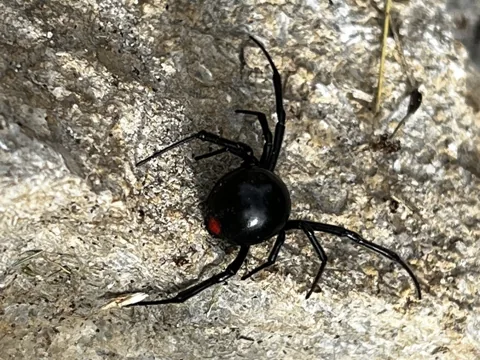 Southern Black Widow
Latrodectus mactans
Black widows are shy, web-building spiders with a neurotoxic venom; they live throughout North America and are most common in the southern and western United States. The southern black widow is found throughout states such as South Carolina.
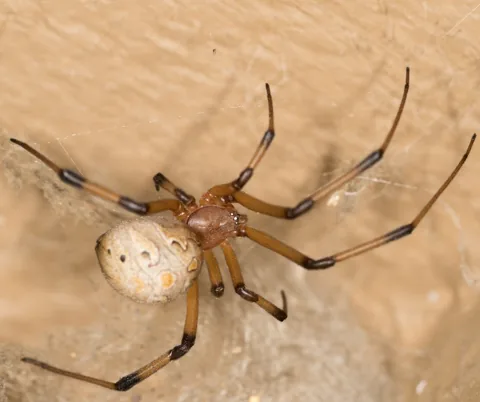 Brown Widow
Latrodectus geometricus
The brown widow is a non-native widow spider. It was found only in Florida for decades, then in the 2000s turned up from Texas along the Gulf Coast and up the Atlantic coast and became common around homes and parks in Southern California.
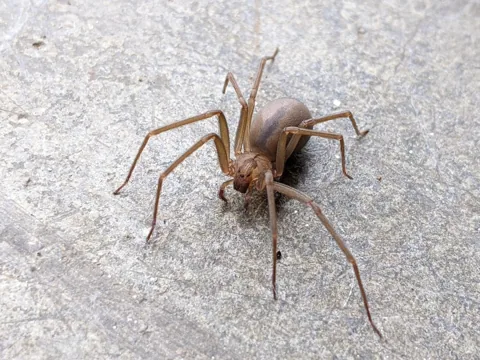 Brown Recluse
Loxosceles reclusa
The brown recluse is a secretive spider of the south-central and Midwestern United States whose bite can occasionally cause serious wounds; it is widely over-reported outside its range. The Illinois Department of Public Health says it occurs in roughly the southeastern quarter of the country and that bites are uncommon even where the spider is common.
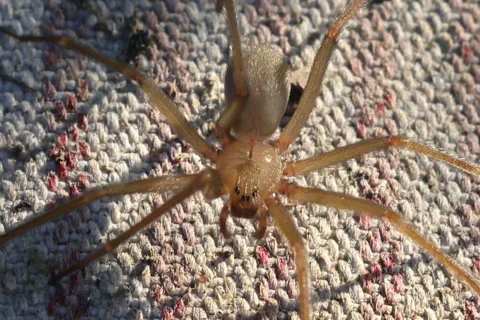 Desert Recluse
Loxosceles deserta
The desert recluse is the most common recluse spider in California and the one most likely behind a true recluse find there. It is native to the desert Southwest, lives mainly outdoors in native vegetation and is seldom found indoors.
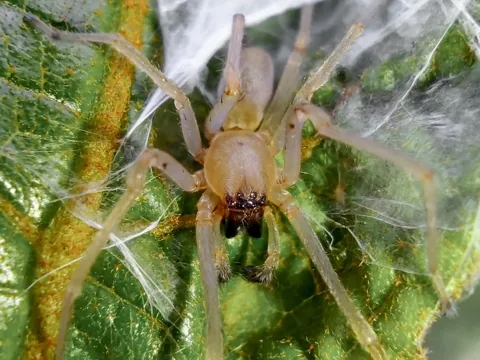 Yellow Sac Spider
Cheiracanthium species (shown: C. inclusum)
Yellow sac spiders are small, pale hunting spiders that rest by day in silk sacs in the corners of walls and ceilings, under siding or among leaves, and come out at night to hunt instead of building a web.
The two kinds of US spiders that cause serious bites
CDC names the black widow and the brown recluse as the venomous spiders found in the United States. MedlinePlus says the widow genus, Latrodectus, contains the largest number of venomous species known, and that brown recluse venom can destroy skin and blood vessels.[1][3][4]
Most other spiders are a nuisance at worst. MedlinePlus says most spider bites are harmless, though certain ones, such as the black widow or brown recluse, can cause serious illness or death. Washington's health department says almost all spiders have venom glands but very few are harmful to people, and that most spider bites cause minor and temporary symptoms.[5][11]
Washington State also lists the yellow sac spider as medically significant there; our yellow sac spider comparison covers what its bite does.[11]
Spiders do not hunt people. CDC says brown recluses cannot bite without counterpressure, such as being trapped against the skin, and Poison Control says recluse bites usually happen when stored gloves or boots are put on. Washington's health department says to brush a spider off rather than crush it, because bites are more likely when one is pressed against the skin.[1][8][11]
Widow bites: pain, cramps and whole-body symptoms
CDC says a black widow's venom is a neurotoxin that produces pain at the bite and then spreads to the chest, abdomen or the entire body, and that its bites have two puncture marks. Poison Control says the bite is usually painful right away, though MedlinePlus notes some people may not feel it.[1][7][3]
Where the pain goes depends on where you were bitten. MedlinePlus says a bite on the upper body usually brings most of the pain to the chest, and a bite on the lower body to the abdomen. Poison Control gives the example of a bite on the hand whose pain spreads up the arm to the shoulder, chest and abdomen.[3][7]
Timing: MedlinePlus says a dull muscle pain spreads from the bite within 15 minutes to 1 hour; Poison Control says muscle cramps can begin in 15 to 60 minutes and can come in waves.[3][7]
Outlook: death is very rare. Poison Control says recovery usually comes within 24 to 48 hours but symptoms can persist for several days; MedlinePlus says severe symptoms usually start to improve within 2 to 3 days while milder ones can last weeks. Both say young children, older people and people who are very ill are at greater risk, and Washington adds people with high blood pressure.[7][3][11]
Black widow, brown widow and false widow look-alikes are compared on our widow comparison pages; this page covers only what the bite does.[7]
- Severe belly or chest pain and muscle cramps, which MedlinePlus says can be mistaken for appendicitis, gallbladder pain or even a heart attack.[3]
- Sweating, nausea and vomiting, and high blood pressure, which Poison Control says occur frequently.[7][1]
- Also listed by MedlinePlus: anxiety and restlessness, headache, difficulty breathing, increased saliva, muscle weakness or rigidity, numbness and tingling spreading from the bite, and facial swelling in the hours after the bite. Pregnant women may have contractions.[3]
- Washington's health department says widow bites do not cause conspicuous swelling or tissue death around the bite. That is one way they differ from recluse bites.[11]
Recluse bites: a sore that can grow over days
Poison Control says a brown recluse bite often is not felt and at first can look like any other insect bite: a little red, itchy and inflamed. CDC says a small white blister usually develops, and MedlinePlus says pain usually develops within the first several hours and may become severe.[8][1][4]
Over a few days the venom can kill the surrounding tissue. Poison Control says the wound may get larger, more painful and darker, then ulcerate, turn black and form a crust that eventually falls off. MedlinePlus says in serious cases this black scab (eschar) sloughs off after about 2 to 5 weeks, leaving an ulcer that may take many months to heal and leaves a deep scar.[8][4]
Other symptoms MedlinePlus lists include chills, fever, itching, nausea, sweating, a general ill feeling and a reddish or purplish ring around the bite.[4][1]
Rarely, the venom affects the whole body (systemic loxoscelism). MedlinePlus lists blood in the urine, yellowing of the skin and eyes, kidney failure, seizures and coma as rare symptoms. The Missouri Poison Center says this syndrome begins 24 to 72 hours after the bite, occurs most often in patients under 30, and that its risk does not track with how bad the skin wound looks. MedlinePlus says death from brown recluse bites is more common in children than adults.[4][10]
Poison Control says there is no antidote for brown recluse venom; care treats the wound and prevents infection, and deep or infected wounds may need surgery.[8]
When a 'spider bite' is really something else
Most wounds people blame on spiders are not spider bites. CDC says you cannot tell by looking whether a skin problem is a MRSA infection, that people sometimes confuse MRSA skin infections with a spider bite, and that unless you actually see the spider, the irritation is likely not a spider bite.[2]
MedlinePlus describes a staph skin infection as a red, swollen, painful area that may drain pus and may look like a boil, more likely where the skin has been cut or rubbed or where there is more body hair.[6]
In a 2011 study at a California emergency department, 182 patients who said they had a 'spider bite' were enrolled over 23 months. Seven were diagnosed with actual spider bites and 156 with infections; where the spider could be identified, the confirmed bites were from black widows.[12]
Washington's health department lists the conditions most often misdiagnosed as spider bites: MRSA, other bacterial infections, viral or fungal infections, and chemical or thermal burns. It warns that a wrong label can leave the real condition untreated and lead to serious complications. Poison Control and the Missouri Poison Center give similar lists, adding other insect bites and conditions that affect blood circulation.[11][8][9]
If a sore is spreading, warm, draining pus or comes with fever, get it checked as a possible infection whatever you think caused it. Say plainly whether you actually saw a spider bite you.[2][11][8]
Where brown recluses live, and where they don't
Brown recluses have a limited range. CDC places them in the midwestern and southern United States, and MedlinePlus says they are most common in the south and central states, especially Missouri, Kansas, Arkansas, Louisiana, eastern Texas and Oklahoma.[1][4]
The Missouri Poison Center says the range fully covers states such as Missouri, Arkansas, Alabama, Louisiana and Mississippi and only partly covers Georgia, Illinois, Indiana, Iowa, Kansas, Kentucky, Nebraska, Oklahoma, Tennessee, Texas and the westernmost Florida panhandle. Washington's health department says brown recluses do not live in Washington.[9][11]
Outside that range, a recluse bite is very unlikely. A 2002 review by Vetter and Bush found presumptive brown recluse bites reported across North America, including places where the spider has never or rarely been documented, usually without any spider identified, and called such diagnoses a misdiagnosis. The Missouri Poison Center says a bite outside the spider's territory is more likely another bug bite, skin lesion or disease, while noting recluses occasionally travel in shipments and luggage.[13][9]
Other recluse species live in the Southwest; see our desert recluse profile and the recluse look-alike guide for how to check a spider's eyes.[9]
First aid for a spider bite
These steps come from CDC, MedlinePlus and Washington's health department. They are for comfort and safety until you get advice; they do not treat venom.[1][3][4][11]
- Stay calm and move away from the spider. If it can be done safely, catch or photograph it, since identifying the spider helps medical care. MedlinePlus and Washington's health department both say to bring it with you if possible.[1][5][11]
- Wash the bite with soap and water.[1][3][4][11][8]
- Apply a cold cloth or ice wrapped in a clean cloth. MedlinePlus says 10 minutes on, 10 minutes off, and less time for people with blood flow problems.[1][3][4]
- Raise the bitten arm or leg if you can, and keep it still. MedlinePlus says to loosen clothing and remove rings and other tight jewelry.[1][11][3][4]
- Do not try to remove the venom. CDC and Washington's health department both say so.[1][11]
- Check your tetanus shot. CDC says to keep tetanus boosters up to date because spider bites can become infected with tetanus spores; Poison Control advises calling a doctor after a widow bite if your last booster was more than 5 years ago, and says a booster is usually given after a recluse bite if your status is unknown. Ask your provider which applies.[1][7][8]
When to call Poison Control, a doctor or 911
MedlinePlus says to call 911 or the local emergency number, or the Poison Help line at 1-800-222-1222, if you or someone with you is bitten by a black widow or brown recluse. Poison Control says expert guidance at that number, or through its online tool, is free, confidential and available 24 hours a day.[3][4][7][8]
Before you call, MedlinePlus says to have the person's age, weight and condition ready, plus the time of the bite, where on the body it was and the type of spider if known.[3][4]
This page cannot tell you what bit you. Poison Control says a recluse bite is very hard to diagnose unless the person felt the bite and saw and correctly identified the spider.[8]
- Call 911 for a severe reaction: trouble breathing, chest pain, face or mouth swelling, trouble swallowing, fainting or light-headedness, or a seizure. Washington's health department says severe allergic reactions to spider bites can occur quickly and be fatal if not treated right away.[11][5][3]
- Get medical help right away for a suspected black widow bite: MedlinePlus says to seek medical help and call Poison Control, and Washington's health department says to seek care immediately. Poison Control says emergency care is appropriate when pain is not controlled by oral pain medication.[3][11][7]
- Get care for a suspected brown recluse bite: MedlinePlus says to seek emergency treatment, noting the bite may not look serious at first but can take time to become severe.[4]
- See a doctor for any bite or sore that keeps getting worse, spreads, drains pus, or comes with fever or chills. Washington's health department says to seek care if symptoms don't improve.[11][4][2]
- Children, older adults and people with serious illness need care sooner. MedlinePlus and Washington's health department both say they are at higher risk from widow bites, and MedlinePlus says children may have more serious recluse reactions.[3][11][4]
How to lower the odds of a bite at home
Most bites happen when a hand or foot meets a hidden spider. Washington's health department, CDC and Poison Control recommend:[11][1][8][7]
- Shake out gloves, boots, shoes, clothing, towels and blankets before using them, especially items stored in a garage, shed, barn or closet.[11][1][8][7]
- Wear gloves and long sleeves when moving firewood, boxes, mulch, rocks or empty flowerpots, or when cleaning sheds, garages, attics, basements and crawl spaces.[11][1][7]
- Cut clutter. Clear boxes, old furniture and clothes from undisturbed spots, and store clothing and gear in tightly closed plastic bags.[11][8][1]
- Move beds away from walls, remove bed skirts and clear out items stored under the bed.[11]
- Seal cracks, use tight-fitting screens, and vacuum along baseboards, behind furniture and around door and window frames.[11]
- Keep woodpiles, rock piles and shrubbery away from the house, and inspect firewood and potted plants before bringing them inside.[11][1]
- If you find widows or recluses indoors, Poison Control suggests a pest control professional; our removal guides cover what works.[8][7]
Pets and spider bites
The Merck Veterinary Manual says most widow-bite cases in veterinary medicine are reported in dogs and cats. It says cats are highly vulnerable to black widow venom and that fatal outcomes occur frequently, while dogs have some resistance and their overall outlook is good.[14]
Merck adds that diagnosing a recluse bite in an animal means weighing where you live, the signs and, ideally, the spider itself. If you think a pet was bitten, call your veterinarian.[14]
Common questions
- What does a spider bite look like?
- Usually like any other small bug bite. CDC says possible symptoms range from itching or a rash to a reddish or purplish blister, and Poison Control says a recluse bite at first looks like any other insect bite. You can't reliably tell a spider bite by its look; CDC says MRSA infections are often confused with spider bites.[1][8][2]
- Do two puncture marks mean a spider bit me?
- Not by themselves. CDC says black widow bites have two puncture marks, but many skin problems are mistaken for spider bites, and CDC says that unless you saw the spider, it likely wasn't one.[1][2]
- Can a brown recluse bite me if I live in Washington, California or New England?
- It is very unlikely. Washington's health department says brown recluses don't live there, and a 2002 peer-reviewed review found recluse bites diagnosed in regions where the spider is unknown were misdiagnoses.[11][13]
- Is a black widow bite deadly?
- Rarely. Poison Control and MedlinePlus say death is very rare, but bites can be severe, especially for young children, older adults and people who are very ill, so get medical advice right away.[7][3]
- Is there an antivenom?
- For widows, yes. Poison Control says an antivenom exists but is needed only rarely, not all hospitals have it, and it can cause allergic reactions. For brown recluses, Poison Control says there is no antidote.[7][8]
- Should I bring the spider to the doctor?
- If you can catch it safely, yes. MedlinePlus and Washington's health department say bringing the spider helps identify it, and CDC says identifying the spider can aid treatment.[5][11][1]
Photo credits
- Southern Black Widow: Carol Spence, public domain (CC0), via iNaturalist
- Brown Widow: Jesse Rorabaugh, public domain (CC0), via iNaturalist
- Brown Recluse: iamfindingplants, public domain (CC0), via iNaturalist
- Desert Recluse: (c) nmoorhatch, some rights reserved (CC BY) — via iNaturalist, CC BY 4.0
- Yellow Sac Spider: (c) Jhonatan Matheus, some rights reserved (CC BY) — via iNaturalist, CC BY 4.0
Sources
- CDC, National Institute for Occupational Safety and Health, “Venomous Spiders at Work.” www.cdc.gov/niosh/outdoor-workers/about/venomous-spiders.html (accessed 2026-11-15)
- Centers for Disease Control and Prevention, “Methicillin-resistant Staphylococcus aureus (MRSA) Basics.” www.cdc.gov/mrsa/about/index.html (accessed 2026-11-15)
- MedlinePlus, U.S. National Library of Medicine, “Black widow spider (Medical Encyclopedia).” medlineplus.gov/ency/article/002858.htm (accessed 2026-11-15)
- MedlinePlus, U.S. National Library of Medicine, “Brown recluse spider (Medical Encyclopedia).” medlineplus.gov/ency/article/002859.htm (accessed 2026-11-15)
- MedlinePlus, U.S. National Library of Medicine, “Insect bites and stings (Medical Encyclopedia).” medlineplus.gov/ency/article/000033.htm (accessed 2026-11-15)
- MedlinePlus, U.S. National Library of Medicine, “Methicillin-resistant Staphylococcus aureus (MRSA) (Medical Encyclopedia).” medlineplus.gov/ency/article/007261.htm (accessed 2026-11-15)
- Poison Control (National Capital Poison Center), “How dangerous is a black widow spider bite?.” www.poison.org/articles/black-widow-spiders (accessed 2026-11-15)
- Poison Control (National Capital Poison Center), “Brown recluse spider bites: Know the signs, reduce the risks.” www.poison.org/articles/brown-recluse-spider-bites (accessed 2026-11-15)
- Missouri Poison Center, “The Truth About the Brown Recluse Spider.” missouripoisoncenter.org/the-truth-about-the-brown-recluse-spider/ (accessed 2026-11-15)
- Missouri Poison Center, “Systemic Loxoscelism.” missouripoisoncenter.org/systemic-loxoscelism/ (accessed 2026-11-15)
- Washington State Department of Health, “Spiders.” doh.wa.gov/community-and-environment/pests/spiders (accessed 2026-11-15)
- Journal of Emergency Medicine (PubMed 19939602), “Suchard JR. "Spider bite" lesions are usually diagnosed as skin and soft-tissue infections. J Emerg Med 2011;41(5):473-481.” pubmed.ncbi.nlm.nih.gov/19939602/ (accessed 2026-11-15)
- Clinical Infectious Diseases (PubMed 12145729), “Vetter RS, Bush SP. Reports of presumptive brown recluse spider bites reinforce improbable diagnosis in regions of North America where the spider is not endemic. Clin Infect Dis 2002;35(4):442-445.” pubmed.ncbi.nlm.nih.gov/12145729/ (accessed 2026-11-15)
- Merck Veterinary Manual, “Spider and Scorpion Bites and Stings to Animals.” www.merckvetmanual.com/toxicology/venomous-arthropods/spiders-and-scorpions (accessed 2026-11-15)