The short answer
- Small moths flying around the kitchen, or silk webbing in flour, cereal or dried fruit, almost always means Indian meal moths: use the pantry moth guide for the full cleanout.[2][7]
- Tiny brown beetles crawling on shelves or counters, or snouted weevils in popcorn, whole grains or bird seed: use the pantry beetle and weevil guide. The cleanup below works for both.[2][6]
- Inspect every package, especially opened ones; webbing in corners or tiny holes in containers are signs. Throw out anything infested.[2][6]
- Vacuum the corners and crevices of cupboards and wash shelves with soap and water.[2][6][8]
- Store dry foods and pet food in containers with tight lids, not plastic bags, and keep rarely used flour, spices and grains in the freezer.[2][8]
- Keep using pheromone traps after cleanup; pantry pests can live for weeks without food. Check them weekly.[2]
Pantry pest profiles
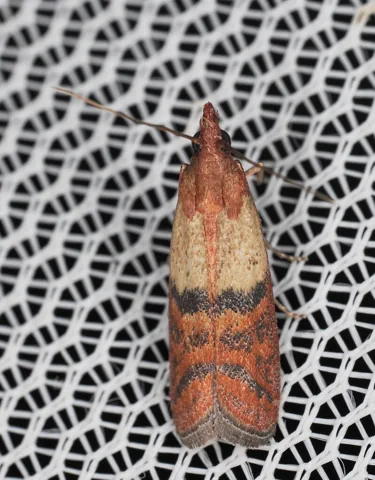 Indianmeal Moth
Plodia interpunctella
The Indianmeal moth is the most common moth infesting stored food in the home; all damage is done by the larvae, which feed in cereals, flour, nuts, dried fruit, chocolate and pet food.
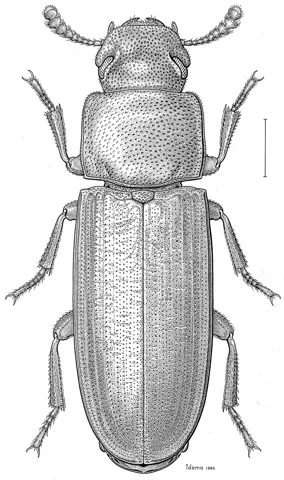 Confused Flour Beetle
Tribolium confusum
The confused flour beetle is a common pantry pest that feeds on flour, cereals, broken grain, nuts, dried fruit and many other dry foods. UF/IFAS counts it and the red flour beetle among the most important pests of stored products in homes and grocery stores.
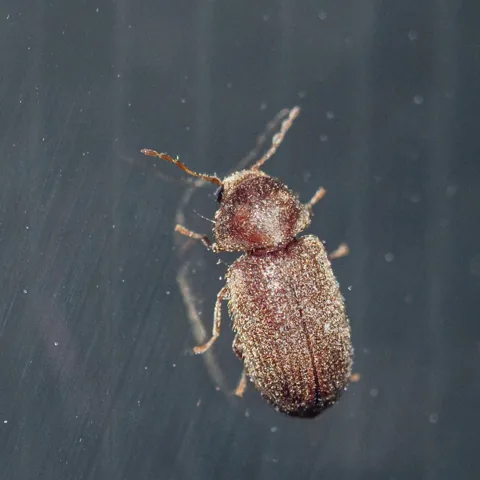 Drugstore Beetle
Stegobium paniceum
The drugstore beetle is a very general feeder said to "eat anything except cast iron"; in homes it most often infests pet food, drugs, cereals and spices.
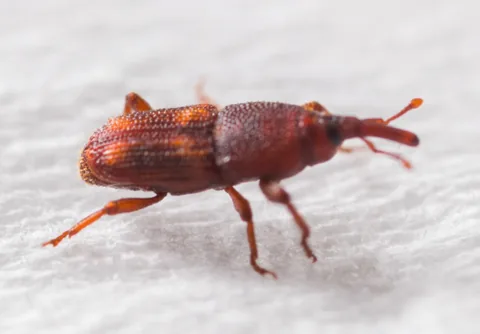 Rice Weevil
Sitophilus oryzae
Rice and granary weevils develop inside whole grains and seeds. Weevils in the house usually mean an infested package of whole grain or seed somewhere, such as popcorn, dried beans, saved seeds or decorative corn.
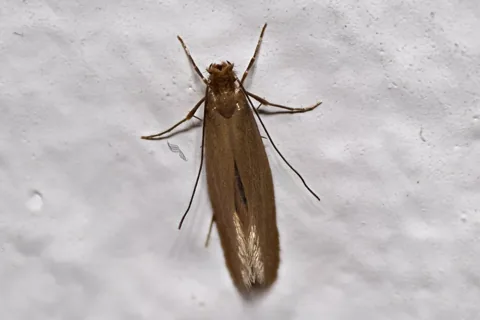 Webbing Clothes Moth
Tineola bisselliella
The webbing clothes moth is probably the most commonly encountered clothes moth in the United States. Its larvae feed on wool, fur, feathers and other animal fibers in hidden spots, and the moths are seldom seen because they avoid light.
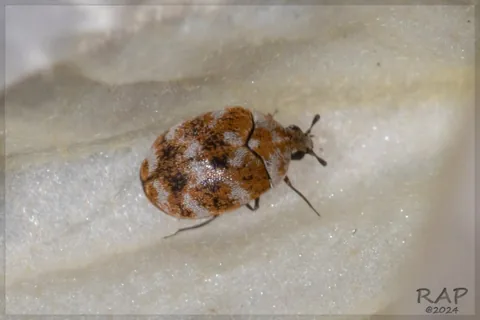 Varied Carpet Beetle
Anthrenus verbasci
Carpet beetles are small beetles whose larvae damage wool, silk, fur, feathers, leather and other animal products; the adults feed on pollen outdoors and often fly in through windows.
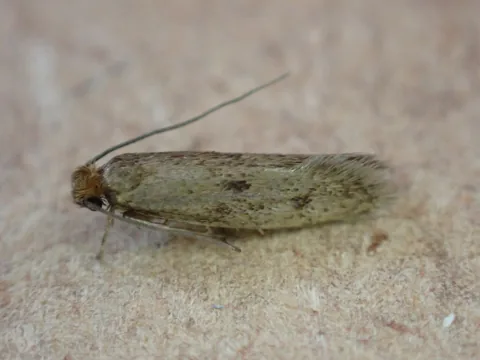 Casemaking Clothes Moth
Tinea pellionella
The casemaking clothes moth is a small fabric pest whose larvae feed on wool, fur, feathers and other animal fibers. Each larva lives inside a portable silk tube that takes on the color of whatever it has been eating.
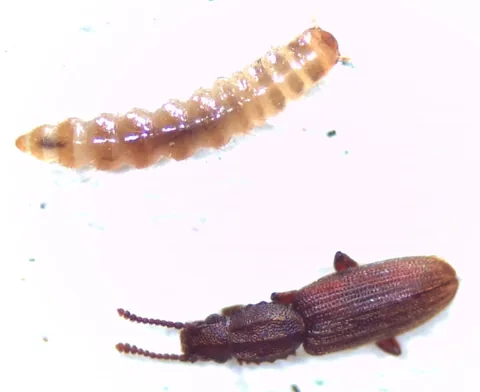 Sawtoothed Grain Beetle
Oryzaephilus surinamensis
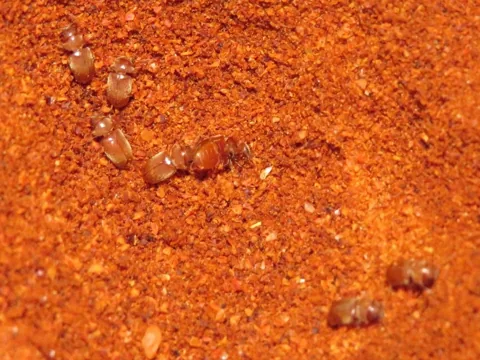
The sawtoothed grain beetle is one of the most common beetles in home pantries; Georgia Extension rates it nearly as common as the Indianmeal moth. Both adults and larvae feed in dry foods of plant origin, and the first thing most people notice is small beetles crawling over shelves and counters. UF/IFAS calls it one of the most important stored-product pests in homes and grocery stores.
 Cigarette Beetle
Lasioderma serricorne
The cigarette beetle is the most important insect pest of stored tobacco, and Texas A&M calls it the most common pantry pest in Texas. In homes its larvae feed in spices, pet food, flour, cereals and dried plant decorations. The University of Florida calls it the most damaging pest of stored tobacco and a major pest of many stored foods.
 Granary Weevil
Sitophilus granarius
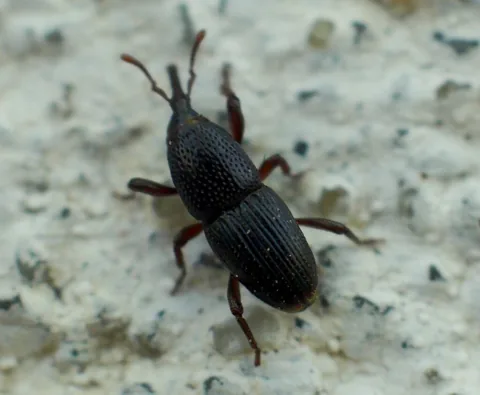
The granary weevil is a pest of stored grain and seeds. Its young develop hidden inside whole kernels, so the first sign in a home is usually small dark weevils near seeds, popcorn or decorative corn. UF/IFAS counts it among the most important grain pests: it can completely destroy commercially stored grain, but it cannot fly, depends on people to spread it and is not often found in homes.
 Booklice
Liposcelis species and other psocids (family Liposcelididae)
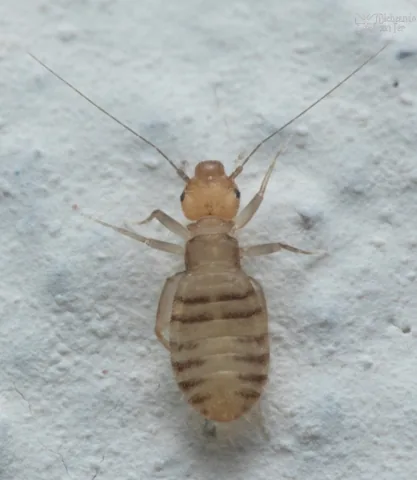
Booklice, also called psocids, are tiny insects that feed on mold and fungi. Finding them indoors usually means high humidity or a moisture problem, and drying things out is the most effective control.
 Lesser Grain Borer
Rhyzopertha dominica
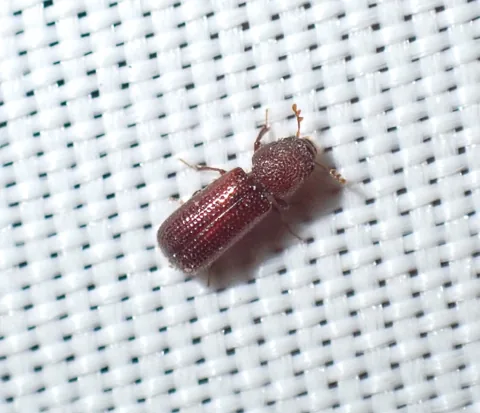
The lesser grain borer is one of the smallest beetles that attack stored grain. Unlike most pantry beetles, both the adults and the larvae are primary pests that bore into whole, undamaged kernels and feed there.
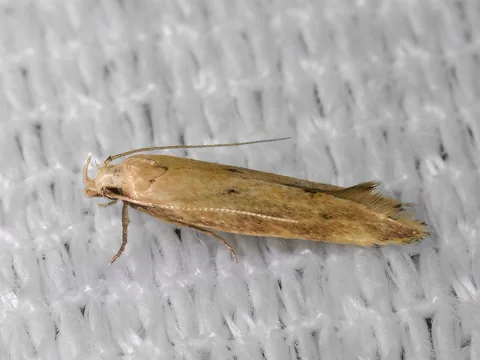 Angoumois Grain Moth
Sitotroga cerealella
The Angoumois grain moth is a primary pest of stored grain: its caterpillars develop entirely inside single kernels, so infested corn or wheat can look normal until moths appear. USDA's stored-grain handbook calls it the moth most commonly found in infested grain in the United States. UF/IFAS ranks it second only to the grain and rice weevils in importance as a pest of stored grain in the United States, and a UF grain-storage circular calls it most important in stored corn.
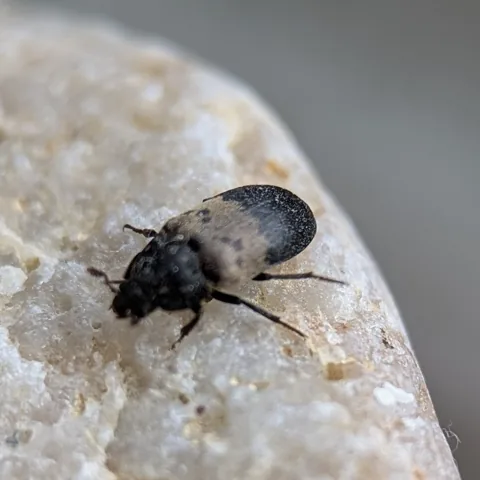 Larder Beetle
Dermestes lardarius
The larder beetle is a dermestid beetle named for its old attraction to larders and cured meats. Home curing is rare now, and it is more often found in dry pet food or feeding on dead insects trapped in attics and wall voids.
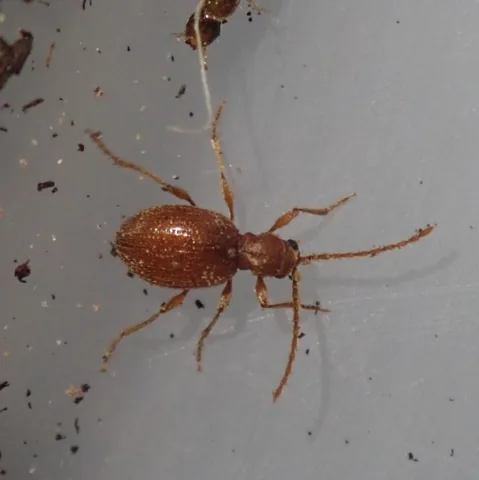 Spider Beetles
Ptinus fur
Spider beetles are small scavenging beetles in the family Ptinidae, named for their long legs and rounded, spider-like bodies; the whitemarked spider beetle is shown here. USDA's stored-grain handbook says several species turn up in grain and cereal products but are rarely abundant enough in the U.S. to cause serious damage, and Washington State University says they are usually a problem only where sanitation is very poor. UF/IFAS counts about 50 spider beetle species in the U.S. and Canada, only about 13 of them pests, and calls them minor stored-product pests that usually point to poor sanitation.
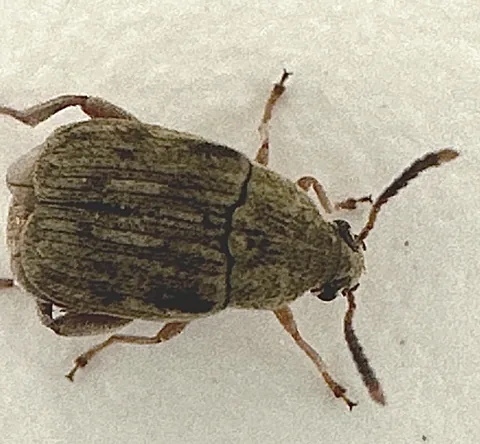 Bean Weevil
Acanthoscelides obtectus
The bean weevil is a small seed beetle, not a true weevil, whose larvae live inside dry beans and related seeds. Infestations can start in the garden and continue in storage, where the beetles breed continuously in warm pantries.
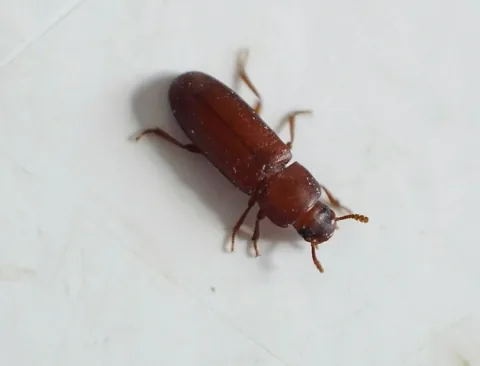 Red Flour Beetle
Tribolium castaneum
The red flour beetle is a shiny reddish-brown beetle that lives in flour, mixes and other processed or broken grain products; it can't chew into whole, sound kernels. Researchers call it a major storage pest. The University of Florida counts it among the most important pests of stored products in homes and grocery stores, and says every life stage can turn up in infested grain products at the same time.
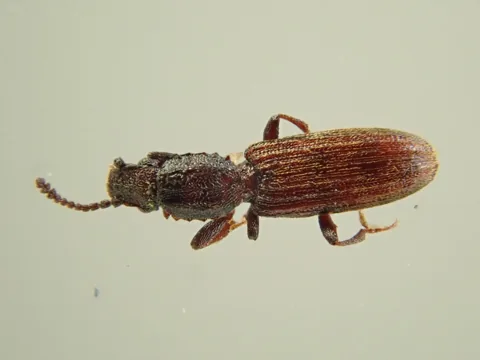 Merchant Grain Beetle
Oryzaephilus mercator
The merchant grain beetle is a close relative of the sawtoothed grain beetle and looks almost the same. It favors nuts and other oilseed products, and the adults are strong fliers.
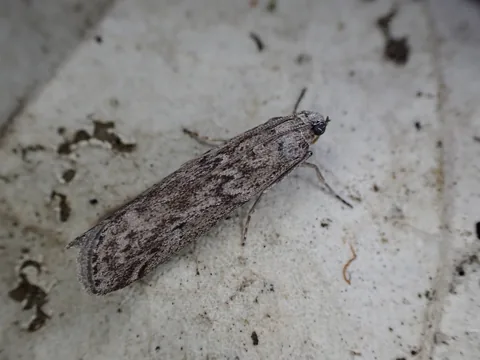 Mediterranean Flour Moth
Ephestia kuehniella (also listed as Anagasta kuehniella)
The Mediterranean flour moth is a gray pantry moth whose caterpillars line flour and other dry foods with silk webbing. Washington State University calls it a frequent food-infesting moth in homes, though less common than the Indian meal moth.
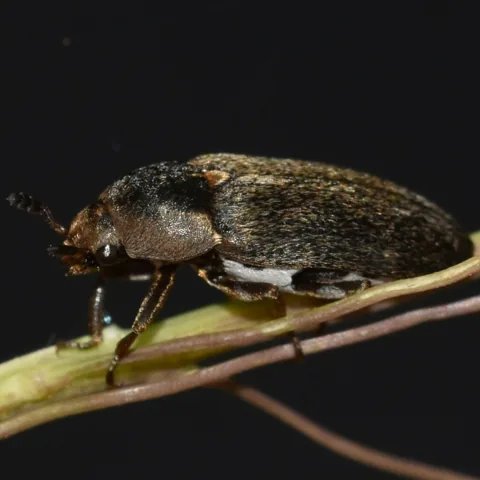 Hide Beetle
Dermestes maculatus
The hide beetle is a dark dermestid beetle that eats dead animal matter. In homes and storage it gets into dried fish and meat, dry pet food and treats, hides, fur and feathers, and museums and taxidermists keep colonies on purpose to clean skeletons. It doesn't bite or sting; the harm is to food, specimens and materials. To get rid of it, find and throw out the infested item, vacuum the area, and freeze or heat anything you want to keep. Sprays alone don't solve it.
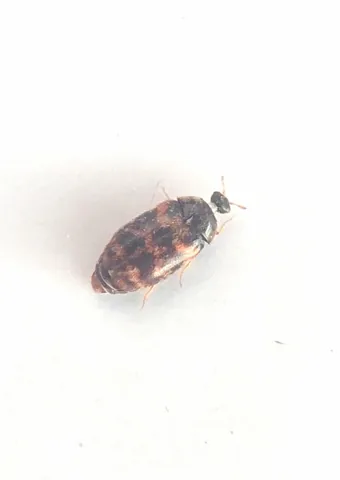 Warehouse Beetle
Trogoderma variabile
The warehouse beetle is a dermestid beetle that infests a very wide range of dry foods, from cereals and flour to pet food, nuts, spices and candy. Its hairy larvae do the feeding, and their shed hairs make infested food unfit to eat.
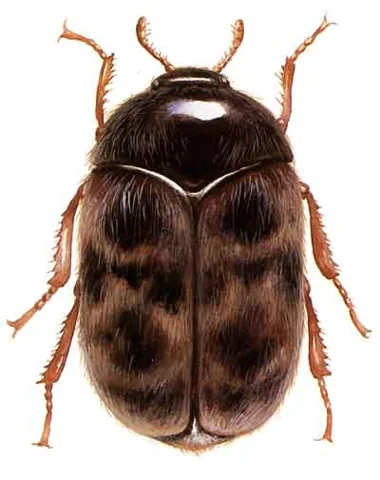 Khapra Beetle
Trogoderma granarium
The khapra beetle is a small dermestid beetle that customs officials call one of the world's most destructive pests of grain, cereals and stored foods. USDA says it is not known to occur in the United States, but it is intercepted at ports of entry often, mostly in passenger baggage. UF/IFAS notes it has been described as one of the 100 worst invasive species worldwide.
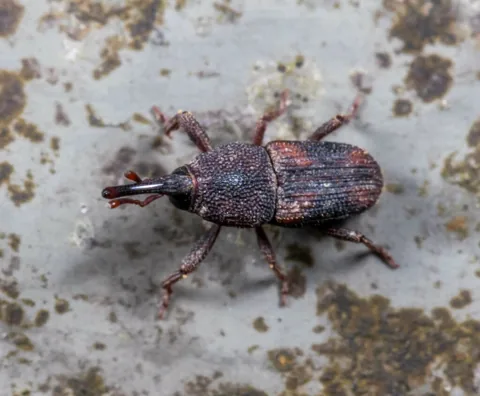 Maize Weevil
Sitophilus zeamais
The maize weevil is one of the most destructive pests of stored grain worldwide. Its larvae feed and grow hidden inside individual kernels, so the first thing most people notice is small, dark snout beetles near stored corn, grain or pasta.
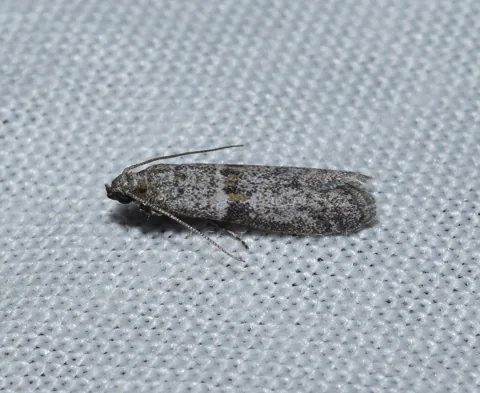 Almond Moth
Cadra cautella
The almond moth, also called the tropical warehouse moth, is a pantry moth whose caterpillars infest dried fruit, nuts, seeds, candy and cereal products. In the United States it is more common in the warm, humid Southeast than in dry California. Despite the name, the University of Florida says its preferred foods are dried figs and dates.
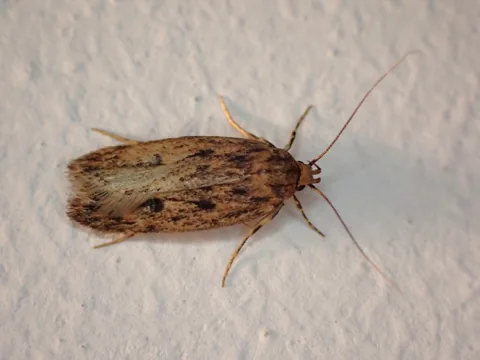 Brown House Moth
Hofmannophila pseudospretella
The brown house moth is an omnivorous household scavenger that usually breeds in bird nests and dry debris in attics and roof spaces. Its wandering larvae occasionally damage carpets and other woolens, and it is also a minor pest of stored food.
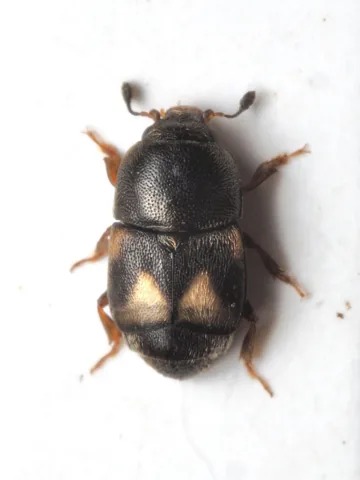 Dried Fruit Beetle
Carpophilus hemipterus
The driedfruit (dried fruit) beetle is a small sap beetle that lays its eggs on ripe and rotting fruit of all kinds. It is the most common driedfruit beetle in California fig orchards and a key pest of dates, infesting fruit both in the field and in storage. Purdue Extension calls it a major pest of the dried fruit industry that will also attack grain and grain products, especially damaged ones.
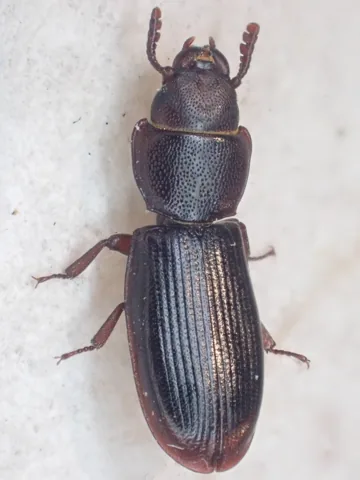 Cadelle
Tenebroides mauritanicus
The cadelle (Tenebroides mauritanicus) is the largest of the major stored-grain beetles. Adults and larvae feed mainly on the germ of stored grain, burrow into the wood of bins to pupate or overwinter, and can live a long time without food, so a bin that held infested grain can quickly infest the next batch.
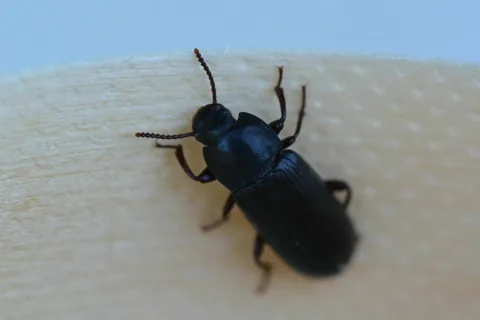 Yellow Mealworm
Tenebrio molitor
The yellow mealworm is one of the largest insects that infest stored cereal products. Its yellowish larvae feed on grain and meal that is damp or in poor condition, usually in undisturbed places such as basements. USDA's stored-grain handbook does not consider it a serious pest.
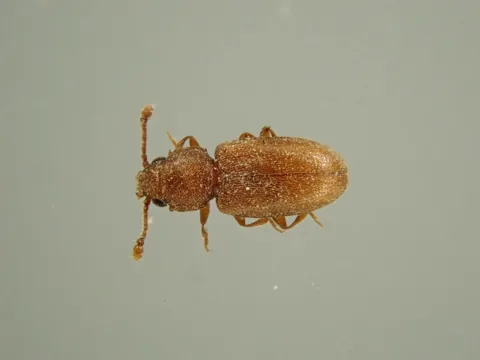 Foreign Grain Beetle
Ahasverus advena
The foreign grain beetle is a tiny, reddish-brown beetle that feeds on molds rather than sound grain. It is best known for showing up in large numbers in newly built homes in late summer, where it feeds on mold growing on damp lumber and drywall inside the walls.
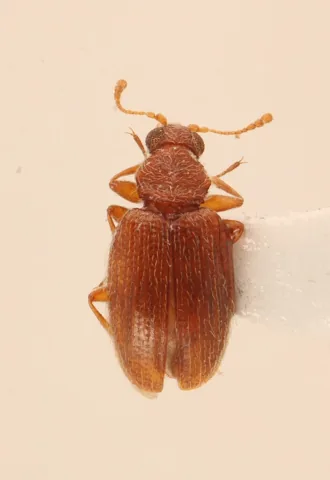 Plaster Beetles
Latridiidae (e.g., Melanophthalma americana and Dienerella species)
Plaster beetles, also called minute brown scavenger beetles, are tiny beetles in the family Latridiidae that live on mold and mildew. They turn up in new homes with damp lumber or fresh plaster and anywhere moisture lets mold grow, and they pose no threat to people.
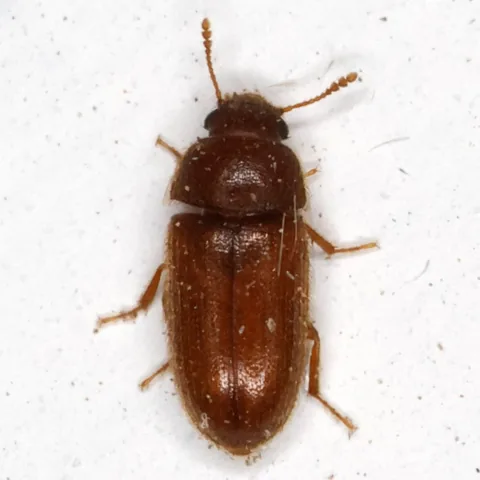 Hairy Fungus Beetle
Typhaea stercorea
The hairy fungus beetle is a tiny, hairy, light brown beetle that feeds on molds in stored grain, seeds, nuts and other foods. The Canadian Grain Commission says finding it in stored grain points to poor storage conditions.
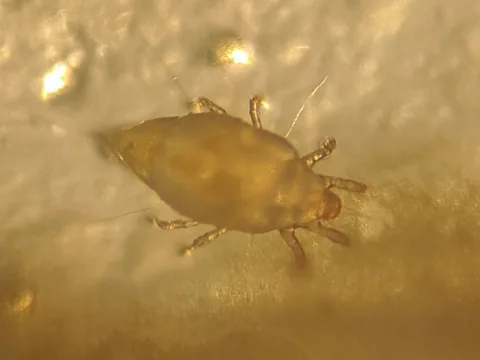 Mold Mite
Tyrophagus putrescentiae
Mold mites are tiny mites that feed on mold and fungi, so they show up only where food or surfaces stay damp. Tyrophagus putrescentiae, a relatively common one, infests high-fat and high-protein stored foods.
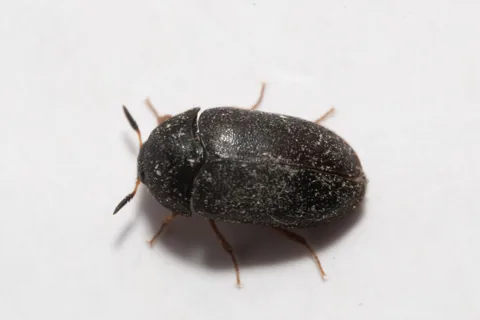 Black Carpet Beetle
Attagenus unicolor
The black carpet beetle is a shiny black carpet beetle whose larvae feed on wool, fur, feathers and other animal products, plus grains and other stored foods. In dry areas such as California, it is more often a pantry pest than a fabric pest. Colorado State Extension calls it one of the most common dermestid beetles.
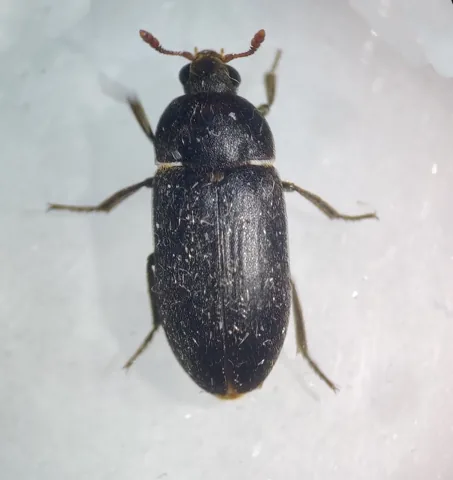 Black Larder Beetle
Dermestes ater
The black larder beetle (Dermestes ater) is a dark, unpatterned dermestid beetle. Adults and larvae feed on animal-based material such as skins, hides, carcasses, cured meat and dead insects, and the larvae can chew pupal chambers into wood.
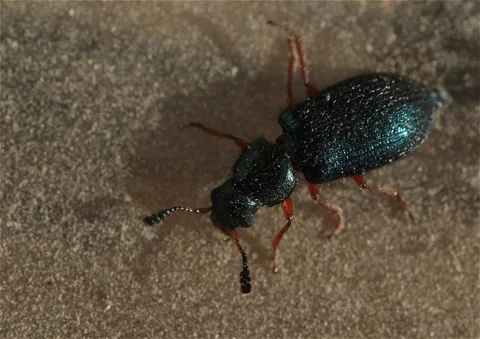 Redlegged Ham Beetle
Necrobia rufipes
The redlegged ham beetle is a stored-food pest of protein-rich products: dry-cured ham, cheese, dried fish and copra (dried coconut). It is a serious pest of dry-cured country hams, which are aged for up to two years, and it has recently become an emerging pest of pet food. UF/IFAS adds that it also goes by copra beetle and ham beetle, and that it matters in forensic entomology.
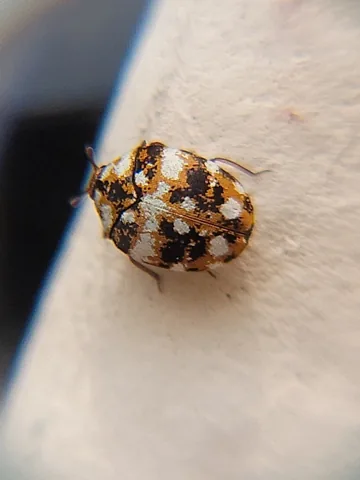 Furniture Carpet Beetle
Anthrenus flavipes
The furniture carpet beetle is a small, round dermestid beetle whose hairy larvae chew upholstery, carpets, fur and other animal-fiber items. UF/IFAS calls it a cosmopolitan pest that is most destructive in warmer parts of the world; in the United States it is mainly a pest of the southern states, though it also turns up in heated buildings farther north.
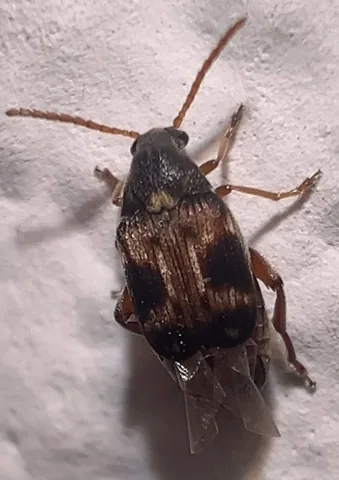 Cowpea Weevil
Callosobruchus maculatus
The cowpea weevil is a small seed beetle that breeds inside stored dried legumes such as cowpeas and black-eyed peas. Researchers describe it as the most important storage pest of grain legumes. UF/IFAS says infestation often starts in the field but most damage happens in storage, and on cowpeas it can cut yield by over 90%.
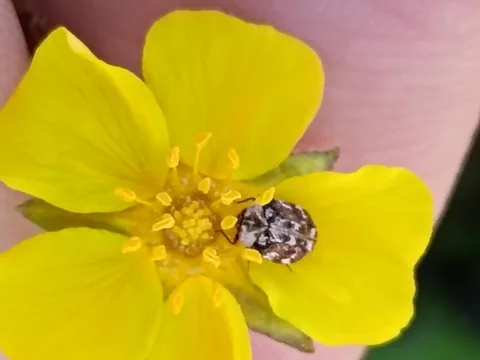 Common Carpet Beetle
Anthrenus scrophulariae
The common carpet beetle is a small, nearly round dermestid beetle whose larvae eat wool, carpets, fur and other animal products. UF/IFAS says it is found worldwide and also attacks preserved museum specimens.
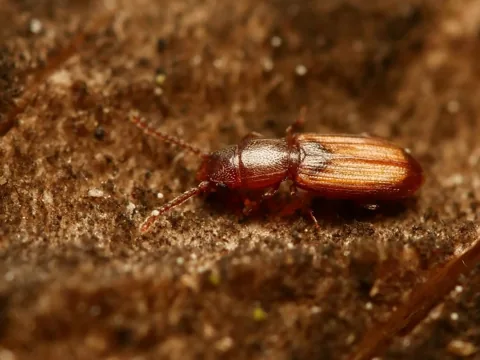 Flat Grain Beetles
Cryptolestes spp. (rusty grain beetle C. ferrugineus, flat grain beetle C. pusillus, flour mill beetle C. turcicus)
Flat grain beetles, a group that includes the rusty grain beetle, the flat grain beetle and the flour mill beetle (Cryptolestes turcicus), are tiny, flat, reddish-brown beetles that infest grain, cereal products and other stored foods.
No photo yet
Grain Mite
Acarus siro
The grain mite, also called the flour mite, is a tiny, pale mite that multiplies in damp flour, grain and other stored foods. When numbers get high, the food, the bag or the shelf looks like it is covered in moving dust.
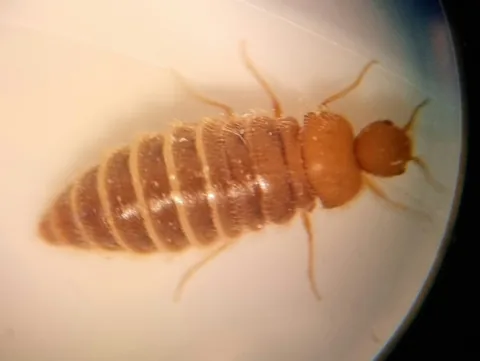 Odd Beetle
Thylodrias contractus
The odd beetle is a small relative of carpet beetles named for how different the sexes look: males are slender winged beetles, while the wingless females look like larvae; the bristly larvae feed on dry animal matter in buildings and collections.
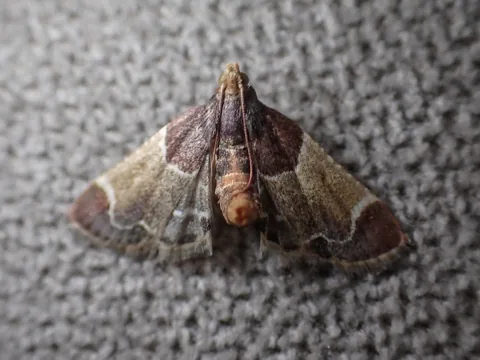 Meal Moth
Pyralis farinalis
The meal moth is a stored-food moth whose caterpillars feed on cereals, flour, meal, seeds and similar material, especially when it is damp or spoiled. It turns up in grain warehouses and in damp spots such as moist basements, and it is mostly a minor pest.
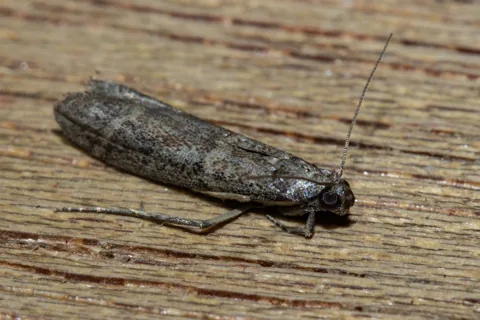 Tobacco Moth
Ephestia elutella
The tobacco moth (Ephestia elutella), also called the warehouse moth, is a small pantry and warehouse moth. Its caterpillars feed in cereals, grain products, dried fruit, nuts, cocoa beans, chocolate, animal feed and stored tobacco, and they foul what they don't eat with droppings, webbing and shed skins. It is one of the two main pests of stored tobacco, along with the cigarette beetle.
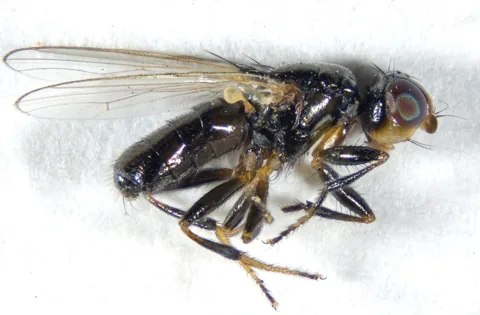 Cheese Skipper
Piophila casei
The cheese skipper (Piophila casei), also called the ham skipper, is a fly found worldwide whose larvae feed on cheese, cured meats such as ham, and other high-protein matter, including carcasses. The larvae get the name from their habit of 'skipping' from one product to another. Swallowing them by accident can cause intestinal myiasis.
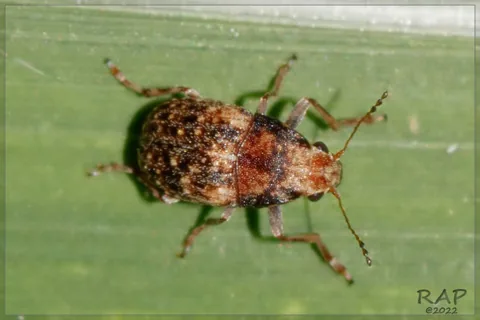 Coffee bean weevil
Araecerus fasciculatus
The coffee bean weevil is a small, dome-shaped, dark brown beetle that breeds in coffee beans, cocoa, nutmeg, seeds and many other dry stored foods. It is mainly a pest of warm climates and, in cooler areas, of heated buildings.
Moth, beetle, mite or booklouse?
Adult moths and adult beetles are easy to tell apart; the larvae are harder. Look at the legs with a hand lens. Beetle larvae are legless grubs or have only three pairs of legs, all near the head. Moth larvae have three pairs of true legs plus extra leglike structures farther back on the body. Beetles feed as larvae and adults, but only moth larvae eat stored food.[2]
If beetles did the damage, you will usually find adults and larvae in the food, with cast skins or pupal cases, and adults may crawl on the shelves. If moths did it, you may see adults flying, especially around windows and lights, and larvae with silk webbing in the food.[7]
In general, the more insects you see, the older the infestation. The source is often a partly used box or bag forgotten at the back of a shelf, and the problem spreads as adults search for new food.[6]
Indian meal moth (go to the pantry moth guide)
The most common pantry moth: 1/3 to 2/5 inch long with reddish-brown forewings that shine coppery on the outer two-thirds. Larvae leave silk webbing wherever they crawl and may wander far from the food to pupate. Clothes moths are smaller and hairier.[2][7]
- Sources give slightly different sizes for the adult: UC IPM says 1/3 to 2/5 inch long, while Kentucky and Illinois say about 1/2 inch.[2][6][8]
- The larvae leave the food to pupate, often where a wall meets the ceiling, so finding caterpillars or cocoons far from the pantry is normal. The pantry moth guide covers finding every infested item, freezing, traps and prevention for moths.[8][7][2]
Pantry beetles and weevils (go to the beetle guide)
Where you find them depends on what they eat. Rice and granary weevils develop inside whole kernels, so look in popcorn, whole grains, bird seed, nuts and decorative corn. Flour beetles and the sawtoothed grain beetle cannot attack whole, undamaged grain and live in flour, meal, mixes, dried fruit, pet food and similar processed foods.[6][8]
Many pantry beetle adults live for months, and some fly to lights, so stragglers can turn up on windowsills and counters well after the source is gone. The pantry beetle and weevil guide covers each beetle's hiding places, how long cleanup takes and when traps help.[6][8][2]
- Sawtoothed and merchant grain beetles: slender, flat, brown, about 1/10 inch, with six sawlike teeth on each side of the thorax; they eat almost any plant-based food, including pet food, bird seed and rodent bait, and adults live 6 to 10 months on average, some up to 3 years.[2][8]
- Confused and red flour beetles: shiny reddish brown, about 1/7 inch; the red flour beetle's antennae end in an abrupt three-segment club. Adults can live about a year, some nearly four.[2]
- Cigarette and drugstore beetles: about 1/8 inch, cylindrical and light brown; the drugstore beetle has grooved wing covers. Both infest spices, pet food and cereals. The cigarette beetle also gets into dried pepper arrangements and wreaths, and the drugstore beetle feeds on medicines.[2][8]
- Warehouse beetle: oval, about 1/8 inch, with a brown and yellow pattern. Its larvae shed hairs that can irritate the mouth, throat and gut, so throw out anything it has infested.[2]
- Rice and granary weevils, lesser grain borers and bean weevils develop inside whole seeds and grains and are managed the same way.[2][6]
Grain mites
- Grain mites feed on flour, wheat germ, yeast, cheese, powdered milk and mold, multiplying fast in hot, humid conditions; a fine, dust-like layer of mites on a shelf usually means a heavily infested package nearby.[3]
- Find and discard infested items, wipe every item and shelf with hot, soapy water, vacuum cracks, and lower the humidity. There are no good chemical solutions, and insecticides aren't recommended in kitchens.[3]
- The life cycle takes only about two weeks at room temperature, and young mites can rest for several weeks when conditions are poor, so some survive even a thorough cleanup. Store everything that is left in tightly sealed containers.[3]
Larder beetles
- Adults are dark brown, about 1/3 inch, with a band of pale yellow hairs across the front half of the wing covers, usually with six dark spots; the hairy brown larvae have two curved spines at the tail.[1]
- They feed on animal products such as dried dog food, cured meats, cheese, fur, hides and feathers, and on dead insects that pile up in attics and wall voids after overwintering, which is how many homes get them.[1]
- Mature larvae bore into nearby materials, even wood, to pupate. Clean out and discard infested food, store attractive foods in tight jars or cans, and heat (140°F for 30 minutes) or freeze (0°F for 3 to 4 days) valuable infested items.[1]
Booklice (psocids)
- Psocids are tiny, 1/25 to 1/8 inch, pale to gray insects that aren't true lice; they feed on mold and fungi and favor warm, damp, undisturbed places, including damp books, cardboard and stored food.[4][5]
- They're a nuisance and a sign of excess moisture: reduce humidity, vacuum, clean up spilled food and buy dry goods in amounts you'll use within a few months.[5][4]
- Booklice in food usually point to a moisture problem nearby, such as a leaking or sweating pipe, damp books or damp cardboard. The booklice guide covers drying out the area.[5][4]
Where else to look
If the pantry looks clean but the insects keep coming, look beyond the kitchen. Kentucky suggests checking decorative items and bird seed next.[6]
Clemson says infestations sometimes start in a bag of dog food in the garage and move into the kitchen when numbers build up.[7]
Georgia lists non-food items that can feed pantry pests: potpourri and dried flower arrangements, rodent baits, bird seed, dry pet food, rawhide and other animal treats, dried fish, tobacco products and decorative arrangements.[9]
Some pantry insects breed in rodent and insect nests and move from there into the home, and they also breed in old rodent baits. Remove nests in or near the house and check and replace baits often.[2][7]
General cleanup for any pantry pest
Moths and beetles are cleaned out the same way. Killing the adults you see does not solve the problem; you have to find and remove the food they are breeding in.[7][6]
- Empty the cupboard and check every package, including unopened ones and those at the back. Beetles often hide under cans and other items.[6][2][7]
- Throw out anything with insects, webbing or tiny holes. Bag it and put it in an outdoor trash can with a tight lid.[2][7][8]
- Vacuum the shelves, top and bottom, using a crevice attachment on cracks, edges and corners, then empty the vacuum or throw out the bag.[6][8]
- Wash the shelves with soap and water, and wash any reusable containers that held infested food before refilling them.[2][7]
- Replace shelf paper if needed and caulk cracks where spilled food can build up.[7]
- Kentucky advises doing one very thorough job rather than repeating a hasty inspection and cleanup.[6]
Freezing or heating items you want to keep
For food that is badly infested, throw it out. Items you want to keep, such as lightly infested dry goods, decorations or keepsakes, can be treated with cold or heat, but extension sources give different times and temperatures.[8][6][9]
- Kentucky: 0°F for 4 days in a freezer that is not self-defrosting, or 155°F for about 20 minutes in the oven with the door propped open for decorative corn, dried flowers or bird seed.[6]
- Illinois: 27ºF or colder for at least 3 to 7 days (longer is better), or 140ºF in the oven for an hour.[8]
- Georgia: six days at 0 °F to -2 °F, longer for warehouse beetle, and results depend on how cold the inside of the item gets.[9]
- Penn State, for larder beetles in valuable items: 140° for half an hour or 0° for 3 to 4 days.[1]
Pheromone traps
Pheromone traps tell you whether pests are still around after cleanup; they are not a cure. Traps made for the Indian meal moth do not attract beetles. Moth traps catch males only, while flour beetle traps use aggregation pheromones that draw both sexes.[2]
Put traps where the infestation was and check them weekly. Most stay effective for about three months. When a trap catches a new batch of moths or beetles, inspect your food packages again.[2]
Georgia also describes traps as a way to monitor pantry pests rather than control them.[9]
Should you spray?
UC IPM does not recommend insecticides for pantry pests: spraying on or near food may do more harm to your family than the insects, and removing infested food and cleaning controls even large infestations.[2]
Clemson calls spraying a last resort. If you do spray, follow the label, direct it into cracks and crevices, and never spray food.[7]
Illinois says control from insecticides is only temporary unless the infested food is removed, any food that contacts insecticide must be thrown out, and cupboards, containers and dishes must be washed and dried before reuse.[8]
Georgia says insecticides can knock down visible adults but alone are unlikely to end the problem, and should never be applied to food. For grain mites, Kentucky says there are no good chemical solutions.[9][3]
Are pantry pests harmful?
Clemson says no diseases have been associated with pantry pests, but their presence makes food unfit to eat.[7]
UC IPM adds two cautions: warehouse beetle hairs can irritate the mouth, throat and stomach if eaten, and pantry pests can bring in microbes that may produce mycotoxins, especially in food stored warm and humid. Throw out infested food.[2]
Keeping pantry pests out
- Buy dry foods in amounts you will use soon. Clemson suggests no more than you will use in two months; Washington State says a few months.[7][4]
- Check packages before you buy and skip broken or damaged ones. Clemson notes that a weak factory seal can let insects into unopened packages, so a problem can start at the store.[2][7][8]
- Use older products before newer ones and opened packages before unopened ones, and never mix old and new lots.[8][2]
- Move food from paper, cardboard and thin plastic into tightly closed glass, metal or heavy plastic containers. Sealed containers also keep an infestation from spreading if one starts.[6][8][4]
- Georgia suggests writing the purchase date on packages before they go into the cupboard.[9]
- Keep storage areas dry and clean up crumbs and spills; moisture favors pantry pests.[2][7]
Common questions
- Do I have to throw out everything in the pantry?
- No. Throw out what is infested and check everything else carefully. Lightly infested items you want to keep can be frozen or heated, and unopened packages with their original seal are less likely to be infested, though a weak seal can still let insects in.[2][8][7]
- Will a pantry moth trap catch beetles too?
- No. Traps made for the Indian meal moth don't attract beetles. Some traps combine lures for several species, and flour beetle lures attract both sexes.[2]
- Why do I still see bugs after cleaning out the pantry?
- Pantry pests can live for weeks without food, and many beetle adults live for months. If new insects keep turning up, there is probably another infested item, such as pet food, bird seed or a decoration elsewhere in the house.[2][6][7]
- Can I spray the pantry shelves?
- Extension sources advise against it or call it a last resort. Cleanup controls pantry pests without insecticides; if you do spray, follow the label, treat only cracks and crevices, keep it off food and wash dishes and containers afterward.[2][7][8]
Photo credits
- Indianmeal Moth: (c) Rosario Douglas, some rights reserved (CC BY) — via iNaturalist, CC BY 4.0
- Confused Flour Beetle: Bousquet et al. 2018, Catalogue of Tenebrionidae of North America, ZooKeys 728, Figure 30 (CC BY 4.0) — via Wikimedia Commons, CC BY 4.0
- Drugstore Beetle: (c) Arsen Vorobei, some rights reserved (CC BY) — via iNaturalist, CC BY 4.0
- Rice Weevil: (c) portioid, some rights reserved (CC BY) — via iNaturalist, CC BY 4.0
- Webbing Clothes Moth: (c) David Kleuker, some rights reserved (CC BY) — via iNaturalist, CC BY 4.0
- Varied Carpet Beetle: (c) RAP, some rights reserved (CC BY) — via iNaturalist, CC BY 4.0
- Casemaking Clothes Moth: Stephen James McWilliam, public domain (CC0), via iNaturalist
- Sawtoothed Grain Beetle: (c) aubrey_moore, some rights reserved (CC BY) — via iNaturalist, CC BY 4.0
- Cigarette Beetle: (c) Ezequiel Vera, some rights reserved (CC BY) — via iNaturalist, CC BY 4.0
- Granary Weevil: (c) Roman, some rights reserved (CC BY) — via iNaturalist, CC BY 4.0
- Booklice: (c) Luis Fernando Valdez Ojeda, some rights reserved (CC BY) — via iNaturalist, CC BY 4.0
- Lesser Grain Borer: (c) Bao Pham, some rights reserved (CC BY) — via iNaturalist, CC BY 4.0
- Angoumois Grain Moth: Boza48, public domain (CC0), via iNaturalist
- Larder Beetle: (c) Nelson Chu Pavlosky, some rights reserved (CC BY) — via iNaturalist, CC BY 4.0
- Spider Beetles: (c) agujaceratops, some rights reserved (CC BY) — via iNaturalist, CC BY 4.0
- Bean Weevil: (c) E. A., some rights reserved (CC BY) — via iNaturalist, CC BY 4.0
- Red Flour Beetle: (c) Roman, some rights reserved (CC BY) — via iNaturalist, CC BY 4.0
- Merchant Grain Beetle: Karel Schoonvaere, public domain (CC0), via iNaturalist
- Mediterranean Flour Moth: (c) dr_robert, some rights reserved (CC BY) — via iNaturalist, CC BY 4.0
- Hide Beetle: kbkash, public domain (CC0), via iNaturalist
- Warehouse Beetle: (c) Viktor Strenada, some rights reserved (CC BY) — via iNaturalist, CC BY 4.0
- Khapra Beetle: Illustration: U.S. Department of Agriculture (public domain), via Wikimedia Commons
- Maize Weevil: (c) portioid, some rights reserved (CC BY) — via iNaturalist, CC BY 4.0
- Almond Moth: (c) Sunčana Bradley, some rights reserved (CC BY) — via iNaturalist, CC BY 4.0
- Brown House Moth: (c) Gabriele Vaudano, some rights reserved (CC BY) — via iNaturalist, CC BY 4.0
- Dried Fruit Beetle: (c) Cosimo Costanzia di Costigliole, some rights reserved (CC BY) — via iNaturalist, CC BY 4.0
- Cadelle: (c) Trevor Van Loon, some rights reserved (CC BY) — via iNaturalist, CC BY 4.0
- Yellow Mealworm: Ruebezahl, public domain (CC0), via iNaturalist
- Foreign Grain Beetle: Karel Schoonvaere, public domain (CC0), via iNaturalist
- Plaster Beetles: Nick Bédard, public domain (CC0), via iNaturalist
- Hairy Fungus Beetle: (c) Catherine C. Galley, some rights reserved (CC BY) — via iNaturalist, CC BY 4.0
- Mold Mite: cgmayers, public domain (CC0), via iNaturalist
- Black Carpet Beetle: (c) Поляков Александр, some rights reserved (CC BY) — via iNaturalist, CC BY 4.0
- Black Larder Beetle: (c) Svavar Martin Andreasen, some rights reserved (CC BY) — via iNaturalist, CC BY 4.0
- Redlegged Ham Beetle: (c) ajott, some rights reserved (CC BY) — via iNaturalist, CC BY 4.0
- Furniture Carpet Beetle: (c) Rodolfo Salinas Villarreal, some rights reserved (CC BY) — via iNaturalist, CC BY 4.0
- Cowpea Weevil: (c) Vincent Mia Edie Verheyen, some rights reserved (CC BY) — via iNaturalist, CC BY 4.0
- Common Carpet Beetle: (c) Alexander Petrunin-Suharev, some rights reserved (CC BY) — via iNaturalist, CC BY 4.0
- Flat Grain Beetles: (c) Alexis Tinker-Tsavalas, some rights reserved (CC BY) — via iNaturalist, CC BY 4.0
- Odd Beetle: bulatik, public domain (CC0), via iNaturalist
- Meal Moth: Joshua S. Martin, public domain (CC0), via iNaturalist
- Tobacco Moth: Carey_Knox_Southern_Scales, public domain (CC0), via iNaturalist
- Cheese Skipper: (c) Andrew Meeds, some rights reserved (CC BY) — via iNaturalist, CC BY 4.0
- Coffee bean weevil: (c) RAP, some rights reserved (CC BY) — via iNaturalist, CC BY 4.0
Sources
- Penn State Extension, “Larder Beetle (updated June 24, 2026).” extension.psu.edu/larder-beetle (accessed 2026-10-06)
- University of California Statewide IPM Program, “Pantry Pests (Pest Notes, Home and Landscape).” ipm.ucanr.edu/home-and-landscape/pantry-pests/ (accessed 2026-10-06)
- University of Kentucky Entomology, “ENTFACT-629: Grain Mites (revised March 2026).” entomology.mgcafe.uky.edu/ef629 (accessed 2026-10-06)
- Washington State University PestSense, “Psocids (booklice or barklice).” pestsense.cahnrs.wsu.edu/fact-sheet/psocids-booklice-or-barklice/ (accessed 2026-10-06)
- Utah State University Extension, “Booklice and Psocids (Structural Pest ID Guide).” extension.usu.edu/planthealth/ipm/structural-pest-id-guide/booklice-psocids (accessed 2026-10-06)
- University of Kentucky Entomology, “ENTFACT-612: Stored Product Pests in the Pantry.” entomology.mgcafe.uky.edu/ef612 (accessed 2026-11-10)
- Clemson Cooperative Extension, Home & Garden Information Center, “Pantry Pests (HGIC).” hgic.clemson.edu/factsheet/pantry-pests/ (accessed 2026-11-10)
- University of Illinois Extension, “Common Pantry Pests.” extension.illinois.edu/sites/default/files/common_pantry_pests.pdf (accessed 2026-11-10)
- University of Georgia Cooperative Extension, “Bulletin 1378: Stored Product Pests in the Home.” fieldreport.caes.uga.edu/publications/B1378/ (accessed 2026-11-10)