The short answer
- Look on flowers for bees and butterflies, on plants with aphids for lady beetles, under rocks, boards and mulch for pill bugs and ants, and around porch lights after dark for June beetles.[3][1][29][27][15]
- The season matters. Cabbage whites are among the first butterflies of spring, June beetles crash into lights in late May and June, and annual cicadas come out of the ground in July and August.[10][16][36]
- Hands off bees and ants, because they can sting or bite. Pill bugs, June beetles and daddy longlegs can't hurt people, so they're fine to hold gently.[3][6][27][29][15][34]
- Every card links to a full profile page, so you can learn more about any bug you find.[1]
Profiles for every bug on the sheet
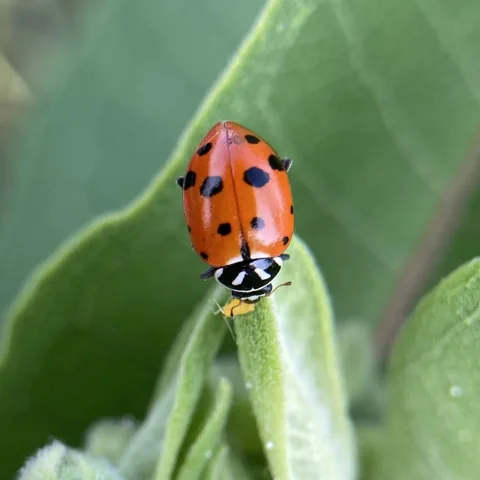 Convergent Lady Beetle
Hippodamia convergens
The convergent lady beetle is a native lady beetle named for the two short white marks on its thorax that angle toward each other. Adults and larvae eat aphids and other soft-bodied insects, and it is essentially the only lady beetle sold in stores and catalogs for aphid control.
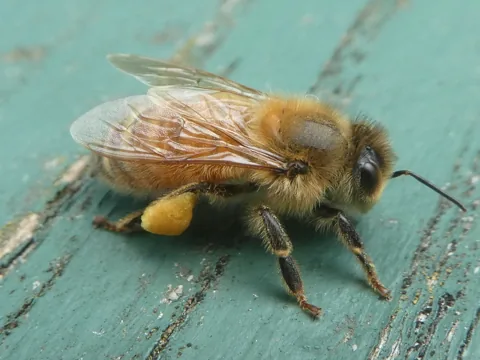 Western Honey Bee
Apis mellifera
Honey bees are important pollinators, but a colony that moves into a wall void or attic can become a stinging hazard. A swarm is temporary and usually best left alone, while an established colony in a building should be removed along with its comb.
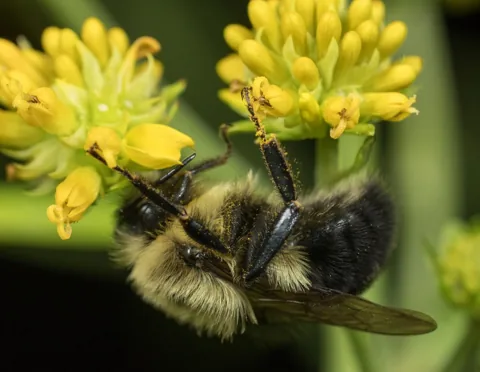 Common Eastern Bumble Bee
Bombus impatiens
Bumble bees are social bees that form annual colonies in soil cavities, old rodent burrows and similar voids; they are valuable pollinators and defend their nests only when disturbed.
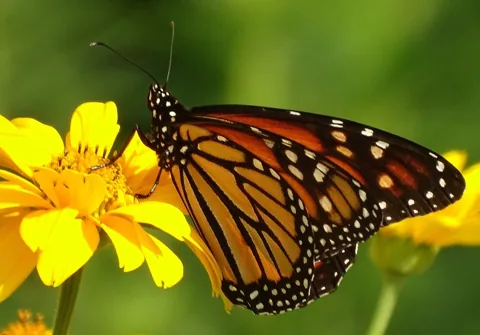 Monarch Butterfly
Danaus plexippus
The monarch is a large orange-and-black butterfly whose caterpillars feed only on milkweeds. North America has two migratory populations: eastern monarchs overwinter in mountain forests of central Mexico and western ones in groves on the California coast.
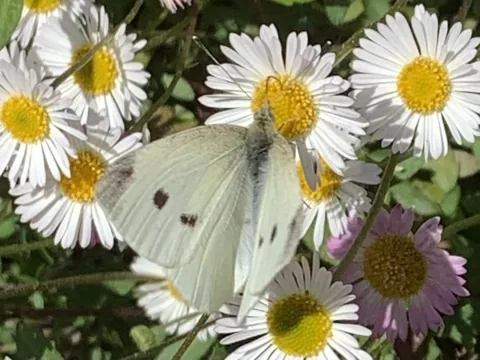 Imported Cabbageworm
Pieris rapae
The imported cabbageworm is the caterpillar of the familiar small white butterfly, the cabbage white. It chews ragged holes in cabbage, broccoli, cauliflower, kale and other cole crops, and it bores into heads as it grows.
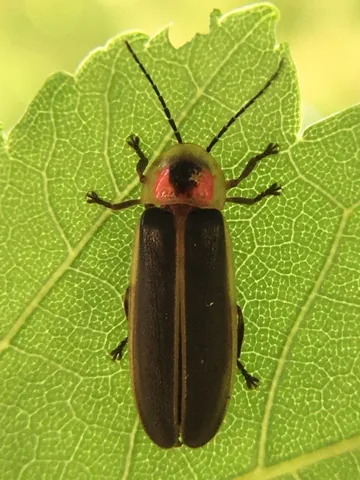 Fireflies
Lampyridae (e.g., Photinus pyralis, the big dipper firefly)
Fireflies, also called lightning bugs, are neither flies nor bugs but soft-bodied beetles. Many flash light to find mates, and their larvae prey on snails, slugs and other soft-bodied animals.
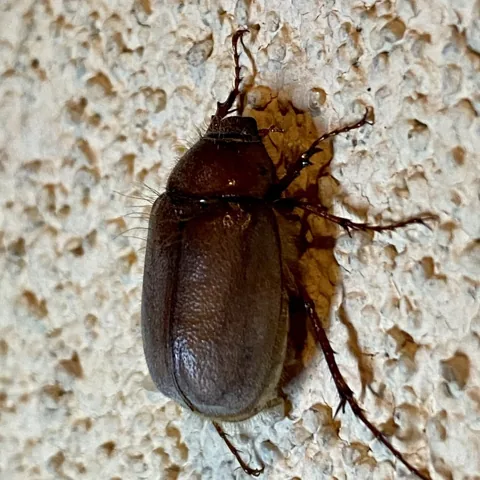 May and June Beetles
Phyllophaga species
May and June beetles, or June bugs, are native scarab beetles in the genus Phyllophaga. The adults buzz around porch lights on early summer nights, while their C-shaped grubs feed on roots, mostly in turf.
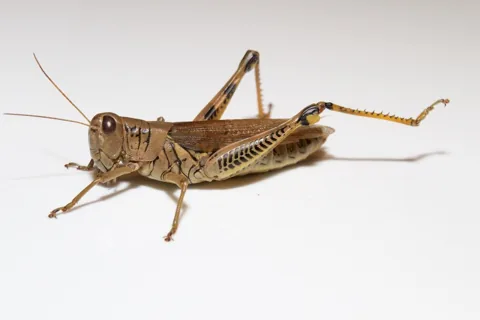 Grasshoppers
Acrididae (e.g., differential grasshopper, Melanoplus differentialis)
Grasshoppers are sporadic garden pests that build up in weedy, uncultivated land and move into yards as nearby vegetation dries out. The differential grasshopper is one of the common, large species that often shows up in gardens first.
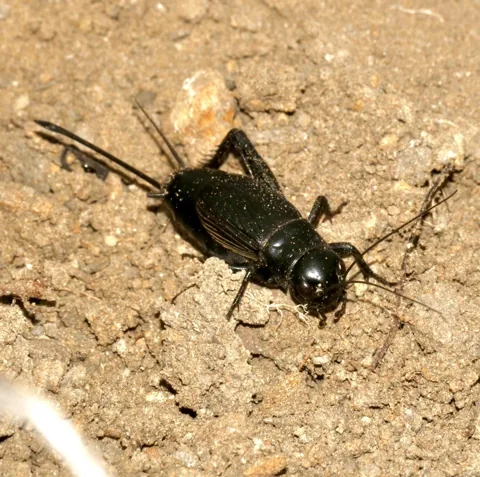 Field Crickets
Gryllus species (e.g., G. pennsylvanicus)
Field crickets are several species in the genus Gryllus that live outdoors in fields, pastures, roadsides and yards. They come into homes most often in late summer and fall, when cooler nights and outdoor lights draw them toward buildings.
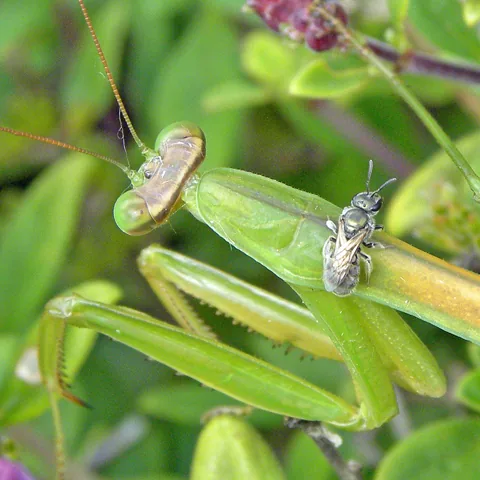 Praying Mantids
Mantidae (e.g., Tenodera sinensis, Mantis religiosa, Stagmomantis carolina)
Mantids are generalist predators. They catch pests, but they also eat bees, butterflies and other beneficial insects, and UC IPM says they're of no benefit for biological pest control.
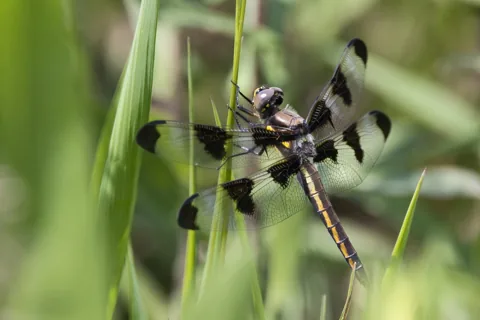 Dragonflies
Anisoptera (shown: Libellula pulchella)
Dragonflies are harmless to people and catch mosquitoes and other small insects on the wing. Their aquatic young eat mosquito larvae too, but sources disagree on how much they can do about a mosquito problem.
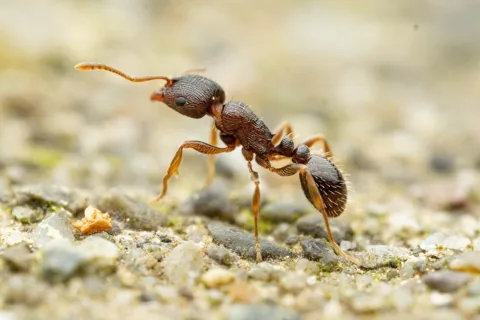 Pavement Ant
Tetramorium immigrans
The pavement ant is an introduced, soil-nesting ant that lives under sidewalks, slabs and stones. Penn State calls it one of the most commonly encountered house-infesting ants in Pennsylvania and says its range runs from New England to the Midwest and south through the Mid-Atlantic states to Tennessee, with populations in parts of California and Washington.
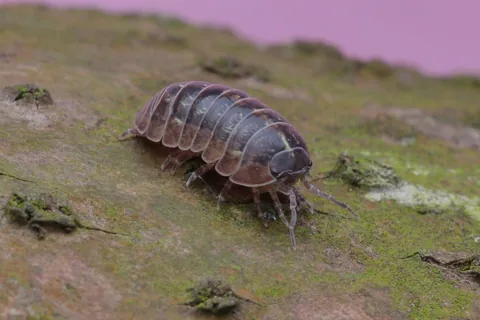 Common Pillbug
Armadillidium vulgare
Sowbugs and pillbugs are land-living crustaceans, more closely related to shrimp and crayfish than to insects, that feed mostly on decaying plant matter. They are harmless indoors, and finding many inside usually points to dampness, a large population outdoors or a gap at a door or window.
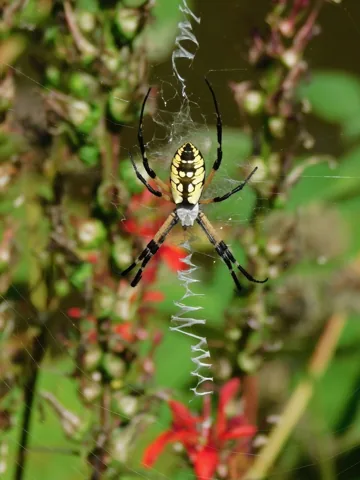 Orb Weaver Spiders (yellow garden spider)
Argiope aurantia
Orb weavers are the spiders that spin classic wheel-shaped webs in gardens and around porches. The best known is the yellow garden spider, a large black-and-yellow spider whose web has a white zigzag down the middle. They eat insects and aren't considered dangerous.
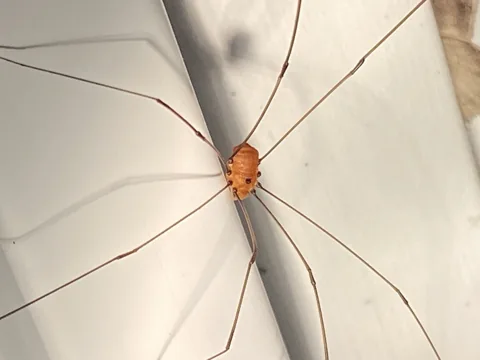 Harvestmen (Daddy Longlegs)
Opiliones (e.g., eastern harvestman, Leiobunum vittatum)
Harvestmen, widely called daddy longlegs, are arachnids related to spiders but are not true spiders. They make no silk, have no venom glands, and are beneficial predators and scavengers in yards and gardens.
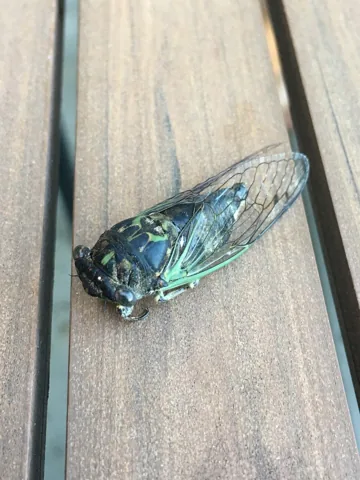 Annual Cicadas (dog-day cicadas)
Neotibicen species (e.g., N. canicularis)
Annual cicadas, also called dog-day cicadas, are the large cicadas heard droning from trees every summer. Their life cycles overlap, so some adults come out every year. They can't bite or sting, and Clemson and Minnesota extension both say they pose no danger to people or pets.
How to use this sheet
Print this page, grab a pencil and head outside with a grown-up. When you find a bug, match it to a card using the 3 clues, then write down the date and the place you saw it. New to bug hunting? Our safe bug hunting page covers what to leave alone and how to catch and release.[1][29]
- Flowers: honeybee workers are usually seen as they visit flowers for pollen and nectar, and bumble bees feed among flowers during the day.[3][5]
- Plants with aphids: lady beetles go wherever their food is, and their favorite foods, aphids and scale insects, sit on plants.[1][2]
- Under things: pill bugs hide under dead leaves, rocks, boards, grass clippings and mulch on damp ground. Ant eggs, larvae and pupae are often seen when a stone is turned over.[29][27]
- Near water: adult dragonflies usually stay near water because they lay their eggs there.[25][26]
- At dusk and after dark: fireflies flash at dawn and dusk, June beetles fly to lights at night, and field crickets chirp at night.[12][15][20]
When to look: a backyard bug calendar
Most of these bugs are out in the warm months, but each has its own best time. Use this list to plan your hunts.[12][10]
- Early spring: cabbage whites fly from March through October in Missouri, and they're among the first butterflies to come out in spring.[10][11]
- Spring: bumble bee queens come out in May to look for nest sites, such as old mouse burrows and holes in the ground. Honey bee swarms are common from late April through June.[6][5][4]
- Late spring and early summer: May and June beetles fly at night. In Wisconsin, adults come out in late May and early June. Firefly adults fly and flash in spring and summer.[15][16][12]
- Midsummer: annual cicadas crawl out of the ground and molt into adults in July and August. In Illinois they show up from July through September. Dragonflies are a summer sight along lakes, streams and ponds.[36][37][26]
- Late summer and fall: female garden spiders are usually noticed in late summer. Mantids lay eggs in late summer and die when it freezes. Crickets may wander into homes in late summer and fall, and monarchs fly south to Mexico in late summer and fall.[32][33][22][21][7]
Printable backyard bug ID sheet
Each card gives the bug's name, 3 clues to look for, where and when you'll find it, and whether it's safe to touch. If you can't tell, just look. You can always take a photo instead.[1][34]
- LADY BEETLE (ladybug). Look for: a round, shiny, dome-shaped body; red, orange or yellow, usually with black spots (a few kinds are all black); wing covers that meet in a straight line down the back. Where and when: on garden plants that have aphids or scale insects; some kinds pile into houses in late autumn. Touch? Yes, gently. One that's handled may leak a bad-smelling liquid, but lady beetles aren't harmful.[1][2]
- HONEY BEE. Look for: about 1/2 to 5/8 inch long; pollen packed into baskets on the back legs; hairy eyes. Where and when: on flowers; nests are in tree hollows or beekeepers' boxes, not in the ground. Touch? No. A worker's stinger is barbed and can be used once, and she dies after stinging.[3][4]
- BUMBLE BEE. Look for: big and fuzzy; black and yellow (sometimes orange) bands; fuzz on the back end, too. Where and when: on flowers in the daytime, from spring to fall; at night some sleep hanging under a leaf. Touch? No. Bumble bees are calm, but they can sting more than once, and they defend their nests.[5][6]
- MONARCH. Look for: orange wings with black veins; black wing edges with small white dots; wings about 3 1/2 to 4 inches across. Where and when: fields, roadsides and garden flowers in summer; its white, black and yellow striped caterpillar eats milkweed. Touch? No, just watch. Its wings are covered with tiny scales.[7][8][9]
- CABBAGE WHITE. Look for: a small white butterfly; dark wingtips; 1 black spot on each front wing (male) or 2 (female). Where and when: open places like lawns, fields and vegetable gardens, from early spring to fall; its green caterpillar eats cabbage and broccoli. Touch? No, just watch it fly.[10][11]
- FIREFLY (lightning bug). Look for: a soft, dark body; a red or orange shield that covers the head from above; a pale yellow tail tip that glows. Where and when: yards, fields and forest edges at dusk in spring and summer. Touch? Yes, gently in a cupped hand, then let it go. Its body is soft.[12][13][14]
- JUNE BEETLE (May beetle). Look for: a stout, plain brown to almost black beetle, 1/2 to 1 inch long; no spots or stripes; antennae that fan open at the tip. Where and when: bumping into porch lights and window screens on late-spring nights. Touch? Yes. It chews leaves but can't hurt people.[15][16][17]
- GRASSHOPPER. Look for: big back legs for jumping; short antennae, usually less than half as long as the body; green, tan or brown camouflage. Where and when: grassy, open places; babies hatch in spring and adults are around until fall. Touch? Gently, with a grown-up's OK, then let it hop away.[18][19]
- FIELD CRICKET. Look for: black, brown or tan (often shiny black); a big head and jumping legs; two thin feelers at the back end (females also have a long, needle-like egg-laying tube). Where and when: lawns, fields and roadsides, chirping at night; sometimes it wanders inside in late summer and fall. Touch? Gently, yes. The female's egg-laying tube is harmless.[20][21]
- PRAYING MANTIS. Look for: a triangle-shaped head that turns; spiny front legs folded like praying hands; green, tan or gray. Where and when: gardens, old fields and thickets, spring to fall; egg cases that feel like crusty foam sit on twigs over winter. Touch? Gently, with a grown-up. Mantids don't bite people.[22][24][23]
- DRAGONFLY. Look for: 2 pairs of thin, veined wings held out flat; huge eyes that almost cover the head; a long, thin body. Where and when: near ponds, lakes and streams in summer, catching mosquitoes and other flying insects in the air. Touch? It can't sting or bite, but it's very hard to catch, so just watch.[25][26]
- ANT. Look for: a pinched-in waist with a small bump; elbowed antennae; black, brown, reddish or yellowish. Where and when: under stones and sidewalks; pavement ants push little sand piles out of sidewalk cracks in warm months. Touch? No. Many ants bite or sting.[27][28]
- PILL BUG (roly-poly). Look for: a brown to dark gray, oval, armored back made of plates; curls into a ball when touched; lots of legs. Where and when: under leaves, rocks, boards and mulch on damp ground. Touch? Yes. Pill bugs don't bite or sting. Put it back where it was damp.[29][30]
- YELLOW GARDEN SPIDER. Look for: a black-and-yellow body about 3/4 to 1 inch long; a round web about 2 feet across with a zigzag band in the middle; sits head-down at the center. Where and when: gardens and tall grass near houses, mostly in late summer. Touch? No. It isn't aggressive, but it could bite if grabbed carelessly. Watch it shake its web instead.[31][32][33]
- DADDY LONGLEGS (harvestman). Look for: 8 very long, thin legs; one small, oval body; no web. Where and when: in leaf litter, on tree bark and around yards, from spring to fall. Touch? Yes, gently. It has no venom and can't bite people, but it may give off a strange smell.[34][35]
- CICADA. Look for: a black or green body; 4 thin wings with a green or black tint; a loud, raspy buzz from the trees. Where and when: around trees in July and August; after the brown nymph molts, its empty skin is left behind on a tree trunk or other object. Touch? Yes, for a short time. If one sits on you a long time it may poke you with its straw-like mouth. That hurts but is harmless.[36][37]
After the hunt
Put every bug back where you found it. Pill bugs need damp places and die quickly if they dry out, so set them back under the leaves or board you lifted.[29]
Some of these bugs need help. Monarchs need milkweed for their caterpillars, and avoiding broad-spectrum insecticides helps fireflies. Ask a grown-up about planting milkweed and native flowers.[7][12]
Want to know which of these bugs are garden helpers? Lady beetles eat aphids, dragonflies catch mosquitoes, and firefly larvae eat snails and slugs. Our helpful bugs page has more.[1][25][12]
Common questions
- Are June bugs and lightning bugs really bugs?
- No, both are beetles. Scientists save the word bug for the true bugs, like stink bugs and cicadas. June bugs belong to the scarab beetle family, and lightning bugs (fireflies) are beetles too.[1][15][13]
- Which bugs on this sheet can sting?
- Honey bees, bumble bees and ants. A honey bee worker's stinger is barbed, so she can sting only once, while a bumble bee can sting more than once. Many ants bite or sting, and pavement ants have a stinger.[3][6][27][28]
- What makes the loud buzzing in the trees in summer?
- Male cicadas. They make a loud, raspy call to attract females, and different kinds call at different times of day. Cicadas don't pose a threat to people or pets.[36][37]
- What do monarch caterpillars eat?
- Only milkweed. Milkweed has chemicals that the caterpillar stores in its body, which make both the caterpillar and the butterfly taste bad and poisonous to many predators.[7]
- Why do crickets come into the house in the fall?
- They wander in by accident, mostly in late summer and fall. Crickets that come inside usually don't lay eggs there, and they normally die by autumn or early winter.[21][20]
Photo credits
- Convergent Lady Beetle: (c) Jody, some rights reserved (CC BY) — via iNaturalist, CC BY 4.0
- Western Honey Bee: (c) Doug Miller, some rights reserved (CC BY) — via iNaturalist, CC BY 4.0
- Common Eastern Bumble Bee: Jesse Rorabaugh, public domain (CC0), via iNaturalist
- Monarch Butterfly: (c) Shirley Zundell, some rights reserved (CC BY) — via iNaturalist, CC BY 4.0
- Imported Cabbageworm: (c) eebee, some rights reserved (CC BY) — via iNaturalist, CC BY 4.0
- Fireflies: (c) Albert Cardona, some rights reserved (CC BY) — via iNaturalist, CC BY 4.0
- May and June Beetles: (c) Elliott Gordon, some rights reserved (CC BY) — via iNaturalist, CC BY 4.0
- Grasshoppers: (c) Brian Gratwicke, some rights reserved (CC BY) — via iNaturalist, CC BY 4.0
- Field Crickets: (c) Dustin Snider, some rights reserved (CC BY) — via iNaturalist, CC BY 4.0
- Praying Mantids: (c) M. Whitson, some rights reserved (CC BY) — via iNaturalist, CC BY 4.0
- Dragonflies: (c) Lauren McLaurin, some rights reserved (CC BY) — via iNaturalist, CC BY 4.0
- Pavement Ant: (c) Jake Nitta, some rights reserved (CC BY) — via iNaturalist, CC BY 4.0
- Common Pillbug: (c) Carlos Alexandre Mattos Raposo, some rights reserved (CC BY) — via iNaturalist, CC BY 4.0
- Orb Weaver Spiders (yellow garden spider): (c) Michael J. Papay, some rights reserved (CC BY) — via iNaturalist, CC BY 4.0
- Harvestmen (Daddy Longlegs): (c) Mark Eanes, some rights reserved (CC BY) — via iNaturalist, CC BY 4.0
- Annual Cicadas (dog-day cicadas): suzannehale, public domain (CC0), via iNaturalist
Sources
- Missouri Department of Conservation, “Lady Beetles (Ladybird Beetles; Ladybugs) (Field Guide).” mdc.mo.gov/discover-nature/field-guide/lady-beetles-ladybird-beetles-ladybugs (accessed 2026-11-15)
- University of Minnesota Extension, “Lady beetles.” extension.umn.edu/yard-and-garden-insects/lady-beetles (accessed 2026-11-15)
- Missouri Department of Conservation, “Honeybee (Field Guide).” mdc.mo.gov/discover-nature/field-guide/honeybee (accessed 2026-11-15)
- University of Kentucky Entomology, “Controlling Nuisance Honey Bees (ENTFACT-606).” entomology.mgcafe.uky.edu/ef606 (accessed 2026-11-15)
- Missouri Department of Conservation, “Bumblebees (Field Guide).” mdc.mo.gov/discover-nature/field-guide/bumblebees (accessed 2026-11-15)
- Ohio State University Extension, “HYG-2143: Bumble Bees and Solitary Bees & Wasps in Urban Landscapes.” ohioline.osu.edu/factsheet/HYG-2143-10 (accessed 2026-11-15)
- Missouri Department of Conservation, “Monarch (Field Guide).” mdc.mo.gov/discover-nature/field-guide/monarch (accessed 2026-11-15)
- USDA Forest Service, “Monarch Butterfly Biology.” www.fs.usda.gov/wildflowers/pollinators/Monarch_Butterfly/biology/index.shtml (accessed 2026-11-15)
- Illinois Department of Natural Resources, “Wild About Illinois Butterflies!.” dnr.illinois.gov/education/wildaboutpages/wildaboutinvertebrates/wildaboutbutterflies.html (accessed 2026-11-15)
- Missouri Department of Conservation, “Cabbage White (Field Guide).” mdc.mo.gov/discover-nature/field-guide/cabbage-white (accessed 2026-11-15)
- University of Wisconsin-Madison Extension, “Imported Cabbageworm.” hort.extension.wisc.edu/articles/imported-cabbageworm/ (accessed 2026-11-15)
- Missouri Department of Conservation, “Fireflies (Lightning Bugs) (Field Guide).” mdc.mo.gov/discover-nature/field-guide/fireflies-lightning-bugs (accessed 2026-11-15)
- Colorado State University Extension, “Fireflies (Lightningbugs), Colorado Insects of Interest.” wci.extension.colostate.edu/wp-content/uploads/sites/14/2017/03/Fireflies.pdf (accessed 2026-11-15)
- University of Missouri Extension, “Fireflies illuminate landscapes with summer love.” extension.missouri.edu/news/fireflies-illuminate-landscapes-with-summer-love (accessed 2026-11-15)
- Missouri Department of Conservation, “May Beetles (June Bugs) (Field Guide).” mdc.mo.gov/discover-nature/field-guide/may-beetles-june-bugs (accessed 2026-11-15)
- University of Wisconsin-Madison Extension, “May/June Beetles.” hort.extension.wisc.edu/articles/mayjune-beetles/ (accessed 2026-11-15)
- Utah State University Extension, “May/June Beetles (turf IPM).” extension.usu.edu/planthealth/ipm/notes_orn/list-turf/ar_may-june-beetles (accessed 2026-11-15)
- Missouri Department of Conservation, “Short-Horned Grasshoppers (Field Guide).” mdc.mo.gov/discover-nature/field-guide/short-horned-grasshoppers (accessed 2026-11-15)
- University of California Statewide IPM Program, “Pest Notes: Grasshoppers.” ipm.ucanr.edu/home-and-landscape/grasshoppers/ (accessed 2026-11-15)
- Missouri Department of Conservation, “Field Crickets (Field Guide).” mdc.mo.gov/discover-nature/field-guide/field-crickets (accessed 2026-11-15)
- University of Minnesota Extension, “Crickets.” extension.umn.edu/garden-and-home/home-maintenance/household-insects/crickets (accessed 2026-11-15)
- Missouri Department of Conservation, “Mantids (Mantises) (Field Guide).” mdc.mo.gov/discover-nature/field-guide/mantids-mantises (accessed 2026-11-15)
- Ohio State University Extension, “Ohio's Natural Enemies: Mantids (ENT-67).” ohioline.osu.edu/factsheet/ent-67 (accessed 2026-11-15)
- University of California Statewide IPM Program, “Natural Enemies Gallery: Mantids, or Praying Mantises.” ipm.ucanr.edu/natural-enemies/mantids/ (accessed 2026-11-15)
- Missouri Department of Conservation, “Dragonflies (Field Guide).” mdc.mo.gov/discover-nature/field-guide/dragonflies (accessed 2026-11-15)
- Iowa State University Extension and Outreach, “Dragonflies and Damselflies.” hortnews.extension.iastate.edu/dragonflies-and-damselflies (accessed 2026-11-15)
- Missouri Department of Conservation, “Ants (Field Guide).” mdc.mo.gov/discover-nature/field-guide/ants (accessed 2026-11-15)
- Penn State Extension, “Pavement Ant.” extension.psu.edu/pavement-ant (accessed 2026-11-15)
- Iowa State University Extension and Outreach, “Sowbugs and Pillbugs.” hortnews.extension.iastate.edu/sowbugs-and-pillbugs (accessed 2026-11-15)
- University of California Statewide IPM Program, “Pillbugs and Sowbugs.” ipm.ucanr.edu/PMG/GARDEN/FRUIT/PESTS/sowbugs.html (accessed 2026-11-15)
- Missouri Department of Conservation, “Black-and-Yellow Garden Spider (Field Guide).” mdc.mo.gov/discover-nature/field-guide/black-yellow-garden-spider (accessed 2026-11-15)
- NC State Extension, “Black and Yellow Garden Spider.” content.ces.ncsu.edu/black-and-yellow-garden-spider (accessed 2026-11-15)
- Penn State Extension, “Yellow Garden Spider.” extension.psu.edu/yellow-garden-spider (accessed 2026-11-15)
- Missouri Department of Conservation, “Daddy Longlegs (Harvestmen) (Field Guide).” mdc.mo.gov/discover-nature/field-guide/daddy-longlegs-harvestmen (accessed 2026-11-15)
- University of Minnesota Extension, “Harvestmen (daddy longlegs), What insect is this?.” apps.extension.umn.edu/garden/diagnose/insect/general-curiosity-insects/relatives/medium/harvestmen.html (accessed 2026-11-15)
- Missouri Department of Conservation, “Annual Cicadas (Field Guide).” mdc.mo.gov/discover-nature/field-guide/annual-cicadas (accessed 2026-11-15)
- University of Illinois Extension, “Cicadas.” extension.illinois.edu/insects/cicadas (accessed 2026-11-15)