The short answer
- Look first, touch never, unless a grown-up says a bug is safe. Some caterpillars, ants, bees, wasps and spiders can hurt you. Poison Control says to teach children to leave caterpillars alone.[7][3][4]
- Don't put your hands where you can't see. MedlinePlus says not to put your hands in nests or under rotted wood where insects may gather.[6][4]
- Catch bugs with a jar, not your fingers. UC IPM's trick for a spider is to set a jar over it, slide a piece of paper under the opening, then carry it outside and let it go.[11][16]
- Do a tick check when you come inside. CDC says to check under the arms, in and around the ears, inside the belly button, behind the knees, in and around the hair, between the legs and around the waist.[1][5]
- Get a grown-up right away if you're stung or bitten, find a tick stuck to your skin, or touch a fuzzy or spiny caterpillar. Call 911 if someone has trouble breathing or swelling of the face or mouth after a sting.[6][7][2]
If someone may be poisoned
- Call 911 if someone who was stung has trouble breathing, wheezing, swelling anywhere on the face or in the mouth, throat tightness or trouble swallowing, feels weak, or turns blue.[6][9]
- Poison Control can help with caterpillar stings and other poison questions, online or by phone at 1-800-222-1222. It's free, confidential and open 24 hours a day.[7]
Meet the bugs on this page
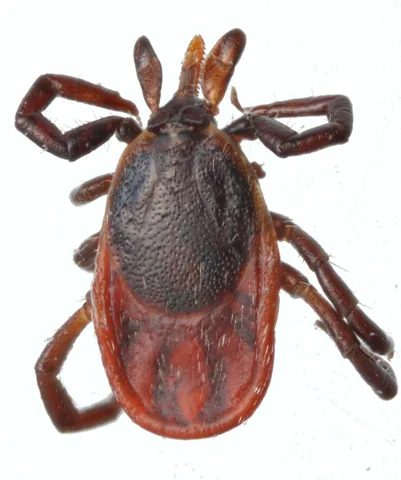 Blacklegged Tick
Ixodes scapularis
The blacklegged tick, often called the deer tick, is widely distributed across the eastern United States and spreads the bacteria that cause Lyme disease along with several other infections.
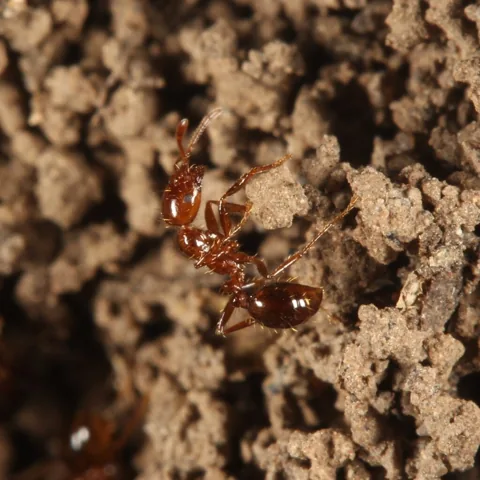 Red Imported Fire Ant
Solenopsis invicta
The red imported fire ant is an aggressive stinging ant that infests most of the southern United States and parts of California, building mounds in open, sunny areas such as lawns, parks and roadsides. USDA APHIS says imported fire ants came from South America, probably in soil on cargo ships, and now infest more than 367 million acres in Alabama, Arkansas, California, Florida, Georgia, Louisiana, Mississippi, North Carolina, Oklahoma, South Carolina, Tennessee, Texas, Virginia and Puerto Rico.
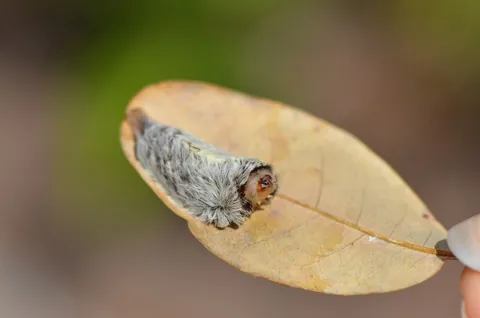 Puss Caterpillar (southern flannel moth)
Megalopyge opercularis
The puss caterpillar is the larva of the southern flannel moth. Its soft, fur-like coat hides short venomous spines, and medical reviews count it among the most serious stinging caterpillars in North America. UF/IFAS calls it one of the most venomous caterpillars in the United States, and its adult is the most common of the five flannel moth species in the Southeast.
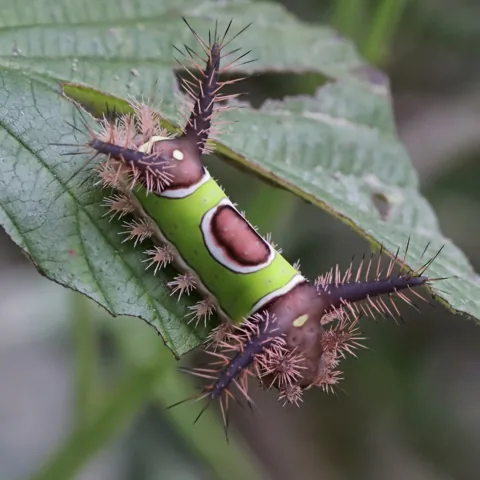 Saddleback Caterpillar
Acharia stimulea
The saddleback caterpillar is a slug caterpillar, a stinging moth larva named for the saddle-shaped spot in the middle of its green back. Clemson calls it the most common slug caterpillar, and poison center records list it among the caterpillars that actually cause stings.
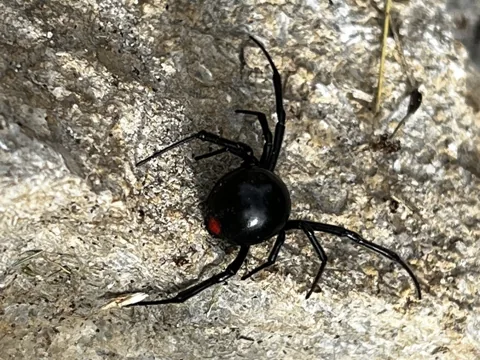 Southern Black Widow
Latrodectus mactans
Black widows are shy, web-building spiders with a neurotoxic venom; they live throughout North America and are most common in the southern and western United States. The southern black widow is found throughout states such as South Carolina.
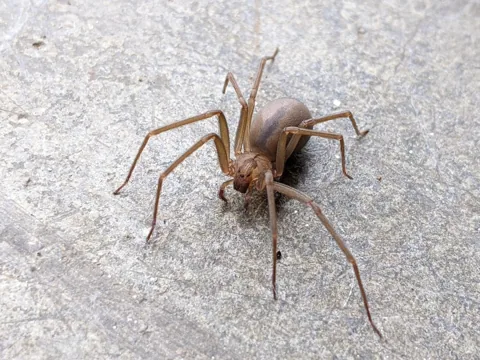 Brown Recluse
Loxosceles reclusa
The brown recluse is a secretive spider of the south-central and Midwestern United States whose bite can occasionally cause serious wounds; it is widely over-reported outside its range. The Illinois Department of Public Health says it occurs in roughly the southeastern quarter of the country and that bites are uncommon even where the spider is common.
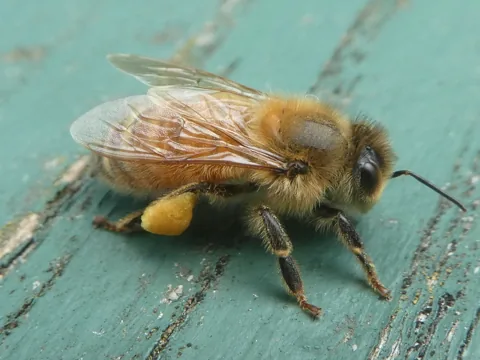 Western Honey Bee
Apis mellifera
Honey bees are important pollinators, but a colony that moves into a wall void or attic can become a stinging hazard. A swarm is temporary and usually best left alone, while an established colony in a building should be removed along with its comb.
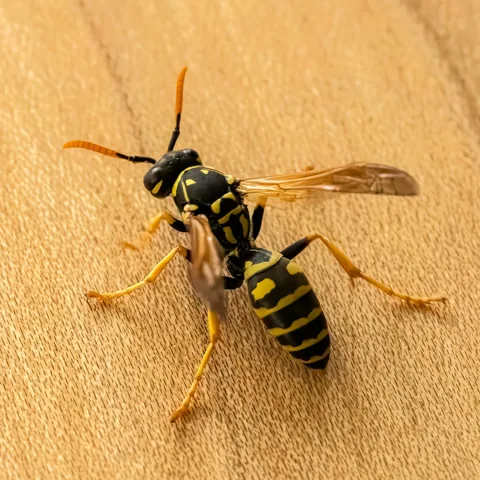 European Paper Wasp
Polistes dominula
Paper wasps hang open, umbrella-shaped paper nests under eaves and in sheltered spots; they are much less defensive than yellowjackets and rarely sting unless a nest is disturbed.
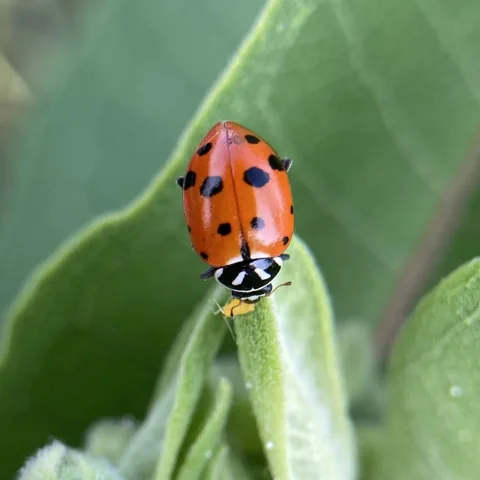 Convergent Lady Beetle
Hippodamia convergens
The convergent lady beetle is a native lady beetle named for the two short white marks on its thorax that angle toward each other. Adults and larvae eat aphids and other soft-bodied insects, and it is essentially the only lady beetle sold in stores and catalogs for aphid control.
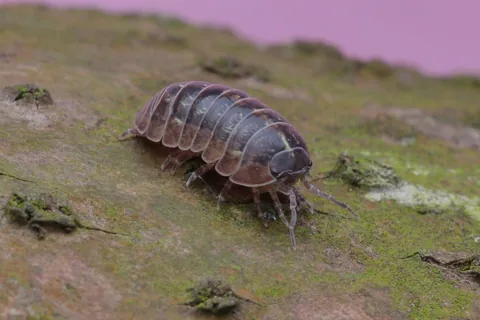 Common Pillbug
Armadillidium vulgare
Sowbugs and pillbugs are land-living crustaceans, more closely related to shrimp and crayfish than to insects, that feed mostly on decaying plant matter. They are harmless indoors, and finding many inside usually points to dampness, a large population outdoors or a gap at a door or window.
Bugs to look at but never touch
Most spiders and caterpillars you'll meet are harmless, UC IPM and Poison Control say. These are the ones a smart bug hunter watches from a safe distance, and tells a grown-up about.[7][11][3]
- Bees, wasps and hornets. They're most common in warm months, and their nests can be in trees or under roof edges. Stay calm and still if one flies near you, because NIOSH says swatting may make it sting. UC IPM says a bee or wasp is not likely to sting unless someone bumps it hard or swats at it.[3][9]
- Fire ants. They bite and sting, and the sting burns. Never stand on or poke an ant mound. Texas A&M says fire ant mounds are hills of fluffy, worked-up soil with no hole in the middle, and the ants are small, about 1/8 to 1/4 inch long, and come in different sizes. NIOSH says fire ants live mostly in the Southeast, with some in New Mexico, Arizona and California.[3][14][10]
- Black widow spiders. A grown-up female is shiny black with a red or orange hourglass under her round belly. Black widows hide in dark, dry, quiet places like woodpiles, fences and piles of junk, and people get bitten when they reach in or pick things up there.[11][4]
- Brown recluse spiders. They're brown with a dark violin-shaped mark on its head. NIOSH says they hide under logs and in piles of rocks or leaves outdoors, and in dark closets, shoes and attics indoors. They bite when they get trapped against skin.[4][11]
- Fuzzy or spiny caterpillars. Some caterpillars have hairs or spines with venom that cause pain, itching, burning, swelling and blisters. Clemson says the puss caterpillar looks soft and fluffy but hides sharp spines under its hair, and the saddleback is gray with a lime green "saddle" in the middle. Clemson's advice: admire a colorful or fuzzy caterpillar from afar.[7][8]
- Ticks. Ticks are tiny and live in grassy, brushy or wooded places. They don't sting, but they can bite and hang on, and CDC says some carry germs that cause tickborne diseases. Minnesota's health department says a tick can look like a speck of dirt or a freckle.[1][2][5]
Where to look for bugs
On plants. Lady beetles (ladybugs) are most often found on plants that have aphids, mealybugs or scale insects, which are tiny bugs the lady beetles eat. University of Minnesota Extension says both adult lady beetles and their larvae eat insects.[15]
Under leaves and garden litter. Pillbugs and sowbugs hide under leaf litter and other debris on the ground and under low plants. UC IPM says they aren't insects at all. They are crustaceans, and they eat mostly rotting plant material. A pillbug curls into a ball when you disturb it, and a sowbug runs away instead.[12]
In the open. UC IPM says the spiders you see out in the open during the day are unlikely to bite people, so these are good ones to watch, not grab.[11]
Let a grown-up turn over logs, boards and rocks. Black widows and brown recluses hide in exactly those spots. NIOSH suggests gloves, long sleeves and long pants when handling stacked or undisturbed piles, and MedlinePlus says not to put your hands under rotted wood.[4][6][11]
Skip a few places. Stay away from any spot where you see bees or wasps flying in and out, because UC IPM says that's likely a nest. Don't go barefoot in clover or blooming ground covers, where bees feed. And stay off fire ant mounds.[9][3]
Catch, look, and let it go
A clear jar and a piece of stiff paper make a good bug trap. UC IPM's method: set the jar over the bug, slide the paper under the opening so it seals the jar, and lift. Then you can look through the glass. Utah State University Extension also suggests catch and release with a glass jar for spiders found indoors.[11][16]
Look closely. Some bug parts are very small. UC IPM, for example, says you need a good hand lens to see how a spider's eyes are arranged. Most spiders have 8 eyes.[11]
Expect some bug defenses. A lady beetle that's handled may give off a bad-smelling liquid, University of Minnesota Extension says, and a pillbug rolls into a ball.[15][12]
Let it go outside. UC IPM and Utah State both describe releasing a jar-caught spider outdoors.[11][16]
Only jar a bug that's safe to catch. Leave stinging insects, fire ants, black widows, brown recluses, fuzzy or spiny caterpillars and ticks alone, and tell a grown-up where you saw them. If a caterpillar lands on you, Poison Control says to brush it off with a stick or tool, not your bare hands.[7][4][3]
Tick check after outdoor play
Ticks can get on you in your own backyard. CDC says to do a full body check after being outdoors in places that might have ticks, including your own backyard, and Minnesota's health department says to check at least once a day.[1][5]
Check these spots on your body (CDC's list): under the arms, in and around the ears, inside the belly button, behind the knees, in and around the hair, between the legs and around the waist. Use a mirror or ask a parent to look at the spots you can't see.[1][5]
Take a shower. CDC says showering within two hours of coming inside lowers the chance of getting Lyme disease and is a good time for a tick check.[1][5]
Check your stuff and your pets too. Ticks can ride inside on clothes, backpacks and pets, then crawl onto a person later. CDC says tumble drying dry clothes on high heat for 10 minutes kills ticks on them.[1]
Found one stuck to your skin? Tell a grown-up right away. CDC says an attached tick should come off as soon as possible, using clean fine-tipped tweezers close to the skin and a steady pull. Don't twist it, squeeze it, or put nail polish, petroleum jelly or heat on it.[2][5]
Watch for a rash or fever. CDC says to see a doctor if a rash or fever shows up within several days to weeks after a tick is removed.[2]
When to get a grown-up (right away)
If you're stung by a bee or wasp. A honey bee often leaves its stinger in the skin. UC IPM says to get it out as fast as possible, and any way works, like scraping with a fingernail. Then wash with soap and water and use ice. NIOSH adds: don't squeeze the stinger or use tweezers (UC IPM says speed matters more than method), don't scratch, and have someone stay with you to watch for an allergic reaction.[9][3][6]
If fire ants get on you. NIOSH says to brush them off fast, because they grab skin with their jaws. Texas A&M and UC IPM say a white blister or pimple-like bump often shows up a day or so later. Keep it clean, because it can get infected.[3][13][10]
If you touch a fuzzy or spiny caterpillar. Poison Control and Clemson both say to press tape on the skin, sticky side down, and pull it off to lift out the tiny hairs, then wash with soap and water. A grown-up can call Poison Control for help.[7][8]
If a spider bites you. Stay calm, wash the bite with soap and water, and put a cool, wet cloth or ice on it, NIOSH says. NIOSH and UC IPM both say to get medical care after a black widow or brown recluse bite. UC IPM says small children can have more serious effects from a black widow bite.[4][11]
Call 911 for breathing trouble, swelling of the face, lips or tongue, or fainting after any sting. MedlinePlus and Poison Control both list these as emergencies. UC IPM says allergic symptoms can start right after a sting or up to 30 minutes later.[6][7][9]
Allergic to stings? If a doctor has given your child an epinephrine auto-injector, it goes on every bug hunt. UC IPM and NIOSH both say people who know they're allergic should carry one.[9][3]
If a lot of bees or wasps come at you
Run. NIOSH says if several stinging insects attack at once, run away and go indoors. A shady spot is better than an open one. Don't jump into water, because some insects wait above it.[3]
Cover your face as you go. UC IPM says stinging insects often fly around the top of their target, so pull part of your shirt over your head, while still making sure you can see where you're going.[9]
Printable bug hunter checklist
Print this list and take it on your next bug hunt. Each line comes from the sources on this page.[1][3][11]
- Bring a grown-up, a clear jar and a piece of stiff paper.[11][16]
- Bring a hand lens or magnifying glass for tiny details.[11]
- Wear shoes, not bare feet. Don't go barefoot in clover or blooming ground covers.[9][13]
- Have your epinephrine auto-injector along if a doctor prescribed one.[9][3]
- Look first. Don't put your hands under logs, rotted wood or rocks. A grown-up with gloves turns them over.[6][4]
- Don't touch: bees, wasps, fire ants, black widows, brown recluses, fuzzy or spiny caterpillars, ticks.[3][4][7][1]
- Stay still if a bee or wasp flies near. No swatting.[3][9]
- Stay off ant mounds and away from places where bees or wasps fly in and out.[3][9]
- Let jar bugs go outdoors when you're done looking.[11][16]
- Back inside: tick check under arms, ears, belly button, behind knees, hair, between legs, waist.[1]
- Shower within two hours. Check backpacks, clothes and pets.[1]
- Stung, bitten, or found a tick stuck on you? Tell a grown-up now.[2][6][7]
- Emergency: trouble breathing or a swollen face after a sting means call 911. Poison Control: 1-800-222-1222.[6][7]
Common questions
- Are all fuzzy caterpillars dangerous?
- No. Poison Control says most caterpillars are harmless, but several kinds in the US sting, including the saddleback, io moth, puss caterpillar and buck moth. Since they're hard to tell apart, the safe rule is to look and not touch.[7][8]
- Can I pick up a spider I find in the house?
- Not with your hands. Use the jar-and-paper trick from UC IPM and let it go outside. NIOSH says spiders usually bite only when they're trapped or touched.[11][4][16]
- Is a ladybug safe to hold?
- Lady beetles eat other insects and are counted as helpful bugs. University of Minnesota Extension says one that is handled may give off a bad-smelling liquid, so a jar is a nicer way to look at one.[15]
- Why do I need a tick check if I only played in the yard?
- CDC says many people get ticks in their own yard or neighborhood, and recommends a full body check after being outdoors, including in your own backyard.[1][5]
- What if a bee lands on me?
- Stay calm and still. UC IPM says a bee or wasp that lands on you will usually leave by itself, or you can gently and slowly brush it away with a piece of paper. Swatting can make it sting, NIOSH says.[9][3]
Photo credits
- Blacklegged Tick: (c) Christian Back, some rights reserved (CC BY) — via iNaturalist, CC BY 4.0
- Red Imported Fire Ant: (c) Natasha Taylor, some rights reserved (CC BY) — via iNaturalist, CC BY 4.0
- Puss Caterpillar (southern flannel moth): Center for Urban Ecology, public domain (CC0), via iNaturalist
- Saddleback Caterpillar: Dennis White, public domain (CC0), via iNaturalist
- Southern Black Widow: Carol Spence, public domain (CC0), via iNaturalist
- Brown Recluse: iamfindingplants, public domain (CC0), via iNaturalist
- Western Honey Bee: (c) Doug Miller, some rights reserved (CC BY) — via iNaturalist, CC BY 4.0
- European Paper Wasp: (c) Andrew McKinlay, some rights reserved (CC BY) — via iNaturalist, CC BY 4.0
- Convergent Lady Beetle: (c) Jody, some rights reserved (CC BY) — via iNaturalist, CC BY 4.0
- Common Pillbug: (c) Carlos Alexandre Mattos Raposo, some rights reserved (CC BY) — via iNaturalist, CC BY 4.0
Sources
- U.S. Centers for Disease Control and Prevention, “Preventing Tick Bites.” www.cdc.gov/ticks/prevention/index.html (accessed 2026-11-15)
- U.S. Centers for Disease Control and Prevention, “What to Do After a Tick Bite.” www.cdc.gov/ticks/after-a-tick-bite/index.html (accessed 2026-11-15)
- CDC National Institute for Occupational Safety and Health (NIOSH), “Insects and Scorpions at Work.” www.cdc.gov/niosh/outdoor-workers/about/insects-and-scorpions.html (accessed 2026-11-15)
- CDC National Institute for Occupational Safety and Health (NIOSH), “Venomous Spiders at Work.” www.cdc.gov/niosh/outdoor-workers/about/venomous-spiders.html (accessed 2026-11-15)
- Minnesota Department of Health, “Preventing Tickborne Disease.” www.health.state.mn.us/diseases/tickborne/prevention.html (accessed 2026-11-15)
- MedlinePlus, U.S. National Library of Medicine, “Insect bites and stings (Medical Encyclopedia).” medlineplus.gov/ency/article/000033.htm (accessed 2026-11-15)
- Poison Control, National Capital Poison Center, “Are caterpillars poisonous?.” www.poison.org/articles/caterpillar-stings (accessed 2026-11-15)
- Clemson University Home & Garden Information Center, “Stinging Caterpillars.” hgic.clemson.edu/factsheet/stinging-caterpillars/ (accessed 2026-11-15)
- University of California Statewide IPM Program, “Bee and Wasp Stings.” ipm.ucanr.edu/home-and-landscape/bee-and-wasp-stings/ (accessed 2026-11-15)
- University of California Statewide IPM Program, “Pest Notes: Red Imported Fire Ant.” ipm.ucanr.edu/PMG/PESTNOTES/pn7487.html (accessed 2026-11-15)
- University of California Statewide IPM Program, “Pest Notes: Spiders.” ipm.ucanr.edu/home-and-landscape/spiders/ (accessed 2026-11-15)
- University of California Statewide IPM Program, “Pest Notes: Pillbugs and Sowbugs.” ipm.ucanr.edu/home-and-landscape/pillbugs-and-sowbugs/ (accessed 2026-11-15)
- Texas Imported Fire Ant Research and Management Project, Texas A&M AgriLife Extension, “Medical Information.” fireant.tamu.edu/manage/medical-information/ (accessed 2026-11-15)
- Texas Imported Fire Ant Research and Management Project, Texas A&M AgriLife Extension, “How can I tell if I have fire ants?.” fireant.tamu.edu/manage/how-can-i-tell-if-i-have-fire-ants/ (accessed 2026-11-15)
- University of Minnesota Extension, “Lady beetles.” extension.umn.edu/yard-and-garden-insects/lady-beetles (accessed 2026-11-15)
- Utah State University Extension, “Hobo and Grass Spiders.” extension.usu.edu/planthealth/ipm/notes_nuisance/hobo-grass-spiders (accessed 2026-11-15)
- U.S. National Park Service, “Insects and Invertebrates.” www.nps.gov/subjects/insects/index.htm (accessed 2026-11-15)