The short answer
- Pollinators: bees, butterflies, flies and beetles carry pollen from flower to flower. Bees are the champions.[4][1][7][5]
- Pest hunters: lady beetles, lacewings, ground beetles, spiders and dragonflies eat other bugs, including aphids, caterpillars and mosquitoes.[9][10][11][24][13]
- Recyclers: pill bugs, millipedes and dung beetles break down dead plants and manure. Earthworms help too, but they are worms, not bugs.[25][15][14][16]
- You can help: plant lots of different flowers, don't squash the helpers, leave some leaves, logs and rocks for them to hide under, and ask a grown-up before anyone sprays bug killer.[23][28][25][11]
Meet the helpers
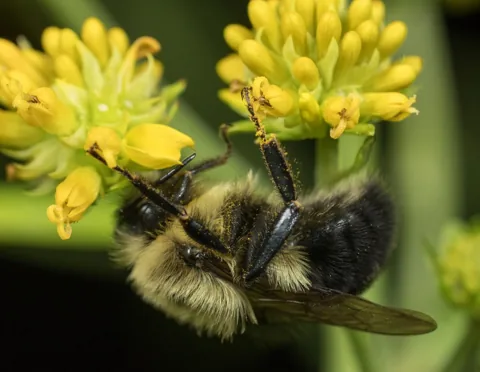 Common Eastern Bumble Bee
Bombus impatiens
Bumble bees are social bees that form annual colonies in soil cavities, old rodent burrows and similar voids; they are valuable pollinators and defend their nests only when disturbed.
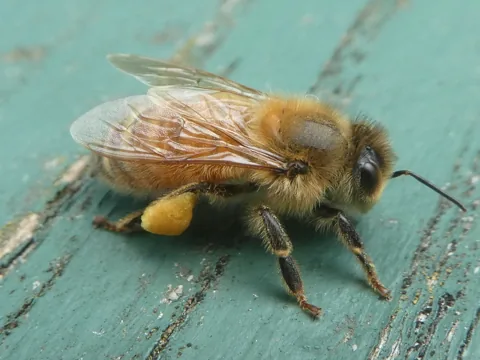 Western Honey Bee
Apis mellifera
Honey bees are important pollinators, but a colony that moves into a wall void or attic can become a stinging hazard. A swarm is temporary and usually best left alone, while an established colony in a building should be removed along with its comb.
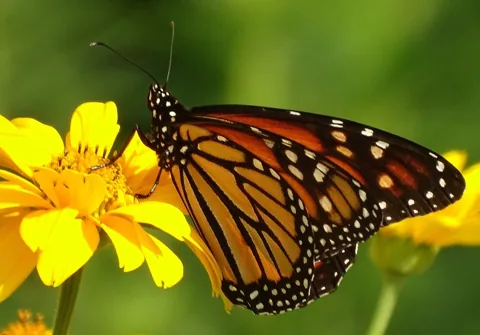 Monarch Butterfly
Danaus plexippus
The monarch is a large orange-and-black butterfly whose caterpillars feed only on milkweeds. North America has two migratory populations: eastern monarchs overwinter in mountain forests of central Mexico and western ones in groves on the California coast.
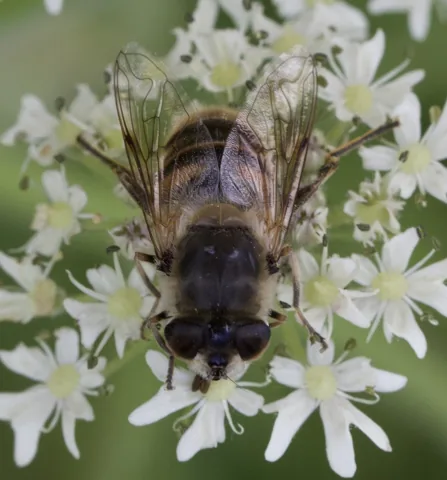 Hover Flies (Flower Flies, Syrphid Flies)
Family Syrphidae (e.g., Eristalis tenax, the drone fly)
Hover flies are true flies dressed up like bees and wasps. They can't sting or bite; the adults pollinate flowers, and the larvae of many species are important predators of aphids in gardens.
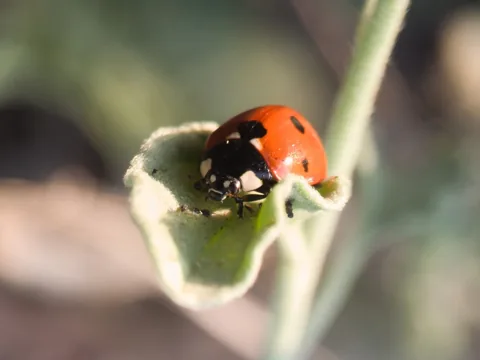 Sevenspotted Lady Beetle
Coccinella septempunctata
The sevenspotted lady beetle is native to Eurasia and is said to be the most common lady beetle in Europe. It was brought into North America on purpose to fight aphids and is now established here.
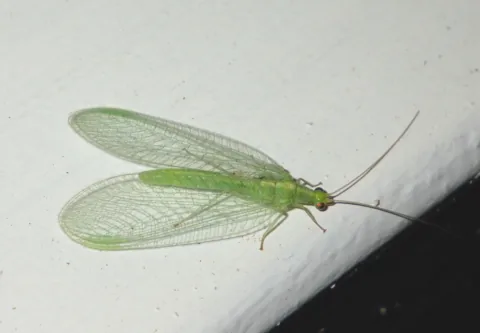 Green Lacewings
Chrysoperla species (e.g., C. carnea)
Green lacewings are beneficial insects, not pests. Their larvae, nicknamed aphid lions, are voracious predators of aphids and other soft-bodied insects, and they rank alongside lady beetles as important natural enemies in gardens and landscapes. Adults are delicate green insects with lacy wings and golden eyes that often come to porch lights. They don't damage plants or homes and larvae only rarely nip people, so the best thing to do is protect them: skip broad-spectrum insecticides and bug zappers, grow flowering plants, and buy eggs or larvae if you want more.
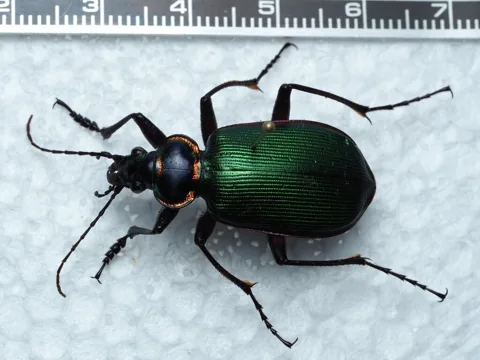 Ground Beetles
Family Carabidae (e.g., Calosoma scrutator, the fiery searcher)
Ground beetles are one of the largest groups of beetles in North America. They sometimes crawl indoors under doors or through small openings, but they prefer to live outside where prey is common, and outdoors they are valuable predators of garden pests.
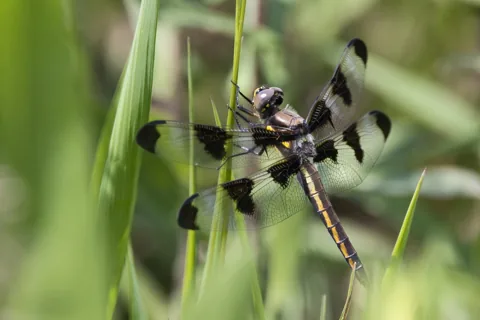 Dragonflies
Anisoptera (shown: Libellula pulchella)
Dragonflies are harmless to people and catch mosquitoes and other small insects on the wing. Their aquatic young eat mosquito larvae too, but sources disagree on how much they can do about a mosquito problem.
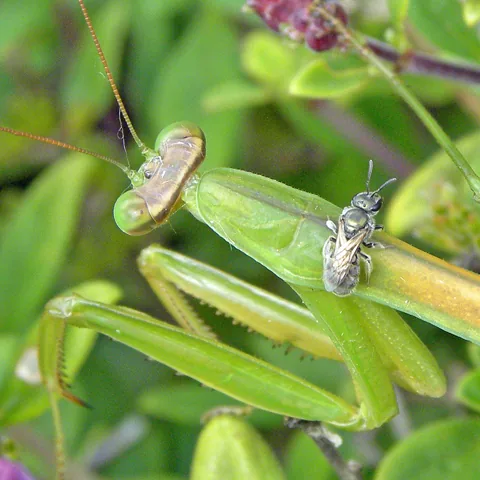 Praying Mantids
Mantidae (e.g., Tenodera sinensis, Mantis religiosa, Stagmomantis carolina)
Mantids are generalist predators. They catch pests, but they also eat bees, butterflies and other beneficial insects, and UC IPM says they're of no benefit for biological pest control.
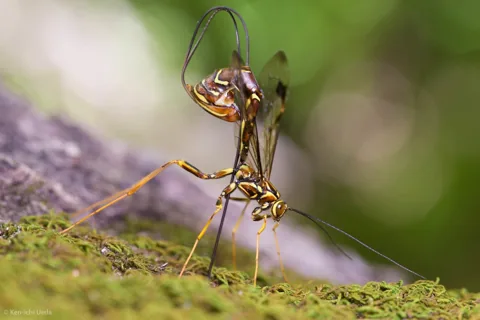 Ichneumon wasps
Ichneumonidae (more than 5,000 North American species)
Ichneumon wasps are the largest family of wasps, with more than 5,000 species in North America alone. They look like stinging wasps drawn out thin: slender, long-legged, with antennae at least half the body length and, on most females, an ovipositor that is often longer than the whole insect. That filament is for laying eggs inside caterpillars, grubs and wood-boring larvae, which the wasp's young eat from the inside. Missouri's conservation department says most ichneumons are harmless, although the female's long ovipositor is intimidating, and that they help control pests such as tomato hornworms, boll weevils and wood borers; WSU recommends no chemical management for them.
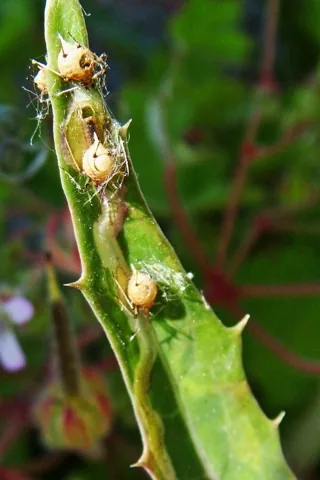 Aphid Parasitoid Wasps
Aphidiinae (Aphidius, Lysiphlebus and relatives)
If you see swollen, crusty tan aphids glued to a leaf, a tiny parasitic wasp has killed them from the inside. These aphid mummies mean natural control is under way.
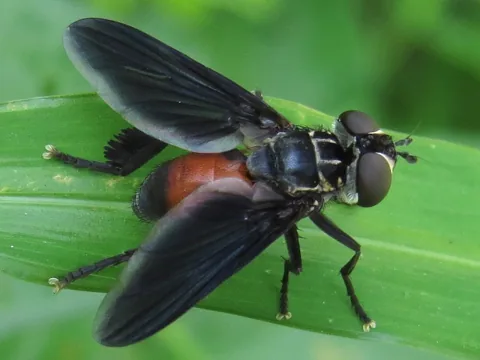 Tachinid Flies
Tachinidae (shown: Trichopoda pennipes)
Tachinids are the most important parasitic flies in biological control and one of the most diverse fly families. Their larvae develop inside caterpillars, beetles, true bugs and other insects, and kill them.
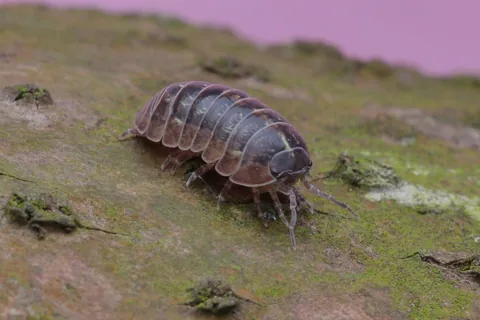 Common Pillbug
Armadillidium vulgare
Sowbugs and pillbugs are land-living crustaceans, more closely related to shrimp and crayfish than to insects, that feed mostly on decaying plant matter. They are harmless indoors, and finding many inside usually points to dampness, a large population outdoors or a gap at a door or window.
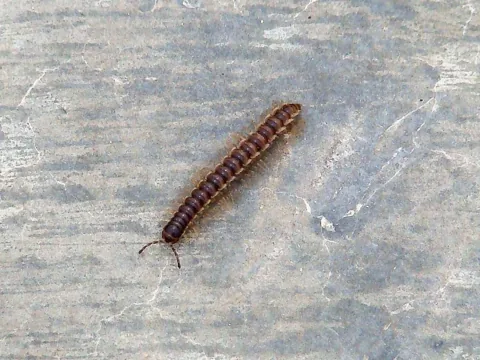 Greenhouse Millipede
Oxidus gracilis
Millipedes live in cool, damp places under leaves, mulch and stones; occasionally they migrate into buildings in large numbers but do no damage and soon die indoors. Clemson says the garden millipede (Oxidus gracilis) is the species that most often invades homes in large numbers.
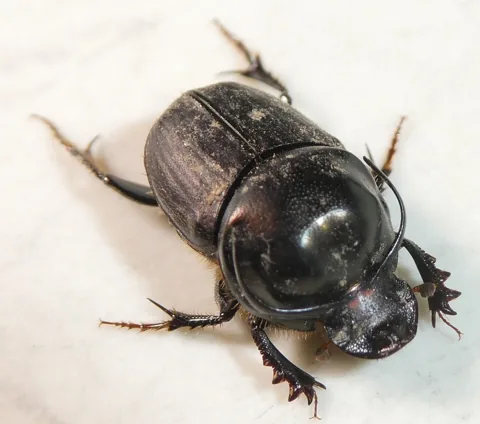 Dung beetles
Scarabaeinae and Aphodiinae (Onthophagus, Canthon, Phanaeus, Aphodius and others), plus Geotrupidae
A cow pat is a small ecosystem, and the beetles that arrive within hours are the ones that decide whether it breeds horn flies and parasites or disappears into the soil. Dung beetles come in three working styles: rollers that carve off a ball and trundle it away to bury, tunnelers that dig chambers beneath the pat and drag dung down to stock them, and dwellers that simply live and breed inside the manure. All three can share one pat, competing with the horn and face flies that lay eggs in fresh dung, and Cornell credits them with reducing those flies by as much as 95 percent on New York pastures.
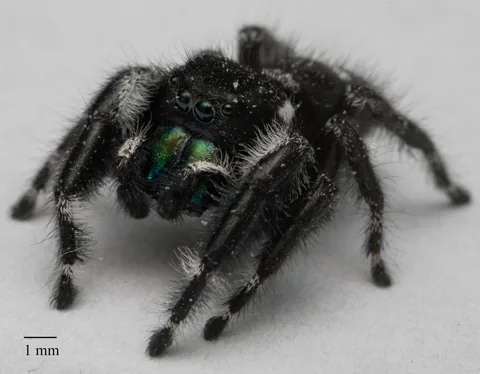 Bold Jumping Spider
Phidippus audax
Jumping spiders are compact, day-active hunters that build no web; they stalk prey by sight and pounce from a short distance. They live on plants, bark and walls and only occasionally wander indoors.
Pollinators: the flower visitors
Pollination means moving grains of pollen from the male part of a flower (the anther) to the female part (the stigma). Plants need it to make seeds. Most plants need help from animals, called pollinators, to make seeds and fruit.[2][1]
The U.S. Forest Service says pollinators are responsible for 1 out of every 3 bites of food you eat.[1]
- Bees are the champion pollinators. The United States has over 4,000 kinds of native bees, including fuzzy bumble bees, shiny green sweat bees and squash bees, plus the honey bee, which was brought here from somewhere else. Bees visit flowers on purpose to gather pollen and nectar to feed themselves and their babies.[4]
- Bumble bees can do a trick called buzz pollination. They shake their flight muscles fast, and the shaking knocks pollen out of the flower. Some plants can only be pollinated by bumble bees.[18]
- Butterflies are busy during the day, sipping nectar from many kinds of wildflowers. They carry less pollen than bees do, because their long, thin legs hold their bodies up above the flower. Butterflies can see the color red, and bees can't. Fun fact: butterflies taste with their feet.[6][4]
- Flies pollinate too. Flower flies (also called syrphid flies or hover flies) visit flowers and dress up like bees and wasps. Look at the wings to tell: flies have one pair, and bees and wasps have two.[7][23]
- Beetles were some of the first insects to visit flowers, and they still pollinate plants like magnolias. They're messy about it. They chew on flower parts and even poop inside the flowers.[5]
- Wasps pollinate some flowers, but they aren't as good at it as bees, because they aren't fuzzy and pollen doesn't stick to them as well.[8]
Pest hunters: bugs that eat bugs
Gardeners call these natural enemies. They eat insects that chew or suck on plants, so the garden needs less bug spray.[23][9]
- Lady beetles: most kinds eat aphids and scale insects, tiny bugs that suck plant juice. The babies (larvae) eat a lot of them too. Lady beetle larvae don't look like ladybugs. They are long, soft, bristly and a bit like tiny lizards, with six legs.[9]
- Lacewings: the adults are pale green with lacy wings and golden eyes. Their babies are called aphid lions, and a single one can eat an aphid a minute, for hours. Look for lacewing eggs, which sit on top of thin threadlike stalks.[10]
- Ground beetles: these shiny black or brown beetles run fast and hunt mostly at night. Both the adults and the larvae are predators. Many kinds eat cutworms and other caterpillars, and some prefer slugs and snails.[11]
- Spiders: all spiders eat insects or other small animals, and garden experts say they're helpful in the garden. Spiders aren't insects. They're arachnids with eight legs.[23][24][21]
- Dragonflies: they catch mosquitoes and other small flying insects in midair, holding their legs like a basket. Their babies (nymphs) live underwater and hunt there.[13][22]
- Flower fly larvae: these little maggot-like babies eat aphids. People sometimes think they're caterpillars, but they eat aphids, not the plant.[23]
Praying mantids: a mixed-up helper
Mantids are big, green or tan insects with a triangle-shaped head that can swivel. They hold their spiny front legs folded up as if they're praying, then grab bugs that come close.[12]
Here's the catch. A mantid eats almost anything it can grab, including helpful bugs like other predators, pollinators and butterflies. It even eats other mantids. So the Missouri Department of Conservation says calling mantids helpful is not so simple.[12]
Most mantids live only about a year. In late summer the female lays her eggs in a hard, foamy egg case on a twig or other surface. The eggs spend the winter inside it and hatch in spring.[12]
Tiny wasps and flies that grow inside pests
Some helpers are so small you might never notice them. They are called parasitoids. A parasitoid mother lays her eggs in or on another insect, like a caterpillar or an aphid. Her babies eat that insect from the inside, and it dies.[28][17]
When you hear wasps, you might think of yellowjackets. But most kinds of wasps are actually parasitoids. Some are tiny, like fairyflies that are 0.008 inch long, and one kind, Megarhyssa, is 5 inches long.[28]
Ichneumon wasps are a big group of parasitoids. They are slender, with long antennae, and the females often have an egg-laying tube longer than their whole body. They help control pests such as tomato hornworms and wood borers.[17]
Some flies are parasitoids too. One fly, Trichopoda pennipes, attacks squash bugs and stink bugs. The Forest Service also shows this fly among the flies that visit flowers.[28][7]
- Detective clue: an aphid that has turned into a puffy, tan, papery shell is called an aphid mummy. A parasitoid wasp grew inside it.[28]
- Detective clue: a tomato hornworm covered in tiny cocoons has been attacked by Cotesia wasps. The cocoons belong to the wasp babies, which grew inside the hornworm.[28]
Recyclers: the cleanup crew
Recyclers eat dead leaves, rotting wood and poop, and turn them back into food for plants.[25][15][14]
- Pill bugs and sowbugs eat dead plant material and put its nutrients back into the soil. They aren't insects. They're crustaceans, cousins of shrimp and lobsters, and they need damp places like leaf litter, mulch, rocks and logs.[25][27]
- Millipedes mostly eat rotting leaves and other dead plant material, softening it with spit as they chew. The nutrients move up the food chain when millipedes get eaten by bigger animals.[15][26]
- Dung beetles eat poop, mostly the dung of plant-eating animals like cows and deer. Some roll it into balls and bury it, then lay eggs inside so their babies have food. Burying dung adds air and fertilizer to the soil and cleans up pastures.[14]
A note about earthworms
Earthworms are great recyclers, but they are not bugs at all. They are segmented worms, in a group called annelids. They eat decaying plants and leave behind rich soil called castings, and their tunnels let air and water into the ground.[16]
Here's a surprise. The most familiar earthworms and nightcrawlers in North America are not native. People brought them from Europe long ago. About 60 of the roughly 175 kinds of earthworms in North America came from Europe or Asia.[16]
In gardens and compost piles, earthworms help. But in northern forests that had no earthworms for thousands of years, nonnative worms are changing forest soils and harming the forest. Some, like jumping worms, are invasive. So don't dump leftover fishing worms or compost worms in the woods.[16]
How kids can help the helpers
You don't need to buy bugs. You just need to make your yard a good place for the helpers that are already there.[23][28]
- Plant lots of different flowers that bloom at different times. Many helpers, like lacewing and flower fly adults and tiny parasitoid wasps, eat only pollen and nectar when they grow up.[23][28]
- Grow plants for caterpillars, not only flowers for butterflies. Monarch caterpillars, for example, need milkweed.[3][20]
- Don't squash bugs just because they look creepy. Lacewings, lady beetle larvae and flower fly larvae look strange, but they're eating the pests.[10][9][23]
- Leave a few hiding places. Pill bugs live in leaf litter and under logs and rocks, ground beetles hide under rocks and logs during the day, and old dead branches give some native bees a place to nest.[25][11][3]
- Ask a grown-up before anyone uses bug spray. Many insecticides kill helpful insects too, and some can poison bees and other helpers that sip nectar and pollen.[28][23][3]
Look first: helper-bug safety
Helpful doesn't always mean safe to touch. Watch them with your eyes and a magnifying glass, and only touch with a grown-up's OK.[29][30]
- Bees and wasps can sting. If one flies around you, stay calm and still. Tell a grown-up right away if you get stung. Some people are allergic to stings, and a bad allergic reaction needs emergency care.[29]
- Bumble bees are calm and not aggressive, but they can sting if someone grabs them or bothers their nest.[18]
- Most spiders can't hurt you, but black widows and brown recluses are venomous spiders found in the United States. Don't pick up spiders.[24][30]
- Millipedes don't bite, but many make fluids that can irritate skin and hurt your eyes. If you touch one, wash your hands well.[26]
- Ground beetles and some lady beetles and lacewings give off bad-smelling or irritating chemicals when they're bothered.[11][9][10]
Printable helper-bug ID sheet
Print this page and take it outside. Each card has three clues, what the bug does, and whether it's OK to touch. When in doubt, look but don't touch.[24][29]
- BUMBLE BEE (pollinator). Clues: fuzzy; yellow-and-black stripes; visits garden flowers. Touch? No. It can sting if bothered.[4][18]
- HONEY BEE (pollinator). Clues: carries pollen in little baskets on its legs; lives in a colony with one queen; brings nectar back to the hive. Touch? No. Its stinger is barbed.[19]
- BUTTERFLY (pollinator). Clues: big colorful wings; flies by day; sips nectar from flat flower clusters. Touch? Look only.[6]
- FLOWER FLY (pollinator and aphid hunter). Clues: looks like a small bee or wasp; hovers at flowers; only one pair of wings. Touch? Look only.[7][23]
- LADY BEETLE (pest hunter). Clues: round, shiny, dome-shaped; often red, orange or yellow; often spotted. Touch? Gently, with a grown-up's OK. It may give off a smelly liquid.[9]
- LACEWING (pest hunter). Clues: pale green; four lacy wings folded like a roof; golden eyes. Touch? Look only. It can make a bad smell when handled.[10]
- GROUND BEETLE (pest hunter). Clues: shiny black or brown; long legs; runs fast from under rocks and logs. Touch? No. Some spray bad-smelling or irritating chemicals.[11]
- DRAGONFLY (pest hunter). Clues: long slender body; 2 pairs of wings held out flat; catches bugs in midair. Touch? Better not. It can't sting, but big ones can pinch.[13]
- SPIDER (pest hunter, arachnid). Clues: 8 legs; 2 body parts; no antennae or wings. Touch? No. A few kinds are venomous.[21][24][30]
- PRAYING MANTID (hunter, eats good bugs too). Clues: triangle head that swivels; spiny front legs folded up; green or tan. Touch? Look only and watch it hunt.[12]
- PILL BUG (recycler, crustacean). Clues: gray to brown, oval; 7 pairs of legs; rolls into a ball. Touch? Yes, gently. It doesn't bite.[25][27]
- MILLIPEDE (recycler). Clues: long round body; 2 pairs of legs on most segments; moves slowly. Touch? Better not. If you do, wash your hands.[15][26]
- DUNG BEETLE (recycler). Clues: stout, oval, usually black; found on or under animal poop; may roll a dung ball. Touch? No. It lives in poop.[14]
Common questions
- Are all bugs pests?
- No. Lots of bugs help people and gardens. They pollinate flowers, eat pest insects, or recycle dead leaves and poop into soil.[1][23][25]
- Is a praying mantis a good bug?
- Sort of. Mantids eat pest insects, but they also eat helpful bugs like pollinators, butterflies and other predators. The Missouri Department of Conservation says that makes them hard to call simply helpful.[12]
- Are earthworms insects?
- No. Earthworms are segmented worms called annelids. They are helpful in gardens, but most common earthworms in North America came from Europe and can harm northern forests.[16]
- What is an aphid mummy?
- It's an aphid that a tiny parasitoid wasp grew inside. The aphid turns into a puffy, tan, papery shell, and later a new wasp comes out.[28]
- Can a dragonfly sting me?
- No. Dragonflies cannot sting. Big ones can give a pinch if you hold them, but they can't harm people.[13]
- What's the best thing I can do for helpful bugs?
- Plant lots of different flowers that bloom at different times of the growing season, and ask grown-ups to skip bug spray when they can. Helpers need nectar and pollen, and many bug sprays kill them too.[23][28]
Photo credits
- Common Eastern Bumble Bee: Jesse Rorabaugh, public domain (CC0), via iNaturalist
- Western Honey Bee: (c) Doug Miller, some rights reserved (CC BY) — via iNaturalist, CC BY 4.0
- Monarch Butterfly: (c) Shirley Zundell, some rights reserved (CC BY) — via iNaturalist, CC BY 4.0
- Hover Flies (Flower Flies, Syrphid Flies): (c) nevwright, some rights reserved (CC BY) — via iNaturalist, CC BY 4.0
- Sevenspotted Lady Beetle: (c) Atalay Karakuş, some rights reserved (CC BY) — via iNaturalist, CC BY 4.0
- Green Lacewings: Andreas Manz, public domain (CC0), via iNaturalist
- Ground Beetles: Brighton Lee, public domain (CC0), via iNaturalist
- Dragonflies: (c) Lauren McLaurin, some rights reserved (CC BY) — via iNaturalist, CC BY 4.0
- Praying Mantids: (c) M. Whitson, some rights reserved (CC BY) — via iNaturalist, CC BY 4.0
- Ichneumon wasps: (c) Ken-ichi Ueda, some rights reserved (CC BY) — via iNaturalist, CC BY 4.0
- Aphid Parasitoid Wasps: (c) Gianni Del Bufalo bygdb, some rights reserved (CC BY) — via iNaturalist, CC BY 4.0
- Tachinid Flies: (c) Theo Rickert, some rights reserved (CC BY) — via iNaturalist, CC BY 4.0
- Common Pillbug: (c) Carlos Alexandre Mattos Raposo, some rights reserved (CC BY) — via iNaturalist, CC BY 4.0
- Greenhouse Millipede: (c) capacoscar, some rights reserved (CC BY) — via iNaturalist, CC BY 4.0
- Dung beetles: (c) Wendy Jegla, some rights reserved (CC BY) — via iNaturalist, CC BY 4.0
- Bold Jumping Spider: Jesse Rorabaugh, public domain (CC0), via iNaturalist
Sources
- USDA Forest Service, “Who Are the Pollinators?.” www.fs.usda.gov/managing-land/wildflowers/pollinators/who-are-the-pollinators (accessed 2026-11-15)
- USDA Forest Service, “What is Pollination?.” www.fs.usda.gov/managing-land/wildflowers/pollinators/what-is-pollination (accessed 2026-11-15)
- USDA Forest Service, “Gardening for Pollinators.” www.fs.usda.gov/managing-land/wildflowers/pollinators/gardening (accessed 2026-11-15)
- USDA Forest Service, “Bee Pollination.” www.fs.usda.gov/wildflowers/pollinators/animals/bees.shtml (accessed 2026-11-15)
- USDA Forest Service, “Beetle Pollination.” www.fs.usda.gov/wildflowers/pollinators/animals/beetles.shtml (accessed 2026-11-15)
- USDA Forest Service, “Butterfly Pollination.” www.fs.usda.gov/wildflowers/pollinators/animals/butterflies.shtml (accessed 2026-11-15)
- USDA Forest Service, “Fly Pollination.” www.fs.usda.gov/wildflowers/pollinators/animals/flies.shtml (accessed 2026-11-15)
- USDA Forest Service, “Wasp Pollination.” www.fs.usda.gov/wildflowers/pollinators/animals/wasps.shtml (accessed 2026-11-15)
- Missouri Department of Conservation, “Lady Beetles (Ladybird Beetles; Ladybugs) (Field Guide).” mdc.mo.gov/discover-nature/field-guide/lady-beetles-ladybird-beetles-ladybugs (accessed 2026-11-15)
- Missouri Department of Conservation, “Green Lacewings (Field Guide).” mdc.mo.gov/discover-nature/field-guide/green-lacewings (accessed 2026-11-15)
- Missouri Department of Conservation, “Ground Beetles (Carabids) (Field Guide).” mdc.mo.gov/discover-nature/field-guide/ground-beetles (accessed 2026-11-15)
- Missouri Department of Conservation, “Mantids (Mantises) (Field Guide).” mdc.mo.gov/discover-nature/field-guide/mantids-mantises (accessed 2026-11-15)
- Missouri Department of Conservation, “Dragonflies (Field Guide).” mdc.mo.gov/discover-nature/field-guide/dragonflies (accessed 2026-11-15)
- Missouri Department of Conservation, “Dung Beetles (Tumblebugs) (Field Guide).” mdc.mo.gov/discover-nature/field-guide/dung-beetles-tumblebugs (accessed 2026-11-15)
- Missouri Department of Conservation, “Millipedes (Field Guide).” mdc.mo.gov/discover-nature/field-guide/millipedes (accessed 2026-11-15)
- Missouri Department of Conservation, “Earthworms (Field Guide).” mdc.mo.gov/discover-nature/field-guide/earthworms (accessed 2026-11-15)
- Missouri Department of Conservation, “Ichneumon Wasps (Field Guide).” mdc.mo.gov/discover-nature/field-guide/ichneumon-wasps (accessed 2026-11-15)
- Missouri Department of Conservation, “Bumblebees (Field Guide).” mdc.mo.gov/discover-nature/field-guide/bumblebees (accessed 2026-11-15)
- Missouri Department of Conservation, “Honeybee (Field Guide).” mdc.mo.gov/discover-nature/field-guide/honeybee (accessed 2026-11-15)
- Missouri Department of Conservation, “Monarch (Field Guide).” mdc.mo.gov/discover-nature/field-guide/monarch (accessed 2026-11-15)
- Illinois Department of Natural Resources, “Wild About Illinois Spiders!.” dnr.illinois.gov/education/wildaboutpages/wildaboutinvertebrates/wildaboutspiders.html (accessed 2026-11-15)
- Illinois Department of Natural Resources, “Wild About Illinois Dragonflies!.” dnr.illinois.gov/education/wildaboutpages/wildaboutinvertebrates/wildaboutdragonflies.html (accessed 2026-11-15)
- University of California Statewide IPM Program, “Pest Notes: Biological Control and Natural Enemies of Invertebrates.” ipm.ucanr.edu/PMG/PESTNOTES/pn74140.html (accessed 2026-11-15)
- University of California Statewide IPM Program, “Pest Notes: Spiders.” ipm.ucanr.edu/home-and-landscape/spiders/ (accessed 2026-11-15)
- Clemson Cooperative Extension Home & Garden Information Center, “Sowbugs & Pillbugs.” hgic.clemson.edu/factsheet/sowbugs-pillbugs/ (accessed 2026-11-15)
- Clemson Cooperative Extension Home & Garden Information Center, “Millipedes.” hgic.clemson.edu/factsheet/millipedes/ (accessed 2026-11-15)
- University of Kentucky Entomology, “Sowbugs & Pillbugs (ENTFACT-439).” entomology.mgcafe.uky.edu/ef439 (accessed 2026-11-15)
- University of Kentucky Entomology, “Insect Parasitoids: Important Natural Enemies of Pests (ENTFACT-018).” entomology.ca.uky.edu/ef018 (accessed 2026-11-15)
- CDC National Institute for Occupational Safety and Health (NIOSH), “Insects and Scorpions at Work.” www.cdc.gov/niosh/outdoor-workers/about/insects-and-scorpions.html (accessed 2026-11-15)
- CDC National Institute for Occupational Safety and Health (NIOSH), “Venomous Spiders at Work.” www.cdc.gov/niosh/outdoor-workers/about/venomous-spiders.html (accessed 2026-11-15)