The short answer
- Stingers are for defense. Bees, wasps and fire ants sting when they're squished, stepped on, or think their nest is in danger. Only the females have stingers.[21][7][27]
- Blood-drinkers bite. Female mosquitoes, ticks and fleas bite to get blood. Spiders rarely bite people unless they are trapped or pressed against skin.[19][5][12][4]
- Stings usually hurt right away. Mosquito and flea bites usually itch. You may not feel a tick bite at all.[2][1][5]
- If you get stung or bitten, tell a grown-up. Wash the spot with soap and water and cool it with a cold cloth or wrapped ice. Try not to scratch.[1][7][8]
- Trouble breathing, a swollen face, lips or mouth, a tight throat, or feeling faint after a sting is an emergency. A grown-up should call 911 right away.[1][3]
Meet the stingers and biters
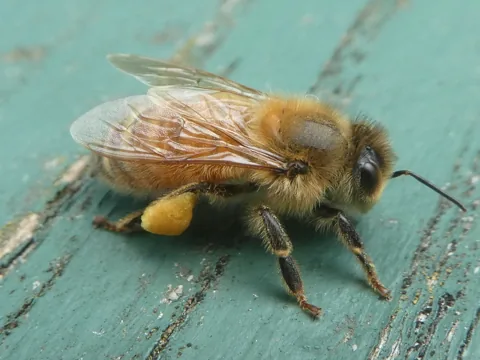 Western Honey Bee
Apis mellifera
Honey bees are important pollinators, but a colony that moves into a wall void or attic can become a stinging hazard. A swarm is temporary and usually best left alone, while an established colony in a building should be removed along with its comb.
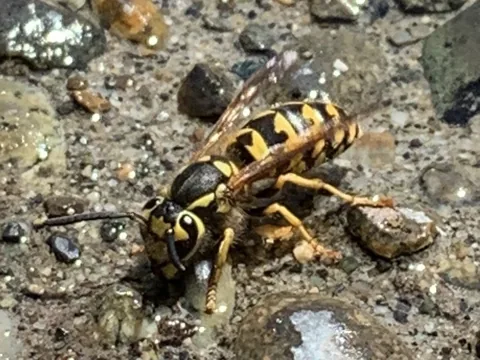 Western Yellowjacket
Vespula pensylvanica
Yellowjackets are social wasps that nest mostly in the ground and in wall voids, defend their nests vigorously, and become persistent scavengers at picnics and garbage cans in late summer and fall.
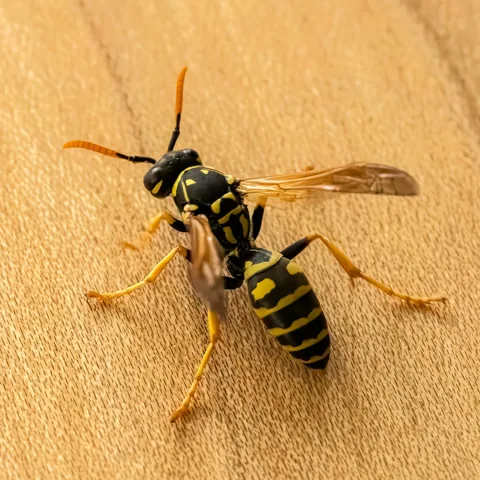 European Paper Wasp
Polistes dominula
Paper wasps hang open, umbrella-shaped paper nests under eaves and in sheltered spots; they are much less defensive than yellowjackets and rarely sting unless a nest is disturbed.
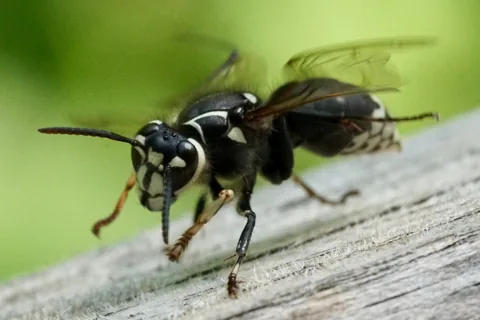 Bald-faced Hornet
Dolichovespula maculata
The bald-faced hornet is a large black-and-white aerial yellowjacket that builds gray, football-shaped paper nests in trees, shrubs and on buildings and defends them aggressively.
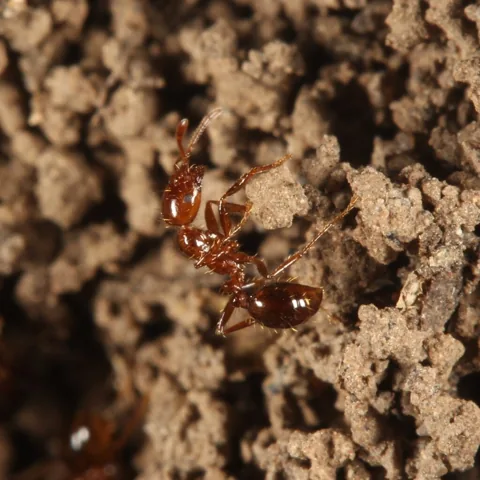 Red Imported Fire Ant
Solenopsis invicta
The red imported fire ant is an aggressive stinging ant that infests most of the southern United States and parts of California, building mounds in open, sunny areas such as lawns, parks and roadsides. USDA APHIS says imported fire ants came from South America, probably in soil on cargo ships, and now infest more than 367 million acres in Alabama, Arkansas, California, Florida, Georgia, Louisiana, Mississippi, North Carolina, Oklahoma, South Carolina, Tennessee, Texas, Virginia and Puerto Rico.
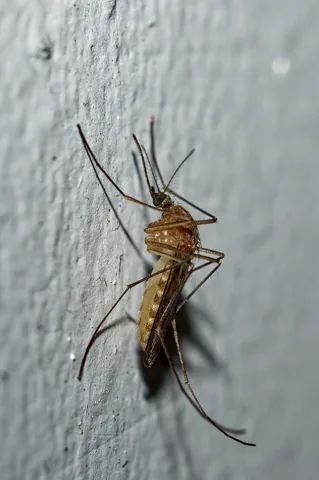 Mosquito
Culicidae (shown: Culex pipiens complex)
Mosquitoes are small, delicate flies whose females feed on blood and can pass on viruses such as West Nile; the control that works best goes after the larvae in standing water.
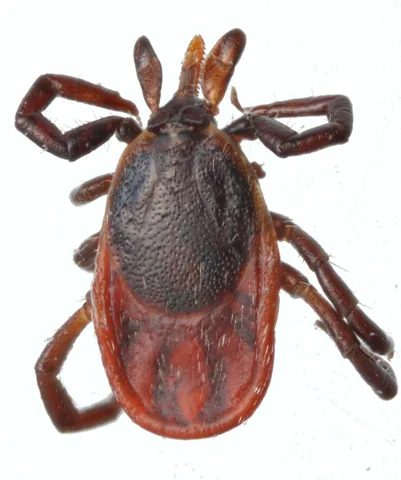 Blacklegged Tick
Ixodes scapularis
The blacklegged tick, often called the deer tick, is widely distributed across the eastern United States and spreads the bacteria that cause Lyme disease along with several other infections.
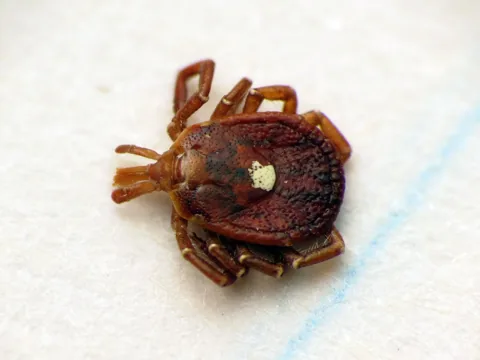 Lone Star Tick
Amblyomma americanum
The lone star tick is a very aggressive tick that readily bites people and pets across the Northeast, South and Midwest; its bite is linked to alpha-gal syndrome, a red meat allergy.
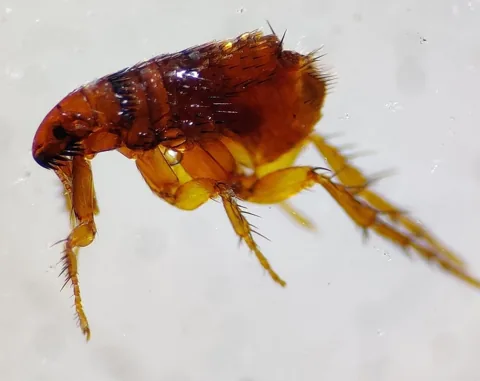 Cat Flea
Ctenocephalides felis
The cat flea is the most common external parasite of domestic cats and dogs, and the flea most often found on both. Adults spend most of their time on the pet, while eggs, larvae and pupae build up wherever the pet rests.
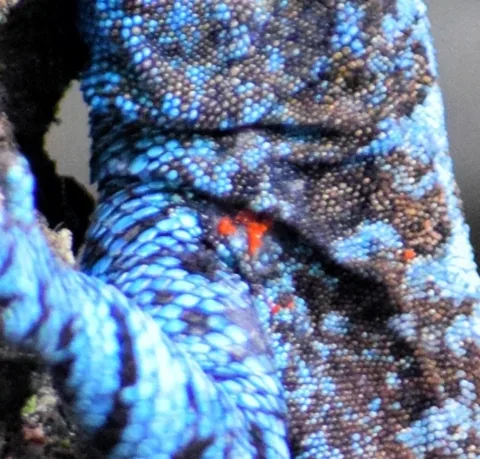 Chiggers
Trombiculidae (e.g., Trombicula / Eutrombicula alfreddugesi)
Chiggers are the tiny larvae of mites; only the larva bites, and its feeding causes intense itching and small red welts. Contrary to popular belief, chiggers don't burrow into the skin or suck blood.
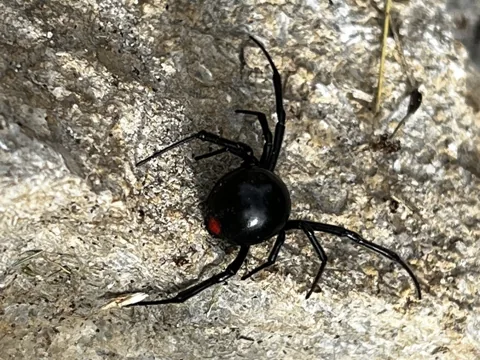 Southern Black Widow
Latrodectus mactans
Black widows are shy, web-building spiders with a neurotoxic venom; they live throughout North America and are most common in the southern and western United States. The southern black widow is found throughout states such as South Carolina.
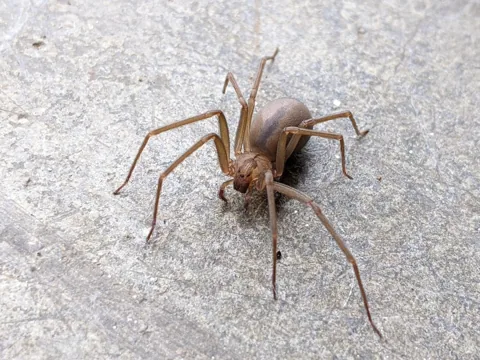 Brown Recluse
Loxosceles reclusa
The brown recluse is a secretive spider of the south-central and Midwestern United States whose bite can occasionally cause serious wounds; it is widely over-reported outside its range. The Illinois Department of Public Health says it occurs in roughly the southeastern quarter of the country and that bites are uncommon even where the spider is common.
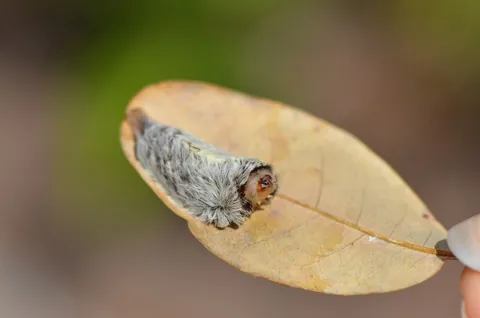 Puss Caterpillar (southern flannel moth)
Megalopyge opercularis
The puss caterpillar is the larva of the southern flannel moth. Its soft, fur-like coat hides short venomous spines, and medical reviews count it among the most serious stinging caterpillars in North America. UF/IFAS calls it one of the most venomous caterpillars in the United States, and its adult is the most common of the five flannel moth species in the Southeast.
Why do some bugs sting?
Stinging insects belong to one group: wasps, bees and ants. A stinger started out as the part a female uses to lay eggs, so only females can sting. Male bees and wasps can't sting at all.[21][30]
Stinging is defense, not hunting people. Most bees and wasps live alone and would rather fly away than fight. Bees and wasps that live in big colonies, like yellowjackets, honey bees, bumble bees and fire ants, have workers whose job is to guard the nest. Bump the nest and they come out stinging.[21]
Away from the nest, a wasp or bee visiting flowers usually won't sting. It may sting if it gets trapped, squished against your skin, or stepped on with bare feet.[21][22]
- Honey bee: her stinger has tiny barbs, like fish hooks, so it stays stuck in your skin. When she flies away, part of her body tears off with it, and she dies. A honey bee can sting only once.[30][25]
- Yellowjackets, paper wasps and bumble bees: their stingers slide back out, so they can sting more than once, and the stinger usually isn't left in your skin.[25][26]
- Fire ants: they grab on with their jaws and sting again and again. A sting burns, and a day or two later a small white bump filled with fluid can show up.[7][27]
Why do some bugs bite?
Some bugs bite because they need a meal of blood. It isn't personal. You're just a warm-blooded animal, like a dog or a deer.[5][12]
- Mosquitoes: only the female bites. She needs blood to make her eggs, then lays them on or near water. Male mosquitoes don't bite. Mosquitoes can bite in the day and at night.[19][23][9]
- Ticks: ticks aren't insects. They have eight legs, like their spider cousins. They drink the blood of people and other warm-blooded animals, and a tick can stay stuck on for several days.[5]
- Fleas: tiny, reddish-brown, about one-eighth of an inch long, and they can jump up to a foot to reach a host. They live on animal or human blood. Keeping pets flea-free is the best way to keep fleas off people.[15][12][13]
- Chiggers: these baby mites live in tall grass and weeds. The bite doesn't hurt, but it starts itching a lot several hours later.[6]
- Spiders: almost all spiders use their bite on bugs, not people. Most have jaws too small to bite humans, and spiders rarely bite unless they are trapped in clothes or bedding, or pressed against skin.[24][4][8]
Which ones to keep away from
You don't need to be scared of bugs. You just need to give a few of them space. These are the ones to look at from a distance and never touch or poke.[7][1]
- Any bee or wasp nest: paper nests under eaves, holes in the ground with wasps flying in and out, and hives. Don't throw things at nests or poke them.[22][31][7]
- Fire ant mounds: fluffy piles of dirt with no hole in the middle, mostly in the Southeast. Don't stand on them or kick them.[28][7]
- Black widow: spider with a red pattern on the underside of its belly that builds webs between objects. It hides in woodpiles, under eaves, along fences and in junk piles.[8]
- Brown recluse: brown spider with a dark violin shape on its head. It bites only when it gets pressed against skin, like in a shoe or a glove.[8]
- Fuzzy or spiny caterpillars, like the puss caterpillar and saddleback: their hairs or spines can sting. Look, don't touch.[29][16]
- Ticks in tall grass, brush and leaf piles: stay in the middle of the trail.[10]
Itchy bite or ouchy sting? How to tell
Bee, wasp and hornet stings and fire ant stings usually hurt right away. Mosquito, flea and mite bites usually itch more than they hurt.[2][1]
- Sting: pain or burning, then a red, swollen spot that may itch. A honey bee sting often leaves the stinger behind in the skin.[1][25][21]
- Normal sting swelling: it can range from a little red spot to big, itchy swelling that lasts up to a week. Doctors call this a local reaction. It isn't the dangerous kind of allergy.[25]
- Mosquito or flea bite: an itchy spot. Scratching makes it itch and swell more and can let germs in.[2][12][7]
- Tick bite: you may not feel it at all. That's why a tick check after outdoor play matters.[5][10]
- Spider bite: often looks like a bee sting, with redness, pain and swelling. Most spider bites are harmless.[4]
Got stung or bitten? Do this
Most bites and stings can be taken care of at home. Here's the plan.[1]
- 1. Walk away calmly from the bugs, and tell a grown-up right away, even if it seems small. Someone should stay with you for a while to watch for an allergic reaction.[7][21]
- 2. If a stinger is stuck in your skin, a grown-up can get it out fast by scraping across it with a fingernail or the edge of a card. Don't squeeze it or use tweezers, which can push more venom in.[7][1][25]
- 3. Wash the spot with soap and water.[1][7][4]
- 4. Cool it down. Hold a cloth wet with cold water, or ice wrapped in a washcloth, on the spot for 10 minutes, then take it off for 10 minutes.[1][8][4]
- 5. Try not to scratch. Scratching can make it swell and itch more and can cause an infection. If needed, a grown-up may use an anti-itch cream or allergy medicine.[7][1]
- 6. Over the next few days, tell a grown-up if the spot gets redder, more swollen or more painful. Those can be signs of infection.[1]
- 7. If you got bitten by a spider, a grown-up can try to identify it, if that's safe, because that helps doctors. Kids and anyone with bad symptoms after a spider bite should get medical care.[1][8][4]
- Found an attached tick? A grown-up should take it off. Our tick bite page shows how. If a rash or fever shows up within a few weeks, see a doctor and say you had a tick bite.[5][11]
Call 911: signs of a serious allergic reaction
A few people are allergic to stings. Their whole body can react, and it can happen very quickly. This is called anaphylaxis, and it's an emergency.[1][3]
If you see any of these signs after a sting or bite, yell for a grown-up. The grown-up should call 911 right away.[1][3]
- Trouble breathing, wheezing, coughing or noisy breathing[1][3]
- Swelling of the face, lips, eyes, tongue or mouth[1][3]
- Tight throat or trouble swallowing[1][3]
- Feeling dizzy, faint, weak or like you might pass out[1][3]
- Hives (itchy welts), a rash, or red, flushed skin[1][3]
- Belly pain, throwing up, or chest pain or tightness[1][3]
- Slurred speech or bad sweating after fire ant stings[27][7]
- For grown-ups: if the person has an epinephrine auto-injector, use it right away and stay with them until help arrives. People who've had a bad reaction should carry their emergency kit everywhere.[3][1][2]
- If lots of bees or wasps come at you, run away and get indoors. Our safe bug hunting page has more on what to do.[7]
Keeping mosquitoes and ticks away
Bug spray, called insect repellent, is a grown-up job. Kids shouldn't handle it. A grown-up puts it on their own hands first, then on your face, and never on your hands, near your eyes or mouth, or on cuts and scratchy skin.[17][9]
Grown-ups pick an EPA-registered repellent and follow the label. Our grown-up guide to repellents for babies and kids has the details.[9][10][17]
- Wear loose long sleeves and long pants outside when mosquitoes or ticks are around.[9][13]
- Sunscreen goes on first, and repellent goes on after.[9][10]
- Repellent goes only on skin that shows or on clothes, not under clothes.[17][9]
- When you come inside, wash off the repellent with soap and water, or take a bath.[17]
- Mosquito job for kids: once a week, help a grown-up dump out water in buckets, toys, flowerpot saucers and birdbaths. Mosquito babies grow in standing water.[9][23]
- Keep screens on windows and doors, and tell a grown-up about holes.[9]
- Tick smarts: stay out of tall grass, brush and leaf piles, and walk in the middle of trails. Then do a tick check when you come in.[10][14]
- Flea smarts: keeping pets flea-free is the best way to keep fleas off people. A grown-up and the vet handle flea products for pets.[13]
- If repellent gets in someone's eyes or mouth, a grown-up follows the first aid on the label and can call Poison Control at 1-800-222-1222 for advice.[20][18]
Printable keep-away ID sheet
Print this page and stick it on the fridge or take it outside. Each card has three clues and whether it's OK to touch. When in doubt, look but don't touch.[7][24]
- HONEY BEE (stings once). Clues: fuzzy, less brightly striped than a yellowjacket; pollen baskets on its back legs; visits flowers. Touch? No. Its barbed stinger stays in your skin.[30][22]
- YELLOWJACKET (stings more than once). Clues: bright, jagged yellow and black stripes; barely-there waist; buzzes around food and trash cans. Touch? No. It guards its nest hard.[22][25]
- PAPER WASP (stings more than once). Clues: open paper nest with no outer cover; nest cells face down; nest often under eaves. Touch? No. Workers guard the nest.[31][25]
- FIRE ANT (bites and stings). Clues: small reddish-brown ants of different sizes; fluffy dirt mound with no hole on top; pour out when the mound is bumped. Touch? No. Stings burn and leave white bumps.[28][7]
- MOSQUITO (female bites). Clues: small, delicate fly with two wings; babies wiggle in standing water; only females bite. Touch? Shoo it. Bites itch.[23][19]
- TICK (bites and holds on). Clues: 8 legs; a spider cousin, not an insect; waits in tall grass, brush and leaf litter. Touch? No. Tell a grown-up to remove it.[5][10]
- FLEA (bites). Clues: tiny, about 1/8 inch; reddish-brown; jumps. Touch? No. Tell a grown-up if your pet scratches a lot.[15][13]
- BLACK WIDOW (venomous spider). Clues: red pattern under the belly; webs between objects; hides in woodpiles, fences and junk piles. Touch? Never.[8]
- BROWN RECLUSE (venomous spider). Clues: brown; dark violin shape on its head; 6 eyes instead of 8. Touch? Never. Shake out shoes and gloves.[8]
- STINGING CATERPILLAR. Clues: covered in dense hairs or pointed spines; puss caterpillars look like a fluffy mass of brown hair; saddlebacks are gray with a lime-green saddle. Touch? Never. Hollow hairs can sting.[29][16]
Common questions
- Why do bees sting?
- To protect themselves and their nest. A bee visiting flowers usually won't sting unless it's trapped, squished or stepped on.[21][22]
- Do boy bees and wasps sting?
- No. The stinger grew out of the egg-laying part, so only females can sting.[21][30]
- Why do mosquito bites itch?
- Mosquito, flea and mite bites usually itch more than they hurt. Try not to scratch, because scratching can make the itch and swelling worse and let germs in.[1][7]
- Can I put on bug spray by myself?
- No. EPA says kids shouldn't handle repellent. A grown-up sprays it on their own hands and puts it on you, and keeps it off your hands, eyes and mouth.[17][9]
- Will a spider bite me if I see it in my room?
- Very unlikely. Spiders rarely bite people unless they're trapped or pressed against skin. Spiders out in the open during the day are unlikely to bite. Still, don't pick them up.[4][24]
- When is a sting an emergency?
- When the person has trouble breathing, swelling of the face or mouth, a tight throat, or feels faint or weak. A grown-up should call 911.[1][3]
Photo credits
- Western Honey Bee: (c) Doug Miller, some rights reserved (CC BY) — via iNaturalist, CC BY 4.0
- Western Yellowjacket: (c) eebee, some rights reserved (CC BY) — via iNaturalist, CC BY 4.0
- European Paper Wasp: (c) Andrew McKinlay, some rights reserved (CC BY) — via iNaturalist, CC BY 4.0
- Bald-faced Hornet: (c) Amy Schnebelin, some rights reserved (CC BY) — via iNaturalist, CC BY 4.0
- Red Imported Fire Ant: (c) Natasha Taylor, some rights reserved (CC BY) — via iNaturalist, CC BY 4.0
- Mosquito: (c) Donald Davesne, some rights reserved (CC BY) — via iNaturalist, CC BY 4.0
- Blacklegged Tick: (c) Christian Back, some rights reserved (CC BY) — via iNaturalist, CC BY 4.0
- Lone Star Tick: (c) Katja Schulz, some rights reserved (CC BY) — via iNaturalist, CC BY 4.0
- Cat Flea: (c) Thomas Gyselinck, some rights reserved (CC BY) — via iNaturalist, CC BY 4.0
- Chiggers: (c) Alberto Alcalá, some rights reserved (CC BY) — via iNaturalist, CC BY 4.0
- Southern Black Widow: Carol Spence, public domain (CC0), via iNaturalist
- Brown Recluse: iamfindingplants, public domain (CC0), via iNaturalist
- Puss Caterpillar (southern flannel moth): Center for Urban Ecology, public domain (CC0), via iNaturalist
Sources
- MedlinePlus, U.S. National Library of Medicine, “Insect bites and stings (Medical Encyclopedia).” medlineplus.gov/ency/article/000033.htm (accessed 2026-11-15)
- MedlinePlus, U.S. National Library of Medicine, “Insect Bites and Stings (health topic).” medlineplus.gov/insectbitesandstings.html (accessed 2026-11-15)
- MedlinePlus, U.S. National Library of Medicine, “Anaphylaxis (Medical Encyclopedia).” medlineplus.gov/ency/article/000844.htm (accessed 2026-11-15)
- MedlinePlus, U.S. National Library of Medicine, “Spider Bites (health topic).” medlineplus.gov/spiderbites.html (accessed 2026-11-15)
- MedlinePlus, U.S. National Library of Medicine, “Tick Bites (health topic).” medlineplus.gov/tickbites.html (accessed 2026-11-15)
- MedlinePlus, U.S. National Library of Medicine, “Chiggers (Medical Encyclopedia).” medlineplus.gov/ency/article/001333.htm (accessed 2026-11-15)
- CDC National Institute for Occupational Safety and Health (NIOSH), “Insects and Scorpions at Work.” www.cdc.gov/niosh/outdoor-workers/about/insects-and-scorpions.html (accessed 2026-11-15)
- CDC National Institute for Occupational Safety and Health (NIOSH), “Venomous Spiders at Work.” www.cdc.gov/niosh/outdoor-workers/about/venomous-spiders.html (accessed 2026-11-15)
- U.S. Centers for Disease Control and Prevention, “Preventing Mosquito Bites.” www.cdc.gov/mosquitoes/prevention/index.html (accessed 2026-11-15)
- U.S. Centers for Disease Control and Prevention, “Preventing Tick Bites.” www.cdc.gov/ticks/prevention/index.html (accessed 2026-11-15)
- U.S. Centers for Disease Control and Prevention, “What to Do After a Tick Bite.” www.cdc.gov/ticks/after-a-tick-bite/index.html (accessed 2026-11-15)
- U.S. Centers for Disease Control and Prevention, “About Fleas.” www.cdc.gov/fleas/about/index.html (accessed 2026-11-15)
- U.S. Centers for Disease Control and Prevention, “Preventing Flea Bites.” www.cdc.gov/fleas/prevention/index.html (accessed 2026-11-15)
- Minnesota Department of Health, “Tickborne Disease Prevention.” www.health.state.mn.us/diseases/tickborne/prevention.html (accessed 2026-11-15)
- Illinois Department of Public Health, “Fleas.” idph.illinois.gov/envhealth/pcfleas.htm (accessed 2026-11-15)
- Poison Control (National Capital Poison Center), “Are caterpillars poisonous?.” www.poison.org/articles/caterpillar-stings (accessed 2026-11-15)
- U.S. Environmental Protection Agency, “Using Insect Repellents Safely and Effectively.” www.epa.gov/insect-repellents/using-insect-repellents-safely-and-effectively (accessed 2026-11-15)
- U.S. Environmental Protection Agency, “Reduce Your Child's Chances of Pesticide Poisoning.” www.epa.gov/safepestcontrol/reduce-your-childs-chances-pesticide-poisoning (accessed 2026-11-15)
- U.S. Environmental Protection Agency, “Mosquito Life Cycle.” www.epa.gov/mosquitocontrol/mosquito-life-cycle (accessed 2026-11-15)
- National Pesticide Information Center, “DEET General Fact Sheet.” npic.orst.edu/factsheets/DEETgen.html (accessed 2026-11-15)
- University of California Statewide IPM Program, “Bee and Wasp Stings.” ipm.ucanr.edu/home-and-landscape/bee-and-wasp-stings/ (accessed 2026-11-15)
- University of California Statewide IPM Program, “Pest Notes: Yellowjackets and Other Social Wasps.” ipm.ucanr.edu/PMG/PESTNOTES/pn7450.html (accessed 2026-11-15)
- University of California Statewide IPM Program, “Mosquitoes (Pest Notes).” ipm.ucanr.edu/home-and-landscape/mosquitoes/ (accessed 2026-11-15)
- University of California Statewide IPM Program, “Pest Notes: Spiders.” ipm.ucanr.edu/home-and-landscape/spiders/ (accessed 2026-11-15)
- University of Minnesota Extension, “Wasps and bees.” extension.umn.edu/insects-infest-homes/wasps-and-bees (accessed 2026-11-15)
- Penn State Extension, “Eastern Yellowjacket.” extension.psu.edu/eastern-yellowjacket (accessed 2026-11-15)
- Texas Imported Fire Ant Research and Management Project, Texas A&M AgriLife Extension, “Medical Information.” fireant.tamu.edu/manage/medical-information/ (accessed 2026-11-15)
- Texas Imported Fire Ant Research and Management Project, Texas A&M AgriLife Extension, “How can I tell if I have fire ants?.” fireant.tamu.edu/manage/how-can-i-tell-if-i-have-fire-ants/ (accessed 2026-11-15)
- Clemson Cooperative Extension Home & Garden Information Center, “Stinging Caterpillars.” hgic.clemson.edu/factsheet/stinging-caterpillars/ (accessed 2026-11-15)
- Missouri Department of Conservation, “Honeybee (Field Guide).” mdc.mo.gov/discover-nature/field-guide/honeybee (accessed 2026-11-15)
- Missouri Department of Conservation, “Paper Wasps (Field Guide).” mdc.mo.gov/discover-nature/field-guide/paper-wasps (accessed 2026-11-15)