The short answer
- The big ones in the US: Lyme disease (deer ticks), ehrlichiosis (brown dog and lone star ticks), anaplasmosis (deer and western blacklegged ticks), Rocky Mountain spotted fever (American dog and Rocky Mountain wood ticks), babesiosis, and, along the Gulf Coast, hepatozoonosis, which dogs catch by eating an infected Gulf Coast tick.[1][3][4][5][6][8]
- Call your vet if your dog has a fever, stops eating, seems tired or weak, limps or has swollen joints, or shows bruising, nosebleeds or blood in the urine or stool. The Merck Veterinary Manual lists all of these among the signs of tick-borne disease in dogs.[1][3][6]
- Go now if a dog has a high fever with tiny purplish-red spots on the gums or eyelid linings, trouble breathing, a wobbly walk or seizures. Merck says Rocky Mountain spotted fever can cause these signs and that delays in treatment raise the risk of severe illness or death.[6]
- Prevention: check your dog for ticks after time outdoors, remove any you find promptly, and use a tick preventive your veterinarian recommends. Merck says a tick usually has to be attached for 1–2 days to pass on Lyme disease.[1][6][11]
- Dogs are an early warning for people. Dogs don't give owners Lyme disease, CDC says, but they share the same yard and trails and can bring infected ticks indoors.[15][16]
Ticks that spread disease to dogs
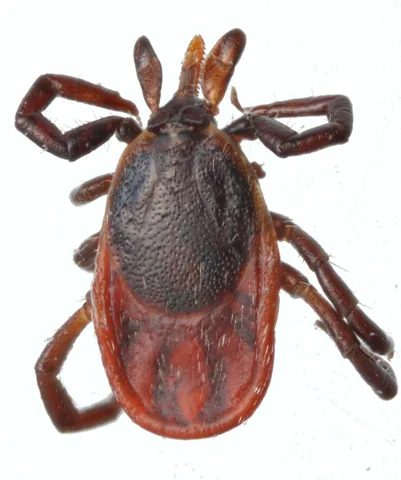 Blacklegged Tick
Ixodes scapularis
The blacklegged tick, often called the deer tick, is widely distributed across the eastern United States and spreads the bacteria that cause Lyme disease along with several other infections.
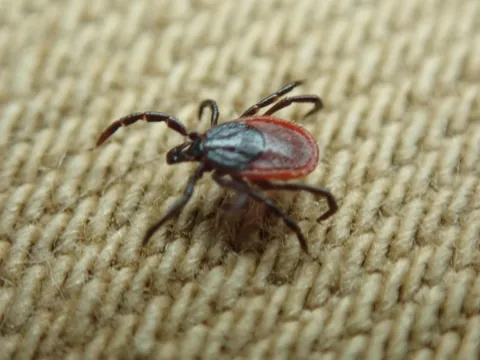 Western Blacklegged Tick
Ixodes pacificus
The western blacklegged tick is the Pacific Coast relative of the eastern deer tick and, in California, the only tick whose nymphs and adult females pass Lyme disease bacteria to people. It attaches to people more often than any other tick species in the state.
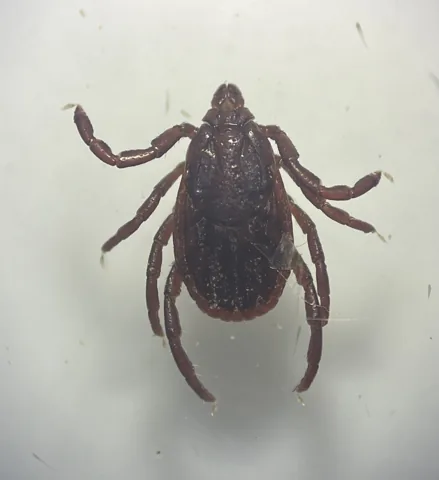 Brown Dog Tick
Rhipicephalus sanguineus
The brown dog tick is unusual: unlike most ticks, it can complete its entire life cycle indoors. It occurs across the United States, is met more often in the southern states, and can build up to high numbers on dogs and in homes and kennels. UF/IFAS Featured Creatures adds that this lets it set up populations even in colder climates.
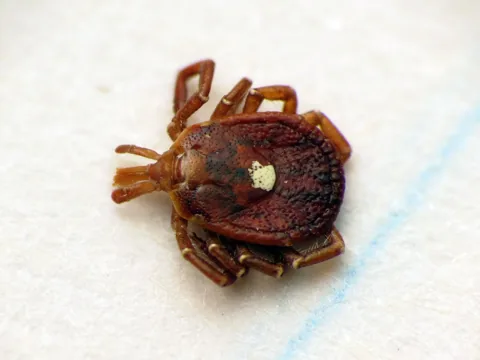 Lone Star Tick
Amblyomma americanum
The lone star tick is a very aggressive tick that readily bites people and pets across the Northeast, South and Midwest; its bite is linked to alpha-gal syndrome, a red meat allergy.
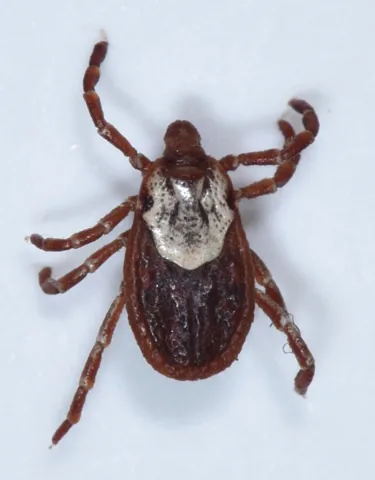 American Dog Tick
Dermacentor variabilis
The American dog tick, also called the wood tick, is widely distributed east of the Rocky Mountains. Adult females are the stage most likely to bite people, especially in spring and summer, and adults commonly climb to the crown of the head.
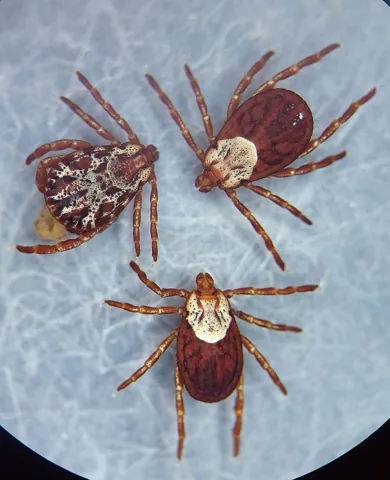 Rocky Mountain Wood Tick
Dermacentor andersoni
The Rocky Mountain wood tick is the tick most often found on people and pets in Colorado and Utah. It is most active in spring, then goes dormant as the weather turns hot and dry, and it is the vector of Colorado tick fever.
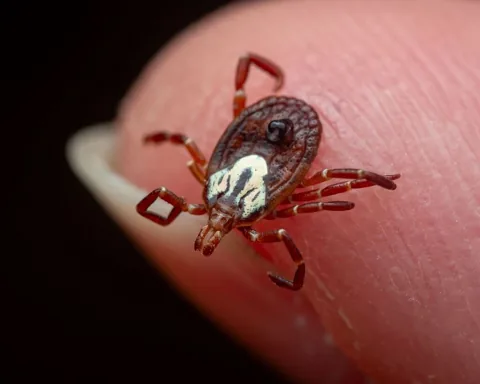 Gulf Coast Tick
Amblyomma maculatum
The Gulf Coast tick is a hard tick of grass prairies, coastal uplands and shrubby, recently disturbed ground with little or no tree cover. Adults bite people, and it is the principal carrier of Rickettsia parkeri, which causes a form of spotted fever, and of the parasite behind American canine hepatozoonosis in dogs.
The main tick diseases of dogs at a glance
Each disease has its own tick and its own part of the country. Your veterinarian knows which ones turn up where you live, and CDC suggests asking about the tick-borne diseases in your area. For the tick species themselves, see the types of ticks and deer ticks vs dog ticks guides.[13][1]
- Lyme disease: the blacklegged (deer) tick causes most infections. Merck says it is most common in the Northeast, the upper Midwest and along the Pacific Coast, and highest-risk times are spring and autumn.[1]
- Ehrlichiosis: the brown dog tick spreads Ehrlichia canis across the US, CDC says. Merck adds that the lone star tick spreads Ehrlichia ewingii, mainly in the southeastern and south-central US.[14][4]
- Anaplasmosis: Merck names the blacklegged (deer) tick and the western blacklegged tick as the main carriers of Anaplasma phagocytophilum. A related germ, Anaplasma platys, attacks a dog's platelets.[5][3]
- Rocky Mountain spotted fever: Merck says the American dog tick and the Rocky Mountain wood tick are the most important carriers in the US, with the brown dog tick also spreading it in some areas, including Arizona.[6]
- Babesiosis: a blood parasite that destroys red blood cells. Merck says it is spread by ticks and ranges from a mild illness to a severe one that kills quickly.[8][9]
- Hepatozoonosis: Merck says the North American form is carried by the Gulf Coast tick and that dogs get it by eating the tick, not from a bite. Most US cases have been in Texas, Oklahoma and Louisiana.[8]
Lyme disease in dogs
Many infected dogs show no signs, the Merck Veterinary Manual says. When signs do appear they commonly include fever, loss of appetite, swollen or painful joints, lameness that shifts from one leg to another, swollen lymph nodes and lack of energy.[1]
The kidney form is the one to fear. Merck says Lyme disease that affects the kidneys is one of the most serious forms in dogs and is often fatal; untreated infection can also affect the nervous system, and rarely the heart.[1]
Merck says dogs are at higher risk than people because they are more exposed to ticks. Removing ticks quickly matters because the tick usually needs to be attached for 1–2 days to spread the bacteria.[1]
Ehrlichiosis in dogs
Early signs, according to the Merck Veterinary Manual, include fever, swollen lymph nodes, an enlarged spleen and a low platelet count, sometimes with loss of appetite, low energy, stiffness, leg swelling, or coughing and trouble breathing. CDC says signs can start 1-3 weeks after the bite and that untreated ehrlichiosis can be life-threatening.[3][14]
It can go quiet and come back worse. Merck says some dogs recover from the early stage, while in others the infection becomes long-term, with severe weight loss, kidney failure, nerve problems and bleeding: nosebleeds, blood in the urine or stool, and easy bruising on the skin or gums. German Shepherd Dogs are more likely to get the long-term form.[3]
CDC's owner fact sheet says to take your dog to a veterinarian if it is not eating, acts tired, or has signs of bruising or bleeding, and to tell the vet if you have seen ticks on it.[14]
Anaplasmosis in dogs
Infection is usually silent, the Merck Veterinary Manual says. When signs appear they most commonly include fever, swollen lymph nodes, an enlarged spleen and bleeding tendencies such as pinpoint or blotchy bruises, and dogs with Anaplasma phagocytophilum can also go lame.[5]
Because the same deer tick carries Lyme disease, Merck advises vets to consider more than one infection in dogs that test positive and are more seriously ill.[5][1]
Rocky Mountain spotted fever in dogs
Dogs are highly susceptible, the Merck Veterinary Manual says. Early signs include a high fever (up to 105°F), loss of appetite, swollen lymph nodes and joints, coughing or breathing difficulty, belly pain, vomiting, diarrhea, and swelling of the face or legs.[6]
In severe cases small purplish-red spots appear on the lining of the eyes and mouth, and nervous system signs such as behavior changes, poor balance and spine pain can follow. Merck says vets often start treatment before test results come back because early treatment is critical.[6][7]
Babesiosis and hepatozoonosis
Babesiosis can be confused with other diseases that cause fever, anemia, jaundice or red urine, so the Merck Veterinary Manual says lab tests are needed to confirm it. Some dogs carry a long-term infection with severe, progressive anemia.[8]
American canine hepatozoonosis, Merck says, causes fever that comes and goes, weight and muscle loss, weakness, eye discharge, bloody diarrhea, and often severe pain near the spine with stiffness and reluctance to move. Many dogs keep a normal appetite.[8]
Because dogs catch hepatozoonosis by eating ticks or prey animals that ate ticks, Merck says good tick control plus keeping dogs from catching and eating prey are the most effective ways to prevent it.[8]
Signs that mean call the vet
Never wait to see whether a sick dog that has had ticks gets better on its own. Call your veterinarian if you notice any of these, and mention any ticks you have found:[14][10]
- Fever, loss of appetite, tiredness or lack of energy.[1][3][14]
- Limping, lameness that moves from leg to leg, stiffness, or swollen or painful joints.[1][3]
- Bruising on the skin or gums, nosebleeds, or blood in the urine or stool.[3][14]
- Signs of anemia, yellowing (jaundice) or red urine. Merck says babesiosis destroys red blood cells and needs lab tests to confirm.[8]
- Purplish-red spots on the gums or eyelid linings, swelling of the face or legs, trouble breathing, poor balance or seizures: these call for prompt care.[6][1]
- A tick bite site that turns red or swells, or a heavy tick load on the dog. Merck says both warrant a prompt trip to the veterinarian.[10]
How vets check for tick diseases
Diagnosis is a vet's job, usually with blood tests. Merck says ehrlichiosis is diagnosed with blood tests and that for Lyme disease, routine blood work is often normal, so the vet weighs the dog's signs and tick exposure along with antibody tests.[3][1]
A positive antibody test does not always mean a sick dog. CDC's ehrlichiosis fact sheet says antibodies can last for months to years, so a dog may test positive after it has recovered; another kind of test looks for the germ itself.[14]
If you are thinking about the Lyme vaccine, Merck says dogs that have been exposed to ticks should be tested before vaccination.[2]
Tick checks and vet-prescribed preventives
Check after every outing. Merck advises checking dogs for ticks after they have been outdoors, especially in tall grass or brush in spring, summer and autumn, and brushing them regularly to help find ticks. The step-by-step removal guide shows how to take one off.[1]
Use a tick preventive your veterinarian recommends. The Merck Veterinary Manual gives this advice for Lyme disease, ehrlichiosis and Rocky Mountain spotted fever alike, and the FDA strongly recommends involving your veterinarian when choosing a flea and tick product, especially if your dog has health conditions.[1][3][6][11]
Match the product to the animal. The FDA says to check the species, life stage and weight class on the label, never to use a dog product on a cat, and to talk to your vet before treating weak, old, medicated, sick, pregnant or nursing pets.[11]
Watch for reactions. The FDA says to call your veterinarian if a pet shows dizziness, wobbliness, incoordination, poor appetite, vomiting, diarrhea or drooling after a product. For the isoxazoline class of oral and topical flea and tick drugs, the FDA says most dogs have no problems but muscle tremors, loss of coordination (ataxia) and seizures have been reported, so review your dog's history with your vet.[11][12]
Vaccines help with only one disease. Merck says Lyme vaccination might be recommended where the disease is common; CDC notes that Lyme disease is the only tick-borne disease dogs can be vaccinated against, and a vaccine does not stop a dog from bringing ticks home.[1][13]
Don't use human insect repellents on dogs, CDC says. Cats are extremely sensitive to many chemicals, so ask your vet before putting any tick product on a cat.[14][13]
Your dog's ticks are your ticks too
Dogs rarely pass these infections to people directly. CDC says there is no evidence that pets spread Lyme disease to their owners and that ehrlichiosis is not spread from animals to people. The risk is shared ticks: pets can bring infected ticks into your home or yard.[15][14]
Dogs act as sentinels. A study in CDC's Emerging Infectious Diseases journal notes that a pet dog meets many of the same conditions that expose people to ticks, that Lyme antibodies in dogs track human Lyme disease in the same areas, and that routine vet screening of dogs can help monitor human risk. A positive test in your dog is a reason to tighten tick checks for the whole household.[16]
Handle ticks with care. Merck says people can be infected with Rocky Mountain spotted fever by fluids from crushed or blood-filled ticks during removal, so use tweezers rather than bare fingers.[6][10]
Watch yourself too. MedlinePlus says to contact your health care provider if you get fever, chills, aches and pains or a rash within several weeks of removing a tick. The Lyme disease, ehrlichiosis and anaplasmosis, Rocky Mountain spotted fever and babesiosis guides cover the human side.[17]
Common questions
- What are the most common tick diseases in dogs?
- The FDA names Lyme disease, ehrlichiosis, anaplasmosis, Rocky Mountain spotted fever and babesiosis among the infections ticks give pets. The Merck Veterinary Manual adds American canine hepatozoonosis, mainly along the Gulf Coast.[11][8]
- How soon after a tick bite would my dog get sick?
- It depends on the disease. CDC says ehrlichiosis signs can start 1-3 weeks after the bite, and Merck notes that many dogs with Lyme disease never show signs at all. Watch your dog for changes in behavior or appetite and call your vet if anything seems off.[14][1][13]
- Can my dog give me Lyme disease or ehrlichiosis?
- Not directly. CDC says there is no evidence that dogs spread Lyme disease to owners and that ehrlichiosis is not spread from animals to people, but dogs can carry infected ticks into your home and yard.[15][14]
- Is there a vaccine for tick diseases in dogs?
- Only for Lyme disease, CDC says. Merck says vaccination might be recommended where Lyme disease is common, so ask your veterinarian; it does not replace tick checks and a tick preventive.[13][1]
- My dog tested positive for Lyme but seems fine. Is it sick?
- Not necessarily. The Merck Veterinary Manual says many infected dogs show no signs, and CDC notes that antibodies can stay after a dog recovers. Your veterinarian decides whether a positive test needs treatment.[1][14]
- Can I use my own bug spray on my dog?
- No. CDC says not to use human insect repellents on dogs. Use a tick product made for dogs that your veterinarian recommends, matched to your dog's weight and age as the FDA advises.[14][11]
Photo credits
- Blacklegged Tick: (c) Christian Back, some rights reserved (CC BY) — via iNaturalist, CC BY 4.0
- Western Blacklegged Tick: Randal, public domain (CC0), via iNaturalist
- Brown Dog Tick: (c) NoahM, some rights reserved (CC BY) — via iNaturalist, CC BY 4.0
- Lone Star Tick: (c) Katja Schulz, some rights reserved (CC BY) — via iNaturalist, CC BY 4.0
- American Dog Tick: (c) Don Loarie, some rights reserved (CC BY) — via iNaturalist, CC BY 4.0
- Rocky Mountain Wood Tick: (c) Toby, some rights reserved (CC BY) — via iNaturalist, CC BY 4.0
- Gulf Coast Tick: (c) Zachary Dankowicz, some rights reserved (CC BY) — via iNaturalist, CC BY 4.0
Sources
- Merck Veterinary Manual, “Lyme Disease (Lyme Borreliosis) in Dogs (Pet Owner Version).” www.merckvetmanual.com/dog-owners/disorders-affecting-multiple-body-systems-of-dogs/lyme-disease-lyme-borreliosis-in-dogs (accessed 2026-11-15)
- Merck Veterinary Manual, “Lyme Borreliosis in Animals.” www.merckvetmanual.com/generalized-conditions/lyme-borreliosis/lyme-borreliosis-in-animals (accessed 2026-11-15)
- Merck Veterinary Manual, “Ehrlichiosis and Related Infections in Dogs (Pet Owner Version).” www.merckvetmanual.com/dog-owners/disorders-affecting-multiple-body-systems-of-dogs/ehrlichiosis-and-related-infections-in-dogs (accessed 2026-11-15)
- Merck Veterinary Manual, “Ehrlichiosis in Dogs.” www.merckvetmanual.com/infectious-diseases/rickettsial-diseases-in-dogs/ehrlichiosis-in-dogs (accessed 2026-11-15)
- Merck Veterinary Manual, “Anaplasmosis in Dogs.” www.merckvetmanual.com/infectious-diseases/rickettsial-diseases-in-dogs/anaplasmosis-in-dogs (accessed 2026-11-15)
- Merck Veterinary Manual, “Rocky Mountain Spotted Fever (Tick Fever) in Dogs (Pet Owner Version).” www.merckvetmanual.com/dog-owners/disorders-affecting-multiple-body-systems-of-dogs/rocky-mountain-spotted-fever-tick-fever-in-dogs (accessed 2026-11-15)
- Merck Veterinary Manual, “Rocky Mountain Spotted Fever in Dogs.” www.merckvetmanual.com/infectious-diseases/rickettsial-diseases-in-dogs/rocky-mountain-spotted-fever-in-dogs (accessed 2026-11-15)
- Merck Veterinary Manual, “Blood Parasites of Dogs (Pet Owner Version).” www.merckvetmanual.com/dog-owners/blood-disorders-of-dogs/blood-parasites-of-dogs (accessed 2026-11-15)
- Merck Veterinary Manual, “Babesiosis in Animals.” www.merckvetmanual.com/circulatory-system/blood-parasites/babesiosis-in-animals (accessed 2026-11-15)
- Merck Veterinary Manual, “Ticks of Dogs (Pet Owner Version).” www.merckvetmanual.com/dog-owners/skin-disorders-of-dogs/ticks-of-dogs (accessed 2026-11-15)
- U.S. Food and Drug Administration, “Safe Use of Flea and Tick Products in Pets.” www.fda.gov/consumers/consumer-updates/safe-use-flea-and-tick-products-pets (accessed 2026-11-15)
- U.S. Food and Drug Administration, Center for Veterinary Medicine, “Fact Sheet for Pet Owners and Veterinarians about Potential Adverse Events Associated with Isoxazoline Flea and Tick Products.” www.fda.gov/animal-veterinary/animal-health-literacy/fact-sheet-pet-owners-and-veterinarians-about-potential-adverse-events-associated-isoxazoline-flea (accessed 2026-11-15)
- Centers for Disease Control and Prevention, “Preventing Ticks on Pets.” www.cdc.gov/ticks/prevention/preventing-ticks-on-pets.html (accessed 2026-11-15)
- Centers for Disease Control and Prevention, “Ehrlichiosis in Dogs: Fast Facts for Dog Owners.” www.cdc.gov/ehrlichiosis/pdfs/fs-ehrlichiosisowners-508.pdf (accessed 2026-11-15)
- Centers for Disease Control and Prevention, “How Lyme Disease Spreads.” www.cdc.gov/lyme/causes/index.html (accessed 2026-11-15)
- Emerging Infectious Diseases (CDC journal), “Rapid Increase in Seroprevalence of Borrelia burgdorferi Antibodies among Dogs, Northwestern North Carolina, USA, 2017-2021. Emerg Infect Dis 2024;30(10).” wwwnc.cdc.gov/eid/article/30/10/24-0526_article (accessed 2026-11-15)
- MedlinePlus, U.S. National Library of Medicine, “Tick Bites.” medlineplus.gov/tickbites.html (accessed 2026-11-15)