The short answer
- Ehrlichiosis: mostly the lone star tick, which carries Ehrlichia chaffeensis and E. ewingii; cases come mostly from the southeastern and south-central US, from the East Coast west to Texas (CDC). A third type, E. muris eauclairensis, comes from blacklegged ticks and has only been reported from Wisconsin and Minnesota (CDC, Minnesota Department of Health).[3][4][16]
- Anaplasmosis: blacklegged ticks (deer ticks) in the eastern US and western blacklegged ticks along the West Coast. CDC says it is most commonly reported in the Northeast and upper Midwest; Minnesota calls it its second-most common tickborne disease after Lyme disease.[6][15]
- See a doctor if you get fever, chills, a severe headache, muscle aches, or nausea and vomiting within a couple of weeks of a tick bite or time in brushy, wooded or grassy areas. CDC says symptoms usually start 1 to 2 weeks after the bite and many people don't remember being bitten.[2][6]
- Don't wait for test results. CDC says results can take several weeks and a provider who suspects anaplasmosis should prescribe antibiotics while waiting. Early treatment can prevent severe illness and death from either disease (CDC).[6][5][10]
Ticks that spread them
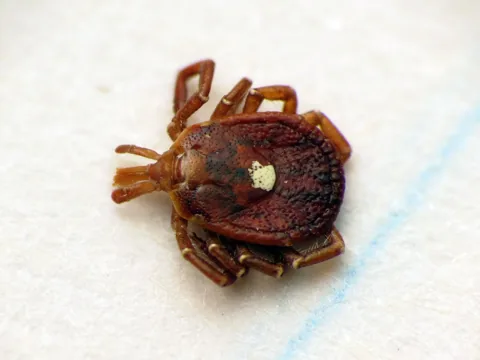 Lone Star Tick
Amblyomma americanum
The lone star tick is a very aggressive tick that readily bites people and pets across the Northeast, South and Midwest; its bite is linked to alpha-gal syndrome, a red meat allergy.
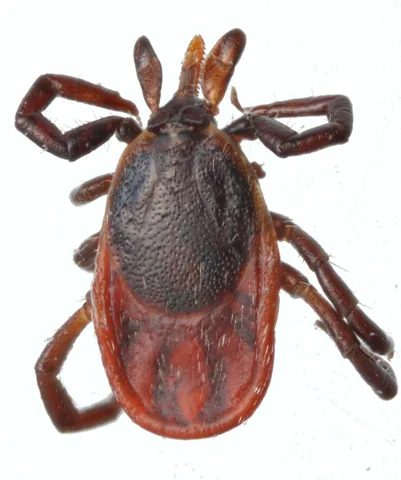 Blacklegged Tick
Ixodes scapularis
The blacklegged tick, often called the deer tick, is widely distributed across the eastern United States and spreads the bacteria that cause Lyme disease along with several other infections.
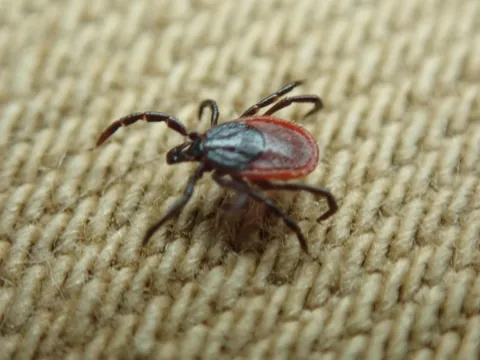 Western Blacklegged Tick
Ixodes pacificus
The western blacklegged tick is the Pacific Coast relative of the eastern deer tick and, in California, the only tick whose nymphs and adult females pass Lyme disease bacteria to people. It attaches to people more often than any other tick species in the state.
Lone star tick vs blacklegged tick: which spreads which
The two diseases were once lumped together. MedlinePlus still lists the anaplasmosis germ as a cause of human granulocytic ehrlichiosis; the Minnesota Department of Health says the disease was first recognized in 1993 as human granulocytic ehrlichiosis and renamed anaplasmosis in 2003. Today CDC treats them as separate diseases with different ticks.[14][15]
- Lone star tick (Amblyomma americanum): carries E. chaffeensis and E. ewingii, the causes of most ehrlichiosis (CDC). CDC calls it a very aggressive tick that bites humans; the adult female has a white dot on her back, and nymphs and adult females bite people most often. Its range covers much of the Northeast, South and Midwest.[3][11]
- Blacklegged tick (Ixodes scapularis): carries the anaplasmosis germ in the eastern US, plus E. muris eauclairensis, and is the same tick that spreads Lyme disease (CDC, Minnesota Department of Health). Nymphs and adult females bite people most, and CDC says the greatest risk of a bite is in spring, summer and fall.[6][11][15]
- Western blacklegged tick (Ixodes pacificus): carries the anaplasmosis germ along the West Coast (CDC).[6]
- Can't tell your tick apart? The lone star vs deer tick comparison and the tick profiles below show the differences. MedlinePlus also lists the American dog tick among carriers of Ehrlichia; CDC's ehrlichiosis pages name the lone star and blacklegged ticks.[14][1]
Where and when people get them
Ehrlichiosis from E. chaffeensis and E. ewingii is reported mostly from the southeastern and south-central US, from the East Coast west to Texas, and CDC's clinician page adds the mid-Atlantic states. MedlinePlus puts it mainly in the southern central states and the Southeast.[3][4][14]
Anaplasmosis is reported mostly in the upper Midwest and Northeast (CDC; MedlinePlus says the same). Minnesota reports only small numbers of ehrlichiosis cases, some in people who traveled to southern states where it is more common (Minnesota Department of Health).[9][6][14][16]
Season: CDC says most ehrlichiosis cases begin in summer, peaking in June and July. In Minnesota, blacklegged tick bite risk is greatest April through July and September through October and peaks in June or July (Minnesota Department of Health). CDC says ticks are most active April to September, but exposure can happen year-round.[4][16][12]
Rarely, both infections have spread through blood transfusion, and ehrlichiosis through organ transplant (CDC).[3][6]
Symptoms and when to get care
Early illness, in roughly the first 5 days, is usually mild or moderate. For ehrlichiosis CDC lists fever, chills, severe headache, muscle aches, nausea, vomiting, diarrhea, loss of appetite, confusion and sometimes a rash. For anaplasmosis it lists fever, chills, severe headache, muscle aches, nausea, vomiting, diarrhea and loss of appetite.[2][6]
Timing: CDC says symptoms usually begin within 1 to 2 weeks of the bite; its clinician page for anaplasmosis says 5 to 14 days, and MedlinePlus gives about 7 to 14 days for ehrlichiosis.[2][6][7][14]
Rash: CDC says up to 1 in 3 people with ehrlichiosis report a rash, more often children, usually about 5 days after fever starts, looking like red splotches or pinpoint dots. A rash is uncommon with anaplasmosis, and CDC says one may point to a second infection such as Lyme disease.[2][7]
Severe illness: if treatment is delayed, either disease can cause respiratory failure, bleeding problems, organ failure and death, and ehrlichiosis can also affect the brain and nervous system (CDC). CDC lists delayed treatment, age under 5 or over 65, and a weakened immune system as risk factors for severe illness.[2][6][7]
If you become ill after a tick bite or time in grassy, brushy or wooded areas, see your healthcare provider and tell them about the tick exposure (CDC, MedlinePlus). Minnesota says to see your doctor immediately if anaplasmosis is suspected. This page can't diagnose you; for removing and saving the tick, follow what to do after a tick bite.[2][14][15]
How they differ from Lyme disease and Rocky Mountain spotted fever
Early on, many tickborne illnesses look alike. CDC says the early signs of anaplasmosis are fever, headache and malaise and that symptoms vary, so the tick, the place and the rash are the main clues your provider will ask about.[7]
- Lyme disease: spread by the same blacklegged tick as anaplasmosis, so one bite can pass more than one germ; MedlinePlus lists Lyme disease and babesiosis as possible co-infections. A rash is uncommon in anaplasmosis, so CDC says a rash may mean a second infection such as Lyme disease. The Lyme disease page covers its rash and stages.[11][14][7]
- Rocky Mountain spotted fever: spread by different ticks (American dog, Rocky Mountain wood and brown dog ticks; CDC). MedlinePlus says ehrlichiosis with a rash is sometimes mistaken for RMSF. CDC says doxycycline treats RMSF, ehrlichiosis and anaplasmosis, so all three are handled the same urgent way.[11][14][10]
- Alpha-gal syndrome: CDC says growing evidence suggests lone star tick bites may trigger this red meat allergy, which is not an infection like the other two. See the alpha-gal syndrome page.[4][11]
How they are diagnosed and treated
Providers use blood tests to look for these infections or other illnesses with similar symptoms; results may take several weeks, and CDC says a provider who suspects anaplasmosis should prescribe antibiotics while waiting. MedlinePlus lists a complete blood count, antibody testing and PCR among the tests for ehrlichiosis.[6][14]
CDC recommends the antibiotic doxycycline for suspected ehrlichiosis and anaplasmosis in adults and children of all ages, and says other antibiotics are less effective. Treatment choices are your doctor's.[5][10]
CDC does not recommend antibiotics after a tick bite to prevent anaplasmosis; instead, watch for symptoms and see a provider if fever, rash, headache or other symptoms develop within two weeks.[8]
Preventing them
There is no vaccine for either disease, so CDC says prevention means preventing tick bites, ticks on pets and ticks in your yard. The yard part is in tick control in the yard; choosing a repellent is in how to choose an insect repellent.[1][6]
- Use an EPA-registered repellent with DEET, picaridin, IR3535, oil of lemon eucalyptus, para-menthane-diol or 2-undecanone, and follow the label (CDC). EPA's repellent search tool lists registered skin-applied products and can filter for ticks.[12][19]
- Treat boots, clothing and camping gear with 0.5% permethrin (CDC). MedlinePlus adds long pants and sleeves, socks pulled over pant legs and light-colored clothes so ticks are easier to spot.[12][14]
- Check your whole body, including the scalp, after being outdoors; adults should check children (MedlinePlus). Blacklegged tick nymphs are about the size of a poppy seed, so a bite is easy to miss (Minnesota Department of Health).[14][16]
- Remove attached ticks quickly. Minnesota says a blacklegged tick must be attached at least 12 to 24 hours to pass anaplasmosis; MedlinePlus says studies suggest at least 24 hours for tickborne disease in general. Either way, early removal may prevent infection.[15][14]
- Check pets daily: CDC says pets can carry ticks into the house.[13]
Dogs, ehrlichiosis and anaplasmosis
Dogs get both. The Merck Veterinary Manual says the lone star tick spreads E. ewingii, which infects dogs and people, dogs can also carry E. chaffeensis, the brown dog tick spreads E. canis, and blacklegged and western blacklegged ticks spread Anaplasma phagocytophilum. Signs can include fever, bleeding tendencies such as nosebleeds or tiny skin bleeds, swollen lymph nodes, lameness and neurologic signs, though Merck says anaplasmosis infections are usually subclinical. Call your veterinarian if your dog shows these after tick exposure.[17][18]
A sick dog won't pass either disease to you directly: Merck says a tick is needed, but an infected dog can signal higher tick-borne risk to people in that area.[17][18]
Merck says prevention means limiting tick exposure (keeping dogs on trails and out of tall grass and leaf litter), checking dogs after walks, removing ticks carefully to avoid exposing people, and using a labeled tick preventive before going into tick areas. Ask your veterinarian which product fits your dog; tick removal is in the dog tick removal guide.[17][18]
Common questions
- Are ehrlichiosis and anaplasmosis the same disease?
- No, though they are related and look alike. Anaplasmosis was once called human granulocytic ehrlichiosis and was renamed in 2003 (Minnesota Department of Health). CDC treats them separately: ehrlichiosis mostly from lone star ticks, anaplasmosis from blacklegged ticks.[15][1][6]
- How soon after a tick bite do symptoms start?
- CDC says usually within 1 to 2 weeks; MedlinePlus says about 7 to 14 days for ehrlichiosis. Many people never noticed the bite.[2][14]
- Should I take antibiotics right after a tick bite?
- CDC does not recommend it to prevent anaplasmosis. Watch for fever, rash, headache or other symptoms for two weeks and see a provider if they appear.[8]
- Can one tick bite give me Lyme disease and anaplasmosis together?
- Yes. The blacklegged tick carries both, and MedlinePlus says ticks can carry more than one organism, so co-infection happens. CDC says a rash with anaplasmosis may point to Lyme disease too.[11][14][7]
- Is there a vaccine?
- No. CDC says there is no vaccine for either ehrlichiosis or anaplasmosis.[1][6]
Photo credits
- Lone Star Tick: (c) Katja Schulz, some rights reserved (CC BY) — via iNaturalist, CC BY 4.0
- Blacklegged Tick: (c) Christian Back, some rights reserved (CC BY) — via iNaturalist, CC BY 4.0
- Western Blacklegged Tick: Randal, public domain (CC0), via iNaturalist
Sources
- Centers for Disease Control and Prevention, “About Ehrlichiosis.” www.cdc.gov/ehrlichiosis/about/index.html (accessed 2026-11-14)
- Centers for Disease Control and Prevention, “Signs and Symptoms of Ehrlichiosis.” www.cdc.gov/ehrlichiosis/signs-symptoms/index.html (accessed 2026-11-14)
- Centers for Disease Control and Prevention, “Ehrlichiosis: Causes and How It Spreads.” www.cdc.gov/ehrlichiosis/causes/index.html (accessed 2026-11-14)
- Centers for Disease Control and Prevention, “Clinical Overview of Ehrlichiosis.” www.cdc.gov/ehrlichiosis/hcp/clinical-overview/index.html (accessed 2026-11-14)
- Centers for Disease Control and Prevention, “Treatment of Ehrlichiosis.” www.cdc.gov/ehrlichiosis/treatment/index.html (accessed 2026-11-14)
- Centers for Disease Control and Prevention, “About Anaplasmosis.” www.cdc.gov/anaplasmosis/about/index.html (accessed 2026-11-14)
- Centers for Disease Control and Prevention, “Clinical Signs and Symptoms of Anaplasmosis.” www.cdc.gov/anaplasmosis/hcp/clinical-signs/index.html (accessed 2026-11-14)
- Centers for Disease Control and Prevention, “Clinical Care of Anaplasmosis.” www.cdc.gov/anaplasmosis/hcp/clinical-care/index.html (accessed 2026-11-14)
- Centers for Disease Control and Prevention, “Anaplasmosis Epidemiology and Statistics.” www.cdc.gov/anaplasmosis/hcp/statistics/index.html (accessed 2026-11-14)
- Centers for Disease Control and Prevention, “Treatment of Anaplasmosis.” www.cdc.gov/anaplasmosis/treatment/index.html (accessed 2026-11-14)
- Centers for Disease Control and Prevention, “Where Ticks Live.” www.cdc.gov/ticks/about/where-ticks-live.html (accessed 2026-11-14)
- Centers for Disease Control and Prevention, “Preventing Tick Bites.” www.cdc.gov/ticks/prevention/index.html (accessed 2026-11-14)
- Centers for Disease Control and Prevention, “Preventing Ticks on Pets.” www.cdc.gov/ticks/prevention/preventing-ticks-on-pets.html (accessed 2026-11-14)
- MedlinePlus, National Library of Medicine, “Ehrlichiosis (Medical Encyclopedia).” medlineplus.gov/ency/article/001381.htm (accessed 2026-11-14)
- Minnesota Department of Health, “About Anaplasmosis.” www.health.state.mn.us/diseases/anaplasmosis/basics.html (accessed 2026-11-14)
- Minnesota Department of Health, “Ehrlichiosis Basics.” www.health.state.mn.us/diseases/ehrlichiosis/basics.html (accessed 2026-11-14)
- Merck Veterinary Manual, “Ehrlichiosis in Dogs.” www.merckvetmanual.com/generalized-conditions/rickettsial-diseases/ehrlichiosis-anaplasmosis-and-related-infections-in-animals (accessed 2026-11-14)
- Merck Veterinary Manual, “Anaplasmosis in Dogs.” www.merckvetmanual.com/infectious-diseases/rickettsial-diseases-in-dogs/anaplasmosis-in-dogs (accessed 2026-11-14)
- US Environmental Protection Agency, “Find the Repellent that is Right for You.” www.epa.gov/insect-repellents/find-repellent-right-you (accessed 2026-11-14)