The short answer
- Lyme disease is spread by blacklegged ticks (also called deer ticks) in the Northeast, mid-Atlantic and upper Midwest, and by the western blacklegged tick along the Pacific Coast. CDC says an infected tick generally has to be attached for more than 24 hours to pass on the bacteria.[1][8]
- Watch for the rash and flu-like illness for about a month after a tick bite. CDC says early symptoms come 3 to 30 days after the bite: fever, chills, headache, fatigue, muscle and joint aches, and often an expanding red rash that doesn't always look like a bull's-eye.[2][9]
- See a doctor if you get a large, red, expanding rash, or if after a tick bite you develop weakness, numbness, tingling or heart problems, MedlinePlus says. Minnesota's health department says anyone who suspects Lyme disease should contact a doctor right away. Early antibiotic treatment usually leads to a quick, complete recovery, according to CDC.[9][10][3]
The ticks behind Lyme disease
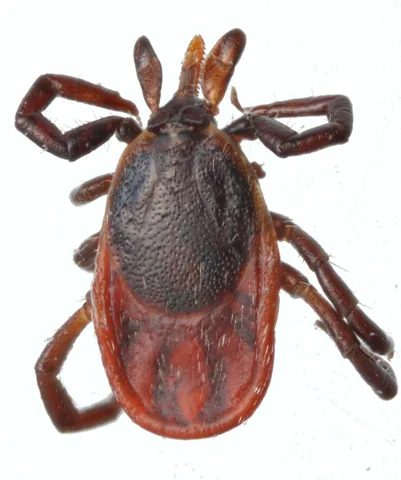 Blacklegged Tick
Ixodes scapularis
The blacklegged tick, often called the deer tick, is widely distributed across the eastern United States and spreads the bacteria that cause Lyme disease along with several other infections.
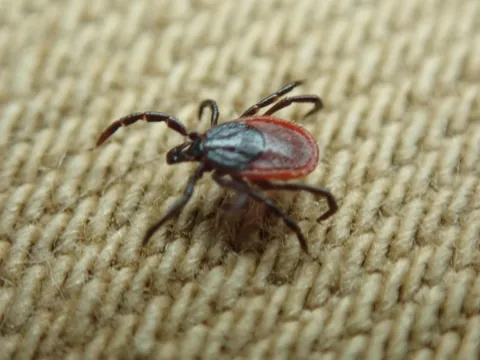 Western Blacklegged Tick
Ixodes pacificus
The western blacklegged tick is the Pacific Coast relative of the eastern deer tick and, in California, the only tick whose nymphs and adult females pass Lyme disease bacteria to people. It attaches to people more often than any other tick species in the state.
 Deer (white-tailed deer shown; mule deer similar)
Odocoileus species (shown: white-tailed deer, O. virginianus; also mule deer, O. hemionus)
White-tailed and mule deer browse gardens, shrubs, young trees and flowers, often at dawn and dusk when no one sees them. Fencing is the most reliable fix, with repellents and plant choice helping in lighter cases.
Which ticks spread Lyme disease
- In the US, Lyme disease is caused by the bacterium Borrelia burgdorferi and, rarely, Borrelia mayonii. CDC says the blacklegged tick (deer tick, Ixodes scapularis) spreads it in the northeastern, mid-Atlantic and north-central states, and the western blacklegged tick (Ixodes pacificus) spreads it along the Pacific Coast. Minnesota's health department notes the blacklegged tick is also called the bear tick.[1][10]
- These ticks are tiny. CDC says adults are about the size of a sesame seed and nymphs about the size of a poppy seed, which is why many people with Lyme disease never saw or felt a tick. MedlinePlus says the ticks are often found in hard-to-see places such as the groin, armpits and scalp.[1][9][8]
- Ticks pick up the bacteria as larvae or nymphs feeding on infected wildlife, usually rodents, CDC and Washington's health department say. CDC adds that deer feed ticks and help them spread to new areas but are not infected with Lyme bacteria and do not infect ticks.[1][11]
Where and when people catch it
- Where: MedlinePlus lists the Northeast, mid-Atlantic, upper Midwest and Pacific coast (especially northern California). CDC says infected ticks are most common in forested areas of the northeastern, north-central and mid-Atlantic states and in smaller areas within Pacific Coast states.[8][1]
- Close to home counts too. CDC says many people with Lyme disease are exposed to infected ticks in their own yards or neighborhoods, not just in wooded or rural areas. MedlinePlus lists gardening, hunting and hiking where Lyme disease occurs, and having a pet that can carry ticks home, as risk factors.[6][9]
- When: In the eastern US, CDC says people can be bitten by infected blacklegged ticks from spring through fall; nymphs are most active from April through July and adults in early spring and fall. MedlinePlus says most tick bites happen in the warmer months (April-September). Washington's health department says most Lyme disease cases in North America occur between May and August.[1][8][11]
- In the West it is less common. Washington's health department says Lyme disease is rare there: 10-40 cases a year are reported among Washington residents, and most of those people were bitten in the Northeast or upper Midwest.[11]
- How common: CDC's Lyme data page (updated September 9, 2026) says more than 80,000 Lyme disease cases are reported to CDC each year. CDC also cites an insurance-claims estimate (from 2010-2018 data) that 476,000 people may be diagnosed and treated each year, which it says may be an overestimate.[4]
Symptoms: the rash and what can come later
- Early (3 to 30 days after the bite): CDC lists fever, chills, headache, fatigue, muscle and joint aches and swollen lymph nodes, which can happen without a rash. Minnesota's health department says people often feel like they have the flu.[2][10]
- The rash (erythema migrans): CDC says it occurs in approximately 70 to 80 percent of infected people, starts at the bite site after 3 to 30 days (average about 7), and expands over several days to up to 12 inches (30 cm) or more. It may feel warm but is rarely itchy or painful, and it does not always look like a classic bull's-eye.[2]
- Later (days to months after the bite): CDC lists severe headaches and neck stiffness, more rashes elsewhere on the body, facial palsy (droop on one or both sides of the face), arthritis with severe joint pain and swelling especially in the knees, heart palpitations or an irregular heartbeat (Lyme carditis), dizziness or shortness of breath, and inflammation of the brain and spinal cord.[2][10]
- MedlinePlus describes three stages: early localized, early disseminated (weeks to months after the bite) and late disseminated (months or years later), when muscle and joint pain are the most common symptoms.[9]
When to see a doctor
- MedlinePlus says to contact your provider if you have a large, red, expanding rash that may look like a bull's-eye; if you had a tick bite and develop weakness, numbness, tingling or heart problems; or if you have symptoms of Lyme disease, especially if you may have been around ticks.[9]
- Facial droop, heart palpitations or an irregular heartbeat, dizziness, shortness of breath, and a severe headache with a stiff neck are among the later signs CDC lists. MedlinePlus says heart problems, weakness or numbness after a tick bite are reasons to contact your provider, so don't wait these out.[2][9]
- MedlinePlus says people bitten by a tick should be watched closely for at least 30 days for a rash or symptoms. Tell the doctor about the bite or where you were outdoors: CDC says doctors weigh the chance you were exposed to infected ticks, and many people never notice the tick.[9][5][1]
- Whether to take an antibiotic right after a bite is a decision for your doctor; CDC says to ask your healthcare provider whether that is appropriate for you. The tick-bite page on this site covers removal, saving the tick and what doctors look at.[3][9]
How long a tick has to be attached
- Sources word this differently. CDC says in most cases a tick must be attached for more than 24 hours to transmit the Lyme bacterium, and removing it within 24 hours greatly reduces your chances of getting Lyme disease. MedlinePlus gives 24 to 36 hours, and Minnesota's health department says at least 24-48 hours. All agree the risk goes up the longer the tick stays on.[1][9][10]
- MedlinePlus also notes that most people bitten by a tick do not get Lyme disease.[9]
How doctors diagnose it
- CDC says diagnosis is based on signs and symptoms, the chance you were exposed to infected ticks, the possibility that another illness explains the symptoms, and lab test results when indicated. Minnesota's health department lists a physical exam that looks for symptoms and the rash.[5][10]
- The usual lab test is a blood test for antibodies to the Lyme bacteria. CDC says it can take several weeks for the body to make enough antibodies, so the test can be falsely negative in the first few weeks, typically when a person has the rash. CDC recommends FDA-cleared tests that follow a two-step process and warns that some labs that don't accept private insurance offer tests not cleared by FDA.[5]
- A positive antibody test can stay positive for months or years after the infection is gone, and CDC says those antibodies don't reliably protect you from getting Lyme disease again.[5]
Treatment and lingering symptoms
- Lyme disease is treated with antibiotics chosen by a doctor. CDC says people treated with appropriate antibiotics in the early stages usually recover rapidly and completely, and early diagnosis and treatment can help prevent more severe disease.[3][8]
- CDC says some people have fatigue, body aches or trouble thinking that last after treatment; these usually improve over time, though it can take many months, and studies have shown more antibiotics are unlikely to help. MedlinePlus calls this post-Lyme disease syndrome and says its cause is unknown. CDC advises working with your healthcare provider to look at all possible causes.[7][9]
Preventing Lyme disease
- Preventing tick bites is the main defense. CDC recommends an EPA-registered repellent containing DEET, picaridin, IR3535, oil of lemon eucalyptus (OLE), para-menthane-diol (PMD) or 2-undecanone, and long sleeves and pants or clothing and gear pretreated with 0.5% permethrin. Always read the label before applying a repellent.[6][8]
- CDC says to check your body, clothing, gear and pets for ticks during and after time outdoors, including your own backyard, and to shower soon after coming inside to wash off unattached ticks. MedlinePlus advises avoiding woods and high grass when possible and being extra careful in warmer months.[6][9]
- Remove any attached tick as soon as you find it; CDC says prompt removal can prevent transmission. Step-by-step removal, yard tick control and what to do about a tick found indoors are on the pages linked below.[1][6]
Dogs, cats and Lyme disease
- The Merck Veterinary Manual says Lyme disease affects dogs, horses, cats and people, and most infections come from the deer (black-legged) tick.[12]
- Many infected animals show no signs. When dogs do get sick, Merck lists fever, loss of appetite, swollen or painful joints, lameness that shifts from leg to leg, swollen lymph nodes and lack of energy. It says Lyme disease affecting the kidneys is one of the most serious forms in dogs and is often fatal, so call your veterinarian about any of these signs.[12]
- Merck says to use a tick-control product your veterinarian recommends, check dogs for ticks after time outdoors in spring, summer and autumn, and ask your vet about vaccination where Lyme disease is common.[12]
- Dogs don't directly infect people with Lyme disease, Merck says, but they can carry infected ticks into the home, where the ticks can attach to people or other pets.[12]
Common questions
- Can I get Lyme disease from my dog?
- Not directly. The Merck Veterinary Manual says dogs don't directly infect people, but they can bring infected ticks into the house that then bite people.[12]
- Does every tick bite cause Lyme disease?
- No. MedlinePlus says most people bitten by a tick do not get Lyme disease, and CDC says infected ticks generally need to be attached for more than 24 hours to transmit it.[9][1]
- Do deer carry Lyme disease?
- CDC says deer are an important blood source for ticks and help move them to new areas, but deer are not infected with Lyme bacteria and do not infect ticks. Ticks usually pick up the bacteria from rodents.[1][11]
- Should I get a Lyme test right after a tick bite?
- Ask your doctor. CDC says antibody tests can be falsely negative in the first few weeks of infection because the body needs several weeks to make enough antibodies.[5]
- Can you get Lyme disease more than once?
- Yes. CDC says the antibodies left after an infection don't reliably prevent reinfection if another infected tick bites you.[5]
- Is there Lyme disease in the West?
- Yes, but less of it. CDC says the western blacklegged tick spreads it along the Pacific Coast, and Washington's health department says the disease is rare in Washington.[1][11]
Sources
- Centers for Disease Control and Prevention, “How Lyme Disease Spreads.” www.cdc.gov/lyme/causes/index.html (accessed 2026-11-14)
- Centers for Disease Control and Prevention, “Signs and Symptoms of Untreated Lyme Disease.” www.cdc.gov/lyme/signs-symptoms/index.html (accessed 2026-11-14)
- Centers for Disease Control and Prevention, “Treatment and Intervention for Lyme Disease.” www.cdc.gov/lyme/treatment/index.html (accessed 2026-11-14)
- Centers for Disease Control and Prevention, “Lyme Disease Surveillance and Data.” www.cdc.gov/lyme/data-research/facts-stats/index.html (accessed 2026-11-14)
- Centers for Disease Control and Prevention, “Testing and Diagnosis for Lyme Disease.” www.cdc.gov/lyme/diagnosis-testing/index.html (accessed 2026-11-14)
- Centers for Disease Control and Prevention, “Preventing Lyme Disease.” www.cdc.gov/lyme/prevention/index.html (accessed 2026-11-14)
- Centers for Disease Control and Prevention, “Chronic Symptoms and Lyme Disease.” www.cdc.gov/lyme/signs-symptoms/chronic-symptoms-and-lyme-disease.html (accessed 2026-11-14)
- MedlinePlus, U.S. National Library of Medicine, “Lyme Disease.” medlineplus.gov/lymedisease.html (accessed 2026-11-14)
- MedlinePlus, U.S. National Library of Medicine, “Lyme disease (Medical Encyclopedia).” medlineplus.gov/ency/article/001319.htm (accessed 2026-11-14)
- Minnesota Department of Health, “About Lyme Disease.” www.health.state.mn.us/diseases/lyme/basics.html (accessed 2026-11-14)
- Washington State Department of Health, “Lyme Disease.” doh.wa.gov/you-and-your-family/illness-and-disease-z/lyme-disease (accessed 2026-11-14)
- Merck Veterinary Manual, “Lyme Disease (Lyme Borreliosis) in Dogs.” www.merckvetmanual.com/dog-owners/disorders-affecting-multiple-body-systems-of-dogs/lyme-disease-lyme-borreliosis-in-dogs (accessed 2026-11-14)
Updated 2026-11-14. Built from sourced records. Spot an error? Tell us.