The short answer
- Don't pick it up with bare hands. Spiders rarely bite, but Colorado State and Washington's health department both say a spider is more likely to bite when its egg sac or nest is disturbed, and a female black widow guarding eggs is the classic case.[13][24]
- Look at the sac before you remove it. A smooth, tough, papery cream-to-tan ball about 1/2 inch across in a messy cobweb points to a black widow; a tan ball covered in little silk spikes is a brown widow; a fluffy cotton-ball sac with no clear edge can be a false widow; a large papery tan ball on garden plants is usually a garden spider.[1][2][3][6][15]
- Indoors, vacuum it up, then seal the vacuum bag in a plastic bag and put it in an outdoor trash can. Clemson Extension adds that freezing the sealed bag for several hours kills the spiders and eggs.[3][1]
- Outdoors, a garden spider's sac can be left alone. NC State says these spiders are beneficial and no control is necessary.[16][15]
Related pest profiles
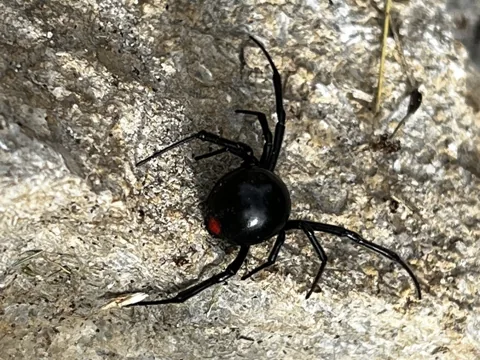 Southern Black Widow
Latrodectus mactans
Black widows are shy, web-building spiders with a neurotoxic venom; they live throughout North America and are most common in the southern and western United States. The southern black widow is found throughout states such as South Carolina.
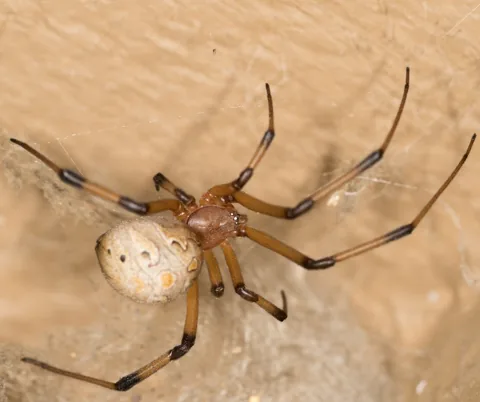 Brown Widow
Latrodectus geometricus
The brown widow is a non-native widow spider. It was found only in Florida for decades, then in the 2000s turned up from Texas along the Gulf Coast and up the Atlantic coast and became common around homes and parks in Southern California.
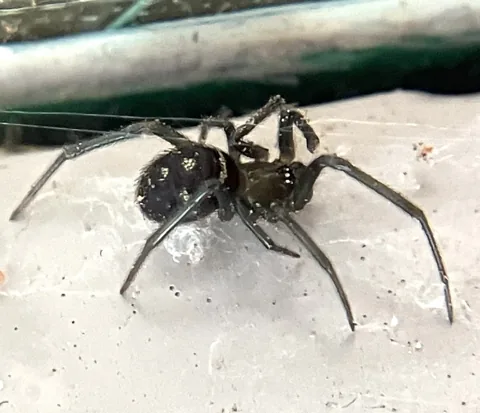 False Widow Spiders
Steatoda species (mainly S. grossa; also S. triangulosa)
False widows are Steatoda cobweb spiders, close relatives of black widows with the same round-bellied shape. The false black widow, Steatoda grossa, is common in homes and often mistaken for a black widow; its bite can hurt but is usually much milder.
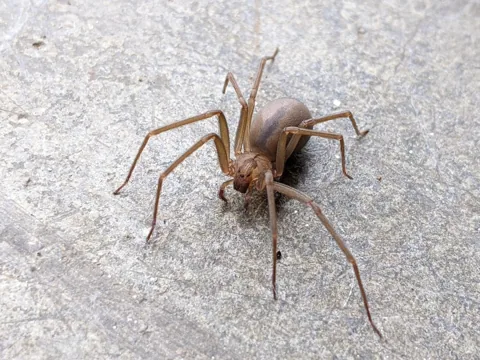 Brown Recluse
Loxosceles reclusa
The brown recluse is a secretive spider of the south-central and Midwestern United States whose bite can occasionally cause serious wounds; it is widely over-reported outside its range. The Illinois Department of Public Health says it occurs in roughly the southeastern quarter of the country and that bites are uncommon even where the spider is common.
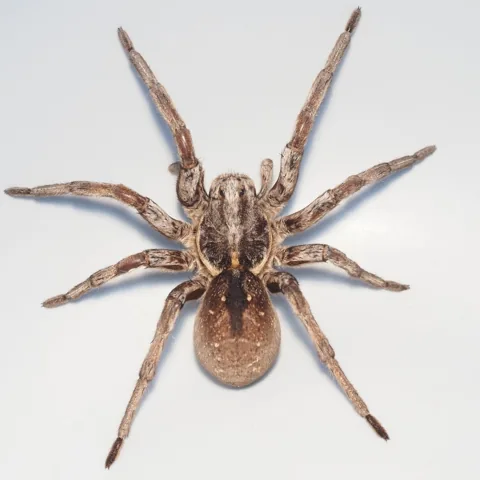 Carolina Wolf Spider
Hogna carolinensis
Wolf spiders are large hunting spiders that don't use webs; they wander into homes by accident, especially males searching for mates, and they don't persist indoors.
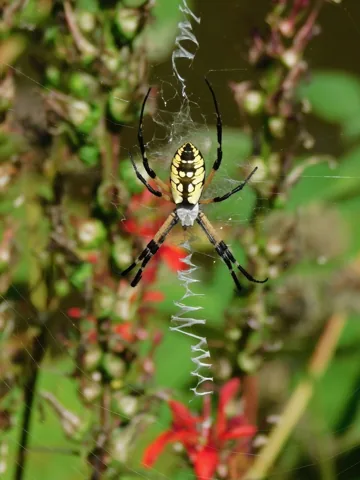 Orb Weaver Spiders (yellow garden spider)
Argiope aurantia
Orb weavers are the spiders that spin classic wheel-shaped webs in gardens and around porches. The best known is the yellow garden spider, a large black-and-yellow spider whose web has a white zigzag down the middle. They eat insects and aren't considered dangerous.
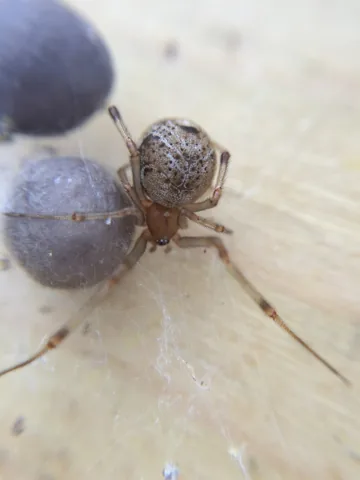 Common House Spider
Parasteatoda tepidariorum
The common house spider is a cobweb weaver found through most of the world. It builds its tangled webs in the corners of walls and windows, along floor joists and in basements, barns and crawl spaces.
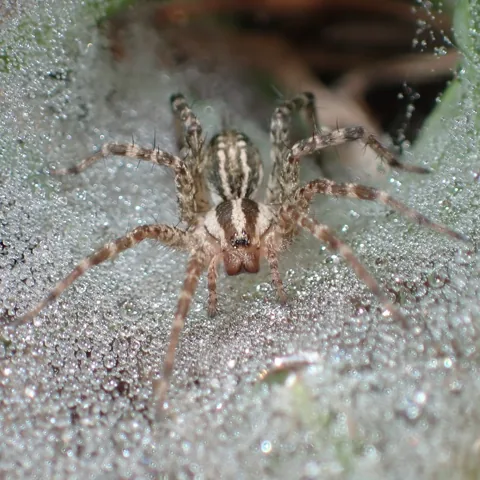 Grass Spiders (Funnel Weavers)
Agelenopsis species
Grass spiders are common funnel weavers whose flat, sheet-like webs with a funnel off to one side show up in lawns, ground covers and shrubs. They are fast and shy, often wander indoors in fall, and are considered beneficial.
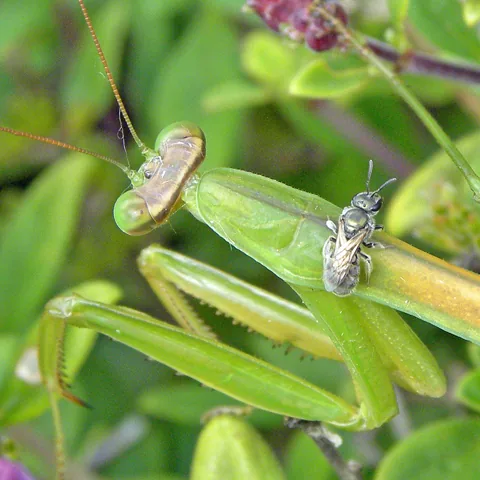 Praying Mantids
Mantidae (e.g., Tenodera sinensis, Mantis religiosa, Stagmomantis carolina)
Mantids are generalist predators. They catch pests, but they also eat bees, butterflies and other beneficial insects, and UC IPM says they're of no benefit for biological pest control.
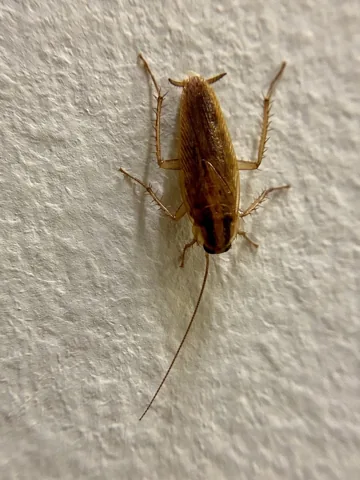 German Cockroach
Blattella germanica
The German cockroach is the most common cockroach living indoors in California and perhaps worldwide, especially in apartment buildings, and it has the fastest reproductive cycle of the common pest cockroaches. Penn State and Kentucky call it the most common cockroach in homes, apartments and other buildings, and Kentucky says it does not live outdoors.
Whose egg sac is it?
Start with where it is and what the silk looks like. Widows hang their sacs in their cobwebs and garden spiders attach theirs to nearby plants, while wolf spiders carry theirs. Use the field marks below, then compare with the profile pages.[2][11][14]
- Black widow: UC IPM describes the sacs as mostly spherical, about 1/2 inch long and 1/2 inch in diameter, creamy yellow to light tan, opaque, and tough and paperlike, hung in an irregular, tough-stranded cobweb. The western black widow's sac is yellowish and teardrop-shaped, tapered at the top; Clemson says the southern black widow's sac is rounded with a single small point.[1][2][3]
- Brown widow: a round, tan or yellow sac covered in little silk spikes. UC IPM and UC Riverside both compare it to a very large pollen grain, and UC IPM calls the sac a much surer way to confirm a brown widow than the spider's markings. The Natural History Museum of Los Angeles County found them on a gate and called them miniature spiky puffballs.[2][6][3][5]
- False widow: UC IPM says false black widows make a sac that looks like a cotton ball with indistinct margins, unlike the well-defined edge of a true widow sac.[2][7]
- Brown recluse: a whitish, round, fairly flat sac in a dark, undisturbed spot. Kentucky Extension describes off-white silken sacs 1/3-inch in diameter, formed from the irregular webbing that lines the spider's daytime retreat; Texas A&M gives about 5/8 inch (1.6 cm), flat on the bottom and convex on top. In infested garages, attics, basements and crawl spaces, Kentucky says sacs are often found along joists, sills and rafters and under rolled insulation.[9][8]
- Wolf spider: you usually won't find this one lying around. The female attaches her pea-sized egg sac to the spinnerets at the rear of her abdomen and carries it with her, and the young ride on her back for a while after they hatch. Missouri describes one rabid wolf spider's egg case as baby blue.[11][14][13]
- Black-and-yellow garden spider: Missouri says the egg cases are a little smaller than ping-pong balls, papery and tan, and usually attached to plants near the web; NC State describes a brown, silk, spherical cocoon about an inch in diameter. Missouri adds that most are made by mid-September.[15][16]
- Common house spider: Penn State describes brown, ovoid sacs with tough, papery covers, 6 to 9 millimeters in diameter.[17]
- Grass spider: Penn State says the female leaves a lens-shaped, white egg sac in late summer to fall.[19][18]
It might not be a spider egg sac at all
Praying mantis egg case (ootheca): glued to a twig, bark or another surface. UC IPM says it starts frothy and pale, dries to a brown, hardened, paperlike mass, and can be up to 1-1/2 inches long. This is the one most often confused with a garden spider sac: Missouri says the nonnative Chinese mantis case looks like a tan toasted marshmallow, fairly round and Ping-Pong-ball size, usually attached to twigs of bushes and small trees. The native Carolina mantis lays a somewhat flattened, elongated, teardrop-shaped case.[21][20]
Cockroach egg case: small, dark brown and bean-shaped. Minnesota Extension compares it to a dry kidney bean and says each holds 16 to 50 eggs depending on the species; Kentucky says up to 40 nymphs come out of a German cockroach case. Finding these indoors is a cockroach problem, not a spider problem.[22][23]
See praying mantises vs walking sticks and the cockroach guides below for more on those.[20][22]
How many spiders are inside, and when do they hatch?
Counts vary a lot by species. UC IPM says a western black widow typically lays about 300 eggs per sac, and a brown widow about 130; the museum's brown widow sacs held about 100 eggs each. Penn State puts the common house spider at 140 to 380 eggs per sac and the false widow at 200 or more. A black-and-yellow garden spider's sac can hold over 1,000 eggs, per Missouri, or several hundred to a thousand or more, per NC State.[2][5][17][7][15][16]
Brown recluse sacs hold fewer: about 40-50 eggs per sac according to Kentucky, or twenty to fifty per Penn State. Texas A&M says spiderlings emerge after 24 to 36 days.[9][10][8]
Many sacs found in fall won't open until spring. Missouri says black widow egg cases overwinter and the young emerge in spring; NC State says garden spiderlings hatch inside the cocoon but don't leave it until the following spring; grass spider eggs also hatch in spring.[4][16][19][18]
Wolf spiders run on a summer schedule instead. Penn State says females make egg cocoons in May or June and the spiderlings hatch in June and July, and Missouri says the young then ride on the mother's abdomen for up to two weeks or more.[12][11]
A single female can make several. UC IPM says a black widow can produce more than 10 egg sacs from one mating, and a brown widow 20 or more in a lifetime; Kentucky says a brown recluse makes up to 5, and Penn State says a house spider twelve or more.[2][9][17]
Does one egg sac mean an infestation?
Not by itself. It means one female laid eggs there. Most spiderlings don't stay: Colorado State and UC IPM describe them climbing to a high point and ballooning away on a strand of silk, and NC State says predators and parasites eat so many that only a few survive the winter.[13][2][16]
Brown recluse is the exception worth checking. Kentucky says infestations range from one or a few spiders to several hundred, and that a flashlight inspection of dark, undisturbed areas, plus flat glue traps placed along baseboards and behind clutter, shows where they are and how many. It also notes that a stray spider carried in boxes to an area outside its range seldom starts an infestation.[9]
For widows, Clemson treats sacs found inside the home, in the garage or in busy outdoor spots as something to remove, and UC IPM says black widows usually live hidden in woodpiles or garage clutter.[3][1]
Is it dangerous?
The sac can't bite. The risk is the female nearby. Colorado State says most spiders won't bite unless provoked, pressed against skin, or if their nest or egg sac is disturbed, and Washington's health department says black widows will usually try to escape rather than bite unless guarding their eggs.[13][24]
Wear gloves when you reach into garage shelves, woodpiles or boxes where you found the sac. Kentucky and UC IPM both say this, and Clemson calls not reaching into dark areas without gloves the most important prevention step.[9][1][3]
If someone is bitten, wash the bite with soap and water, put a cool, damp cloth or ice on it and elevate it if you can, as CDC/NIOSH advises, and get medical care. MedlinePlus says to call 911 or Poison Control at 1-800-222-1222 for a black widow or brown recluse bite, and to bring the spider along if possible.[25][26][27][28]
Poison Control notes that a brown recluse bite may not be felt when it happens.[28]
How to get rid of it (or leave it)
Indoors or in the garage: vacuum the sac and any spider with it, take the bag out right away, seal it in a plastic bag and put it in an outdoor trash bin. Clemson says freezing the sealed bag for several hours kills the spiders and eggs. UC IPM says vacuuming works because spiders' soft bodies usually don't survive the trip through the hose.[3][1]
Spraying the sac is a poor substitute. UC IPM reports that spider egg-sac silk repels water, and in a 2016 study water-based insecticides sprayed on brown widow sacs had no significant effect on the eggs.[2]
Outdoors on plants: garden spiders are harmless and beneficial, per Missouri and NC State, and their winter egg cases are eaten by birds such as titmice and chickadees. UC IPM says most spiders are beneficial predators of insects. Leave these unless they're somewhere you'd brush against them.[15][16][1]
Then make the spot less inviting: UC IPM and Kentucky both recommend clearing clutter, storing things in sealed plastic containers or taped boxes, and sealing cracks and gaps around doors, windows and the foundation.[1][9]
When to call a pro
You keep finding brown recluse sacs, spiders or shed skins. Kentucky says brown recluses are hard to eradicate because of their secretive habits and that treatment is best performed by professionals; it also advises having specimens confirmed by an entomologist or knowledgeable pest control firm because many harmless brown spiders are mistaken for recluses.[9]
Widows keep coming back after you've cleared nesting areas. Clemson says pesticides may then be needed and suggests consulting a licensed pest professional.[3]
Common questions
- What does a black widow egg sac look like?
- A smooth, round to teardrop-shaped ball about 1/2 inch across, creamy yellow to light tan, with a tough papery surface and a sharp edge, sitting in an irregular cobweb. Brown widow sacs are similar in color but covered in small silk spikes.[1][2][3]
- Will an egg sac hatch in my house?
- It can. Texas A&M says brown recluse spiderlings emerge from the egg case after 24 to 36 days, while many outdoor species' sacs made in fall wait until spring. Removing it with a vacuum and sealing the bag avoids the question.[8][4][16][3]
- Should I squish an egg sac?
- Vacuuming is cleaner. UC IPM says widow egg-sac covering is very tough and difficult to rip apart, and Clemson recommends vacuuming and sealing the bag.[2][3]
- Is a spider carrying a white ball on its back end dangerous?
- That's most likely a female wolf spider with her egg sac attached to her spinnerets. Missouri says she may act aggressively while carrying it, so leave her alone or carry her outside in a jar.[11][1]
- Is a tan, foamy lump on a twig a spider egg sac?
- Probably not. A brown, hardened, foamy-looking mass glued to a twig is usually a praying mantis egg case, according to UC IPM and Missouri.[21][20]
Photo credits
- Southern Black Widow: Carol Spence, public domain (CC0), via iNaturalist
- Brown Widow: Jesse Rorabaugh, public domain (CC0), via iNaturalist
- False Widow Spiders: Ken Kneidel, public domain (CC0), via iNaturalist
- Brown Recluse: iamfindingplants, public domain (CC0), via iNaturalist
- Carolina Wolf Spider: (c) Russell Pfau, some rights reserved (CC BY) — via iNaturalist, CC BY 4.0
- Orb Weaver Spiders (yellow garden spider): (c) Michael J. Papay, some rights reserved (CC BY) — via iNaturalist, CC BY 4.0
- Common House Spider: (c) Erin Lalime, some rights reserved (CC BY) — via iNaturalist, CC BY 4.0
- Grass Spiders (Funnel Weavers): (c) dhasdf, some rights reserved (CC BY) — via iNaturalist, CC BY 4.0
- Praying Mantids: (c) M. Whitson, some rights reserved (CC BY) — via iNaturalist, CC BY 4.0
- German Cockroach: (c) Sandra H Statner, some rights reserved (CC BY) — via iNaturalist, CC BY 4.0
Sources
- University of California Statewide IPM Program, “Pest Notes: Spiders, UC ANR Publication 7442.” ipm.ucanr.edu/home-and-landscape/spiders/ (accessed 2026-11-14)
- University of California Statewide IPM Program, “Pest Notes: Widow Spiders and Their Relatives, UC ANR Publication 74149.” ipm.ucanr.edu/home-and-landscape/widow-spiders-and-their-relatives/ (accessed 2026-11-14)
- Clemson Cooperative Extension Home & Garden Information Center, “Widow Spiders in South Carolina.” hgic.clemson.edu/factsheet/widow-spiders/ (accessed 2026-11-14)
- Missouri Department of Conservation, “Black Widow Spiders (Field Guide).” mdc.mo.gov/discover-nature/field-guide/black-widow-spiders (accessed 2026-11-14)
- Natural History Museum of Los Angeles County, “Q: What are those miniature spiky puffballs? A: Brown widow egg sacs.” nhm.org/stories/q-what-are-those-miniature-spiky-puffballs-brown-widow-egg-sacs (accessed 2026-11-14)
- Center for Invasive Species Research, University of California, Riverside, “How to identify (and misidentify) Brown Widow Spiders.” cisr.ucr.edu/invasive-species/how-identify-brown-widow-spiders (accessed 2026-11-14)
- Penn State Extension, “False Black Widow Spider.” extension.psu.edu/false-black-widow-spider (accessed 2026-11-14)
- Texas A&M Urban and Structural Entomology Program, “Brown Recluse.” urbanentomology.tamu.edu/urban-pests/spiders/brown-recluse/ (accessed 2026-11-14)
- University of Kentucky Entomology, “Brown Recluse Spider (ENTFACT-631).” entomology.mgcafe.uky.edu/ef631 (accessed 2026-11-14)
- Penn State Extension, “Brown Recluse Spiders.” extension.psu.edu/brown-recluse-spiders (accessed 2026-11-14)
- Missouri Department of Conservation, “Wolf Spiders (Field Guide).” mdc.mo.gov/discover-nature/field-guide/wolf-spiders (accessed 2026-11-14)
- Penn State Extension, “Wolf Spiders.” extension.psu.edu/wolf-spiders (accessed 2026-11-14)
- Colorado State University Agricultural Biology, “Spiders in the Home.” agsci.colostate.edu/agbio/ipm-pests/spiders-in-the-home (accessed 2026-11-14)
- University of Kentucky Entomology, “Common Spiders Found Around Homes and Buildings (ENTFACT-622).” entomology.mgcafe.uky.edu/ef622 (accessed 2026-11-14)
- Missouri Department of Conservation, “Black-and-Yellow Garden Spider (Field Guide).” mdc.mo.gov/discover-nature/field-guide/black-yellow-garden-spider (accessed 2026-11-14)
- NC State Extension, “Black and Yellow Garden Spider.” content.ces.ncsu.edu/black-and-yellow-garden-spider (accessed 2026-11-14)
- Penn State Extension, “Common House Spider.” extension.psu.edu/common-house-spider (accessed 2026-11-14)
- Missouri Department of Conservation, “Grass Spiders (Field Guide).” mdc.mo.gov/discover-nature/field-guide/grass-spiders (accessed 2026-11-14)
- Penn State Extension, “Grass Spiders.” extension.psu.edu/grass-spiders (accessed 2026-11-14)
- Missouri Department of Conservation, “Mantids (Mantises) (Field Guide).” mdc.mo.gov/discover-nature/field-guide/mantids-mantises (accessed 2026-11-14)
- University of California Statewide IPM Program, “Mantids, or Praying Mantises (Natural Enemies Gallery).” ipm.ucanr.edu/natural-enemies/mantids/ (accessed 2026-11-14)
- University of Minnesota Extension, “Cockroaches.” extension.umn.edu/insects-infest-homes/cockroaches (accessed 2026-11-14)
- University of Kentucky Entomology, “Cockroach Elimination in Homes and Apartments (ENTFACT-614).” entomology.mgcafe.uky.edu/ef614 (accessed 2026-11-14)
- Washington State Department of Health, “Spiders.” doh.wa.gov/community-and-environment/pests/spiders (accessed 2026-11-14)
- CDC / NIOSH, “Venomous Spiders at Work.” www.cdc.gov/niosh/outdoor-workers/about/venomous-spiders.html (accessed 2026-11-14)
- MedlinePlus, U.S. National Library of Medicine, “Black widow spider (Medical Encyclopedia).” medlineplus.gov/ency/article/002858.htm (accessed 2026-11-14)
- MedlinePlus, U.S. National Library of Medicine, “Brown recluse spider (Medical Encyclopedia).” medlineplus.gov/ency/article/002859.htm (accessed 2026-11-14)
- Poison Control (National Capital Poison Center), “Brown recluse spider bites: Know the signs, reduce the risks.” www.poison.org/articles/brown-recluse-spider-bites (accessed 2026-11-14)