The short answer
- Assume every new bird is infested: treat it with a labeled insecticide and keep it apart from the flock until treatment is finished.[1]
- Check the vent area of some birds every two weeks for northern fowl mites; check birds at night, and cracks in the coop, for chicken mites.[1]
- Keep wild birds away from the chickens, coop and feed; they can bring in mites and lice.[1][3]
- Make follow-up treatments; infestations are rarely controlled with one application.[1][3]
- Put only products labeled for poultry on your birds and follow the label directions, including how often you may retreat. Drugs not labeled for chickens need a veterinarian, and you should ask how long to discard the eggs.[1][3][10]
- Flies breed in wet manure and spilled feed, and rats and wild birds come for the feed. Keep litter and droppings dry, clean up spilled feed right away and store feed in containers without holes.[4][7]
Chicken pest profiles
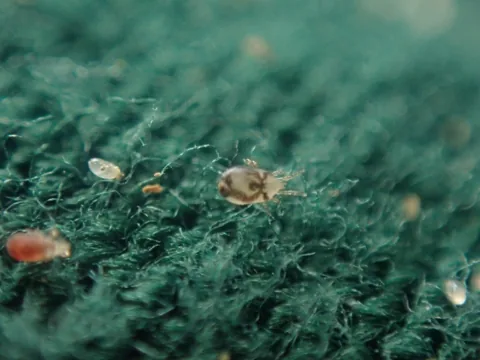 Northern Fowl Mite
Ornithonyssus sylviarum
The northern fowl mite is a tiny blood-feeding mite that Mississippi State Extension calls the most serious external parasite of poultry in North America. It lives its whole life on chickens and other birds, crowding around the vent, and heavy infestations cause anemia, fewer eggs and even death.
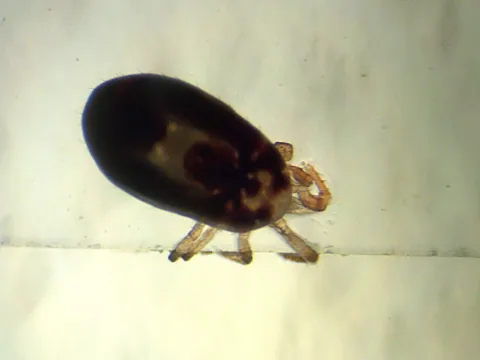 Chicken Mite
Dermanyssus gallinae
The chicken mite (poultry red mite, roost mite) is a tiny blood-feeding mite that hides in cracks, nests and litter by day and crawls onto chickens and wild birds to feed at night. Mites from coops or bird nests can also crawl onto people and bite.
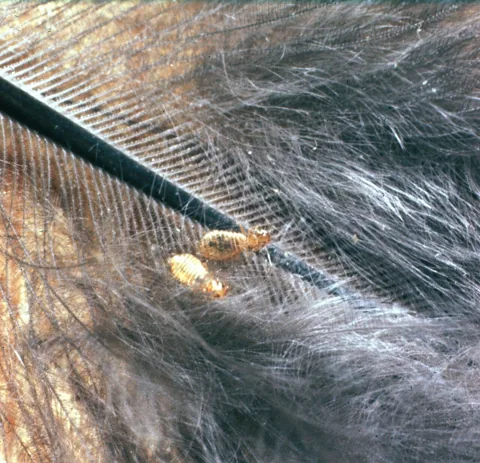 Poultry Lice
Several chewing lice, including the chicken body louse (Menacanthus stramineus) and the shaft louse (Menopon gallinae)
Poultry lice are small, flat, wingless, straw-colored insects that live their entire lives on the bird, chewing on feathers, dry skin scales and scab tissue. Heavy infestations irritate birds, damage feathers and can cut growth and egg production.
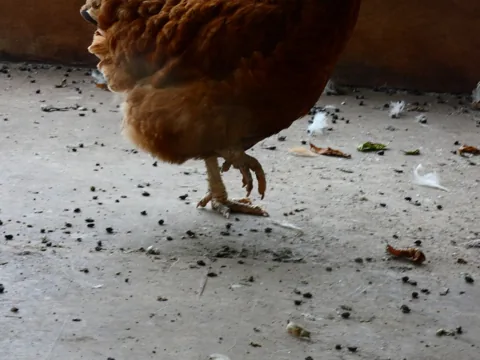 Scaly Leg Mite
Knemidokoptes mutans
The scaly leg mite is a mite too small to see that burrows into the skin under the scales of chickens' legs and feet, leaving the legs thick, crusty and, in bad cases, deformed.
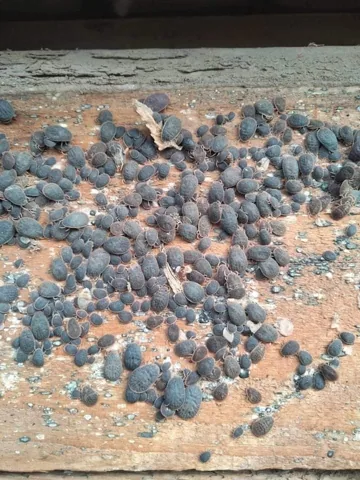 Fowl Tick
Argas persicus
The fowl tick is a soft tick that hides in cracks and crevices of the coop or nests by day and feeds on chickens and other birds at night. Infested birds can become anemic and lose weight, and egg production can drop sharply. UF/IFAS adds that it is also called the blue bug.
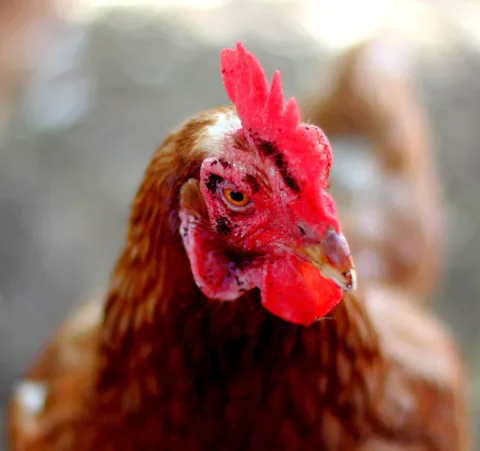 Sticktight Flea
Echidnophaga gallinacea
The sticktight flea is a small, dark flea that embeds its mouthparts in its host's skin and stays put for days or weeks. Texas A&M's veterinary diagnostic lab calls it the main flea pest of poultry, and it also attaches to dogs, cats and people.
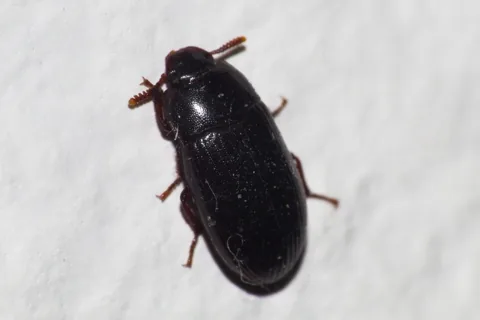 Lesser mealworm
Alphitobius diaperinus
The lesser mealworm, also called the litter beetle or darkling beetle, is a small dark beetle that breeds in huge numbers in poultry-house litter and manure. Its larvae tunnel into barn insulation, both stages carry poultry diseases, and when infested litter is spread on fields in warm weather the adults can fly to nearby homes by the thousands. People who handle them at work can develop allergies. Control relies on dry litter, clean-outs in freezing weather, traps to track numbers, and rotated insecticides; the beetles can't realistically be wiped out of a farm.
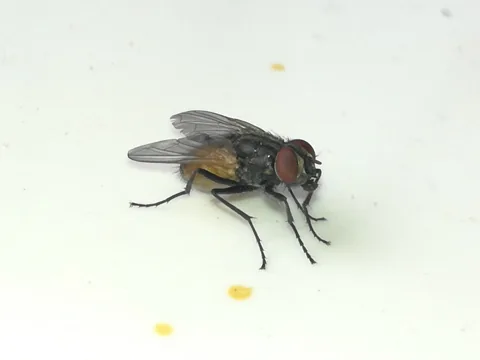 House Fly
Musca domestica
The house fly is a worldwide companion of people and domestic animals; it breeds in garbage, manure and other moist organic matter and is most numerous in hot summer months.
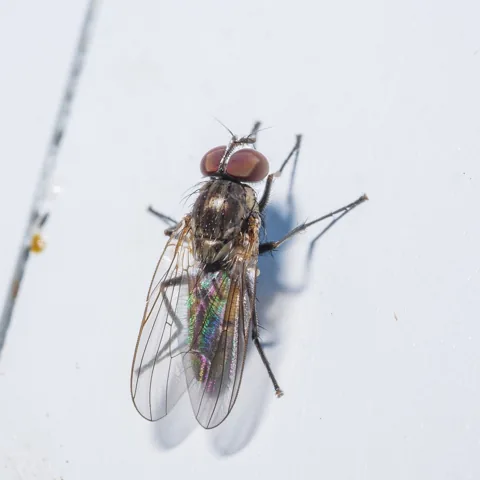 Lesser House Fly
Fannia canicularis
The lesser house fly, also called the little house fly, is a smaller relative of the house fly that breeds in manure, compost and fermenting grass clippings. Swarms of males circle at head height in shady porches and garages, so it is mainly a nuisance, and Texas A&M says it can annoy people living near poultry farms even more than the house fly does.
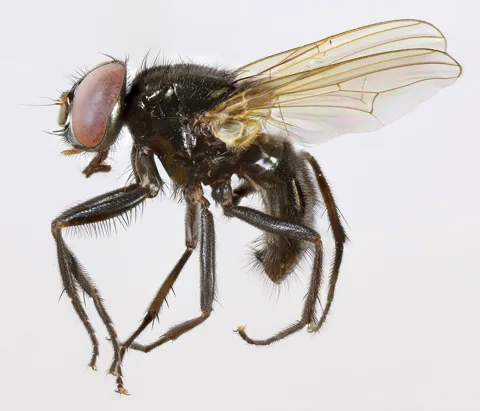 Black dump fly
Hydrotaea aenescens
The black dump fly, also called the black garbage fly, is a shiny black fly found around poultry houses alongside house flies. Its larvae prey on other fly larvae and can cut house fly numbers sharply, but large numbers can also build up, wander into nearby communities, and carry bacteria such as Salmonella and Campylobacter.
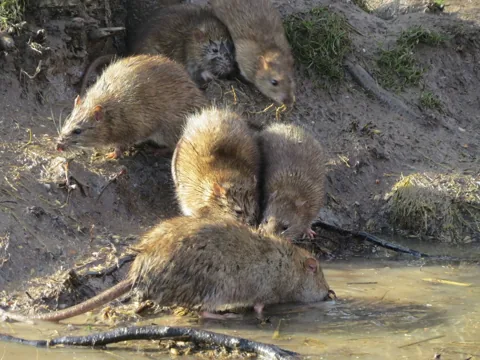 Norway Rat
Rattus norvegicus
The Norway rat, also called the brown or sewer rat, is a large, burrowing rat found throughout the contiguous United States wherever people live.
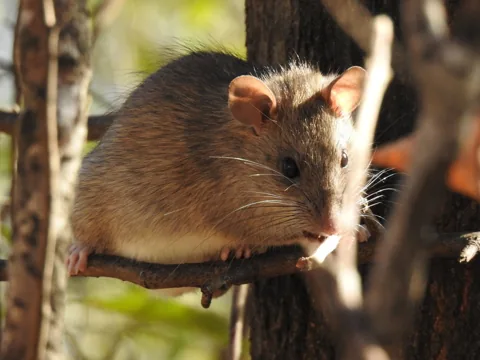 Roof Rat
Rattus rattus
The roof rat, also called the black or ship rat, is a sleek, agile climber that nests above ground in trees, ivy, attics and wall voids.
What turns up on backyard chickens
A University of California, Riverside survey checked five birds on each of 20 backyard flocks in southern California in summer. Only four properties (20%) had no ectoparasites. Lice were the most common: the chicken body louse turned up on 50% of properties and five other louse species on fewer. The sticktight flea was on 20%, northern fowl mites on 15%, scaly leg mites on 10% and chicken mites on 5%. Bed bugs and fowl ticks were not found.[8]
The authors found more kinds of parasites on these backyard flocks than are routinely seen on commercial chickens, and concluded backyard keepers need better biosecurity and more control options.[8]
Northern fowl mite vs chicken mite
Both are about 1/25 inch long, feed on blood, and can go from egg to adult in 7 to 10 days, so hundreds or thousands may be present before you notice. Heavy feeding causes stress, anemia, disease and fewer eggs. Both will bite people but don't infest them.[1][3]
- Northern fowl mites live on the birds day and night, mostly around the vent, where feathers turn black with dried blood and mite droppings. They're most common on birds up to about 30 weeks old and usually come from wild birds or new birds; they survive up to 3 weeks off a bird.[1][3]
- Northern fowl mites are usually brought in by wild birds, rodents or new birds, and on contaminated equipment such as egg flats. Shine a bright flashlight into the feathers: the light makes the mites move so they are easier to see. You may spot them on eggs before you find them on the birds.[3][1]
- Chicken mites feed on birds at night and hide in cracks and crevices of the coop and roost by day, laying eggs off the bird. They arrive on new birds, transport cages or used shelters and can survive up to 34 weeks without a host, so removing the birds for a few days won't starve them.[1]
- Look for chicken mites at night, for feeding lesions on the breast and lower legs, or for clusters of mites in cracks and manure on the floor.[1]
- The two mites differ in how long they last without birds. Mississippi State says a well-fed northern fowl mite may survive two to three weeks off the host at room temperature, so moving birds back into a coop sooner than three weeks may not solve the problem. Chicken mites can survive up to 34 weeks without feeding, so control has to reach the cracks and crevices where they hide.[3][1]
- Both mites will bite people but do not infest them. Chicken mites feed at night, so people who go into an infested coop after dark may be bitten. Northern fowl mites also annoy people who handle the birds and eggs.[1][4]
Poultry lice
Chicken lice are six-legged insects with flat bodies and wide heads that chew skin scales and feathers rather than drinking blood. They spread mostly by contact, survive about a week off a bird, and complete their life cycle in one to two weeks.[1]
Scaly leg mites
Scaly leg mites live under the scales of chickens' legs and feet and tunnel into the upper skin, leaving the legs thick and crusty; severe cases can cut off blood to the toes. Close contact spreads them, so quarantining birds that look unhealthy helps.[4][11]
The mites are only 1/50 to 1/100 inch long and must be magnified to be seen. Commercial flocks rarely have them because the birds are young and seldom contact older infested birds, and researchers suspect wild birds bring the mites to domestic flocks.[4]
Fowl ticks and sticktight fleas
Fowl ticks hide in cracks and crevices of the coop and in nests, feed on the birds at night for 15 to 30 minutes, then drop off; adult females are reported to live over four years without a blood meal, so leaving a coop empty won't clear them.[11]
Flies and litter beetles
Several filth flies breed around poultry: the house fly, the little (lesser) house fly, the black dump fly and blow flies. They develop in manure and other wet, decaying material and can carry pathogens that affect people and birds. Texas A&M notes the house fly is an intermediate host of the common chicken tapeworm and leaves fly specks on eggs.[5][4]
House flies can go from egg to adult in 7 to 10 days in warm manure, so a wet spot becomes a fly problem fast. The little house fly takes two to three weeks and the black dump fly about two weeks.[5][4]
Texas A&M says manure management is the most effective fly control. Fresh poultry manure is 75 to 80 percent water; drying it to 30 percent moisture or less practically stops fly breeding. Fix leaking waterers, keep rain and runoff out of the coop, and promptly remove broken eggs, dead birds and spilled feed.[4]
If you remove manure to break the cycle, Texas A&M advises doing it at least twice a week and spreading it thinly to dry rather than leaving piles.[4]
Fly traps and sticky strips help in small, clean enclosed spaces, but in heavy populations they do not bring numbers down to a satisfactory level, and most entomologists consider traps alone ineffective around poultry.[4]
Lesser mealworms (litter beetles) live in coop litter and feed on spilled feed, dried droppings and dead birds. They can pick up Salmonella, E. coli and other pathogens, and birds can be infected by eating them. Larvae leaving the litter to pupate may tunnel into foam insulation and wood. Keep litter dry and fix leaks, clean up spilled feed, and clean out old litter when temperatures are near or below freezing. Kentucky says they are virtually impossible to eliminate with insecticides.[6]
Rats, mice and feed
- Rats accept whatever food is abundant, and roof rats travel 300 feet or more to find it. UC IPM advises storing pet food in rodent-proof containers and offering only what animals will eat at a feeding; the same logic applies to chicken feed.[2]
- USDA's biosecurity checklist for poultry keepers says not to give wild birds, rodents and insects a free lunch: remove spilled or uneaten feed right away, keep feed storage secure and free of holes, and keep pests out of the flock's water.[7][3]
- UC says to seal cracks and openings larger than 1/4 inch with steel wool, wire screen or sheet metal; rats can chew through plastic, foam, wood and caulk. Never rely on lightweight chicken wire to keep rats out, because they pass through the openings. UC suggests galvanized wire cloth with 1/2-inch mesh over vents and low windows.[2]
- Snap traps are the safest, most effective and most economical way to trap rats. Where chickens, pets or children could reach them, set traps inside boxes or stations or behind a barrier. UC also notes that trapping at night reduces contact with birds.[2]
- All rodent baits are toxic to other animals, and dead rats can carry enough anticoagulant to poison pets and wildlife that eat them.[2]
- Rodents matter for more than lost feed: rats can carry diseases to people and to poultry, and Mississippi State lists rodents and wild birds among the ways northern fowl mites get into a poultry house.[2][3]
Treating
- Use a product labeled for poultry; read whether it's labeled for the birds, the roosting area, or both, and check age restrictions and retreatment intervals. Farm supply stores carry poultry insecticides that garden stores may not.[1]
- For northern fowl mites and lice, treat all birds at once, focusing on the vent area for mites and getting the product to the skin; recheck in 7 to 10 days and repeat as needed.[1]
- For chicken mites, spray or dust cracks and crevices thoroughly and repeat in 5 to 6 days, because mite eggs survive most insecticides.[1]
- Clean or discard crates and boxes used to bring birds home.[1]
- Repeat treatments are needed because mite eggs survive most treatments. Kentucky says to recheck for northern fowl mites and lice in 7 to 10 days and to retreat chicken-mite hiding places in 5 to 6 days. Mississippi State says treatments do not kill mite eggs and warns that waiting more than about seven days before the second treatment lets a new generation of mites develop; it may take at least three treatments. Use the interval on your product's label.[1][3]
Label rules for products used on poultry
Check whether a product is allowed where you live. Kentucky says its poultry pesticide recommendations are registered for use in Kentucky only and that some products may not be legal in your state; ask your county extension agent or a regulatory official.[1]
Backyard hens count as food animals. Even if you think of your chickens as pets, the FDA considers them food-producing animals. Few drugs are FDA-approved for laying hens, and little is known about how long residues of off-label drugs stay in eggs, so ask a veterinarian before using any drug not labeled for chickens and ask how long to discard the eggs.[10]
Mississippi State gives ivermectin as an example: it has controlled northern fowl mites in some breeder flocks, but it is not labeled for poultry, so using it requires a prescription from a licensed veterinarian.[3]
Resistance and what the research shows
Mites build resistance. Mississippi State says northern fowl mites have developed at least partial resistance to many of the chemicals used against them, and that new replacement products are not likely soon.[3]
In a UC Riverside trial on caged hens, sulfur dust in hanging bags cut northern fowl mites on treated birds by 95 to 97% within a week, and mite counts were zero after 2 weeks. Permethrin-impregnated plastic strips had no effect, possibly because of resistance.[9]
Diatomaceous earth and sulfur dust have given mixed results. Mississippi State says dusts may not reach the skin where the mites live, and that one dusting misses mites that hatch afterward, so repeat treatments are needed.[3]
Treat all the birds at the same time, and keep wild birds away from the chickens, coop and feed so they do not bring parasites back.[1]
Common questions
- Will leaving the coop empty get rid of mites and ticks?
- Not reliably: chicken mites can survive for months without feeding (Texas A&M says up to six months), and fowl tick females are reported to live over four years without a blood meal.[1][3][4][11]
- Can I eat the eggs after treating my hens for mites or lice?
- Follow the product's label directions. Backyard hens count as food animals, and for a drug used off-label, data on residues in eggs are often lacking, so ask your veterinarian how long to discard eggs.[1][10]
- Do chicken mites live on people?
- No. Northern fowl mites and chicken mites will bite people but do not infest them, [1]
- Does diatomaceous earth get rid of chicken mites?
- Results are mixed. Dust may not reach the skin where mites feed, and a single treatment misses mites that hatch later, so it needs repeating.[3]
Photo credits
- Northern Fowl Mite: Deniz Wilson, public domain (CC0), via iNaturalist
- Chicken Mite: Dermanyssus gallinae, microscopic view by Sylvain Larrat — via Wikimedia Commons, CC BY 4.0
- Poultry Lice: Menacanthus stramineus by Clemson University - USDA Cooperative Extension Slide Series, Bugwood.org — via Wikimedia Commons, CC BY 3.0
- Scaly Leg Mite: (c) Sean Hartnett, some rights reserved (CC BY) — via iNaturalist, CC BY 4.0
- Fowl Tick: Gabriel Melescanu, public domain (CC0), via iNaturalist
- Sticktight Flea: Tradimus, public domain (CC0), via Wikimedia Commons
- Lesser mealworm: Fernando Sessegolo, public domain (CC0), via iNaturalist
- House Fly: ivan_humljani, public domain (CC0), via iNaturalist
- Lesser House Fly: (c) Dustin Edmundson, some rights reserved (CC BY) — via iNaturalist, CC BY 4.0
- Black dump fly: Hydrotaea aenescens by Janet Graham (CC BY 2.0), via Wikimedia Commons — via Wikimedia Commons, CC BY 2.0
- Norway Rat: petehawkins, public domain (CC0), via iNaturalist
- Roof Rat: (c) Laura Mae, some rights reserved (CC BY) — via iNaturalist, CC BY 4.0
Sources
- University of Kentucky Entomology, “ENTFACT-516: External Mite and Insect Parasites of Backyard Chickens.” entomology.mgcafe.uky.edu/ef516 (accessed 2026-10-06)
- University of California Statewide IPM Program, “Rats (Pest Notes, Home and Landscape).” ipm.ucanr.edu/home-and-landscape/rats/ (accessed 2026-10-06)
- Mississippi State University Extension Service, “Northern Fowl Mite Management (2019).” extension.msstate.edu/publications/northern-fowl-mite-management (accessed 2026-11-10)
- Texas A&M AgriLife Extension, Department of Entomology, “Poultry Pest Management.” extensionentomology.tamu.edu/resources/management-guides/poultry-pest-management (accessed 2026-11-10)
- University of Maryland Eastern Shore Extension, “Poultry Facts: Nuisance Flies on Poultry Farms (2024).” wwwcp.umes.edu/extension/poultry-facts-nuisance-flies-on-poultry-farms/ (accessed 2026-11-10)
- University of Kentucky Entomology, “ENTFACT-507: Lesser Mealworms or Litter Beetles.” entomology.ca.uky.edu/ef507 (accessed 2026-11-10)
- USDA Animal and Plant Health Inspection Service, “Checklist To Protect Against Wild Birds, Rodents, and Insects (Defend the Flock, Program Aid 2235-4).” www.aphis.usda.gov/publications/animal_health/fs-c-birds-checklist-wildbirds.pdf (accessed 2026-11-10)
- Journal of Medical Entomology, abstract via PubMed, “Murillo and Mullens 2016, Diversity and prevalence of ectoparasites on backyard chicken flocks in California.” pubmed.ncbi.nlm.nih.gov/26753948/ (accessed 2026-11-10)
- Journal of Economic Entomology, abstract via PubMed, “Murillo and Mullens 2016, Sulfur dust bag: a novel technique for ectoparasite control in poultry systems.” pubmed.ncbi.nlm.nih.gov/27432937/ (accessed 2026-11-10)
- Journal of the American Veterinary Medical Association, abstract via PubMed, “Marmulak et al. 2015, Egg residue considerations during the treatment of backyard poultry.” pubmed.ncbi.nlm.nih.gov/26642132/ (accessed 2026-11-10)
- University of Arizona Cooperative Extension, “Backyard Chickens and Ectoparasites: Introduction and Management (AZ1878, April 2021).” extension.arizona.edu/sites/extension.arizona.edu/files/pubs/az1878-2021.pdf (accessed 2026-11-12)