The short answer
- What spreads it: fleas that live on wild rodents. CDC says plague bacteria cycle naturally between wild rodents and their fleas, and people usually get plague from an infected rodent flea bite or by handling an infected animal. Sick pets, especially cats, are another source.[2][8]
- Where: the rural and semi-rural West. CDC says most US cases are picked up in two areas: northern New Mexico, northern Arizona and southern Colorado; and California, southern Oregon and far western Nevada. MedlinePlus names the same two regions.[5][7]
- Warning signs: sudden fever, headache, chills and weakness, often with a swollen, painful lymph node (a bubo) in the groin, armpit or neck, within about 2 to 8 days of a flea bite or contact with a sick or dead animal. Cough, chest pain or shortness of breath can mean the lungs are involved.[3][7][9]
- See a doctor right away if those symptoms follow possible exposure to fleas or rodents in a plague area, and say where you have been. CDC says prompt treatment with the correct medications is critical to prevent complications or death.[3][7][9]
- Prevention: keep rodents away from the house, keep flea control on pets, don't touch sick or dead wild animals, and use repellent when you hike, camp or work outdoors where plague occurs.[4][10][9]
Rodents and fleas tied to plague
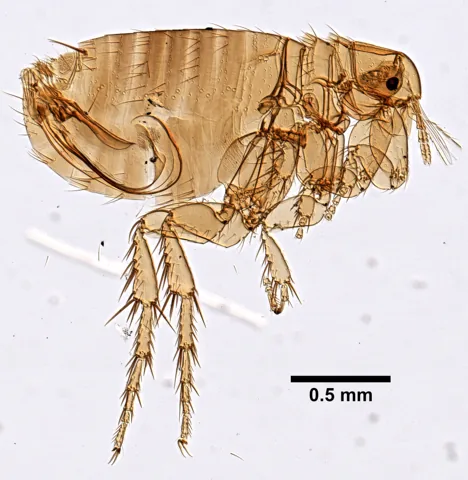 Oriental Rat Flea
Xenopsylla cheopis
The oriental rat flea is a parasite of rats and other small mammals and is best known for spreading two diseases to people: plague and flea-borne (murine) typhus. People are incidental hosts.
 Black-tailed prairie dog
Cynomys ludovicianus
The black-tailed prairie dog is a stocky, burrowing member of the squirrel family that lives in colonies called dog towns on the Great Plains. Towns support many other kinds of wildlife, but they conflict with ranching when prairie dogs compete with livestock for grass.
 Rock Squirrel
Otospermophilus variegatus (formerly Spermophilus variegatus)
The rock squirrel is a large, heavy-bodied ground squirrel of the Southwest that digs open burrows around homes, gardens and orchards. It eats seeds, fruit and garden plants, its burrows can damage landscapes and structures, and, like other wild rodents in the West, it can carry fleas that spread plague.
 Ground Squirrels
Otospermophilus beecheyi and O. douglasii (California ground squirrel)
Ground squirrels are burrowing rodents that forage above ground near their tunnels. The California ground squirrel is the most common species around homes and gardens in the West, where its digging and feeding can do considerable damage. Los Angeles County's agricultural commissioner calls it the ground squirrel most likely to be met there; it is also known as the Beechey ground squirrel.
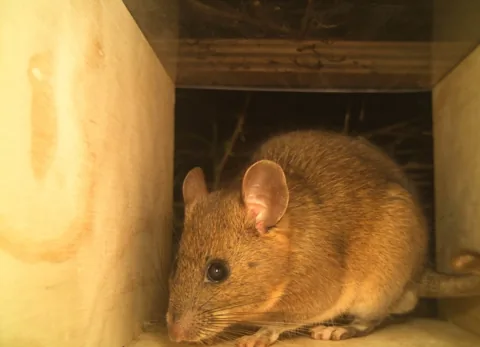 Woodrats
Neotoma species (e.g., N. fuscipes, N. lepida, N. floridana)
Woodrats, also called pack rats or trade rats, are native rats about the size of a Norway rat. They are a nuisance mainly around cabins, sheds and other little-used buildings and in parked vehicles, where they shred furnishings for nests and chew wires.
What plague is today
Plague is the disease that killed millions of people in Europe during the Middle Ages. CDC describes it today as a rare but persistent cause of illness in rural areas of the western United States and certain regions of Africa and Asia. MedlinePlus says plague now occurs sporadically and can be treated and usually cured if caught early.[1][7]
It reached the US in 1900 on rat-infested steamships, and the last urban epidemic was in Los Angeles in 1924 to 1925. CDC says plague then spread from city rats to rural rodent species and became entrenched in many areas of the West, and since then it has shown up as scattered cases in rural areas.[5][7]
There is no plague vaccine available in the United States. CDC says new vaccines are in development but are not expected to be commercially available in the immediate future,[4][7]
Which animals and fleas carry it
CDC says plague is kept going in a cycle between rodents and their fleas, mainly in semi-arid upland forests and grasslands of the West. Animals CDC lists as affected include rock squirrels, wood rats, ground squirrels, prairie dogs, chipmunks, mice, voles and rabbits; wild carnivores can catch it by eating infected animals.[2][7]
Die-offs are the danger sign. CDC says that during plague outbreaks in animals many rodents die, and their hungry fleas look for other sources of blood, so people and animals that visit places where rodents recently died of plague are at risk of flea bites. CDC's advice is that sudden illness or death among wild rodents such as squirrels or prairie dogs could indicate plague activity.[2][1]
In Colorado, El Paso County Public Health says plague is firmly established and often detected in rock squirrels, prairie dogs, other ground squirrels and chipmunks, and in that county it is also seen in tree squirrels common in city parks and Front Range neighborhoods. Arizona's health department says plague there usually circulates between fleas and wild rodents including prairie dogs, and that people can be exposed by getting too close to burrows or nests where infected fleas live.[10][9]
For telling prairie dogs from ground squirrels, the rock squirrel's habits around homes, and the ground squirrel flea that carries plague in the West, see the pages linked below; this page sticks to the disease.[2]
Where and how often plague happens in the US
CDC says that in recent decades an average of five human plague cases a year have been reported in the US, with a range of 0 to 17 cases a year. MedlinePlus gives an average of about 7 cases a year. Either way it is rare.[5][7]
Cases cluster in the Southwest. CDC says most US cases are in northern New Mexico and Arizona, and New Mexico's health department says about half of US cases each year occur in New Mexico. The Merck Veterinary Manual says animal cases are most commonly reported from Arizona, California, Colorado and New Mexico and are present in other western states.[5][8][11]
Recent state counts: New Mexico's health department reports one human case in 2024, three in 2025 and one so far in 2026, plus animal cases in dogs and a wild mammal in 2026. Arizona's health department reported in 2017 that the state had only 5 human plague reports since 2000, while fleas in northern Arizona routinely test positive for plague.[8][9]
CDC says plague has struck people from infants to age 96, and has historically been slightly more common in men, probably because of more outdoor activity. Cases in the eastern US have been in people who traveled from the West or were exposed in a laboratory.[5]
How people catch plague
These are the routes CDC and MedlinePlus describe:[2][7]
- Flea bites: the most common route. Dogs and cats can also carry infected fleas into the home. CDC says flea bites usually lead to bubonic or septicemic plague.[2][7]
- Handling infected animals: touching the tissue or body fluids of an infected animal, such as a hunter skinning a rabbit without gloves. Arizona's health department also warns about handling the blood or tissues of infected wild rodents.[2][9]
- Breathing infectious droplets: a person or animal with plague in the lungs can cough out droplets. CDC says this is the only way plague spreads between people, it usually takes close contact, and person-to-person spread has not been documented in the US since 1924.[2][7]
The three forms of plague and their symptoms
CDC says plague symptoms depend on how a person was infected, and the most common forms are bubonic, septicemic and pneumonic. CDC says most US cases have been bubonic, and MedlinePlus calls it the most common type in the United States.[3][5][7]
- Bubonic plague: fever, headache, chills and weakness with one or more swollen, painful lymph nodes called buboes. CDC says it usually follows an infected flea bite and appears 2 to 8 days later. MedlinePlus says the buboes are most often in the groin but can be in the armpit or neck, and pain may start before the swelling.[3][7]
- Septicemic plague (infection of the blood): fever, chills, extreme weakness, stomach pain, shock and possibly bleeding into the skin and organs. Skin and tissue may turn black and die, especially on fingers, toes and the nose. CDC says it can be the first form or can develop from untreated bubonic plague.[3][7]
- Pneumonic plague (infection of the lungs): fever, headache, weakness and fast-developing pneumonia with shortness of breath, chest pain, cough and sometimes bloody or watery mucus. CDC calls it the most serious form and the only one that spreads from person to person; it can follow untreated bubonic or septicemic plague or come from inhaling droplets. CDC says it can start as soon as 1 day after inhaling them, and MedlinePlus gives 1 to 3 days.[3][7][10]
Why fast medical care matters
Plague is curable, but timing matters. CDC says antibiotics must be given promptly to prevent serious illness or death, and MedlinePlus says the risk of death goes up if treatment is not started within 24 hours of the first symptoms. MedlinePlus adds that septicemic and pneumonic plague are nearly always fatal without prompt treatment.[1][7]
Get medical care right away if you develop fever, swollen painful lymph nodes, or cough and shortness of breath after a flea bite, after handling a wild animal, or after living in or visiting an area where plague occurs. CDC says to seek immediate medical attention for these symptoms, and Arizona's health department says to contact public health and seek care if signs develop after possible exposure to fleas or infected animals.[3][7][9]
Tell the doctor about the exposure. CDC's guidance for clinicians says a recent flea bite, exposure to areas with rodents, or contact with a sick or dead animal are risk factors in plague areas, and that treatment should start on suspicion, without waiting for test results. MedlinePlus says the same.[6][7]
If someone you live with has pneumonic plague, MedlinePlus says close contacts are given antibiotics as a preventive measure and watched carefully, so tell the health department or your doctor about the contact.[7]
How it is diagnosed
MedlinePlus says a provider will do a physical exam and ask about symptoms, and tests can include a blood culture, a culture of fluid drawn from a swollen lymph node, a sputum culture and a chest x-ray. El Paso County Public Health says plague is diagnosed on signs and symptoms and confirmed with a blood test or biopsy.[7][10]
CDC tells doctors to notify local and state health departments right away when plague is suspected.[6]
Cats, dogs and plague
Cats are the pet to watch. CDC says cats are particularly susceptible to plague and can be infected by eating infected rodents, and that rare cases of pneumonic plague continue among people exposed to sick cats. MedlinePlus says US cat owners have been infected through respiratory droplets from their sick cat.[2][7]
The Merck Veterinary Manual says pets are most often infected by eating infected rodents or rabbits or by an infected flea bite, and that risk factors include roaming in plague areas and hunting or eating wild rodents. It lists the ways pets have passed plague to people: carrying infected fleas into the home, bites and scratches, droplets, and contact with infected tissues and fluids.[11]
Signs in cats: the Merck Veterinary Manual says bubonic plague is the form most often seen in cats, with high fever, lethargy, not eating and swollen lymph nodes, often under the jaw, that can abscess and look like an ordinary bite-wound abscess. Plague in the lungs causes fever, labored breathing, discharge from the nose or mouth, and coughing or sneezing, and it can pass to owners and veterinary staff.[11]
Dogs: the Merck Veterinary Manual says dogs are less likely than cats to get sick from plague, though illness has been documented. New Mexico reported four dogs with plague in 2026.[11][8]
If a pet that roams or hunts in a plague area becomes sick with a fever or swollen glands, take it to a veterinarian promptly. The Merck Veterinary Manual says suspected plague patients are isolated and given flea control at the clinic, and CDC says to seek veterinary care as soon as possible.[11][4]
Preventing plague around your home and outdoors
These steps come from CDC, with matching advice from Arizona's and Colorado's El Paso County health departments. For cleaning up rodent nests and droppings indoors, follow the hantavirus cleanup steps linked below.[4][9][10]
- Make the yard less attractive to rodents: remove brush, rock piles, junk, cluttered firewood and food sources such as pet food and wild animal food, and rodent-proof the home and outbuildings. Our pest-proofing guide covers sealing gaps.[4][9]
- Keep fleas off pets with flea control products (ask your veterinarian which one), and keep pets from roaming and from wildlife and their nests. CDC says free-roaming dogs and cats in plague areas should not sleep on your bed.[4][9][10]
- Don't feed or touch wild animals such as prairie dogs, squirrels, chipmunks and rabbits, and never handle sick or dead ones. Keep children and pets away from them.[10][9]
- Wear gloves if you must handle or skin an animal that could be infected, and ask your local health department about disposing of dead animals.[4][9]
- Use repellent when camping, hiking or working outdoors where you could meet fleas. CDC says DEET products can go on skin and clothing, and permethrin products go on clothing only; follow the label.[4][10]
- Report die-offs. El Paso County Public Health asks residents who notice an unusual number of dead wild rodents to call its environmental health line, and Arizona's health department says changes in prairie dog or rodent populations can be reported to the Arizona Game and Fish Department.[10][9]
Common questions
- Is there still plague in the United States?
- Yes, but it is rare. CDC says an average of five human cases a year have been reported in recent decades, mostly in rural northern New Mexico, northern Arizona and southern Colorado, and in California, southern Oregon and far western Nevada.[5][7]
- Can I get plague from a prairie dog or squirrel?
- Mostly through their fleas. CDC says people usually get plague from infected rodent flea bites or by handling an infected animal, and prairie dogs, ground squirrels and rock squirrels are among the animals affected. Don't feed or touch them.[2][10]
- Can my cat give me plague?
- It can happen. CDC says people can be infected through exposure to sick pets, especially cats, and rare pneumonic plague cases still occur in people exposed to sick cats. Take a sick cat from a plague area to a veterinarian promptly.[2][7][11]
- Is plague curable?
- Yes. CDC says plague can be cured with antibiotics, but treatment must be given quickly. MedlinePlus says treatment should start when plague is suspected, even before test results come back.[1][7]
- Is there a plague vaccine?
- Not in the United States. CDC says a plague vaccine is no longer available in the US, and MedlinePlus says the same.[4][7]
- Does plague spread from person to person?
- Only the pneumonic form, through droplets during close contact. CDC says person-to-person spread has not been documented in the US since 1924.[2][3]
Photo credits
- Oriental Rat Flea: Daniel J. Drew, public domain (CC0), via Wikimedia Commons
- Black-tailed prairie dog: (c) Judy Ulrich, some rights reserved (CC BY) — via iNaturalist, CC BY 4.0
- Rock Squirrel: (c) Jacob Saucier, some rights reserved (CC BY) — via iNaturalist, CC BY 4.0
- Ground Squirrels: (c) Rudyard, some rights reserved (CC BY) — via iNaturalist, CC BY 4.0
- Woodrats: Andy Kleinhesselink, public domain (CC0), via iNaturalist
Sources
- Centers for Disease Control and Prevention, “About Plague.” www.cdc.gov/plague/about/index.html (accessed 2026-11-14)
- Centers for Disease Control and Prevention, “How Plague Spreads.” www.cdc.gov/plague/causes/index.html (accessed 2026-11-14)
- Centers for Disease Control and Prevention, “Signs and Symptoms of Plague.” www.cdc.gov/plague/signs-symptoms/index.html (accessed 2026-11-14)
- Centers for Disease Control and Prevention, “Preventing Plague.” www.cdc.gov/plague/prevention/index.html (accessed 2026-11-14)
- Centers for Disease Control and Prevention, “Plague Maps and Statistics.” www.cdc.gov/plague/maps-statistics/index.html (accessed 2026-11-14)
- Centers for Disease Control and Prevention, “Clinical Testing and Diagnosis for Plague.” www.cdc.gov/plague/hcp/diagnosis-testing/index.html (accessed 2026-11-14)
- MedlinePlus, U.S. National Library of Medicine, “Plague (Medical Encyclopedia).” medlineplus.gov/ency/article/000596.htm (accessed 2026-11-14)
- New Mexico Department of Health, “Plague.” www.nmhealth.org/about/erd/ideb/zdp/plg/ (accessed 2026-11-14)
- Arizona Department of Health Services, “Protecting People and Pets against Plague in Arizona (2017).” directorsblog.health.azdhs.gov/protecting-people-and-pets-against-plague-in-arizona/ (accessed 2026-11-14)
- El Paso County Public Health (Colorado), “Plague.” www.elpasocountyhealth.org/plague/ (accessed 2026-11-14)
- Merck Veterinary Manual, “Plague in Animals.” www.merckvetmanual.com/generalized-conditions/plague/plague-in-animals (accessed 2026-11-14)