The short answer
- The cause is midge bites. Merck says horses often become allergic to the bites of Culicoides midges, and calls sweet itch a seasonal allergic skin response to midge saliva. Arizona and Florida extension name the same link.[1][2][5][3]
- Watch for rubbing. Allergic horses scratch and rub the itchy areas, Merck says, causing hair loss, scrapes, crusts and thickened skin, most often on the mane, tail, belly and withers.[1][2]
- Call your vet when a horse rubs out its mane or tail, or has raw or crusted patches. Merck says the vet can treat the bite wounds and the sores from rubbing, and that vets and extension insect specialists can recommend approved midge control methods and products.[2]
- Cut the bites. Merck's horse-owner page says stabling the horse at dusk, fans, fine screens on windows and doors, and stable blankets have helped owners, because midges are weak fliers that bite mostly around dusk.[2][1]
Biting flies of horses
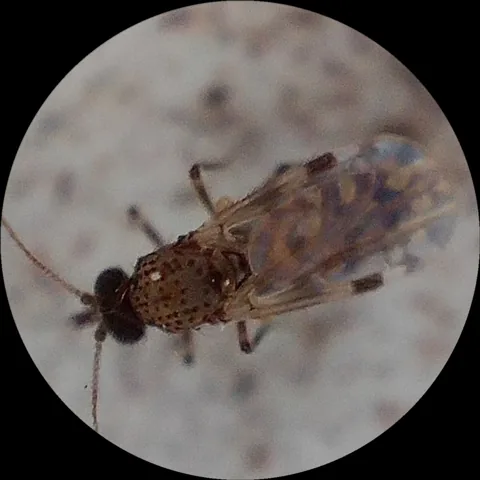 Biting Midges
Culicoides spp.
No-see-ums, also called biting midges, punkies, sand gnats or sand flies, are tiny flies, mostly in the genus Culicoides, whose bites itch intensely; most people feel them without ever seeing them.
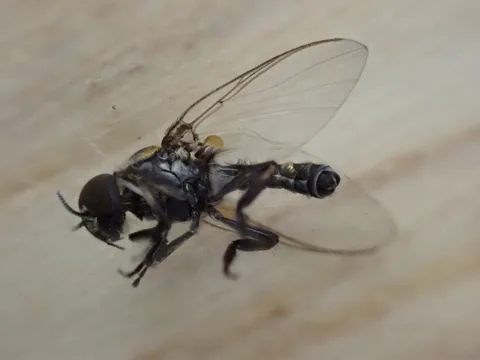 Black Flies
Simulium and related genera (family Simuliidae)
Black flies are tiny, stout, humpbacked biting flies, often called gnats or buffalo gnats. Their larvae live only in running water, and the females swarm around people and animals for blood, mostly in spring and early summer.
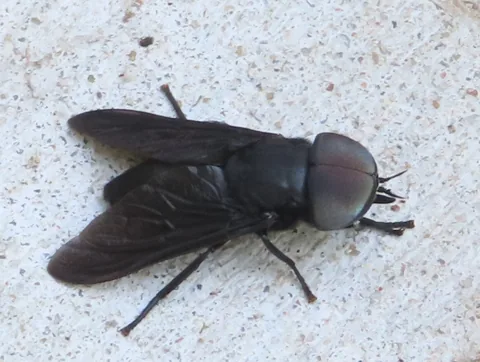 Horse Flies
Tabanus spp. (shown: black horse fly, Tabanus atratus)
Horse flies (Tabanus and related genera) are large, stout biting flies in the same family as deer flies. Only the females bite, during the day, slicing the skin and lapping up the blood.
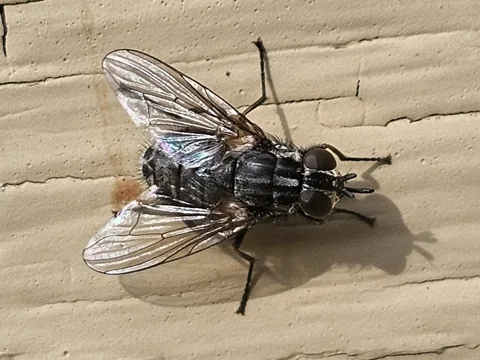 Stable Fly
Stomoxys calcitrans
The stable fly, also called the biting house fly or dog fly, looks much like a house fly but feeds on blood. Cattle are its main hosts, but it also bites horses, dogs and people, especially in neighborhoods near livestock.
What sweet itch is
Merck's veterinary text says horses are particularly prone to insect-bite hypersensitivity from Culicoides bites, with intense itching. The itch drives the horse to rub and scratch, and that self-inflicted damage is what owners usually see.[1]
It follows the midge season. Merck says biting midges fly only in the warm months and that the condition is often called summer or seasonal dermatitis for that reason.[1][2]
Not every horse reacts. Merck describes the bites as able to cause hypersensitivity in susceptible animals, so not every bitten horse develops sweet itch. Similar reactions are reported in cattle, sheep and dogs, Merck adds, but they are less documented than in horses.[1]
The midges behind it
Culicoides midges are extremely small. Florida's UF/IFAS fact sheet says adults are usually 1.0 to 2.0 mm long; Colorado State says biting midges are usually less than 1/8 inch and can pass through typical porch screening.[3][4]
Only the females bite. UF/IFAS says the female's mouthparts are built for piercing skin and sucking blood. Merck's horse-owner page says the bites can be painful and that midges feed on both people and animals, horses included.[3][2]
Larvae live in wet ground, not open water. Merck says they develop in moist organic material such as mud, manure-enriched soil, irrigated pastures and pond margins. Colorado State names the damp edges of ponds, swamps and manure lagoons as favored sites, and Arizona adds over-irrigated turf and poorly drained areas. UF/IFAS says the larvae are not fully aquatic.[1][4][5][3]
Each species tends to use just one or two kinds of larval habitat, UF/IFAS says, so the midges biting horses on one farm may breed somewhere quite different from those on the next.[3]
For identification, life cycle and how midges bite people, see our no-see-um profile and our no-see-ums and biting midges guide.[3]
When and where they bite
Dusk is the peak. Merck says midges are most active before and during dusk. Colorado State says most biting happens at dusk with a second, smaller peak at dawn.[1][2][4]
There are exceptions. UF/IFAS says most species bite at dusk, at night or in the morning, but some bite in broad daylight, especially in cold weather and in coastal areas.[3]
They stay near home. Colorado State says adults rarely fly far from breeding sites and rest on tall grass during the day, and Merck describes them as poor fliers. A horse kept near a wet pasture, pond edge or manure lagoon is closer to the source.[4][1]
Where on the horse depends on the midge. Merck's veterinary text says midges often feed on the mane, tail and belly; the horse-owner page says the usual feeding site is the back and belly but that this varies by species.[1][2]
Signs to watch for
Rubbing and scratching on fences, posts and stall walls, especially in the warm season. Merck says the itch is intense.[1][2]
Hair loss, scrapes and crusts, and over time thickened skin. Merck lists the mane, tail, belly midline and withers as the most common areas, and its photo set shows sweet itch between the eyes, on the withers, near the tail and on the tail itself.[1]
A different worm can look similar. Merck says midges also carry Onchocerca cervicalis, a skin worm of horses; the disease it causes resembles sweet itch but is usually less itchy, is not seasonal and affects the head, neck and belly. Only your vet can tell them apart.[1]
Other allergies can also make a horse itch: Merck says itching is a common allergic reaction to hay dust, mold, mildew, pollen and dust mites. Don't guess; call your vet, and note when the rubbing started and which parts of the body the horse rubs.[6]
What your vet does
Merck's horse-owner page says your veterinarian can treat the bite wounds and the sores caused by scratching and rubbing. Leave the choice of any medicine to the vet.[2]
Vets and extension insect specialists can recommend approved midge control methods and products for your area, Merck says. Merck also says extension entomology staff can help find local larval breeding grounds and give current approved recommendations.[2][1]
Cutting your horse's exposure
Most of the work is keeping midges off the horse. Merck says midge breeding sites are usually spread out and hard to find, which makes large-scale larval control impractical, so management generally aims at reducing the animal's exposure rather than wiping out the midges.[1]
Stable at dusk. Merck says keeping the horse inside a stable during dusk helps reduce its exposure to midges.[2]
Fans. Because Culicoides are poor fliers, Merck says moving air with an electric fan can cut host-seeking and feeding and may be used in stables and other animal housing; the horse-owner page says owners have had success with fans in stables.[1][2]
Fine screens. Merck mentions fine screens on stable windows and doors. Arizona extension says no-see-ums pass through standard 16 x 16 or 18 x16 mesh and recommends 30 x 30 mesh where possible, with screens checked for rips and gaps.[2][5]
Blankets and topicals. Merck's horse-owner page says some owners have had success with stable blankets and topical applications. Ask your vet which on-horse products are approved and suitable for your horse, and follow the label. Merck notes that fly-repellent ear tags tied to manes and tails are not approved for use in the US.[2]
Breeding sites near the barn. Colorado State says removing stagnant water rich in organic matter reduces breeding habitat, and that intermittently flooding or thoroughly drying ponds can help. Arizona says letting over-watered, moist spots drain and dry kills eggs and larvae.[4][5]
Don't expect one fix. Merck says no single control strategy works everywhere and that integrated approaches are generally needed. Colorado State says success of adult midge control is not likely and has not been demonstrated.[1][4]
Barn fly programs aimed at house flies and stable flies won't touch midges: Penn State's horse-farm guide says biting midges do not develop in the same materials as filth flies, so a filth-fly plan will not affect them. See our barn fly control guide for those flies.[7]
Other biting flies on horses
Merck groups biting midges with mosquitoes, black flies, sand flies, horse flies and deer flies as the biting flies of horses. Their bites can be painful and can bring on allergic reactions, but they are usually a nuisance unless the flies are very numerous or carry disease.[2]
Black flies are tiny enough to slip through many screens and bite painfully, Merck says, and swarms can cause whole-body reactions; stabling horses during daylight, when black flies are active, can give some protection. That is the opposite of the dusk stabling that helps with midges.[2]
Horse flies slice the skin, usually on the belly around the navel, the legs, or the neck and withers, Merck says, and the wound keeps oozing after the fly leaves. See our horse fly page and stable fly profile.[2]
Mosquitoes concern horse owners because they spread viral encephalitis, including Eastern and Western equine encephalomyelitis and West Nile virus, Merck says; see West Nile and EEE in horses. For lice and bot flies, see our horse lice and horse bot fly profiles.[2]
Common questions
- Why does my horse rub its mane and tail raw only in summer?
- One possible cause is sweet itch, an allergy to Culicoides midge bites. Merck says the midges fly only in warm months and that allergic horses rub the mane, tail, belly and withers. Other conditions cause rubbing too, so call your vet.[1][2]
- Will a fan in the stall really help?
- Merck says midges are weak fliers and that moving air from an electric fan can cut their host-seeking and feeding in stables, and that owners have had success with stable fans.[1][2]
- Can regular window screen keep no-see-ums out of the barn?
- Often not. Arizona extension says no-see-ums pass through standard 16 x 16 or 18 x16 mesh and recommends 30 x 30 mesh where possible; Colorado State says they can pass through typical porch screening.[5][4]
- Is sweet itch the same as onchocerciasis?
- No. Merck says midges spread the Onchocerca skin worm, but the worm disease is usually less itchy, is not seasonal and affects the head, neck and belly. Your vet can tell them apart.[1]
Photo credits
- Biting Midges: Sinaloa Silvestre, public domain (CC0), via iNaturalist
- Black Flies: Stephen James McWilliam, public domain (CC0), via iNaturalist
- Horse Flies: (c) Ken Clark, some rights reserved (CC BY) — via iNaturalist, CC BY 4.0
- Stable Fly: (c) Phoenix M.S, some rights reserved (CC BY) — via iNaturalist, CC BY 4.0
Sources
- Merck Veterinary Manual, “Biting Midges of Animals.” www.merckvetmanual.com/integumentary-system/flies/biting-midges-of-animals (accessed 2026-11-15)
- Merck Veterinary Manual, “Flies and Mosquitoes of Horses (Horse Owner Version).” www.merckvetmanual.com/horse-owners/skin-disorders-of-horses/flies-and-mosquitoes-of-horses (accessed 2026-11-15)
- University of Florida IFAS Extension, “Biting Midges, No-See-Ums, Culicoides spp. (EENY-349/IN626).” ask.ifas.ufl.edu/publication/IN626 (accessed 2026-11-15)
- Colorado State University Extension, “Biting Flies.” extension.colostate.edu/resource/biting-flies/ (accessed 2026-11-15)
- University of Arizona Cooperative Extension, “No-See-Ums (Biting Midges).” cales.arizona.edu/apmc/docs/No-See-Ums-IPMShort.pdf (accessed 2026-11-15)
- Merck Veterinary Manual, “Allergies in Horses (Horse Owner Version).” www.merckvetmanual.com/horse-owners/skin-disorders-of-horses/allergies-in-horses (accessed 2026-11-15)
- Penn State Extension, “Filth Fly Control on Horse Farms.” extension.psu.edu/filth-fly-control-on-horse-farms (accessed 2026-11-15)