The short answer
- Holes in wool, silk, fur, feathers, felt or leather are most often the work of clothes moth larvae or carpet beetle larvae. Cotton and synthetics such as polyester are rarely eaten unless blended with wool or soiled with food or body oils.[2][3]
- Silky webbing, tubes or mats with droppings in them, hidden under collars and cuffs, point to clothes moths. No webbing but brown, bristly shed skins and droppings the size of salt grains point to carpet beetles.[1][2][4]
- Silverfish can chew holes in starched clothing and cotton, linen or rayon fabrics.[7][6]
- Washing items for 20 to 30 minutes in water of at least 120°F kills all stages of clothes moths; dry clean woolens that can't take hot water.[1]
Profiles of fabric pests
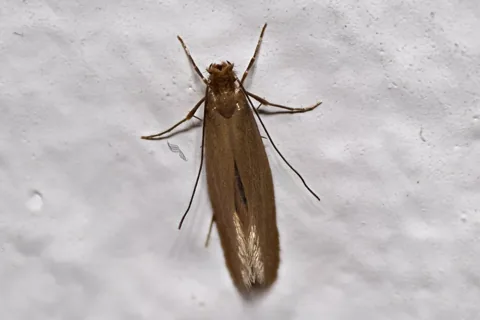 Webbing Clothes Moth
Tineola bisselliella
The webbing clothes moth is probably the most commonly encountered clothes moth in the United States. Its larvae feed on wool, fur, feathers and other animal fibers in hidden spots, and the moths are seldom seen because they avoid light.
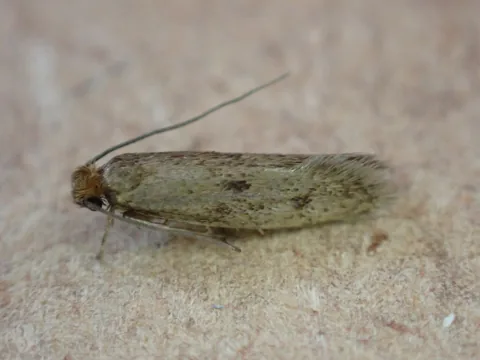 Casemaking Clothes Moth
Tinea pellionella
The casemaking clothes moth is a small fabric pest whose larvae feed on wool, fur, feathers and other animal fibers. Each larva lives inside a portable silk tube that takes on the color of whatever it has been eating.
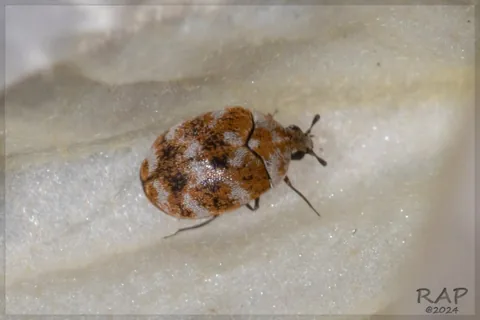 Varied Carpet Beetle
Anthrenus verbasci
Carpet beetles are small beetles whose larvae damage wool, silk, fur, feathers, leather and other animal products; the adults feed on pollen outdoors and often fly in through windows.
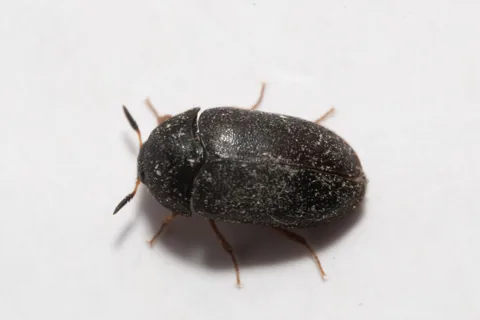 Black Carpet Beetle
Attagenus unicolor
The black carpet beetle is a shiny black carpet beetle whose larvae feed on wool, fur, feathers and other animal products, plus grains and other stored foods. In dry areas such as California, it is more often a pantry pest than a fabric pest. Colorado State Extension calls it one of the most common dermestid beetles.
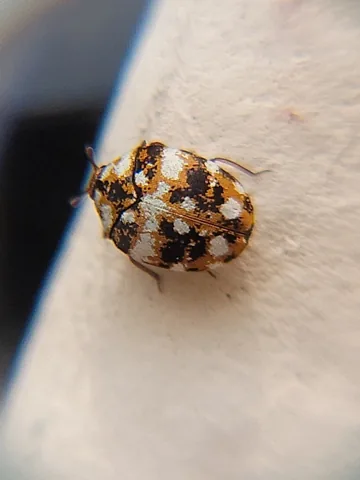 Furniture Carpet Beetle
Anthrenus flavipes
The furniture carpet beetle is a small, round dermestid beetle whose hairy larvae chew upholstery, carpets, fur and other animal-fiber items. UF/IFAS calls it a cosmopolitan pest that is most destructive in warmer parts of the world; in the United States it is mainly a pest of the southern states, though it also turns up in heated buildings farther north.
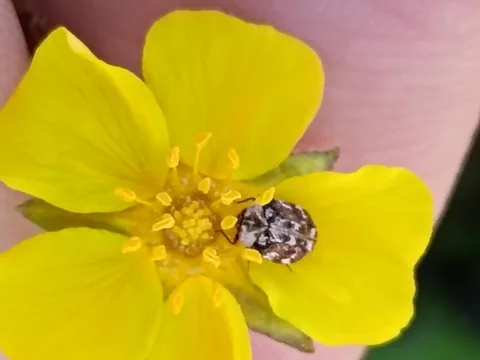 Common Carpet Beetle
Anthrenus scrophulariae
The common carpet beetle is a small, nearly round dermestid beetle whose larvae eat wool, carpets, fur and other animal products. UF/IFAS says it is found worldwide and also attacks preserved museum specimens.
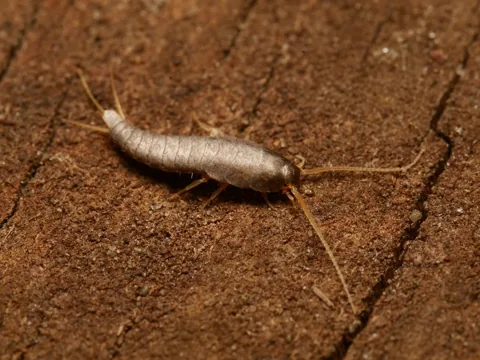 Silverfish
Lepisma saccharinum
Silverfish are nocturnal, wingless insects that hide by day and graze at night on paper, book bindings, starch in clothing and dry foods, preferring damp, warm places such as laundry rooms.
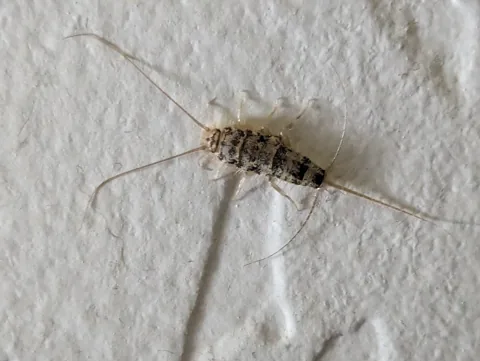 Firebrat
Thermobia domestica
Firebrats are close relatives of silverfish that thrive in very warm spots such as around ovens, furnaces, fireplaces and hot water pipes, grazing on paper, starch and dry foods. They're mostly a nuisance pest.
Damage clues and the likely culprit
- Silken tubes or patches of webbing mixed with fibers and tiny droppings, threadbare spots where fibers were grazed off, and damage hidden under collars, inside cuffs and folds, or on rug edges under furniture: webbing clothes moth.[2][1]
- Similar holes, but the larva lives in an open-ended silk case it drags along with it: casemaking clothes moth. The adults look like webbing clothes moths but have faint dark spots on the wings.[2][1]
- No webbing; brown, shell-like, bristly cast skins and droppings about the size of salt grains; and damage concentrated in a larger area on one part of a garment or rug rather than scattered holes: carpet beetles. The larvae are carrot-shaped and covered in bristles.[4][3][5]
- Holes or nibbled areas in starched clothing and in cotton, linen or rayon, with silvery, scaly, carrot-shaped insects in damp bathrooms, basements or around stored papers: silverfish (or their warmer-loving relative, the firebrat).[7][6]
- Moths fluttering around a lit kitchen are probably pantry moths from stored food, not clothes moths. Clothes moths avoid light, stay close to the infested items, and flutter rather than fly straight.[1][2]
Where to look
- Check seams, folds, creases, collars, cuffs and pockets, plus the edges and undersides of rugs and the carpet beneath furniture.[2][1]
- Look for silk tubes and mats, grazed spots, loose fur or feathers, droppings, larvae and cast skins, then look for adults: clothes moths in dark closets, carpet beetle adults on windowsills and flowers, since they are good fliers drawn to light and feed on pollen.[2][1][3][4]
- Pheromone traps are very useful for detecting clothes moths.[1]
- Look for the source. Carpet beetle larvae often start in bird, rodent or old wasp nests and dead animal material, and both pests feed on hair, lint and debris along baseboards and in cracks and vents.[3][1][5]
What to do next
- Launder washable items for 20 to 30 minutes in water at least 120°F, or dry clean woolens that shouldn't be washed hot.[1]
- Freezing and heat also work: UC IPM lists freezing an item sealed in a plastic bag for several days below 18°F, or heating it above 120°F for at least 30 minutes.[1]
- Vacuum closets, carpets, baseboards, cracks and furniture crevices thoroughly, then empty the vacuum. Clean everything stored in an infested closet before putting it back.[1][3]
- Store clean woolens in tight-fitting plastic bags or containers.[2]
- Mothballs, flakes and crystals (naphthalene or paradichlorobenzene) only work when sealed in with the clothes in a tight container. Never scatter them in open closets where children or pets can reach them.[2][1][8]
- Cedar is not reliable. The oil in aromatic red cedar can kill small larvae but not large ones, and cedar loses this effect after several years.[1]
Common questions
- Do clothes moths eat cotton or polyester?
- Rarely. They feed on animal fibers that contain keratin, such as wool, silk, fur and feathers; cotton and synthetics get damaged mainly when blended with wool or stained with food or body oils.[2][3]
- I see moths in my kitchen. Are they eating my clothes?
- Probably not. Moths in kitchens and other lit rooms are usually pantry moths from cereals, nuts or other stored foods; clothes moths avoid light and stay near the items they infest.[2][1]
- Do cedar closets keep moths away?
- Not dependably. UC IPM calls cedar's value debatable: the oil kills only small larvae and fades after several years.[1]
Photo credits
- Webbing Clothes Moth: (c) David Kleuker, some rights reserved (CC BY) — via iNaturalist, CC BY 4.0
- Casemaking Clothes Moth: Stephen James McWilliam, public domain (CC0), via iNaturalist
- Varied Carpet Beetle: (c) RAP, some rights reserved (CC BY) — via iNaturalist, CC BY 4.0
- Black Carpet Beetle: (c) Поляков Александр, some rights reserved (CC BY) — via iNaturalist, CC BY 4.0
- Furniture Carpet Beetle: (c) Rodolfo Salinas Villarreal, some rights reserved (CC BY) — via iNaturalist, CC BY 4.0
- Common Carpet Beetle: (c) Alexander Petrunin-Suharev, some rights reserved (CC BY) — via iNaturalist, CC BY 4.0
- Silverfish: (c) Alexis Tinker-Tsavalas, some rights reserved (CC BY) — via iNaturalist, CC BY 4.0
- Firebrat: (c) Rachel Stringham, some rights reserved (CC BY) — via iNaturalist, CC BY 4.0
Updated 2026-11-12. Built from sourced records. Spot an error? Tell us.