The short answer
- What spreads it: two container-breeding mosquitoes, the yellow fever mosquito (Aedes aegypti) and the Asian tiger mosquito (Aedes albopictus). They lay eggs in water-holding containers like buckets, flowerpots and pet dishes, live indoors and outdoors near people, and bite during the day and at night.[5][17][16]
- Where in the US: dengue is common in Puerto Rico, the U.S. Virgin Islands and American Samoa. In the rest of the country local spread has been limited to sporadic cases and small outbreaks in Florida, Hawaii and Texas, plus Arizona and California in recent years.[6][10][14]
- Symptoms: about 1 in 4 infected people get sick, usually within 2 weeks of the bite. The most common symptom is fever with aches and pains (eye pain behind the eyes, muscle, joint or bone pain), nausea or vomiting, or a rash. Most people recover after about a week.[2][1][14]
- Go to an emergency room or clinic right away for belly pain or tenderness, vomiting at least 3 times in 24 hours, bleeding from the nose or gums, vomiting blood or blood in the stool, or feeling very tired, restless or irritable. These warning signs usually start 24 to 48 hours after the fever goes away. Severe dengue can become life-threatening within a few hours.[2][3][14]
- For pain and fever, CDC says to use acetaminophen and not to take aspirin or ibuprofen; MedlinePlus explains that aspirin, ibuprofen and naproxen may increase bleeding problems. Prevent it by avoiding bites and emptying anything that holds water around your home once a week.[3][14][12]
The mosquitoes that spread dengue
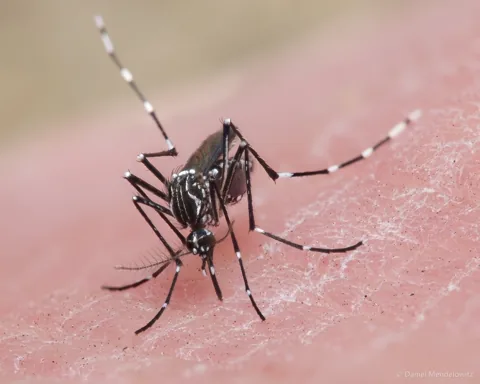 Yellow Fever Mosquito
Aedes aegypti
The yellow fever mosquito, Aedes aegypti, is a container-breeding mosquito that lives close to people and prefers to bite them. It lives indoors and outdoors, and the CDC calls it the main type of mosquito that spreads Zika, dengue and chikungunya viruses.
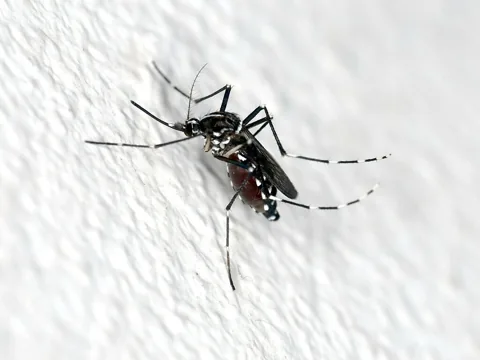 Asian Tiger Mosquito
Aedes albopictus
The Asian tiger mosquito is an invasive, aggressive mosquito that bites during the day and breeds in small water-holding containers around homes. First found at a tire dump near Houston in 1985, it spread rapidly through the southern United States and up the East Coast.
What dengue is
Dengue is caused by four different but closely related viruses: dengue-1, dengue-2, dengue-3 and dengue-4. A person can be infected with dengue more than once in their life.[1][14]
Infection with one type generally gives life-long protection against that type, but only months to years of protection against the others. Texas DSHS also notes that immunity to one type does not protect against another.[10][16]
MedlinePlus says the main risk factor for severe dengue is a prior dengue infection; it adds that people who are pregnant and infants are also more likely to develop severe dengue.[14][15]
MedlinePlus and the Hawaii Department of Health say dengue cannot spread directly from person to person. CDC lists rare other routes: from a pregnant woman to her fetus, and in lab or healthcare exposures through blood transfusions, organ transplants or needlesticks.[14][17][5]
The mosquitoes that spread it
CDC names two vectors: Aedes aegypti (the yellow fever mosquito) and Aedes albopictus (the Asian tiger mosquito). They are the same mosquitoes that spread Zika and chikungunya viruses.[5][17]
- How the cycle works: a mosquito becomes infected when it bites a person who has dengue virus in their blood, then spreads it to other people it bites. Hawaii's health department says it takes a week or more for the virus to multiply in the mosquito; Texas DSHS gives 8-10 days, after which the mosquito can pass it on for the rest of its life.[5][17][16]
- Container breeders: females lay eggs on the inner walls of containers that hold water, just above the waterline. The eggs stick like glue and can survive drying out for up to 8 months.[13][5]
- Fast growth: CDC says an Aedes egg takes 7-10 days to become an adult mosquito, and only a small amount of water is needed. Bowls, cups, fountains, tires, barrels and vases all work as nurseries.[13]
- Day biters near people: these mosquitoes prefer to bite people and live indoors and outdoors near them. Texas DSHS notes they usually bite during the day, especially in early morning and late afternoon; CDC says they can bite day and night.[5][16]
- Where they live: CDC says Aedes aegypti and Aedes albopictus live in many areas of the United States. Hawaii reports Aedes albopictus statewide and Aedes aegypti at sites on Hawaii Island; Texas DSHS says the dengue mosquito is found in Texas and across the southeastern US.[13][17][16]
Where dengue spreads in the US
Most dengue cases reported in the 49 continental states are in travelers infected in areas with dengue risk. Because the mosquitoes that spread it are common in many parts of the country, CDC says local spread is possible, but the risk of widespread transmission in the continental US is low.[6][17]
- Puerto Rico and the territories: CDC classifies Puerto Rico, American Samoa and the U.S. Virgin Islands, plus the Federated States of Micronesia, the Republic of Marshall Islands and Palau, as areas with frequent or continuous dengue spread. Hawaii's health department says most dengue cases in U.S. citizens occur in Puerto Rico, the U.S. Virgin Islands, American Samoa and Guam.[6][10][17]
- Puerto Rico in 2024: Puerto Rico declared a public health emergency, with 1,498 cases from January 1 to June 24, 2024, according to a CDC health advisory.[10]
- Florida, California and Texas in 2024: a CDC MMWR report counted 3,798 dengue cases from the 50 states and DC in 2024, a record. Of these, 105 were locally acquired: Florida (85 cases from 10 counties), California (18 from three counties) and Texas (two from two counties).[11]
- Most cases are still travel-related: in that 2024 report, 97.2% of cases were linked to travel, and cases peaked in July through September.[11]
- Texas: Texas DSHS says most cases have been linked to travel, but sporadic outbreaks have occurred in the Gulf coastal area and extreme south Texas.[16][6]
- Hawaii: the Hawaii Department of Health says the last reported dengue outbreak on Hawaii Island was in 2015-2016, and that the state's climate creates a year-round mosquito season.[17][6]
- Arizona and California: MedlinePlus says that since 2022 dengue has also been reported in California and Arizona; CDC also lists both among states with limited local spread.[14][6][10]
- Current numbers: CDC posts provisional current-year US case data and says state and local health departments may have more up-to-date figures.[7]
Symptoms
About 1 in 4 people infected with dengue get sick, and illness can be mild or severe. Symptoms usually begin within 2 weeks after the bite and typically last 2 to 7 days; most people recover after about a week.[2][1]
Mild dengue can be confused with other illnesses that cause fever. MedlinePlus describes a sudden high fever, often with a flat red rash that may appear a few days after the fever starts.[2][14]
- Fever, the most common symptom, with any of the following:[2][1]
- Headache and eye pain, typically behind the eyes.[2][14]
- Muscle, joint or bone pain (MedlinePlus says joint and muscle aches are often severe).[2][14]
- Nausea and vomiting.[2][14]
- Rash. Hawaii's health department says it often appears on the hands, arms, legs and feet 3 to 4 days after the fever begins.[2][17]
- Minor bleeding of the nose or gums or easy bruising can also occur.[17][8]
Severe dengue and its warning signs
About 1 in 20 people who get sick with dengue develop severe dengue, which can cause shock, internal bleeding and death. Severe dengue is a medical emergency and can become life-threatening within a few hours.[2][14]
The warning signs usually begin 24 to 48 hours after the fever has gone away, so a person who seems to be getting better still needs watching.[2][3][14]
- Belly pain or tenderness.[2][14]
- Vomiting at least 3 times in 24 hours.[2][14]
- Bleeding from the nose or gums.[2][14]
- Vomiting blood, or blood in the stool.[2][14]
- Feeling extremely tired, restless or irritable.[2][14]
- MedlinePlus also lists bleeding under the skin that looks like bruises, and difficulty breathing or rapid breathing.[14]
When to get care
Get care immediately, at a local clinic or emergency room, if you or a family member has any warning sign. MedlinePlus says to call 911 or the local emergency number right away for symptoms of severe dengue.[2][3][14]
- See a healthcare provider if you get a fever or dengue symptoms and live in or recently traveled to an area with dengue risk. Tell them about your travel.[2][3]
- Texas DSHS advises telling your physician about any illness with fever within 2-3 weeks after leaving a tropical area.[16]
- There is no specific medicine to treat dengue. For mild illness CDC advises rest, plenty of fluids (water or drinks with added electrolytes), and acetaminophen for fever and pain.[3][1][14]
- Avoid aspirin and ibuprofen. CDC's patient and clinician pages both say to avoid aspirin and NSAIDs such as ibuprofen; MedlinePlus says aspirin, ibuprofen and naproxen may increase bleeding problems, and Texas DSHS also says to avoid aspirin-containing pain relievers. Ask your provider before taking any medicine.[3][9][14][16]
- If you have dengue, keep mosquitoes off you: during the first week of illness the virus is in the blood and can pass to a biting mosquito, which can then infect others.[3][17]
How it is diagnosed
A blood test is the only way to confirm dengue, but CDC says lab confirmation is not required to manage the illness and a provider may treat based on signs and symptoms.[2]
MedlinePlus lists tests that may be done, including dengue antibody tests, a PCR test for the virus, a complete blood count and liver function tests. Hawaii's health department says diagnosis combines symptoms, travel history and possible exposures with lab testing.[14][17]
Prevention: bites and container mosquitoes at home
The best way to prevent dengue is to avoid mosquito bites. CDC's prevention page says there are no dengue vaccines currently available in the United States; Hawaii's health department agrees that avoiding bites is the most effective protection.[4][17]
Because Aedes mosquitoes breed in small containers close to houses, the most useful steps happen in your own yard:[12][13]
- Use an EPA-registered insect repellent on exposed skin, following the label, and wear loose long-sleeved shirts and long pants.[4][17][16]
- Once a week, empty and scrub, turn over, cover or throw out anything that holds water: tires, buckets, planters, toys, pools, birdbaths, flowerpot saucers and trash containers. Scrubbing matters because the eggs stick to container walls.[12][13]
- Tightly cover rain barrels, buckets and other water storage; use wire mesh with holes smaller than a mosquito on containers without lids.[12]
- Clean clogged gutters, change the water in birdbaths and pet dishes regularly, and get rid of discarded tires, bottles, cans and broken appliances that hold water.[16][17]
- Fill tree holes, drain and turn over kiddie pools, and cover open vent or plumbing pipes.[12]
- Indoors, check vases and flowerpot saucers weekly, repair window and door screens, keep doors closed and use air conditioning when possible.[12][16]
- For water that cannot be dumped or covered and will not be used for drinking, CDC says larvicides can be used, always following label instructions.[12]
- After travel to an area with dengue risk, CDC says to prevent mosquito bites for 3 weeks, even if you feel well, so you do not infect local mosquitoes, and to watch for symptoms for 2 weeks.[4]
Common questions
- Can you get dengue in the US without traveling?
- Yes, but it is uncommon outside Puerto Rico and the other territories. CDC reported 105 locally acquired cases in Florida, California and Texas in 2024, out of 3,798 total cases, most linked to travel.[11][6]
- Which mosquito spreads dengue?
- Aedes aegypti (the yellow fever mosquito) and Aedes albopictus (the Asian tiger mosquito), the same species that spread Zika and chikungunya.[5][17]
- Is dengue contagious from person to person?
- MedlinePlus and Hawaii's health department say it cannot spread directly from person to person. It spreads through mosquito bites; CDC lists rare routes such as pregnancy, transfusions and organ transplants.[14][17][5]
- Why should I avoid ibuprofen with dengue?
- CDC says not to take aspirin or ibuprofen for dengue, and MedlinePlus explains that aspirin, ibuprofen and naproxen may increase bleeding problems. CDC advises acetaminophen for fever and pain; ask your provider.[3][14]
- Can you get dengue more than once?
- Yes. There are four dengue virus types, and a person can be infected multiple times. MedlinePlus says a prior dengue infection is the main risk factor for severe dengue.[1][14]
- Is there a dengue vaccine?
- CDC's prevention page says there are no dengue vaccines currently available in the United States. The best protection is avoiding mosquito bites.[4][17]
Photo credits
- Yellow Fever Mosquito: (c) Dan Mendelowitz, some rights reserved (CC BY) — via iNaturalist, CC BY 4.0
- Asian Tiger Mosquito: (c) Rafael Carbonell Font, some rights reserved (CC BY) — via iNaturalist, CC BY 4.0
Sources
- Centers for Disease Control and Prevention, “About Dengue.” www.cdc.gov/dengue/about/index.html (accessed 2026-11-15)
- Centers for Disease Control and Prevention, “Symptoms of Dengue and Testing.” www.cdc.gov/dengue/signs-symptoms/index.html (accessed 2026-11-15)
- Centers for Disease Control and Prevention, “Manage Dengue.” www.cdc.gov/dengue/treatment/index.html (accessed 2026-11-15)
- Centers for Disease Control and Prevention, “Preventing Dengue.” www.cdc.gov/dengue/prevention/index.html (accessed 2026-11-15)
- Centers for Disease Control and Prevention, “How Dengue Spreads.” www.cdc.gov/dengue/transmission/index.html (accessed 2026-11-15)
- Centers for Disease Control and Prevention, “Data and Statistics on Dengue in the United States.” www.cdc.gov/dengue/data-research/facts-stats/index.html (accessed 2026-11-15)
- Centers for Disease Control and Prevention, “Current Year Data (2026), Dengue.” www.cdc.gov/dengue/data-research/facts-stats/current-data.html (accessed 2026-11-15)
- Centers for Disease Control and Prevention, “Clinical Features of Dengue.” www.cdc.gov/dengue/hcp/clinical-signs/index.html (accessed 2026-11-15)
- Centers for Disease Control and Prevention, “Clinical Care of Dengue.” www.cdc.gov/dengue/hcp/clinical-care/index.html (accessed 2026-11-15)
- Centers for Disease Control and Prevention, “Increased Risk of Dengue Virus Infections in the United States (HAN 00511, June 25, 2024).” www.cdc.gov/han/2024/han00511.html (accessed 2026-11-15)
- Centers for Disease Control and Prevention, “Increase in Travel-Associated and Locally Acquired Dengue Cases, United States, 2024 (MMWR).” www.cdc.gov/mmwr/volumes/75/wr/mm7518a1.htm (accessed 2026-11-15)
- Centers for Disease Control and Prevention, “Mosquito Control at Home.” www.cdc.gov/mosquitoes/mosquito-control/mosquito-control-at-home.html (accessed 2026-11-15)
- Centers for Disease Control and Prevention, “Life Cycle of Aedes Mosquitoes.” www.cdc.gov/mosquitoes/about/life-cycle-of-aedes-mosquitoes.html (accessed 2026-11-15)
- MedlinePlus, U.S. National Library of Medicine, “Dengue fever (Medical Encyclopedia).” medlineplus.gov/ency/article/001374.htm (accessed 2026-11-15)
- MedlinePlus, U.S. National Library of Medicine, “Dengue (Health Topic).” medlineplus.gov/dengue.html (accessed 2026-11-15)
- Texas Department of State Health Services, “Dengue.” www.dshs.texas.gov/mosquito-borne-diseases/dengue (accessed 2026-11-15)
- Hawaii Department of Health, Disease Outbreak Control Division, “Dengue.” health.hawaii.gov/docd/disease_listing/dengue/ (accessed 2026-11-15)