The short answer
- Maggots in a sore, a wound or matted, dirty fur mean flystrike. Merck says house flies, blow flies, bottle flies, flesh flies and bot flies lay eggs in skin wounds, and that fur matted with feces also draws them.[1][2]
- Call your vet the same day. Merck says not to try to remove the maggots yourself: the vet cleans the wound and removes them, and most pets need sedation or anesthesia for it. In small animals Merck calls for immediate treatment.[1][2][3]
- Pets most at risk have an open or infected wound, a coat soiled with urine or feces, or a wet, dirty rear end. Merck names bite wounds in older dogs and cats, the umbilical stub of newborn puppies and kittens, and rabbits with urine-soiled fur or wet, dirty hutch floors.[1][2][5]
- Prevention is wound care, grooming and fly control: get open wounds seen by a vet, keep urine and feces off the coat, pick up pet waste, and keep garbage bagged and covered. Merck, UC IPM and Minnesota Extension give these steps.[1][12][13]
- If maggots are in a wound on any animal and you think it could be New World screwworm, USDA APHIS says to report it right away to your State animal health official and APHIS. FDA says most U.S. dogs and cats are at low risk, with pets near the Mexico border or back from countries with cases more likely to be exposed.[10][9]
The flies behind flystrike
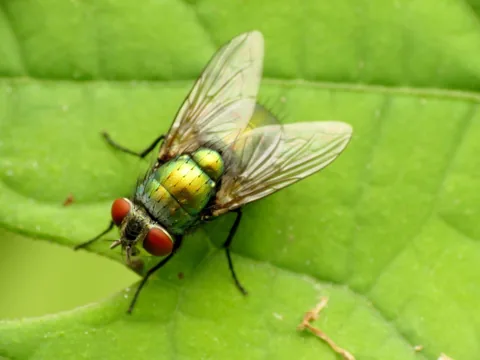 Common Green Bottle Fly
Calliphoridae (shown: Lucilia sericata)
A sudden crowd of shiny green or blue flies indoors often means an animal has died in a chimney, wall or ceiling. Outdoors, most blow flies come from garbage with food waste and from pet waste.
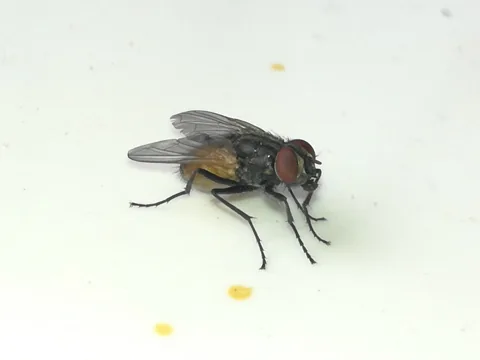 House Fly
Musca domestica
The house fly is a worldwide companion of people and domestic animals; it breeds in garbage, manure and other moist organic matter and is most numerous in hot summer months.
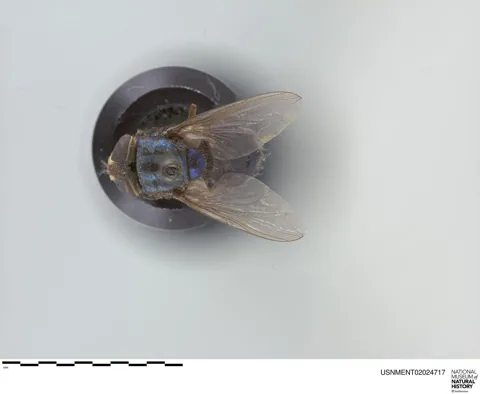 New World Screwworm
Cochliomyia hominivorax
The New World screwworm is a parasitic blow fly whose maggots burrow into the living flesh of animals, and rarely people, through wounds; USDA confirmed cases in Texas in June 2026, and later in New Mexico and Arizona.
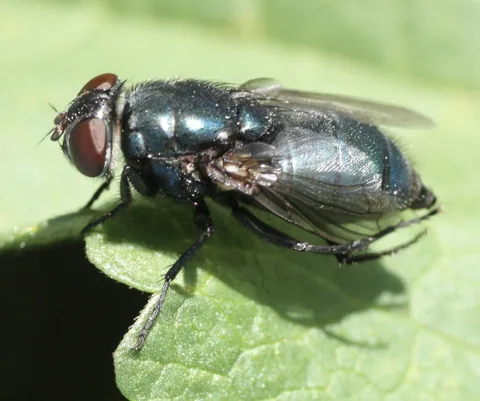 Fleeceworms
Blow fly larvae (Calliphoridae), mainly the black blow fly (Phormia regina) and the common green bottle fly (Lucilia sericata)
Fleeceworms, or wool maggots, are blow fly larvae that infest sheep, a condition called flystrike. Flies lay eggs in wool soiled by urine or scours or matted with blood, and the maggots feed down to the skin, causing wounds and infection that can kill a sheep if it is not treated promptly.
What flystrike is
Merck uses myiasis, fly strike and strike for the same thing: fly larvae living in the skin or tissue of a live animal. Most of the flies involved normally breed in carrion and other decaying matter and only take to live animals when a wound or soiled coat draws them; Merck calls these facultative myiasis flies.[1][3]
Blow flies are the classic culprits. Minnesota Extension says females lay eggs on garbage with meat scraps, on dead animals and in animal wounds, and may also lay them on feces-caked hair or wool on pets and other domestic animals. Merck adds that eggs can hatch within 24 hours if conditions are moist.[13][3]
Merck says eggs laid in a dirty coat produce maggots that move quickly to any infected wound, and once inside a wound the larvae quickly invade the tissue around it. The first maggots make the wound more attractive to other flies, so one strike can hold maggots of more than one fly species.[1][2]
Flystrike is not the same as a Cuterebra warble, where one bot fly larva grows under the skin and makes a swelling. If you see a single lump rather than a cluster of maggots in a sore, read our Cuterebra page.[4][1]
Which pets get it
Dogs and cats with wounds. Merck says flies lay eggs in skin wounds of any dog or cat with an infected wound, that bite wounds are often where it starts in older dogs and cats, and that in newborn puppies and kittens the healing umbilical stub draws flies.[1][2]
Pets with matted or soiled coats. Merck says matted hair coats contaminated with feces attract these flies, and tells owners to keep the coat clean and not let urine or feces collect on the animal.[1][2]
Rabbits with a wet or dirty rear end. Merck's rabbit chapter says rabbits that dribble urine get soiled fur, and a wet area around the anus often leads to fly strike and skin inflammation; this hutch burn comes from wet, dirty hutch floors. Merck says fly strike is a common complication of hutch burn in rabbits kept outdoors.[5]
Rabbits in outdoor hutches. Merck says manure building up in an outside rabbit setup can draw a large number of flies and lead to fly strike, and that frequent manure removal is essential. A wet, soggy dewlap from open water crocks or damp bedding can also become infected or flyblown.[6][5]
Sheep, goats and other backyard livestock. In sheep a common site is the breech (rear end), where wool soaked with urine or feces draws flies; our fleeceworms page covers that. For chickens, Merck notes that hens eating large numbers of blow fly maggots from carrion have been linked to botulism, and says dead animals should be disposed of quickly and safely. See our chicken coop pest guide.[3]
Signs to look for
Merck says affected dogs and cats often have raised, red sores at or near the strike site, and in cats the sore can look like a swollen pocket of pus (an abscess). Maggots may be visible in the sore or wound.[1][2]
For New World screwworm, USDA APHIS lists irritated behavior, head shaking, the smell of decay and maggots in wounds as signs to report in mammals and birds.[10]
In sheep, Merck says struck animals become depressed, stand with their heads down, stop eating and try to bite the infested area. Merck's rabbit page lists loss of energy, loss of appetite and fur loss or red, swollen skin among illness signs, and says to contact your vet right away if any occur.[3][7]
Look under the fur, not just at the surface. Merck says strikes in small animals are judged by clipping the hair to see how far the lesion goes, and that maggots can sit in deep tissue pockets.[3]
Why it is an emergency, and what the vet does
Maggots can tunnel through thinned skin into the tissue under it, making cavities up to several centimeters across, Merck says. Strikes can spread fast and attract more blow flies; bad strikes can be fatal, and untreated animals can die from shock.[3]
Merck says treatment is limited and immediate treatment is necessary when maggots are found in dogs and cats. The vet clips the hair, removes larvae, and may need to sedate or anesthetize the animal to clear deep pockets; owners should not try to remove the maggots themselves.[3][1][2]
Expect a recheck. Merck says fly eggs hatch on different days, so maggots can keep appearing, and a cat may need to be examined daily after the maggots are removed.[2][3]
Merck says treatment of fly strike in dogs involves removing the maggots, cleaning the wound, and medication to control infection and ease discomfort. Follow your vet's directions for care at home after the visit.[1]
Keeping flies off your pet
Treat wounds early. Merck says promptly treating all open wounds and reducing the number of flies are the two steps that protect a pet from strike, and that open wounds should be examined by a vet. For a cat's minor wound, Merck says to clean and rinse it, use a salve your vet recommends, trim the fur around it and check it several times a day.[2][1]
Groom and keep the coat clean. Merck lists routine bathing and grooming and keeping urine and feces off the coat as equally important.[1][2]
For rabbits, keep the hutch floor dry and clean and remove manure often. Merck ties hutch burn to wet, dirty floors and fly strike to manure buildup in outdoor enclosures. Any rabbit with a wet, soiled rear needs a vet visit to find the cause; Merck names bladder problems as one.[5][6][7]
Keep the pet in a screened, fly-free area when you can, Merck says. Minnesota Extension recommends 14- to 16-mesh screen on doors and windows, and Clemson says to keep screens on windows, doors and vents repaired.[1][13][14]
Cutting fly numbers around the house and yard
Remove what flies breed in. Merck says to remove garbage and decaying animal matter, cover all trash containers securely, remove standing water, especially where organic matter such as yard waste collects, and in kennels and yards pick up feces and wash down urination areas daily in warm months.[1]
UC IPM says removing larval breeding sites is the best way to control blow flies: bag and seal household garbage and pet feces before they go in outdoor cans, and set cans out for pickup at least once a week. Clemson says blow flies breed in carcasses, garbage and animal feces.[12][14]
Minnesota Extension says to tie garbage bags tightly, clean cans regularly, use cans with tight-fitting lids and keep them as far from the house as you can. Our trash-can maggot page has the cleanup steps.[13]
UC IPM says sticky ribbons don't work on blow flies and odor-baited traps should go well away from the house; Minnesota says to hang flypaper out of reach of pets. In most homes UC IPM says sanitation and screens are enough and insecticides are not needed.[12][13]
If you do use a pesticide, EPA says to read the label first, follow all precautions and keep pets away from the product. Anything that goes on the pet or its wound should come from your vet.[15][1]
New World screwworm: when to report
New World screwworm (Cochliomyia hominivorax) is different from ordinary flystrike. FDA and APHIS say its maggots burrow into the flesh of living animals and eat healthy tissue, and it can infest livestock, pets, wildlife, occasionally birds and, rarely, people. Merck says it is the only North American fly that is a primary invader of fresh, clean wounds.[8][10][4]
Merck says the wound can greatly enlarge and, unless treated, usually kills the animal. Merck also says that if your pet has a screwworm infestation, your vet must report it to state and federal authorities.[1]
APHIS says that if you think you have found a screwworm, report it immediately to your State animal health official and APHIS office, and that owners who suspect an animal disease should contact their veterinarian. Animals with screwworm should be treated as their veterinarian recommends.[10]
Where it is: sources differ by date. Merck's dog owner page says screwworms are not currently found in the United States or Mexico, and FDA's February 2026 update said NWS had not been detected in the United States at that time. APHIS now keeps a dashboard of confirmed U.S. animal and wild fly detections; check it, and see our screwworm news update.[1][9][11]
FDA has issued emergency use authorizations for several drugs to treat screwworm in dogs and cats; your vet decides which, if any, your pet needs. FDA says most U.S. dogs and cats are at low risk, and APHIS says pets traveling abroad should be inspected for screwworm.[8][9][10]
Can people get it?
CDC says myiasis is an infection of fly larvae in human tissue, that people with untreated or open wounds are at higher risk, and that you cannot catch it from another person. If you think you have it, CDC says to see a healthcare provider.[16]
APHIS says people who suspect they have a screwworm infestation should seek immediate medical treatment.[10]
Common questions
- Can I pull the maggots out of my dog's wound myself?
- Merck says no: wound cleaning and maggot removal should be done by your vet, usually with sedation or anesthesia, because maggots hide in deep pockets and more can hatch later.[1][3]
- There are maggots in my dog's poop. Is that flystrike?
- Usually not. Merck calls this pseudomyiasis: pets swallow maggots while grooming or eating infested flesh, and flies also lay eggs in feces left sitting out, so maggots appear in stool that isn't fresh. Owners can mistake them for intestinal worms. Ask your vet if you are unsure.[1][2]
- Why does my rabbit keep getting a dirty bottom?
- Merck links a wet, soiled rear in rabbits to urine dribbling from bladder problems and to wet, dirty hutch floors, and says it often leads to fly strike. Have your vet find the cause and keep the hutch dry.[5]
- Do I have to report maggots in my pet's wound?
- Suspected New World screwworm is: APHIS says to report it immediately to your State animal health official and APHIS, and Merck says vets must report confirmed cases.[10][1]
Photo credits
- Common Green Bottle Fly: (c) Katja Schulz, some rights reserved (CC BY) — via iNaturalist, CC BY 4.0
- House Fly: ivan_humljani, public domain (CC0), via iNaturalist
- New World Screwworm: Smithsonian National Museum of Natural History, public domain (CC0), via Smithsonian Open Access
- Fleeceworms: (c) Andrew Meeds, some rights reserved (CC BY) — via iNaturalist, CC BY 4.0
Sources
- Merck Veterinary Manual, “Flies and Mosquitoes of Dogs (Dog Owner Version).” www.merckvetmanual.com/dog-owners/skin-disorders-of-dogs/flies-and-mosquitoes-of-dogs (accessed 2026-11-15)
- Merck Veterinary Manual, “Flies and Mosquitoes of Cats (Cat Owner Version).” www.merckvetmanual.com/cat-owners/skin-disorders-of-cats/flies-and-mosquitoes-of-cats (accessed 2026-11-15)
- Merck Veterinary Manual, “Facultative Myiasis-Producing Flies of Animals.” www.merckvetmanual.com/integumentary-system/flies/facultative-myiasis-producing-flies-of-animals (accessed 2026-11-15)
- Merck Veterinary Manual, “Obligatory Myiasis-Producing Flies of Animals.” www.merckvetmanual.com/integumentary-system/flies/obligatory-myiasis-producing-flies-of-animals (accessed 2026-11-15)
- Merck Veterinary Manual, “Noninfectious Diseases of Rabbits.” www.merckvetmanual.com/exotic-and-laboratory-animals/rabbits/noninfectious-diseases-of-rabbits (accessed 2026-11-15)
- Merck Veterinary Manual, “Housing of Rabbits.” www.merckvetmanual.com/exotic-and-laboratory-animals/rabbits/housing-of-rabbits (accessed 2026-11-15)
- Merck Veterinary Manual, “Illness of Rabbits (Pet Owner Version).” www.merckvetmanual.com/all-other-pets/rabbits/disorders-and-diseases-of-rabbits (accessed 2026-11-15)
- U.S. Food and Drug Administration, Center for Veterinary Medicine, “Animal Drugs for New World Screwworm.” www.fda.gov/animal-veterinary/safety-health/animal-drugs-new-world-screwworm (accessed 2026-11-15)
- U.S. Food and Drug Administration, Center for Veterinary Medicine, “FDA Issues Emergency Use Authorizations for Drugs to Treat New World Screwworm in Dogs and Cats.” www.fda.gov/animal-veterinary/cvm-updates/fda-issues-emergency-use-authorizations-drugs-treat-new-world-screwworm-dogs-and-cats (accessed 2026-11-15)
- USDA Animal and Plant Health Inspection Service, “New World Screwworm Prevention for Animals.” www.aphis.usda.gov/livestock-poultry-disease/cattle/ticks/screwworm (accessed 2026-11-15)
- USDA Animal and Plant Health Inspection Service, “Confirmed Detections of New World Screwworm.” www.aphis.usda.gov/animals/animal-health/livestock-and-poultry-disease/stop-screwworm/current-status/confirmed (accessed 2026-11-15)
- University of California Statewide IPM Program, “Flies (Pest Notes 7457).” ipm.ucanr.edu/PMG/PESTNOTES/pn7457.html (accessed 2026-11-15)
- University of Minnesota Extension, “Flies.” extension.umn.edu/nuisance-insects/flies (accessed 2026-11-15)
- Clemson Cooperative Extension Home & Garden Information Center, “Nuisance Flies.” hgic.clemson.edu/factsheet/nuisance-flies/ (accessed 2026-11-15)
- U.S. Environmental Protection Agency, “Read the Label First: Protect Your Pets.” www.epa.gov/pets/read-label-first-protect-your-pets (accessed 2026-11-15)
- U.S. Centers for Disease Control and Prevention (CDC), “About Myiasis.” www.cdc.gov/myiasis/about/index.html (accessed 2026-11-15)