The short answer
- Most likely: bed bug fecal spots, which UC IPM describes as reddish brown or dark brown to black, roughly round and sometimes streaked; or flea dirt, which Merck Veterinary Manual describes as reddish-black, pellet or comma-shaped specks.[3][2][5]
- Quick test: EPA says bed bug spots may bleed on the fabric like a marker would. Merck says flea dirt placed in water or on a damp paper towel dissolves into a reddish-brown color.[1][5]
- Is it dangerous? Not by itself. CDC and MedlinePlus say bed bugs are not known to spread disease, though bites can itch and cost you sleep. CDC says fleas can sometimes carry the germs of flea-borne typhus, plague or cat scratch disease.[12][13][14]
- First steps: check mattress seams with a flashlight for live bugs, eggs and shed skins; check any pet that sleeps on the bed for fleas; and don't spray the bed while you're still finding out what it is.[3][1][5][9]
Profiles on this site
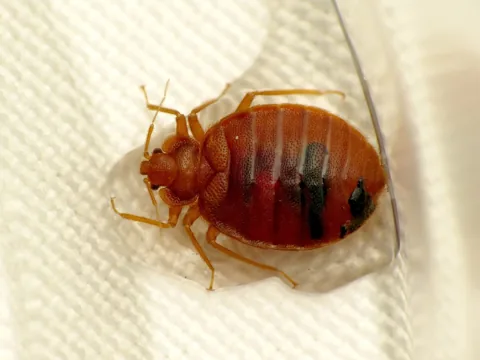 Bed Bug
Cimex lectularius
Bed bugs are wingless, blood-feeding insects that feed on sleeping or resting people, mostly at night; they have resurged worldwide and now turn up even in the finest hotels. CDC says they turn up in five-star hotels and resorts, and how clean a place is does not determine whether bed bugs are present.
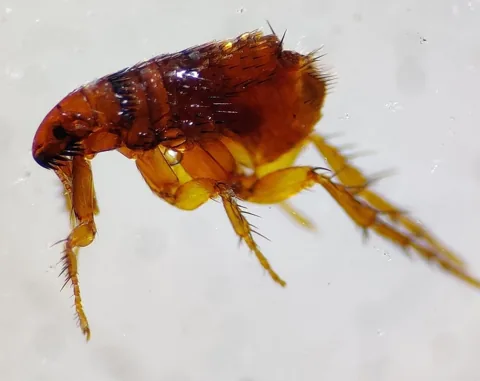 Cat Flea
Ctenocephalides felis
The cat flea is the most common external parasite of domestic cats and dogs, and the flea most often found on both. Adults spend most of their time on the pet, while eggs, larvae and pupae build up wherever the pet rests.
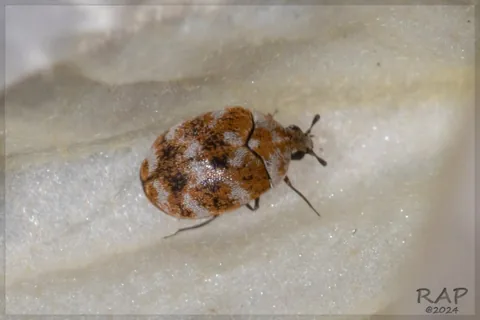 Varied Carpet Beetle
Anthrenus verbasci
Carpet beetles are small beetles whose larvae damage wool, silk, fur, feathers, leather and other animal products; the adults feed on pollen outdoors and often fly in through windows.
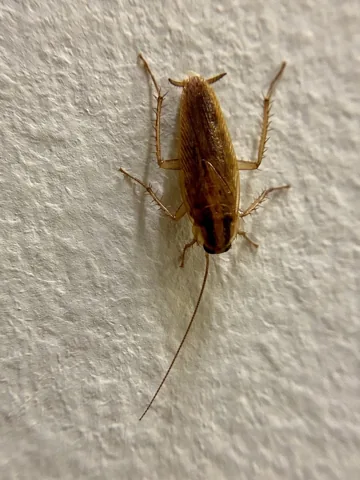 German Cockroach
Blattella germanica
The German cockroach is the most common cockroach living indoors in California and perhaps worldwide, especially in apartment buildings, and it has the fastest reproductive cycle of the common pest cockroaches. Penn State and Kentucky call it the most common cockroach in homes, apartments and other buildings, and Kentucky says it does not live outdoors.
What the specks could be
Look at where the specks are, what shape they are, and what is with them. Each culprit below leaves its own mix of clues; our signs of bed bugs and bed bugs vs fleas pages show the bugs themselves side by side.[3][1][5]
- Bed bug fecal spots: UC IPM says the spots are usually reddish brown or dark brown to black, sometimes yellowish, roughly round, sometimes streaks, and can be very small. University of Kentucky says the dark spotting and staining is dried excrement and gathers in hiding places along mattress seams, box springs, bed frames and headboards. EPA shows them at about the size of a printed dot.[3][2][1]
- Flea dirt: flea droppings are excreted blood that dries within minutes into reddish-black pellets or long tubular coils, according to Merck Veterinary Manual. University of Kentucky Entomology calls them dark, pepper-like specks in a pet's fur. If a dog or cat sleeps on the bed, that is where to expect them.[6][5][8]
- Carpet beetle leftovers: carpet beetle larvae leave shed skins and fecal pellets about the size of a grain of salt where they feed, UC IPM says. Ohio State University Extension describes the larvae as about 1/4 inch long and covered with brownish hair, and says the cast skins are often more abundant than the larvae. Our bed bugs vs carpet beetles page compares them.[9][10]
- Cockroach droppings: UC IPM lists accumulations of fecal matter, seen as dark spots or smears, along with cast skins and egg cases as the signs of where cockroaches hide. In a bedroom, look for these in cracks near food or water rather than on the sheets.[11]
How to tell them apart, step by step
You need a flashlight, a magnifying glass, a damp paper towel or cloth, and a few minutes. UC IPM recommends a flashlight and magnifying glass for checking mattresses for bed bugs and their signs.[3]
- 1. The wet test. Dampen a paper towel or cloth and press or rub a speck. EPA says bed bug excrement may bleed on fabric like a marker would. Merck says flea dirt dissolves in water or on a damp paper towel and leaves a reddish-brown color. Both are digested blood, so both can turn reddish; where the specks are and what's with them settles it.[1][5][6]
- 2. Where are they? Bed bug spots collect where the bugs hide, along seams and edges of mattresses and box springs, University of Kentucky says, and University of Minnesota Extension adds sheets, pillowcases and nearby areas. Flea dirt shows up on pets and in pet bedding, Merck says.[2][4][5]
- 3. Look for eggs and shed skins. EPA says bed bug eggs and eggshells are tiny, about 1mm, and pale yellow, and that nymphs leave behind their shed skins. UC IPM describes bed bug shed skins as light brown. Hairy, striped skins point to carpet beetle larvae instead.[1][3][9]
- 4. Look for the live insect. University of Minnesota Extension says a combination of bed bugs, cast skins and fecal spots is very obvious up close. For fleas, Merck says slowly parting a pet's hair often shows flea excrement or fast-moving fleas, and that checking the pet's bedding for eggs, larvae and excrement also helps.[4][5]
- 5. Rusty smears are a separate clue. EPA and University of Kentucky say rusty or reddish stains on sheets or mattresses come from bed bugs that were crushed after feeding.[1][2]
Are a few specks a sign of more?
For bed bugs, usually yes. University of Kentucky says the fecal spotting marks the places where bed bugs gather, and EPA says it is best to find an infestation early, before it becomes established or spreads. Check the whole bed before deciding it's nothing.[2][1]
For fleas, the specks mean adult fleas are feeding on an animal. University of Kentucky says fleas spend most of their time on the pet, and their eggs fall off into carpets and bedding where the larvae feed on the dried-blood droppings. UC IPM says larvae are found where adult fleas have left dried blood and feces, such as where pets sleep.[8][7]
For carpet beetles, the skins and pellets show where larvae have fed. Ohio State lists clothes closets, woolens, furniture and even bird or rodent nests among the sources, so look past the bed.[10][9]
Is it dangerous?
Bed bugs: CDC says bed bugs are not known to spread diseases to people, but they cause itching and loss of sleep and, rarely, allergic reactions. MedlinePlus adds that some people have no reaction to the bites at all. Washington State Department of Health warns that scratching bites can lead to infection.[12][13][15]
Fleas: CDC says flea bites can cause itching and irritation, and that sometimes fleas infect people or pets with the germs that cause flea-borne typhus, plague or cat scratch disease.[14]
Carpet beetles: they don't bite, but a report in CDC's Emerging Infectious Diseases journal describes skin lesions caused by allergic reactions to carpet beetle larva hairs, which mimic bites and should be told apart from bed bug or flea bites.[16]
Pets: if the specks are flea dirt, the pet is the source. University of Kentucky says some flea products should not be used on cats and others are not approved for puppies and kittens, and advises asking a veterinarian which treatment to use. Merck notes that in some very flea-sensitive pets, grooming removes so many fleas that it is hard to find any evidence of them.[8][5]
What to do next, by culprit
Match the fix to the culprit. Bed bugs, fleas and carpet beetles need different treatments, and University of Kentucky and Washington State Department of Health both say to confirm bed bugs before treating.[2][15][8][9]
- Bed bugs: confirm before you treat. Washington State Department of Health says to first confirm you really have bed bugs and suggests a pest control company for identification help. Then follow our how to get rid of bed bugs guide and the prep steps in getting ready for a bed bug treatment.[15][2]
- Fleas: treat the pet first, with your veterinarian, then vacuum. University of Kentucky says to vacuum thoroughly where pets rest and sleep, including beneath beds and cushions, then seal the vacuum bag in a garbage bag and put it in an outdoor trash can. Our how to get rid of fleas in the house guide has the full plan.[8][5]
- Carpet beetles: find and clean out the source. UC IPM says to clean and vacuum rugs, draperies and upholstered furniture regularly and not to spray clothing or bedding with insecticides. See how to get rid of clothes moths and carpet beetles.[9][10]
- Cockroaches: UC IPM suggests sticky traps on the floor along wall edges, with good spots marked by buildups of droppings, cast skins and egg cases. See I found a cockroach in my kitchen.[11]
When to call a pro
Bed bugs are the main reason to call. UC IPM says eliminating an infestation is best done by a professional pest control company and that serious infestations require professional help. University of Kentucky says confirmation often requires a professional and that, when resources allow, it is prudent to hire one because they know where to look and have more tools.[3][2]
If you can't tell what the specks are, a pest control company can help with identification, Washington State Department of Health says. For fleas, a veterinarian is the first call, according to University of Kentucky and Merck.[15][8][5]
Common questions
- Do bed bug droppings wipe off?
- Not cleanly. EPA says bed bug excrement may bleed on fabric like a marker would, so a damp cloth tends to smear it rather than lift it off.[1]
- Are black specks in my bed always bed bugs?
- No. Flea dirt from a pet looks similar, and carpet beetle larvae and cockroaches leave droppings too. University of Kentucky and Washington State Department of Health both say to confirm bed bugs by finding the bugs or their other signs before treating.[5][9][11][2][15]
- I have no pets. Can it still be flea dirt?
- It's less likely. Flea dirt comes from fleas feeding on an animal, which Merck and University of Kentucky describe on pets. Our flea guide covers fleas from wildlife or rodents in a home with no pets.[5][8]
- Can I just wash the sheets?
- Washing removes the specks, not the cause. Check the mattress seams, box spring and bed frame first, as UC IPM and EPA describe, so you know whether bugs are hiding there.[3][1]
Photo credits
- Bed Bug: (c) Katja Schulz, some rights reserved (CC BY) — via iNaturalist, CC BY 4.0
- Cat Flea: (c) Thomas Gyselinck, some rights reserved (CC BY) — via iNaturalist, CC BY 4.0
- Varied Carpet Beetle: (c) RAP, some rights reserved (CC BY) — via iNaturalist, CC BY 4.0
- German Cockroach: (c) Sandra H Statner, some rights reserved (CC BY) — via iNaturalist, CC BY 4.0
Sources
- U.S. Environmental Protection Agency, “How to Find Bed Bugs.” www.epa.gov/bedbugs/how-find-bed-bugs (accessed 2026-11-14)
- University of Kentucky Entomology, “Bed Bugs (ENTFACT-636).” entomology.mgcafe.uky.edu/ef636 (accessed 2026-11-14)
- University of California Statewide IPM Program, “Pest Notes: Bed Bugs.” ipm.ucanr.edu/home-and-landscape/bed-bugs/ (accessed 2026-11-14)
- University of Minnesota Extension, “Bed bugs.” extension.umn.edu/garden-and-home/home-maintenance/household-insects/bed-bugs (accessed 2026-11-14)
- Merck Veterinary Manual, “Fleas of Dogs.” www.merckvetmanual.com/dog-owners/skin-disorders-of-dogs/fleas-of-dogs (accessed 2026-11-14)
- Merck Veterinary Manual, “Fleas in Dogs and Cats.” www.merckvetmanual.com/integumentary-system/fleas-and-flea-allergy-dermatitis/fleas-in-dogs-and-cats (accessed 2026-11-14)
- University of California Statewide IPM Program, “Pest Notes: Fleas.” ipm.ucanr.edu/home-and-landscape/fleas/ (accessed 2026-11-14)
- University of Kentucky Entomology, “Flea Control and Prevention (ENTFACT-602).” entomology.mgcafe.uky.edu/ef602 (accessed 2026-11-14)
- University of California Statewide IPM Program, “Pest Notes: Carpet Beetles.” ipm.ucanr.edu/home-and-landscape/carpet-beetles/ (accessed 2026-11-14)
- Ohio State University Extension, “Carpet Beetles (HYG-2103).” ohioline.osu.edu/factsheet/hyg-2103 (accessed 2026-11-14)
- University of California Statewide IPM Program, “Pest Notes: Cockroaches.” ipm.ucanr.edu/home-and-landscape/cockroaches/ (accessed 2026-11-14)
- U.S. Centers for Disease Control and Prevention, “About Bed Bugs.” www.cdc.gov/bed-bugs/about/index.html (accessed 2026-11-14)
- MedlinePlus, U.S. National Library of Medicine, “Bed Bugs.” medlineplus.gov/bedbugs.html (accessed 2026-11-14)
- U.S. Centers for Disease Control and Prevention, “About Fleas.” www.cdc.gov/fleas/about/index.html (accessed 2026-11-14)
- Washington State Department of Health, “Bed Bugs.” doh.wa.gov/community-and-environment/pests/bed-bugs (accessed 2026-11-14)
- Simon L, et al. (CDC Emerging Infectious Diseases), “Anthrenus sp. and an Uncommon Cluster of Dermatitis. Emerg Infect Dis 2021;27(7):1940-1943.” wwwnc.cdc.gov/eid/article/27/7/20-3245_article (accessed 2026-11-14)