The short answer
- House mice, rats and tree squirrels are the usual culprits. UC IPM says many fires of unknown origin are believed to be caused by rodents gnawing on wires.[1][4]
- In an attic, rats and squirrels are the main suspects. UC IPM warns that roof rats in attics can cause electrical sparks and fires, and Penn State notes that squirrels nesting indoors chew the insulation around wires.[3][4]
- Under the hood of a car, rats commonly gnaw the insulation on engine wires, and mice gnaw wiring in vehicles too.[3][1][2]
- If you find bare wires, treat it as a fire hazard: Penn State notes bare wires may cause a fire.[4][5][2]
Profiles of the usual wire chewers
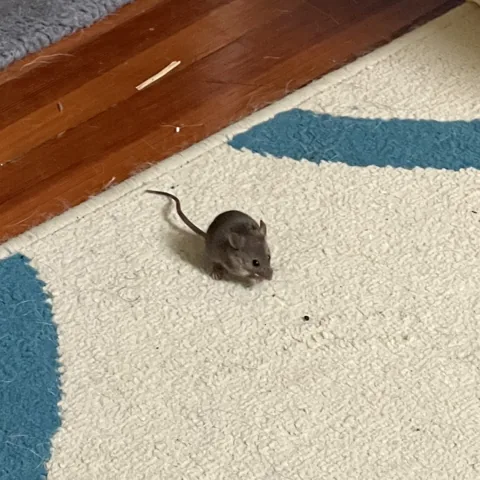 House Mouse
Mus musculus
The house mouse is a small, adaptable rodent that lives close to people in homes, schools and food businesses, eating and contaminating food, gnawing wiring and carrying disease.
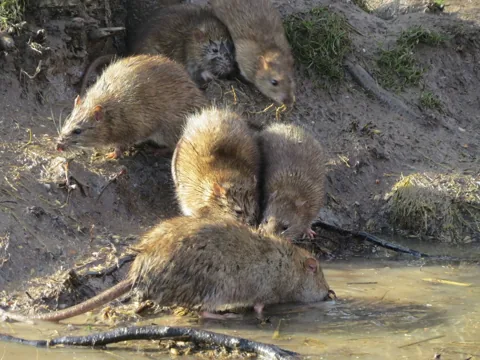 Norway Rat
Rattus norvegicus
The Norway rat, also called the brown or sewer rat, is a large, burrowing rat found throughout the contiguous United States wherever people live.
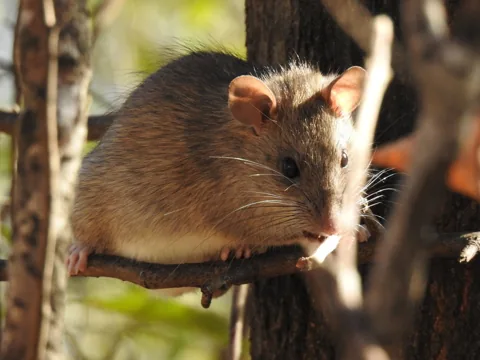 Roof Rat
Rattus rattus
The roof rat, also called the black or ship rat, is a sleek, agile climber that nests above ground in trees, ivy, attics and wall voids.
 Tree squirrels (eastern gray and fox squirrels)
Sciurus species (shown: eastern gray squirrel, S. carolinensis)
Tree squirrels such as the eastern gray squirrel and fox squirrel are bushy-tailed, daytime rodents. Around homes they raid fruit, nuts and bird feeders, dig up lawns and gardens, and chew their way into attics.
Clues and the likely culprit
Look past the wire to what's around it: droppings, gnaw marks, nesting material and the size of any entry hole all help tell mice, rats and squirrels apart.[7][1][3]
- Chewed appliance cords or wires inside walls, droppings about ¼ inch long, shredded paper or insulation nests and a musky smell: house mice.[1][7]
- Gnawed wires plus gnawing on doors, ledges, corners and trim, insulation shredded for nests, and wider tooth marks than mice leave: rats. Roof rats can live in attics, and both rats and mice chew wires in vehicles.[3][7]
- Chewed wires and insulation in the attic, a nest, and chewed openings in siding or under the eaves: tree squirrels. ICWDM notes gray and fox squirrels use holes about the size of a baseball and red squirrels about the size of a golf ball.[4][5]
- Fresh piles of gnawed insulation, wood shavings and other material show rodents are active now.[7][6]
How to confirm which rodent it is
- Compare gnaw marks: ICWDM gives mouse tooth marks as about 1/32 inch wide and rat tooth marks as about 1/16 inch.[7]
- Check the entry holes. Mice squeeze through gaps as small as ¼ inch tall, rat entry holes are larger, and squirrel holes run golf-ball to baseball size.[1][7][5]
- Look and listen for other signs: droppings, fresh gnaw marks and tracks show where mice are active, and squeaking, gnawing or scratching in walls, ceilings and under floors means rodents are present.[1][2]
- Note the timing. Flying squirrels are the only squirrels active at night, while house mice are active mostly at night.[4][1]
What to do next
- Treat damaged wiring as a hazard: Mississippi State notes that chewed wiring causes shorts and electrical hazards, and Penn State that bare wires may cause a fire.[2][4]
- Seal the way in. Close openings larger than 1/4 inch with steel wool, wire screen, sheet metal or hardware cloth.[3][6]
- Remove the rodents with the mice, rat or squirrel guides below. UC IPM says some form of population reduction, including traps, is almost always necessary for house mice.[1][4]
- When cleaning up droppings and nests, CDC advises disinfecting with a household disinfectant or a bleach solution.[8]
Common questions
- Can mice really start a house fire by chewing wires?
- Extension specialists say so. UC IPM writes that many fires of unknown origin are believed to be caused by rodents gnawing on wires, and ICWDM says squirrels chewing electrical lines can lead to fires.[1][5]
- What chews car wires?
- Rats commonly gnaw the insulation on engine wires, and mice gnaw wiring in vehicles and equipment too.[3][2]
- Why do rodents chew wires?
- Mississippi State says they'll gnaw on wiring of any kind, and squirrels and rats also shred insulation for their nests.[2][4][3]
Photo credits
- House Mouse: (c) Carrie Seltzer, some rights reserved (CC BY) — via iNaturalist, CC BY 4.0
- Norway Rat: petehawkins, public domain (CC0), via iNaturalist
- Roof Rat: (c) Laura Mae, some rights reserved (CC BY) — via iNaturalist, CC BY 4.0
- Tree squirrels (eastern gray and fox squirrels): (c) Paolo Zucca, some rights reserved (CC BY) — via iNaturalist, CC BY 4.0
Sources
- University of California Statewide IPM Program, “Pest Notes: House Mouse, Publication 7483 (revised July 2025).” ipm.ucanr.edu/legacy_assets/PDF/PESTNOTES/pnhousemouse.pdf (accessed 2026-11-12)
- Mississippi State University Extension Service, “Controlling Mice & Big Ole Rats (Dawg Tracks Safety Talk, 2021).” extension.msstate.edu/newsletters/dawg-tracks-safety-talk/2021/controlling-mice-big-ole-rats (accessed 2026-11-12)
- University of California Statewide IPM Program, “Rats (Pest Notes, Home and Landscape).” ipm.ucanr.edu/home-and-landscape/rats/ (accessed 2026-11-12)
- Penn State Extension, “Tree Squirrels.” extension.psu.edu/tree-squirrels (accessed 2026-11-12)
- Internet Center for Wildlife Damage Management, “Tree Squirrel Damage Identification.” icwdm.org/species/rodents/tree-squirrels/tree-squirrel-damage-identification/ (accessed 2026-11-12)
- Internet Center for Wildlife Damage Management, “House Mouse Damage Prevention and Control Methods.” icwdm.org/species/rodents/house-mice/house-mouse-damage-prevention-and-control-methods/ (accessed 2026-11-12)
- Internet Center for Wildlife Damage Management, “House Mice: Identification and Damage Signs.” icwdm.org/species/rodents/house-mice/ (accessed 2026-11-12)
- Centers for Disease Control and Prevention, “Clean Up After Rodents.” www.cdc.gov/healthy-pets/rodent-control/clean-up.html (accessed 2026-11-12)