On this page
How to identify it
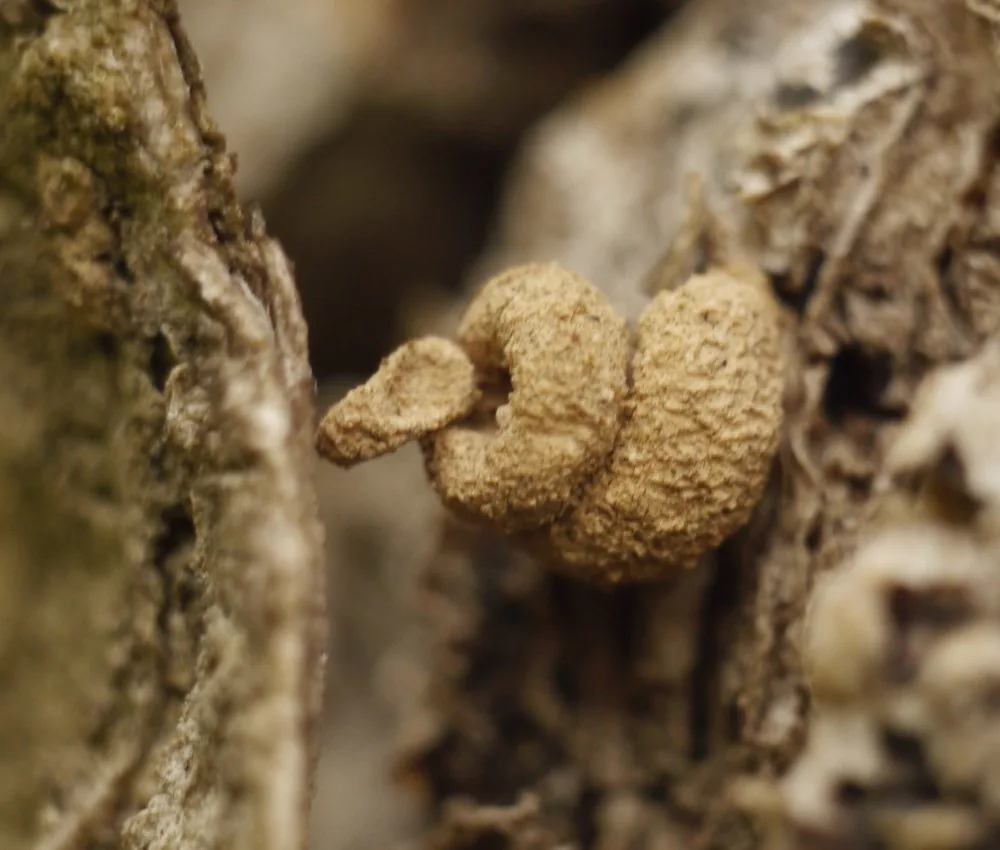
- The case coils like a snail shell and is made of silk, soil and frass. Sources give different sizes: Penn State says three whorls about 4 mm across, Colorado State about 1/8 inch, and Iowa State and WSU about 1/4 inch.[1][2][4][3]
- Cases look like small coils of dirt or droppings, and WSU says the insect can go unnoticed for years.[1][4][3]
- Colorado State describes the caterpillars inside as greenish or reddish gray with a black head.[2]
Look-alikes
Where it lives
Native to Europe and introduced to the U.S. in the 1940s. Penn State says it was found in Albany, New York, in 1962 and occurs in mid-Atlantic and Pacific coastal states and in Colorado, Michigan, Nevada, Utah and Idaho. Colorado State says that by 1996 it was in all Western Slope counties and El Paso, Fremont and Boulder counties, and WSU reports the heaviest Washington numbers in the Methow Valley.[1][2][3]
Biology and life cycle
It reproduces without males; Colorado State says only females are known there. Adults are wingless and young larvae spend the winter in the mother's case, coming out in spring.[1][2]
Grown larvae climb to high, shaded spots on trees, fences, buildings or vehicles and attach by silk to pupate. Timing varies by source: Penn State says around the first week of July, Colorado State late spring to early summer, and WSU May to June. Colorado State says each female lays only one to two dozen eggs.[1][2][3]
It spreads easily. WSU says it can be carried long distances by mammals, birds or people, and Colorado State says the cases attach to many surfaces and get moved to new sites.[3][2]
Damage and signs
- Larvae gouge or mine small areas of leaves. Sources differ on how much it matters: Colorado State says serious plant injury is rare, while Penn State says it occasionally causes economic loss and WSU says it has caused serious problems in some Washington crops.[1][2][3]
- The cases attach so firmly to buildings and cars that pulling them off can take paint with them.[1][2][3]
- WSU says baby's breath for floral use is especially prone to attack and must be inspected before sale. Colorado State lists hosts such as sagebrush, saltbush, rabbitbrush, willow, mountain-mahogany, fruit trees, squash and alfalfa.[3][2]
Health risk
It feeds on plants. Penn State, Colorado State and WSU Extension describe plant damage and a nuisance on buildings and don't mention any risk to people or pets.[1][2][3]
Control
Keep them out
Colorado State suggests temporary barriers such as flanges or sticky tape to keep migrating larvae off walls, and knocking them off with a strong jet of water, preferably soapy, before they attach.[2]
Sanitation
WSU says one bagworm can start a new infestation, and suggests collecting the plants they're feeding on and burning them.[3]
Traps and physical control
Once cases are attached to buildings, fences and vehicles, hand-picking is the way to remove them.[1][2]
Pesticides
Colorado State says control is seldom necessary. If it is, treat larvae while they're feeding on plants, before they migrate; insecticides don't work on migrating or attached insects. WSU says not to apply any insecticide except Bacillus thuringiensis (Bt) to flowering plants.[2][1][3]
More from Iowa State Extension
Iowa State Extension (2004) noted that this European insect, introduced to the United States in the 1940s, was then known from parts of New York, Pennsylvania, the Pacific coastal states, Colorado, Michigan, Nevada, Utah, Idaho and Indiana. The caterpillars feed on many ornamental plants, crops and Christmas trees, and in late summer they move to house siding, cars, trees and fence posts to form pupal cases only about 1/4 inch across that look like small coils of droppings or clumps of dirt.[4]
Its scientific name
U.S. extension sources call it Apterona helix. GBIF's backbone taxonomy treats Apterona helix (Siebold, 1850) as a synonym of Apterona helicoidella (Vallot, 1827).[5][6][1][2]
Common questions
- What are the tiny snail shells stuck on my siding?
- Probably snailcase bagworm cases. Colorado State says grown larvae move to high, shaded spots in late spring and early summer and attach to pupate.[1][2]
- Can I pressure-wash snailcase bagworms off?
- Sources differ. Penn State reports high-pressure water has failed on attached cases and hand-picking is the option. Colorado State says a strong, preferably soapy, water jet can knock larvae off before they attach.[1][2]
Sources
- Penn State Extension, “Snailcase Bagworm.” extension.psu.edu/snailcase-bagworm (accessed 2026-11-13)
- Colorado State University Extension, “Snailcase Bagworm (fact sheet).” extension.colostate.edu/resource/snailcase-bagworm/ (accessed 2026-11-13)
- Washington State University Extension, “Insect Answers: Snailcase Bagworm (FS020E; Suomi, revised by Antonelli).” wpcdn.web.wsu.edu/wp-ecommerce/uploads/sites/2/product-4168-sku-FS020E.pdf (accessed 2026-11-13)
- Iowa State University Extension and Outreach, “Snailcase Bagworm - A Potential New Pest for Iowa (January 16, 2004).” yardandgarden.extension.iastate.edu/article/2004/1-16-2004/bagworm.html (accessed 2026-11-13)
- Global Biodiversity Information Facility (GBIF), “Apterona helix (Siebold, 1850), synonym (GBIF Backbone Taxonomy).” api.gbif.org/v1/species/1853490 (accessed 2026-11-13)
- Global Biodiversity Information Facility (GBIF), “Apterona helicoidella (Vallot, 1827) (GBIF Backbone Taxonomy).” api.gbif.org/v1/species/4526180 (accessed 2026-11-13)
- iNaturalist, “Apterona helicoidella taxon page (order and family).” www.inaturalist.org/taxa/875949 (accessed 2026-10-06)