On this page
How to identify it
Where it lives
NC State says it's native to China and was introduced to the United States in the late 1800s. It attacks a wide range of hosts, and extension guides from Kentucky, North Carolina and California cover it in apple and stone fruit.[3][1][2]
Biology and life cycle
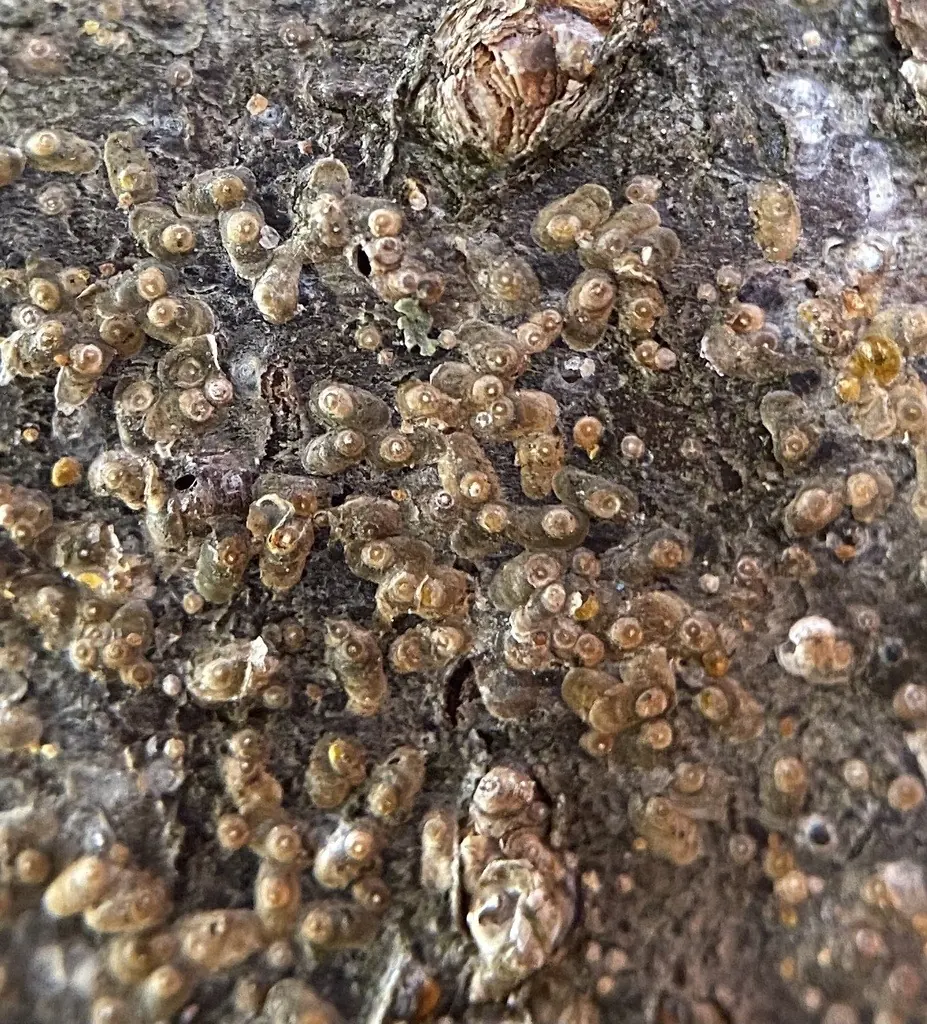
Females give live birth to tiny yellow crawlers, about 400 each according to NC State, which settle within a day or two and cover themselves with wax: first white, then black.[3][1][2]
Generation counts differ by climate: two a year in Kentucky according to UK Extension, four in North Carolina according to NC State, and usually four to five in California according to UC IPM.[1][3][2]
UC IPM says about 80% overwinter as immature "black cap" scales.[2]
Damage and signs
Health risk
This insect feeds only on plants; none of the sources consulted (UK Extension, NC State, UC IPM) describes any risk to people or pets.[1][3][2]
Control
Traps and physical control
Wrap black electrical tape coated with petroleum jelly around an infested limb to see when crawlers are active.[3][1]
Biological control
UC IPM says natural enemies, including the twicestabbed lady beetle and tiny parasitic wasps, often keep it in check, and many orchards that skip broad-spectrum sprays for two or three years don't have San Jose scale problems.[2]
Pesticides
Dormant-season oil sprays are the preferred timing according to UK Extension and UC IPM; in-season sprays aim at crawlers. UK Extension notes the second generation's crawlers emerge over a long period, which makes spraying them impractical. Follow the label.[1][2]
Why sprays sometimes fail
NC State says crawlers are active for much of the time from May to the first frost, so no single in-season spray reaches them all.[3]
UC IPM says broad-spectrum insecticides used for other pests kill the scale's natural enemies, and scale numbers can build up as a result.[2]
Common questions
- What are the red spots on my apples?
- Red rings or blemishes around tiny gray scales on apples point to San Jose scale, and usually mean there are damaging numbers on the tree.[1][3]
- Why does scale survive my sprays?
- Crawlers appear over a long period and the waxy covering protects settled scales. Dormant oil and keeping natural enemies alive are the main defenses.[1][3][2]
Sources
- University of Kentucky Entomology (ENTFACT), “San Jose Scale (ENTFACT-204).” entomology.mgcafe.uky.edu/ef204 (accessed 2026-11-13)
- UC Statewide IPM Program, “San Jose Scale (Peach Pest Management Guidelines).” ipm.ucanr.edu/agriculture/peach/san-jose-scale/ (accessed 2026-11-13)
- NC State Extension, “San Jose Scale.” content.ces.ncsu.edu/san-jose-scale (accessed 2026-11-13)
- Global Biodiversity Information Facility (GBIF), “Comstockaspis perniciosa (Comstock, 1881) (GBIF Backbone Taxonomy).” api.gbif.org/v1/species/10844254 (accessed 2026-11-13)
- iNaturalist, “Comstockaspis perniciosa taxon page (order and family).” www.inaturalist.org/taxa/1476210 (accessed 2026-10-06)