On this page
How to identify it
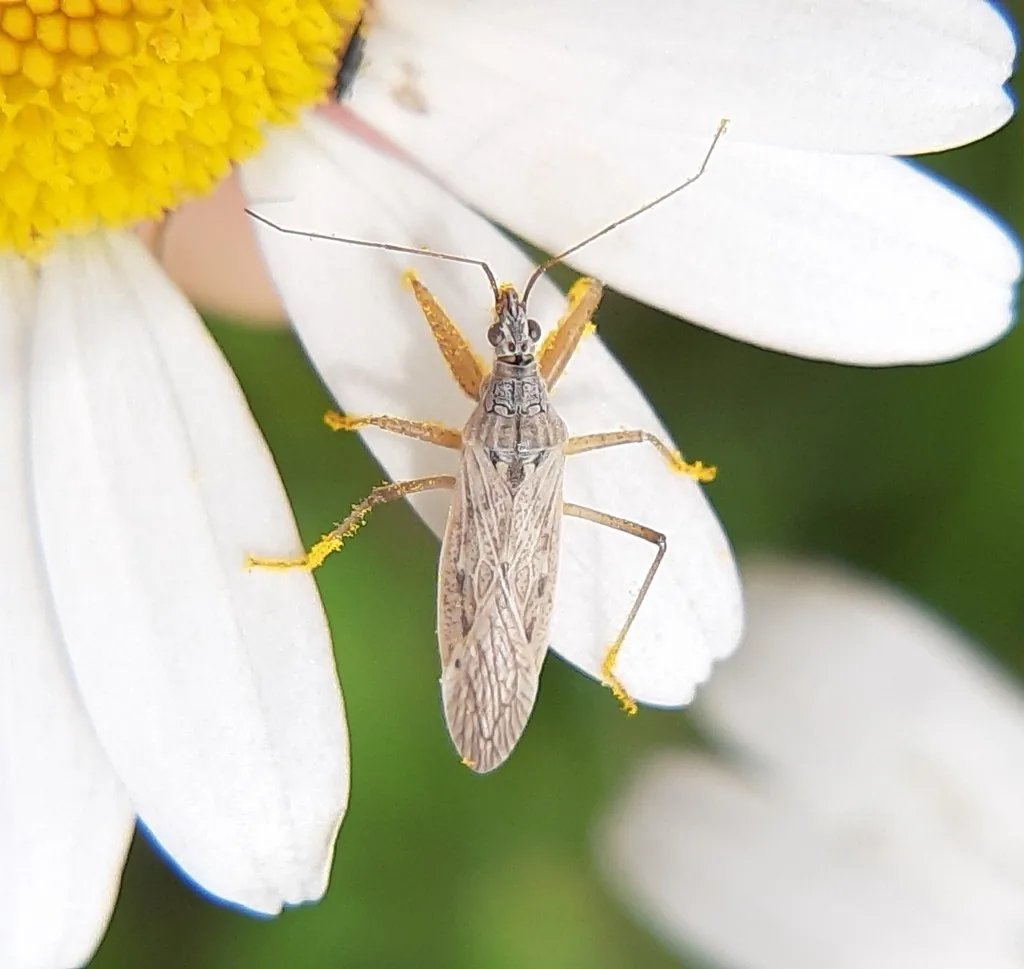
- Adults are slender, about 1/6 to 1/2 inch (4 to 13 mm) long, and usually tan, gray, brown, reddish or yellowish; Wisconsin Extension notes that some less common species are black.[1][3][2]
- The head is narrow with bulging eyes and long antennae, and the front legs are slightly swollen for grasping prey.[1][4]
- Many short, parallel veins at the wing tips are characteristic of all damsel bugs.[4][1]
- Nymphs look like small, wingless adults; older nymphs show developing wing pads.[1][4]
Look-alikes
| Look-alike | How to tell them apart |
|---|---|
| Assassin bugs | Damsel bugs look like small, smooth assassin bugs, but they're a distinct family.[2][4] |
| Minute pirate bugs | Minute pirate bugs are smaller and have no obvious veins or cells near the forewing tips.[1] |
Where it lives
Native throughout North America. Wisconsin Extension calls Nabis americoferus the most common species in North America, NC State says N. roseipennis is the most abundant damsel bug in the Southeast, and at least nine species occur in California.[4][2][1]
Biology and life cycle
Females insert eggs into soft plant tissue, leaving only a flat cap visible.[1]
Nymphs pass through five stages, and egg to adult takes 1 to 2 months in warm weather. Counts of generations vary: UC IPM says two or more a year, Wisconsin Extension one to two for the two common Nabis species, and Washington State numerous overlapping generations.[1][2][3]
Adults overwinter in ground cover and debris and emerge in April or May to lay eggs.[3][1]
Small nymphs eat about one egg or aphid a day; older nymphs and adults may eat one to two dozen.[2]
They can go up to two weeks without food, and with no other prey they turn on each other.[2]
Damsel bugs have their own enemies, including a parasitic tachinid fly, a tiny wasp that develops in their eggs and an insect-killing fungus.[2]
Damage and signs
Health risk
Damsel bugs are predators of insects and mites, and the extension sources here don't treat them as a health concern. They can bite people, though: a 2016 Journal of Medical Entomology report described a common damsel bug (Nabis americoferus) biting a man in Fargo, North Dakota, and compiled other U.S. cases of Nabis bites.[1][2][5]
Control
Prevention
No control is needed. NC State treats damsel bugs as beneficial predators, and Washington State recommends no chemical management for them.[4][3]
Biological control
They shelter in low grasses and ground covers, so keeping some of that habitat encourages them.[2]
Avoid regular use of broad-spectrum pesticides, and favor native plants, which give food and overwintering sites.[3]
Damsel bugs aren't sold commercially, so you rely on the ones already present.[4]
Common questions
- Is this a damsel bug or an assassin bug?
- Damsel bugs are smaller and smoother, with many short parallel veins at the wing tips, though at a glance they resemble small assassin bugs.[4][2]
- Do damsel bugs really control pests?
- They're considered important caterpillar predators in soybeans, but no studies show economic pest control, and their effect in home landscapes isn't known.[4][2]
- Can damsel bugs bite people?
- Rarely, but yes. A 2016 Journal of Medical Entomology report describes a common damsel bug biting a man in North Dakota and lists other U.S. cases of Nabis bites.[5]
Sources
- University of California Statewide IPM Program, “Damsel Bugs (Natural Enemies Gallery).” ipm.ucanr.edu/natural-enemies/damsel-bugs/ (accessed 2026-11-12)
- University of Wisconsin-Madison Extension, “Damsel Bugs, Family Nabidae.” hort.extension.wisc.edu/articles/damsel-bugs-family-nabidae/ (accessed 2026-11-12)
- Washington State University Extension, “Predatory Bugs: Damsel bugs (HortSense).” hortsense.cahnrs.wsu.edu/fact-sheet/predatory-bugs-damsel-bugs/ (accessed 2026-11-12)
- NC State Extension, “Damsel Bug (Biological Control Information Center).” entomology.ces.ncsu.edu/biological-control-information-center/beneficial-predators/damsel-bug/ (accessed 2026-11-12)
- J Med Entomol 2016;53(1):230-232, via PubMed, “A Case of Biting Humans by Nabis americoferus (Heteroptera: Nabidae), With Comments on Bites by Other Species of the Genus Nabis in the United States (2016).” pubmed.ncbi.nlm.nih.gov/26474881/ (accessed 2026-11-12)
- iNaturalist, “Nabis taxon page (order and family).” www.inaturalist.org/taxa/203298 (accessed 2026-11-12)